


In fiscal year 2025, the FDA recorded 2,660 medical device-related Form 483 citations, highlighting why inspection readiness remains critical. In 2026, medical device regulation enters a new phase as FDA QMSR takes effect, EU MDR requirements continue to shape market access, and the UK strengthens post-market surveillance. As a result, pharmaceutical and medical device professionals must understand evolving classification rules, quality management standards, and technical documentation requirements. This guide compares FDA, EU, and UK regulations and explains how to achieve compliance, reduce regulatory risks, and maintain patient safety.
Table of Contents
What Is Medical Device Regulation?
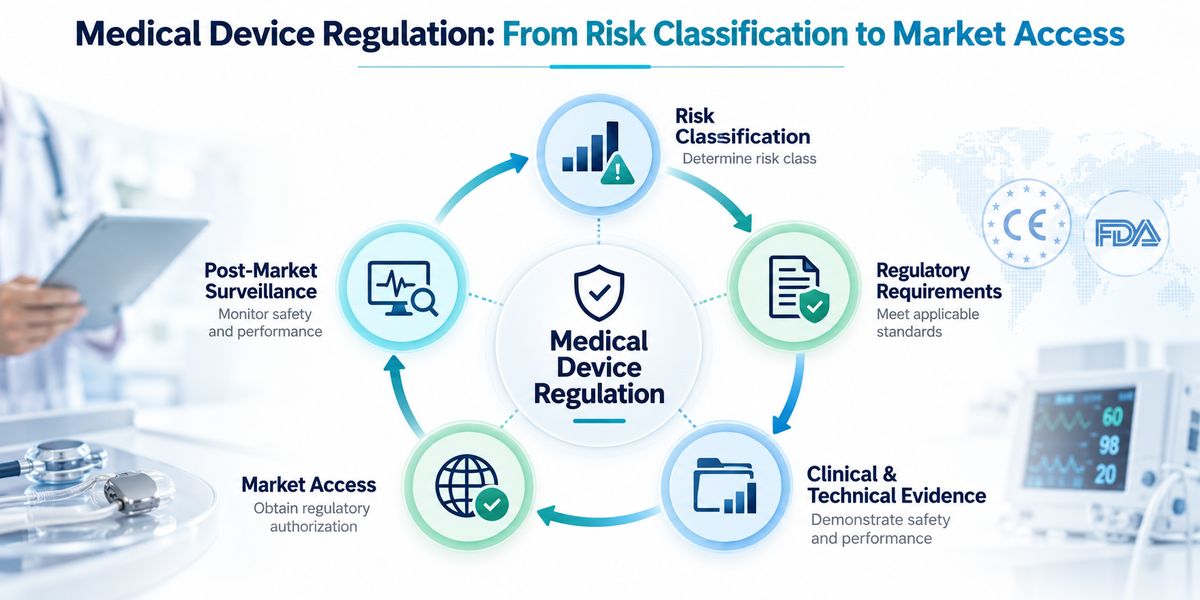
Medical device regulation establishes the legal requirements that manufacturers must meet to ensure device safety, performance, and quality throughout the product lifecycle. In the United States, European Union, and United Kingdom, regulators classify medical devices according to risk, which determines the evidence, quality management controls, and regulatory pathways required for market access. Moreover, manufacturers must maintain technical documentation, monitor device performance, and report safety concerns after commercialization. Although regulatory frameworks differ across jurisdictions, they share a common goal: protecting patients while ensuring devices remain safe, effective, and compliant.
The following infographic illustrates how risk-based device classification guides regulatory requirements, clinical evidence, market authorization, and ongoing compliance.
Why Medical Device Compliance Matters During Inspections?
Inspections show whether your quality system works in practice, not just on paper. First, regulators and notified bodies review your quality management system against requirements such as ISO 13485, the EU MDR, or the FDA’s QMSR. Next, they check your documented controls, including procedures, design files, and supplier agreements, to confirm that teams follow them consistently. Inspectors also examine your clinical evidence to verify that the device performs safely and as intended. In addition, they trace products from components to the end user, so incomplete UDI or batch records quickly raise red flags. Finally, they assess how you detect and fix problems through CAPA, complaint handling, and post-market surveillance. As a result, strong medical device compliance protects patients, prevents costly findings, and keeps your products on the market.
4 Medical Device Regulatory Controls That Shape Inspection Outcomes
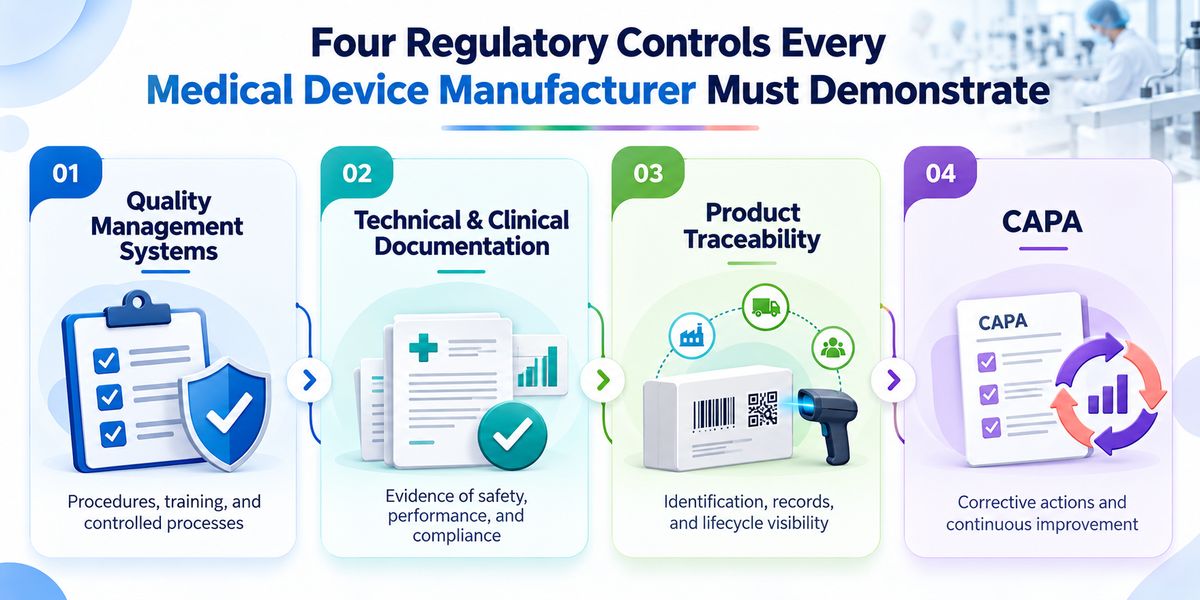
Regulatory inspections assess whether medical device manufacturers can demonstrate consistent safety, quality, and regulatory compliance. Inspectors and notified body auditors focus on four essential controls: quality management systems, technical and clinical documentation, product traceability, and corrective and preventive actions (CAPA). Moreover, they examine whether manufacturers maintain accurate records, manage risks, and resolve quality issues effectively. Therefore, strengthening these controls helps manufacturers meet regulatory expectations, address inspection findings, and maintain medical device compliance throughout the product lifecycle.
The following four regulatory controls form the foundation of medical device inspection readiness and help manufacturers demonstrate compliance with applicable quality, safety, and regulatory requirements.
- Device Classification and Risk Assessment (Available PDF)
- Premarket Submissions and Regulatory Clearance (Available PDF)
- Quality Management Systems and FDA Inspections (Available PDF)
- Post-Market Surveillance and Vigilance Reporting (Available PDF)
The following infographic highlights four essential regulatory controls that support inspection readiness, demonstrate compliance, and help manufacturers maintain device safety.
Device Classification and Risk Assessment (Available PDF)
Medical device classification determines regulatory requirements based on a device’s intended use and potential risks to patients. Moreover, manufacturers must assess hazards, document risk controls, and justify device classification to support safety and regulatory compliance.
Premarket Submissions and Regulatory Clearance (Available PDF)
Premarket submissions demonstrate device safety and performance before market entry. Depending on classification, FDA authorization may require 510(k) clearance, De Novo authorization, or PMA approval.
Quality Management Systems and FDA Inspections (Available PDF)
Medical device quality management systems control production, documentation, risks, and CAPA. Additionally, FDA inspections verify compliance with QMSR and ISO 13485:2016 requirements.
Post-Market Surveillance and Vigilance Reporting (Available PDF)
Post-market surveillance tracks device safety, performance, and risks after market entry. Additionally, vigilance reporting covers serious incidents, safety investigations, and corrective actions.
Download MDCG 2025-10 Post-Market Surveillance Guidance Here
FDA vs EU MDR vs UK: Medical Device Compliance Compared
Medical device manufacturers must follow different regulatory requirements when entering the United States, European Union, and United Kingdom markets. While the FDA focuses on risk-based classification and premarket authorization, the EU MDR emphasizes conformity assessment, clinical evidence, and CE marking requirements. Meanwhile, the UK operates its own regulatory framework under the MHRA, with specific rules for UKCA marking and accepted CE-marked devices. Understanding these differences helps manufacturers select the right regulatory pathway, maintain compliance, and prepare for inspections.
The following table compares the FDA, EU MDR, and UK regulatory systems across device classification, market access, quality management, and regulatory oversight.
| Regulatory Aspect | FDA (United States) | EU MDR (European Union) | UK (Great Britain) |
|---|---|---|---|
|
Device Classification |
Class I, II, III |
Class I, IIa, IIb, III |
Class I, IIa, IIb, III |
|
Market Access |
510(k), De Novo, PMA, or exemption |
Conformity assessment and CE marking |
UKCA or qualifying CE marking; MHRA registration |
|
Quality Management |
FDA QMSR incorporates ISO 13485:2016 |
EU MDR Article 10(9) QMS requirements |
UK MDR 2002 quality requirements |
|
Post-Market Surveillance |
FDA adverse event reporting, recalls, and surveillance |
PMS, vigilance reporting, and corrective actions |
MHRA vigilance and post-market surveillance requirements |
How Can Manufacturers Prepare for Regulatory Inspections?
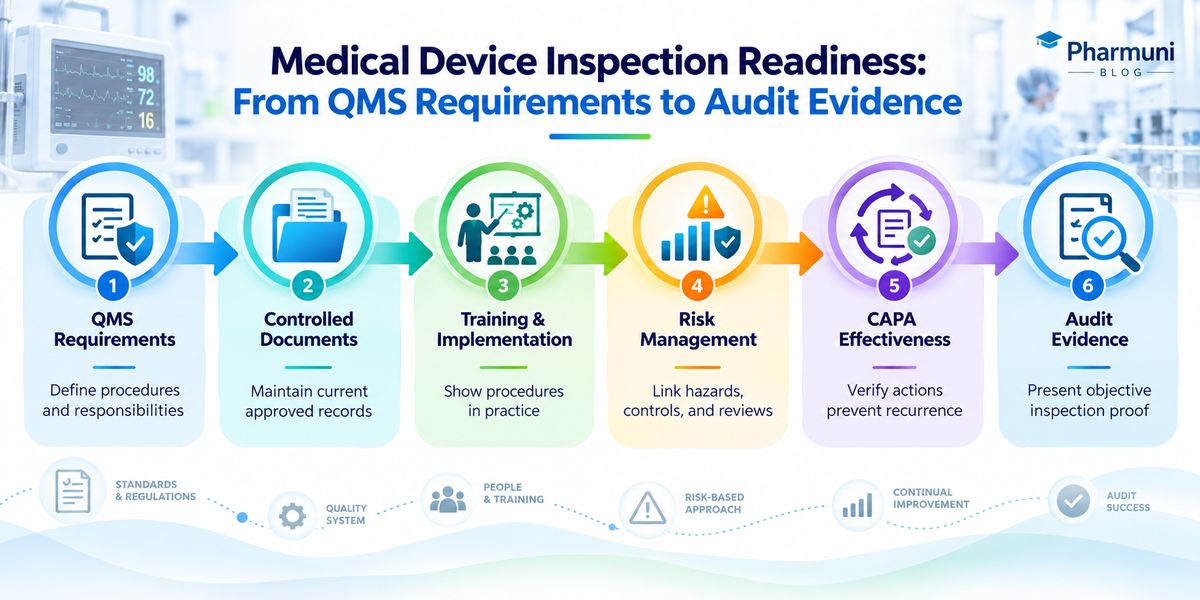
Preparing for regulatory inspections requires more than maintaining written procedures. Manufacturers need a medical device inspection checklist that connects quality management requirements with controlled documents, training records, risk assessments, and evidence of implementation. Moreover, internal audits should identify compliance gaps and verify that corrective and preventive actions (CAPA) address their root causes. As a result, manufacturers can strengthen inspection readiness, demonstrate compliance with FDA QMSR and applicable EU MDR requirements, and reduce the risk of recurring quality issues.
The following table outlines essential inspection checklist areas, the documented evidence manufacturers should maintain, and how to verify CAPA effectiveness.
| Inspection Area | Quality Procedures | Required Audit Evidence | CAPA Effectiveness |
|---|---|---|---|
|
Document Control |
Approve, update, and control procedures. |
Current SOPs, revision histories, and approval records. |
Verify obsolete procedures are no longer used. |
|
Training and Competence |
Train staff and assess competence. |
Training records, competency assessments, and qualifications. |
Confirm retraining resolves identified performance gaps |
|
Risk Management |
Identify hazards and implement risk controls. |
Risk assessments, risk management files, and verification records. |
Confirm corrective actions reduce identified risks. |
|
Production and Traceability |
Control manufacturing processes and device identification. |
Batch or device history records, validation evidence, and UDI records where applicable. |
Review defect trends and verify corrective actions work. |
This infographic highlights key steps to meet FDA QMSR, EU MDR, and UK requirements and improve inspection readiness.
Final Word
In fiscal year 2025, the FDA recorded 342 CAPA-related inspection observations for medical devices, highlighting persistent weaknesses in corrective action processes. As FDA QMSR introduces a new inspection framework in 2026, medical device regulation demands clear evidence of effective quality controls, risk management, and documented compliance. For professionals navigating both medical device requirements and pharma regulation, verifying CAPA effectiveness, maintaining reliable records, and continuously improving quality systems remain essential to inspection readiness and patient safety.
FAQs
Under FDA QMSR, inspectors can review internal audit reports, supplier audits, management reviews, and other quality management records. Manufacturers must demonstrate compliance with ISO 13485:2016 and applicable FDA requirements, including documented CAPA effectiveness.
Yes. Class IIa and IIb medical devices generally require notified body conformity assessment before receiving CE marking under EU MDR. Manufacturers must provide technical documentation, clinical evaluation evidence, and an effective quality management system.
Yes. Great Britain accepts qualifying CE-marked medical devices under transitional arrangements. EU MDR-compliant devices can generally remain on the GB market until 30 June 2030, provided manufacturers meet applicable MHRA registration and regulatory requirements.

Mahtab Shardi
Mahtab is a pharmaceutical professional with a Master’s degree in Physical Chemistry and over five years of experience in laboratory and QC roles. Mahtab contributes reliable, well-structured pharmaceutical content to Pharmuni, helping turn complex scientific topics into clear, practical insights for industry professionals and students.

Medical Device Regulation in 2026: FDA, EU MDR and UK Compliance
Medical device regulation is evolving in 2026. Discover how FDA QMSR, EU MDR requirements, and UK rules shape device classification, market access, inspections, and post-market surveillance, with practical guidance for manufacturers seeking stronger quality systems and compliance.

FDA Accelerated Approval Pathway in 2026: Requirements and Inspection Readiness
How does FDA accelerated approval affect drug development and GMP compliance? Explore clinical evidence requirements, confirmatory trials, postmarketing obligations, and inspection readiness. Learn how pharmaceutical manufacturers can reduce regulatory risks and prepare for FDA approval decisions in 2026.

Deviation vs Nonconformance 2026: 5 Critical GMP Mistakes to Avoid
Explore 5 critical differences between deviation and nonconformance in pharma, including GMP investigations, OOS, risk assessment, and CAPA.