
Orphan Drug Designation in 2026: FDA and EMA Eligibility Criteria

In fiscal year 2025, the FDA granted 450 designations under its orphan drug designation program. However, treating a rare disease does not automatically qualify as a medicine for this status. In 2026, pharmaceutical professionals must understand how FDA and EMA eligibility criteria differ. Moreover, scientific evidence, disease prevalence, and pharma regulation all influence application strategies. So, what should sponsors know before submitting their applications?

Table of Contents

What Is Orphan Drug Designation?

Orphan drug designation is a regulatory status that supports the development of medicines for rare diseases. In the United States, the Orphan Drug Act of 1983 provides incentives for developing eligible treatments. Similarly, EU Regulation (EC) No 141/2000 encourages research into rare diseases with limited treatment options. These incentives can include regulatory support, fee reductions, and potential market exclusivity. However, orphan designation does not mean a medicine is approved for sale. Pharmaceutical companies must still demonstrate safety, quality, and efficacy to obtain marketing authorisation.

Why Does Orphan Status Matter for Regulatory Review?

Orphan drug designation benefits encourage pharmaceutical companies to develop treatments for rare diseases. These incentives include regulatory guidance, fee reductions, tax credits in the United States, and potential market exclusivity after approval. However, sponsors must provide credible scientific evidence to demonstrate eligibility. This includes rare disease prevalence data, medical plausibility, and significant benefit where required. Moreover, orphan status does not guarantee faster approval or lower regulatory standards. Sponsors must still meet applicable safety, efficacy, quality, and reporting requirements throughout development and regulatory review.

4 Evidence Checks Before Applying for Orphan Designation

A successful rare disease drug status request starts with reliable scientific and regulatory evidence. Sponsors must demonstrate that the proposed medicine meets specific eligibility criteria. Moreover, FDA and EMA requirements differ in how they assess rare disease prevalence and potential treatment benefits. Therefore, identifying evidence gaps early can help pharmaceutical companies prepare stronger submissions and avoid unnecessary regulatory delays.

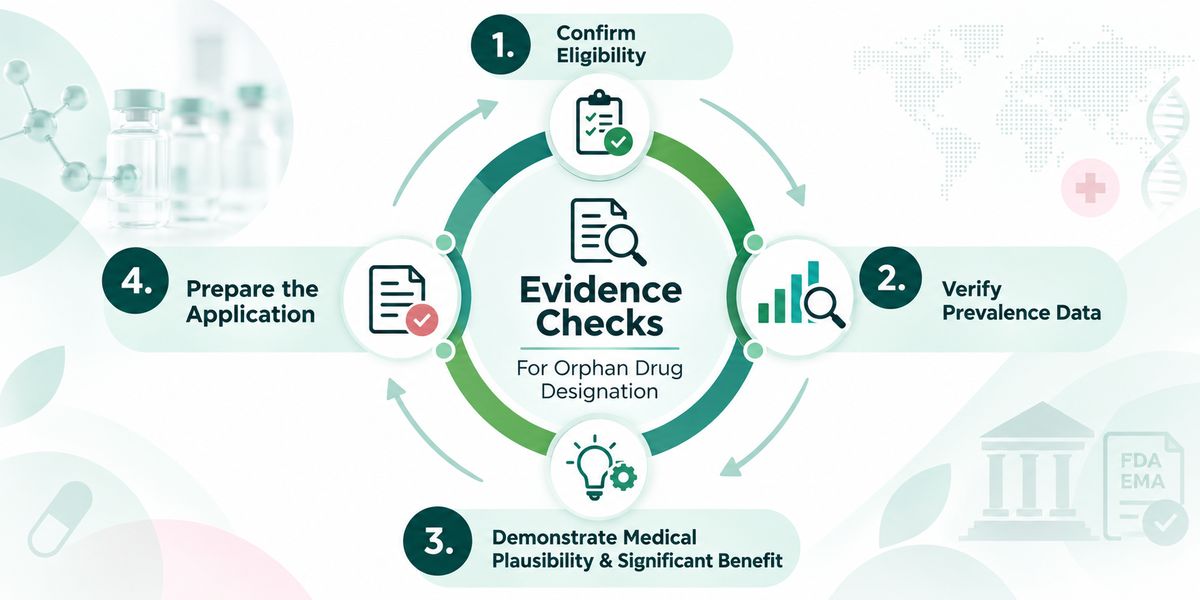
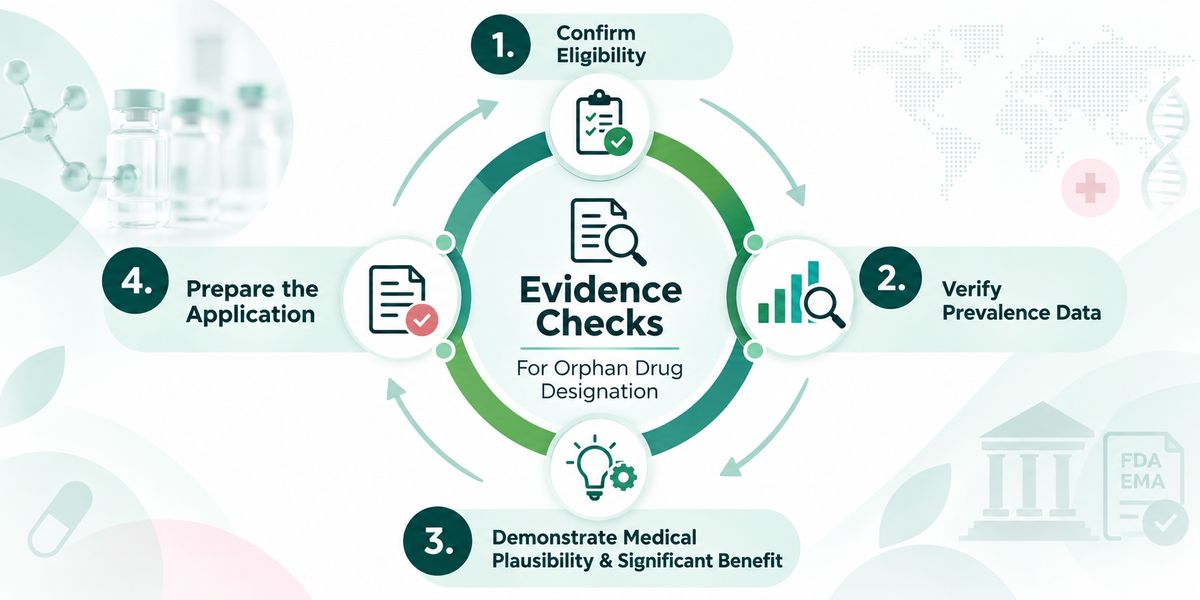
The following four evidence checks can help sponsors strengthen their rare disease designation submissions and meet FDA and EMA eligibility requirements.


  • Confirm the Disease Meets Eligibility Criteria (Available PDF)
  • Verify Rare Disease Prevalence with Reliable Data (Available PDF)
  • Demonstrate Medical Plausibility and Significant Benefit (Available PDF)
  • Prepare a Complete Regulatory Application (Available PDF)


This infographic highlights four essential evidence checks that help sponsors meet rare disease medicine eligibility criteria and prepare stronger regulatory submissions.

Infographic showing four evidence checks: rare disease prevalence, eligibility criteria, medical plausibility, and regulatory application requirements.
Four essential evidence checks for rare disease drug applications, from eligibility criteria to scientific evidence and regulatory documentation.

Confirm the Disease Meets Eligibility Criteria (Available PDF)

Confirm that the targeted disease meets FDA or EMA orphan designation criteria, including rarity requirements. Additionally, assess disease severity and the proposed treatment’s eligibility.

Download the FDA Orphan Drug Incentives PDF Here

Verify Rare Disease Prevalence with Reliable Data (Available PDF)

Use reliable epidemiological studies, disease registries, and scientific sources to establish rare disease prevalence. Moreover, provide clear calculations and supporting evidence to justify your estimates.

Download the Orphan Disease Prevalence PDF Here


Demonstrate Medical Plausibility and Significant Benefit (Available PDF)

Provide scientific evidence showing how the proposed medicine may treat the targeted rare disease. Furthermore, demonstrate significant benefit when required under EU orphan designation rules.

Download the EMA Orphan Designation Guide Here

Prepare a Complete Regulatory Application (Available PDF)

Including disease information, prevalence data, scientific justification, and supporting regulatory documents. Finally, verify application completeness and follow FDA or EMA submission requirements.

Download the FDA Orphan Drug Application Guide Here

How Do FDA and EMA Designation Requirements Compare?

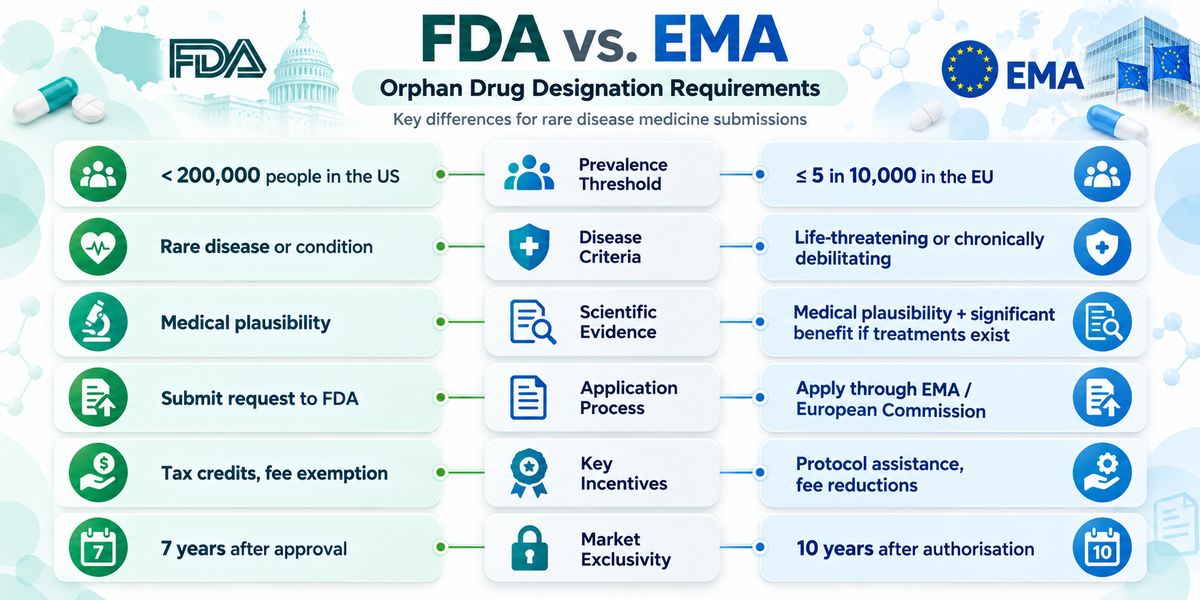
FDA and EMA orphan medicine eligibility rules share similar goals but follow different regulatory frameworks. Both agencies support rare disease treatments through financial and regulatory incentives. However, they apply different prevalence thresholds, scientific evidence standards, and application procedures. Therefore, pharmaceutical sponsors must understand these differences before preparing submissions. A clear regulatory strategy can help reduce documentation gaps and support compliance in both markets.

The following table compares key FDA and EMA requirements, helping sponsors understand eligibility, evidence expectations, application procedures, and regulatory benefits.

Comparison Criteria FDA (United States) EMA (European Union)
Legal framework
Orphan Drug Act of 1983
Regulation (EC) No 141/2000
Rare disease prevalence
Fewer than 200,000 people in the US
Not more than 5 in 10,000 people in the EU
Eligibility criteria
Rare disease threshold or qualifying cost-recovery justification
Life-threatening or chronically debilitating condition, plus prevalence or financial criteria
Scientific evidence
Medical plausibility supported by relevant scientific data
Medical plausibility and significant benefit when satisfactory treatments exist
Application procedure
Submit a designation request to the FDA before the marketing application
Submit through EMA’s IRIS platform; the European Commission grants designation
Regulatory incentives
Clinical trial tax credits and applicable user-fee exemptions
Protocol assistance and applicable regulatory fee reductions
FDA vs. EMA comparison of rare disease prevalence thresholds, scientific evidence, application procedures, and regulatory incentives.

What Happens After Orphan Designation Is Granted?

Once a medicine receives orphan status, sponsors must continue development and meet ongoing regulatory obligations. Both FDA and EMA require progress reports to monitor drug development. However, this special regulatory status provides incentives, not marketing approval. Sponsors must still demonstrate the medicine’s safety, efficacy, and quality. Moreover, EU sponsors must confirm continued orphan eligibility at the marketing authorisation stage. Once approved, eligible medicines may receive seven years of market exclusivity in the US or generally ten years in the EU.

Final Word

In 2025, the EMA reported a 26% increase in Good Clinical Practice (GCP) inspections compared with 2024. This trend highlights the growing importance of reliable clinical data and inspection readiness. For rare disease sponsors, orphan drug designation offers valuable incentives but does not replace strict regulatory standards. Therefore, maintaining accurate documentation and scientific evidence remains essential. Ultimately, strong compliance supports successful regulatory review and helps bring much-needed treatments to patients.

FAQs

1️⃣ How can sponsors prove rare disease prevalence when patient data are limited?


Sponsors should use reliable disease registries, epidemiological studies, and scientific literature. FDA generally requires fewer than 200,000 affected people in the US, while the EU prevalence threshold is no more than 5 in 10,000 people.

2️⃣ What evidence does EMA require when approved treatments already exist?


Sponsors must demonstrate a potential significant benefit over existing authorised treatments. This requires scientific evidence supporting a clinically relevant advantage or major contribution to patient care.

3️⃣ Does rare disease status guarantee marketing approval and market exclusivity?


No. Sponsors must obtain marketing approval and meet applicable regulatory requirements. Eligible medicines may receive seven years of exclusivity in the US or generally ten years in the EU after approval.

Picture of Mahtab Shardi

Mahtab Shardi

Mahtab is a pharmaceutical professional with a Master’s degree in Physical Chemistry and over five years of experience in laboratory and QC roles. Mahtab contributes reliable, well-structured pharmaceutical content to Pharmuni, helping turn complex scientific topics into clear, practical insights for industry professionals and students.

Quality assurance specialist reviewing a Certificate of Suitability with digital verification icons in a pharmaceutical manufacturing facility

CEP certificate in pharma: What QA Must Verify in 2026

Learn how QA teams verify EDQM certificates, assess API suppliers, and prepare for GMP inspections. This guide explains CEP 2.0 updates, impurity controls, and essential records that help maintain regulatory compliance and inspection readiness across pharmaceutical manufacturing operations.

Read More »
CAPA and Deviation Review in Pharma

GMP Inspection Readiness : A Proven Audit Guide in 2026

GMP inspection readiness means showing that your pharmaceutical quality systems work every day. This practical guide walks QA, QC and site leaders through a five-step, risk-based preparation framework, with priority evidence to review, mock inspection tips, CAPA guidance and answers to common inspection questions.

Read More »

Share