


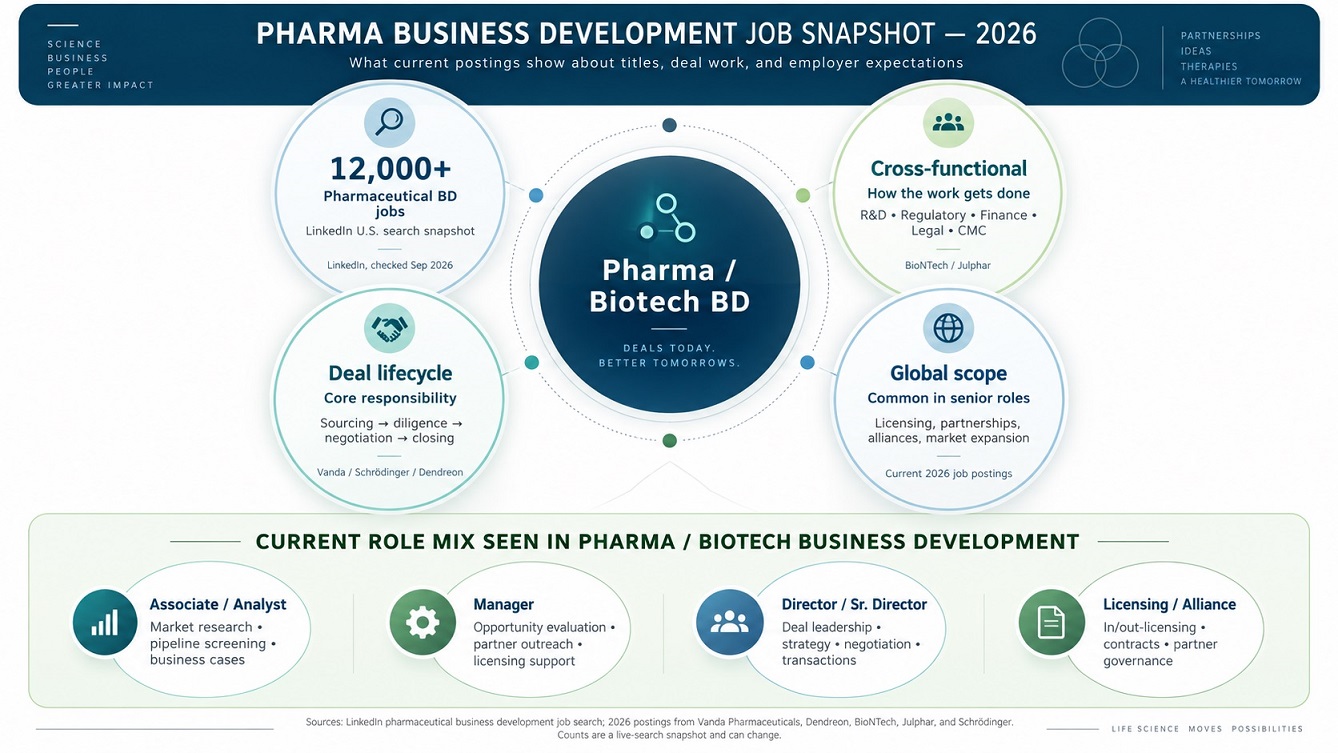
Business development pharma jobs connect scientific opportunities with commercial growth decisions. A September 2026 LinkedIn snapshot showed 12,000+ related U.S. openings. This live snapshot is not official labor-market data. Still, it shows substantial hiring activity.
Candidates often confuse pharma business development with pharmaceutical sales. Sales teams usually promote existing products. Business development teams focus on future strategic growth.
This guide explains roles, skills, qualifications, salaries, and entry routes. Explore current Pharma Jobs during your search.
Table of Contents
What Are Business Development Pharma Jobs?
Business development pharma jobs support strategic growth across pharmaceutical and biotechnology companies. Professionals identify opportunities that strengthen pipelines, portfolios, technologies, or market access. These may involve licensing, acquisitions, collaborations, or strategic partnerships.
The work sits between science, strategy, finance, and deal execution. Therefore, successful professionals need more than commercial selling. They evaluate scientific evidence, development risk, market potential, and transaction economics.
What Does a Pharma Business Development Professional Do?
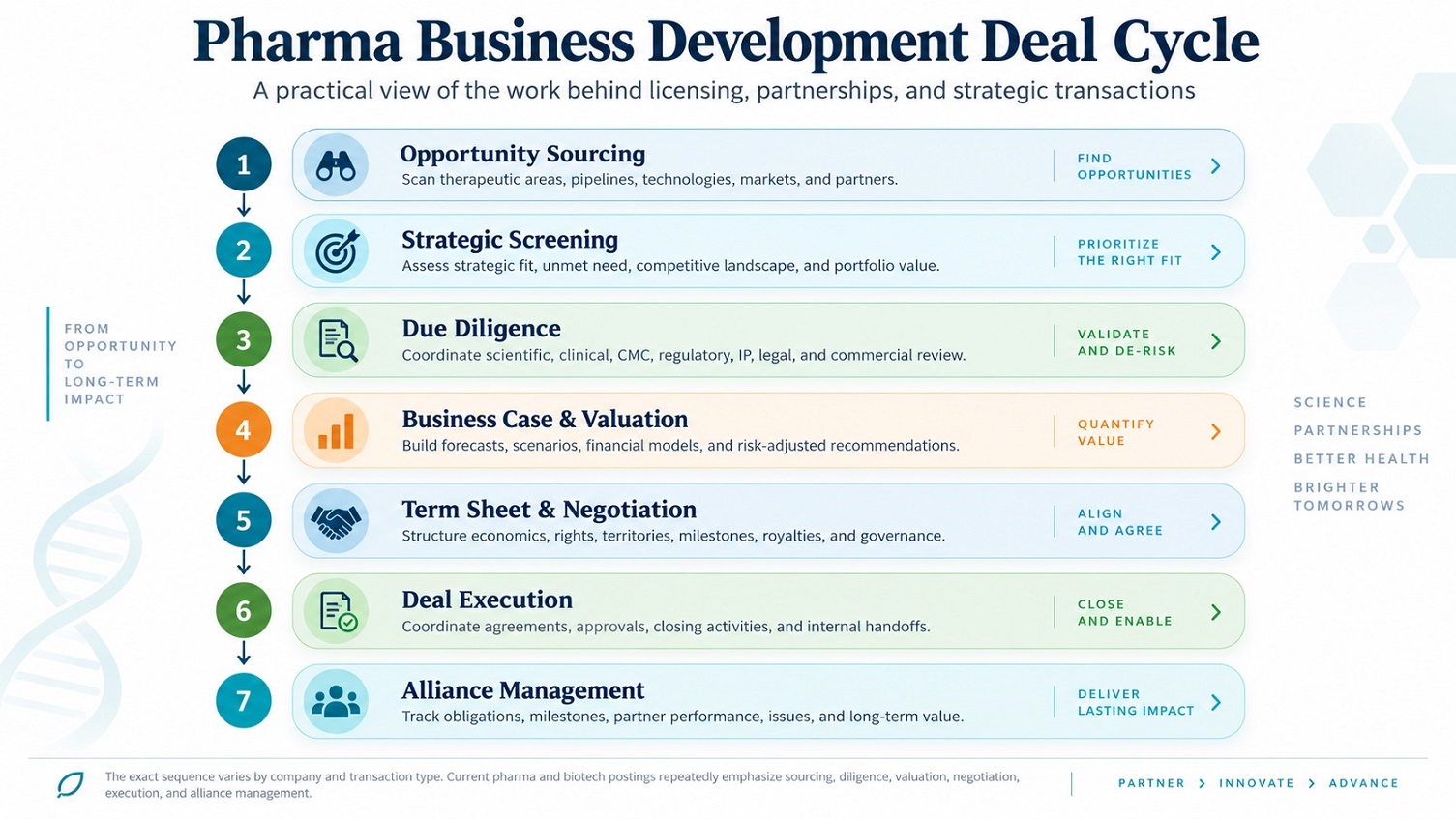
Several responsibilities appear repeatedly across current pharmaceutical business development jobs Source external assets, technologies, partners, and acquisition opportunities. and Screen opportunities against therapeutic, scientific, and commercial priorities. They Coordinate scientific, clinical, regulatory, CMC, legal, and financial diligence.
ِDifferent responsibilies of pharmaceutical business development specialist are
Responsibility 1: Identify and Evaluate New Business Opportunities
Responsibility 2: Manage Licensing, Partnerships, and Deal Execution
Responsibility 3: Work Across R&D, Regulatory, Finance, Legal, and Commercial Teams
Responsibility 1: Identify and Evaluate New Business Opportunities
They track biotech pipelines, competitors, academic programs, and technologies. They consider clinical evidence, differentiation, intellectual property, market size, and competition. Strong professionals translate complex science into business recommendations.
Competitive intelligence also supports opportunity assessment. It helps teams compare assets against existing and future treatments.
Responsibility 2: Manage Licensing, Partnerships, and Deal Execution
In-licensing brings external assets into a company’s portfolio. Out-licensing gives partners rights to company-owned assets or technologies.
Deal teams also evaluate collaborations and acquisitions. They coordinate due diligence before major commitments.
Financial modeling supports these decisions. Teams may use forecasts, sensitivity analysis, NPV, or risk-adjusted NPV. Negotiations define economics, responsibilities, governance, and development obligations.
Responsibility 3: Work Across R&D, Regulatory, Finance, Legal, and Commercial Teams
R&D teams evaluate scientific quality and technical feasibility. Clinical teams assess evidence and development plans.
Regulatory specialists examine approval pathways and major submission risks. CMC experts review manufacturing readiness. Finance teams test valuations, forecasts, and assumptions.
Legal teams manage contracts and intellectual property. Commercial teams assess markets, pricing, and competition.
Business development professionals combine these perspectives into one strategic recommendation.
Most Common Business Development Jobs in Pharma
Current postings show several recurring role families.
| Role | Typical Focus | Career Level | Useful Keywords |
|---|---|---|---|
|
Business Development Associate / Analyst |
Research, screening, tracking, presentations |
Entry / early |
Market analysis, CRM, competitive intelligence |
|
Business Development Manager |
Sourcing, evaluation, diligence coordination |
Mid-career |
Licensing, forecasting, partner management |
|
Director / Senior Director |
Transaction leadership and deal structuring |
Senior |
Valuation, M&A, negotiation, portfolio strategy |
|
Licensing Manager / Director |
In-licensing and out-licensing execution |
Mid to senior |
Term sheets, royalties, milestones, rights |
The same title can mean different work across companies. Therefore, study responsibilities before applying.
Some manager roles remain sales-oriented. Others focus on licensing, transactions, or strategic evaluation.
What Qualifications Do You Need for Pharma Business Development?
However, employers commonly seek scientific understanding and commercial judgment.
- Life sciences, pharmacy, chemistry, biotechnology, engineering, or related degrees.
- Strong understanding of pharmaceutical development and major clinical milestones.
- Market analysis, valuation, financial modeling, or strategic planning experience.
- Clear written communication and executive presentation skills.
- Experience coordinating complex projects across technical and business teams.
- Evidence of negotiation, partnerships, licensing, or transaction support.
Life Sciences, Pharmacy, and Business Degrees
Scientific degrees help candidates evaluate therapies, evidence, and development risk. Pharmacy backgrounds can also support product lifecycle understanding.
Business degrees strengthen finance, strategy, marketing, and negotiation knowledge. However, business training cannot replace scientific fluency in technical BD roles.
MBA, PhD, PharmD, and Advanced Degree Considerations
Advanced degrees can strengthen applications for specialized roles. PhD holders often enter search, evaluation, and scientifically complex transaction positions.
PharmD graduates may fit licensing, medical strategy, alliance, or portfolio roles. An MBA can strengthen finance, leadership, and corporate strategy capabilities.
However, advanced degrees do not guarantee entry. Employers still prioritize relevant experience.
Experience Employers Commonly Look For
Associate roles may accept research, consulting, analytics, or commercial support backgrounds.
Manager roles usually expect independent project ownership. Directors often need direct licensing, diligence, valuation, or negotiation experience.
Current senior postings frequently request five to ten years of relevant experience. They also expect strong scientific communication skills.
Entry-Level Pharma Business Development Jobs
True entry-level pharmaceutical licensing jobs remain less common than senior positions. However, candidates can enter through adjacent roles.
Strategy, market research, competitive intelligence, and consulting roles also help. Candidates from R&D, regulatory, CMC, or commercial functions can transition later. Their technical knowledge becomes valuable during diligence. Use these tactics when building early career credibility:
- Analyze one therapeutic area and map important competitors and pipelines.
- Practice simple market-sizing and opportunity-assessment cases.
- Learn basic valuation concepts, including NPV and risk-adjusted NPV.
Entry candidates should avoid pretending they have deal experience. Instead, show analysis and stakeholder coordination.
Pharma Business Development Jobs by Company Type
Large pharmaceutical companies often maintain specialized licensing and corporate development teams. Roles may focus on specific therapeutic areas. Biotech companies often expect broader responsibilities. One person may source opportunities, manage diligence, and negotiate terms.
CRO and CDMO business development differs significantly. These roles often focus on client acquisition, proposals, services, and account growth. Consultancies can provide another entry route. Strategy projects can build diligence and valuation skills.
Final Word
Business development pharma jobs combine science, strategy, finance, and relationship management. They influence which medicines companies develop, license, partner on, or acquire. Demand also remains visible across the U.S. market. In September 2026, LinkedIn showed 13,000+ related U.S. openings. Current listings include associate, manager, director, alliance, and corporate development positions.
Successful professionals understand both opportunity and risk. They assess science, development pathways, market potential, economics, partnerships, and strategic fit. Due diligence and valuation become increasingly important at senior levels.
U.S. pharmaceutical business development salaries averaged about $59,559 in September 2026. However, compensation rises substantially for specialized leadership positions. Location, experience, transaction responsibility, bonuses, and equity also affect total compensation.
FAQs
Yes, especially through analyst or associate positions. Strategy, consulting, research, and commercial experience can transfer. Show analytical projects and cross-functional decision support.
No. Sales usually focuses on existing products and customers. Business development often focuses on partnerships, assets, licensing, and strategic growth.
Employers value opportunity assessment, due diligence, valuation, negotiation, and stakeholder management. Scientific fluency also matters for asset-focused licensing positions.

Ershad Moradi
Ershad Moradi, a Content Marketing Specialist at Zamann Pharma Support, brings 6 years of experience in the pharmaceutical industry. Specializing in pharmaceutical and medical technologies, Ershad is currently focused on expanding his knowledge in marketing and improving communication in the field. Outside of work, Ershad enjoys reading and attending industry related networks to stay up-to-date on the latest advancements. With a passion for continuous learning and growth, Ershad is always looking for new opportunities to enhance his skills and contribute to pharmaceutical industry. Connect with Ershad on Facebook for more information.

GMP Audit Checklist 2026: The Essential Guide for Risk-Based Audits
Master your GMP Audit Checklist with a practical, risk-based approach to pharmaceutical self-inspections. Explore five essential audit steps, FDA’s six-system model, GMP documentation and evidence sampling, audit findings, CAPA tracking, and effectiveness verification to strengthen compliance and inspection readiness.
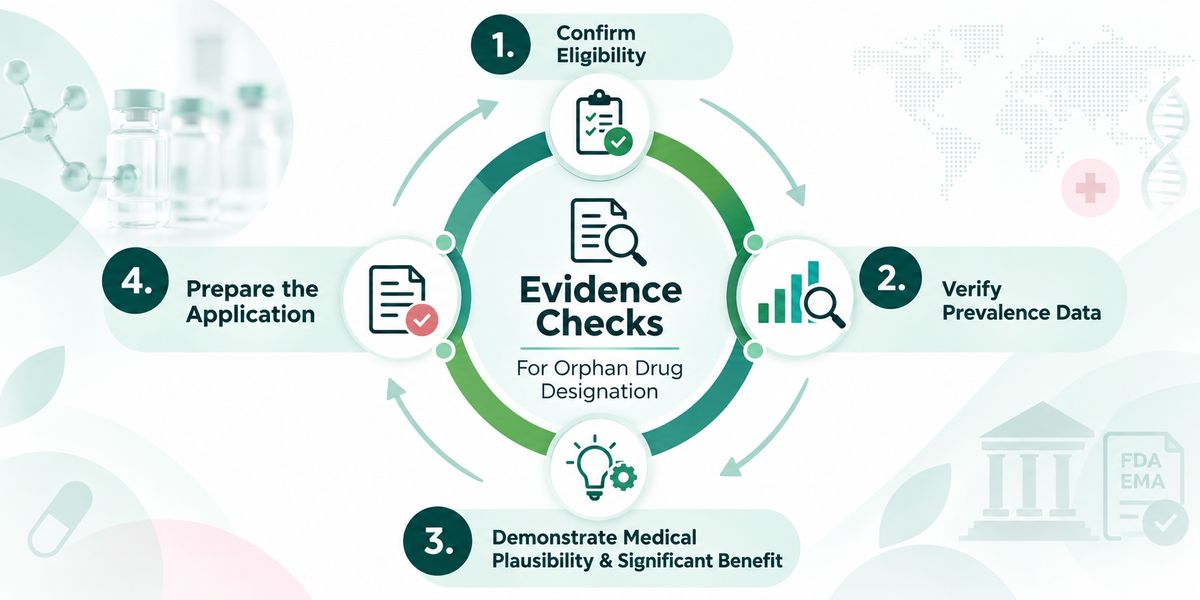
Orphan Drug Designation in 2026: FDA and EMA Eligibility Criteria
Discover how orphan drug designation works in 2026. Compare FDA and EMA eligibility criteria, rare disease prevalence thresholds, scientific evidence requirements, and regulatory incentives. Learn what pharmaceutical sponsors need to prepare for successful regulatory submissions

CEP certificate in pharma: What QA Must Verify in 2026
Learn how QA teams verify EDQM certificates, assess API suppliers, and prepare for GMP inspections. This guide explains CEP 2.0 updates, impurity controls, and essential records that help maintain regulatory compliance and inspection readiness across pharmaceutical manufacturing operations.