


The Role of QMS is fundamental as the backbone of quality and compliance in pharmaceutical manufacturing. It ensures adherence to GMP and global regulatory standards, reducing risks, controlling processes, and driving continuous improvement. According to WHO, implementing robust QMS significantly lowers product defects and regulatory non-compliance incidents.
Pharma quality assurance relies on QMS to maintain documentation accuracy, staff training, and regular management reviews. These elements boost audit success and product safety. Readers and experts are encouraged to share guidelines, data, and case studies demonstrating QMS effectiveness in pharma.
Table of Contents
What is QMS in Pharmaceutical Manufacturing?
product quality and regulatory compliance. It manages processes to reduce risks and improve efficiency. According to WHO, 70% of pharma quality issues relate to weak QMS. Also, QMS supports documentation, training, and continuous improvement essential for success.
Key elements include:
- Quality policy and objectives
- Process control and risk management
- Supplier and material management
- Training and competency programs
- Internal audits and management reviews
How Does QMS Ensure Compliance with GMP and Regulatory Requirements?
QMS ensures compliance with GMP by standardizing processes and maintaining clear documentation. It helps identify risks and enforces corrective actions to meet regulatory demands. According to FDA, 30% of violations stem from inadequate quality systems. Also, QMS supports ongoing training to keep staff compliant and skilled.
Key compliance activities include:
- Document control and record keeping
- Risk assessment and mitigation
- Regular internal audits
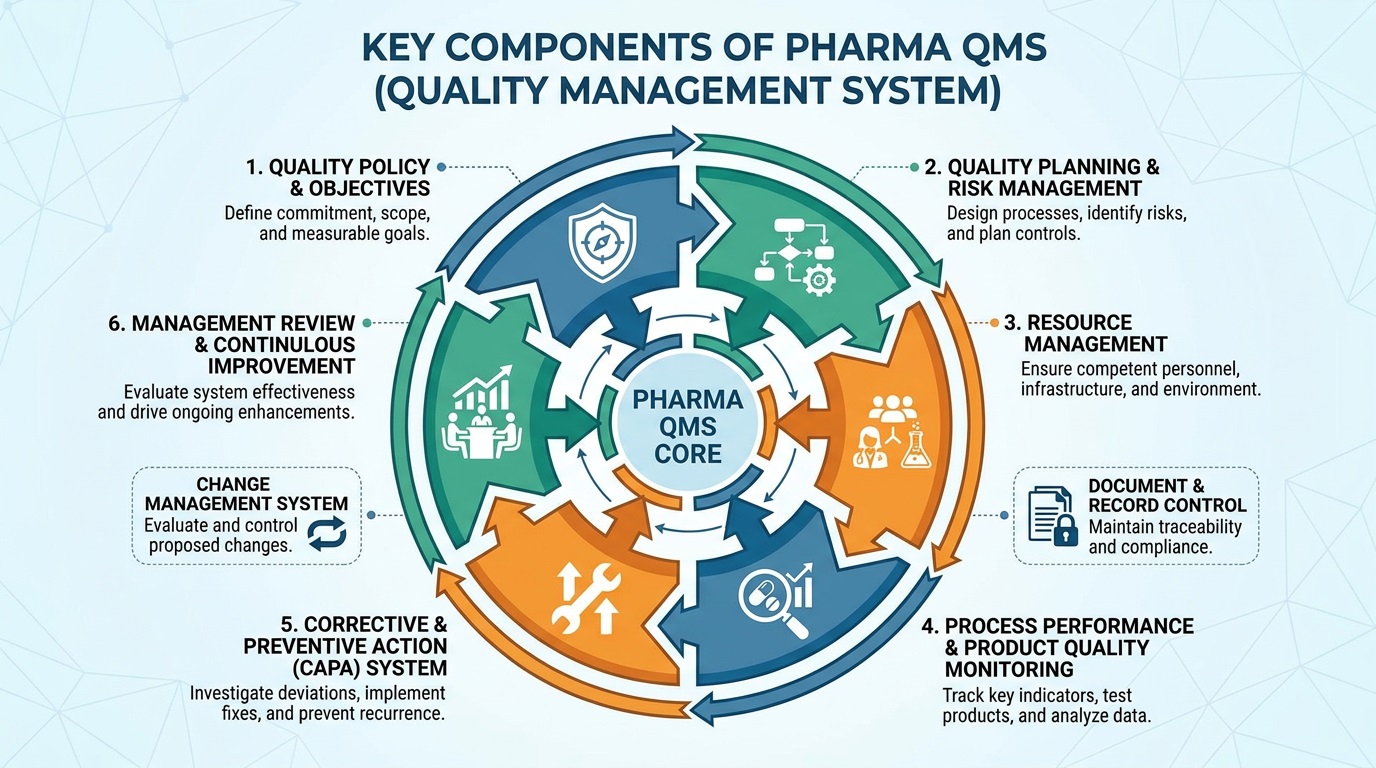
Key Components of an Effective Pharma QMS
An effective pharma QMS relies on clear quality policies and objectives to guide operations. It incorporates risk management to identify and reduce potential issues. Regular internal audits verify compliance and system effectiveness. Also, management reviews assess overall performance and drive continuous improvement.
Key components include:
Number 1 Quality Policy and Objectives
Number 2 Risk Management
Number 3 Internal Audits
Number 4 Management Review
Number 1 Quality Policy and Objectives
Quality policy and objectives set the foundation for consistent pharmaceutical manufacturing quality. They define company commitment and measurable goals, guiding employees’ actions daily. For example, a manufacturer might aim to reduce product defects by 20% within one year. This focus improves overall quality and customer satisfaction. Also, clear policies enhance regulatory compliance and team alignment.
Number 2 Risk Management
Risk management identifies and controls potential issues in pharmaceutical manufacturing to ensure product safety. According to WHO, effective risk management reduces quality failures by 40%. It prioritizes critical areas, guiding resource allocation efficiently. Also, regular risk assessments support continuous improvement and regulatory compliance.
Implementing risk management helps prevent costly errors and recalls. It aligns with GMP guidelines to protect patients. Moreover, it fosters a proactive quality culture throughout the organization. Accurate risk evaluation improves decision-making and process reliability.
Number 3 Internal Audits
Internal audits verify compliance with QMS and identify improvement areas in pharma companies. A growing trend is integrating digital tools to streamline audit processes and data collection. This innovation enhances accuracy and speeds up reporting. Also, real-time monitoring supports proactive issue resolution.
More companies embrace risk-based audit strategies to focus on critical processes. They also involve cross-functional teams for comprehensive reviews. Furthermore, audit outcomes drive continuous improvement and regulatory readiness. Efficient audits reduce compliance risks and maintain product quality consistently.
Number 4 Management Review
Management reviews play a crucial role in evaluating QMS performance and setting strategic goals. A current trend is using analytics to gain deeper insights from review data. This approach helps leadership make informed decisions quickly. Also, involving cross-departmental teams improves review comprehensiveness and accountability.
Companies increasingly schedule more frequent management reviews to address dynamic regulatory changes. They use these reviews to prioritize resource allocation and corrective actions. Furthermore, management reviews foster a culture of continuous quality improvement. Clear documentation of outcomes supports audit readiness and transparency.
Ways to Maintain a QMS in Pharma Companies
Maintaining a QMS in pharma requires continuous staff training to ensure competency and compliance. Also, effective document and record control preserves data integrity and traceability. Furthermore, managing supplier and product quality guarantees materials meet required standards and support overall quality.
Key practices include:
Staff Training and Competency
Document and Record Control
Supplier and Product Quality Management
Staff Training and Competency
Staff training and competency remain central to effective QMS implementation in pharma. A growing trend is adopting e-learning platforms to offer flexible, on-demand training. This approach boosts knowledge retention and accessibility. Additionally, regular competency assessments ensure ongoing employee capability. Firms increasingly use digital tools to monitor and track training progress.
Document and Record Control
Document and record control ensures all pharma quality documents are accurate and up to date. It prevents errors and maintains traceability. Also, proper control supports audit readiness and regulatory compliance. Secure storage and easy retrieval boost efficiency and transparency.
Key document control aspects include:
- Document approval and revision tracking
- Controlled distribution and access
- Retention and archival policies
- Regular review and update schedules
QMS Documentation Checklist
| QMS Documentation Checklist | Notes |
|---|---|
|
Quality Manual |
Overview of QMS policies |
|
Standard Operating Procedures |
Detailed process instructions |
|
Work Instructions |
Step-by-step task guides |
|
Forms and Records |
Evidence of completed tasks |
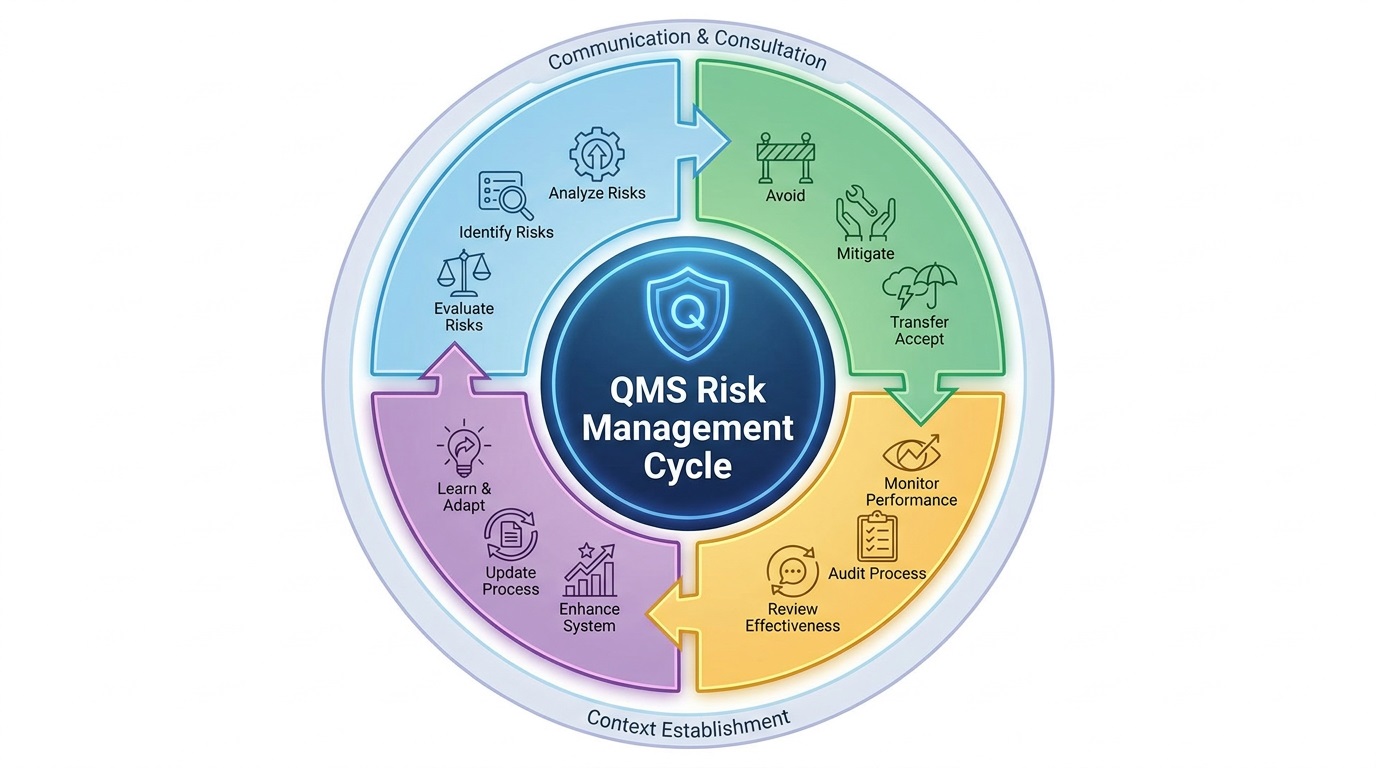
Role of QMS in Risk Management and Product Quality Assurance
QMS helps identify and manage risks that affect product quality. It improves decision-making through data analysis. Hence, companies can prevent defects and ensure safety. QMS integrates risk management with quality assurance to maintain high standards consistently.
- Detect supplier delays that could impact production schedules.
- Identify equipment failures that cause product defects.
- Monitor process variations to avoid quality deviations.
- Control environmental factors affecting product stability during storage.
Preparing for Regulatory Audits Using QMS Tools and Procedures
QMS tools help prepare companies for regulatory audits effectively. They organize documents and track corrective actions. Consequently, companies reduce audit risks and improve compliance. Regular reviews and training ensure audit readiness and minimize surprises.
- Maintain complete and updated documentation for all processes.
- Train employees on audit procedures and regulations.
- Perform internal audits to find and fix gaps.
- Track CAPA implementation to show continuous improvement.
Final Word
A strong Quality Management System (QMS) supports sustained pharmaceutical quality by ensuring compliance with GMP guidelines such as FDA 21 CFR Part 210 and 211. Continuous improvement drives process optimization, while thorough documentation maintains traceability and accountability. For example, studies show that companies with mature QMS reduce deviations by 30%, enhancing product safety.
Ongoing staff training aligns team skills with evolving regulations. Together, these elements foster robust compliance. Please share relevant pharma references, case studies, or regulatory updates to enrich this discussion.
FAQs
QMS ensures product quality, regulatory compliance, and risk control in pharmaceutical manufacturing.
QMS standardizes processes, maintains documentation, and supports staff training to meet GMP requirements.
Continuous improvement reduces defects, enhances processes, and keeps the system aligned with evolving regulations.

Ershad Moradi
Ershad Moradi, a Content Marketing Specialist at Zamann Pharma Support, brings 6 years of experience in the pharmaceutical industry. Specializing in pharmaceutical and medical technologies, Ershad is currently focused on expanding his knowledge in marketing and improving communication in the field. Outside of work, Ershad enjoys reading and attending industry related networks to stay up-to-date on the latest advancements. With a passion for continuous learning and growth, Ershad is always looking for new opportunities to enhance his skills and contribute to pharmaceutical industry. Connect with Ershad on Facebook for more information.
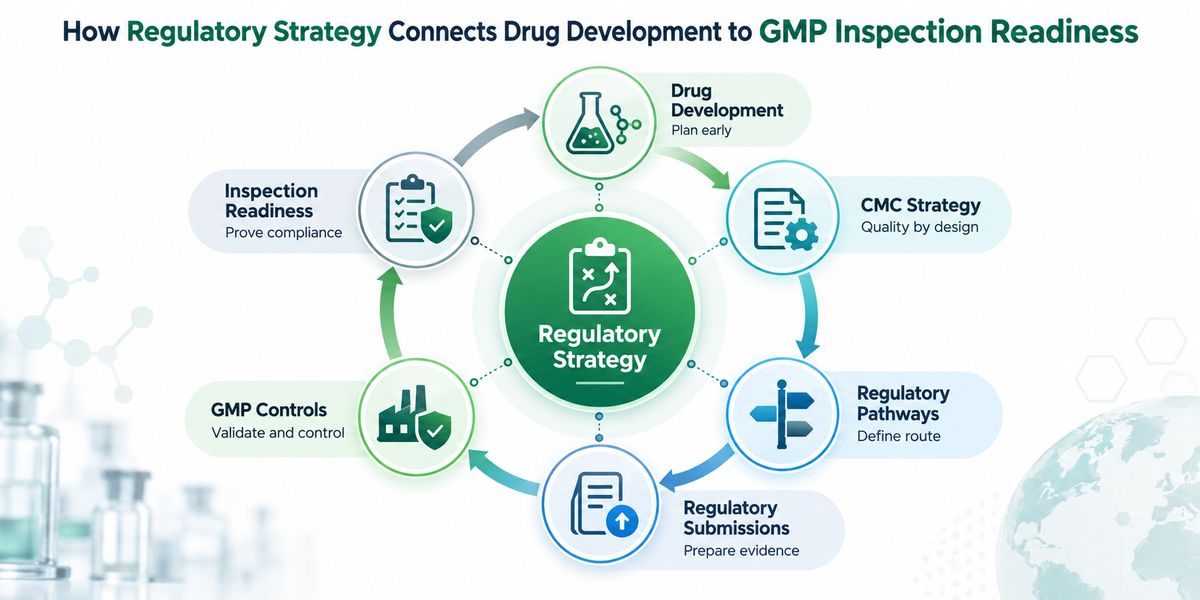
Regulatory Strategy in Pharma in 2026: From Drug Development to GMP Inspection Readiness
Effective regulatory planning connects drug development, CMC, submissions, manufacturing, and lifecycle obligations. This article explains how regulatory teams can reduce compliance gaps, prepare for inspections, manage post-approval changes, and make better decisions across the pharmaceutical product lifecycle.

Alison vs Pharmuni in 2026: Free Learning at Scale or a Guided Pharma Career System?
Alison offers 6,000+ free courses plus career tools and recruitment. Pharmuni is smaller but pharma-focused, with role assessments, Career Paths, CV tools, and 1,000+ life-science jobs.

Udemy vs Pharmuni in 2026: One Course Fast or a Full Pharma Career Path?
Udemy makes it easy to buy a specific self-paced course from a huge marketplace. Pharmuni takes a different approach, connecting pharma learning with assessments, Career Paths, competency visibility, CV tools, and job matching.