

ISO 9000 in pharma industry in 2026: GMP compliance guide

Recent industry analysis shows that over 70% of pharmaceutical GMP inspection findings are linked to gaps in documentation control, audit readiness, or CAPA execution, highlighting how critical structured quality systems have become in regulated manufacturing environments. In this context, understanding iso 9000 in pharma industry is essential for building a resilient and inspection-ready framework. This standard plays a key role in strengthening pharma quality management, ensuring companies maintain consistent processes, improve compliance performance, and reduce regulatory risks through continuous quality improvement and effective system integration.

Table of Contents

What is iso 9000 in pharma industry: ISO 9000 role in pharmaceutical quality management systems

ISO 9000 in pharma industry defines a structured quality management framework aligned with GMP requirements. It standardizes documentation, process control, and internal audits to reduce variability and improve compliance. Moreover, it promotes process-based and risk-based thinking in regulated environments. As a result, companies strengthen quality assurance, improve audit performance, and maintain better inspection control. In addition, it supports CAPA and continuous improvement to ensure regulatory readiness and operational efficiency.

Why ISO 9000 improves GMP inspection outcomes

Strong GMP inspection performance depends on process control, and iso 9000 in pharma industry strengthens this foundation. It establishes clear procedures and structured documentation to reduce deviations and ensure consistency. It also promotes internal audits and risk-based thinking to detect compliance gaps early. As a result, companies improve audit readiness and reduce inspection findings. Additionally, alignment of CAPA systems with ISO 9000 supports continuous improvement and stronger regulatory compliance.

Integration of ISO 9000 into regulated pharma operations

ISO 9000 integrates into regulated pharma operations by aligning quality processes with GMP requirements and daily workflows. It connects documentation, validation, audits, and CAPA into one structured system to ensure consistency and traceability. Moreover, it improves coordination across teams and reduces compliance gaps. As a result, companies gain better process control and stronger inspection readiness.

In the following sections, we break down the key components that drive this integration:

  • Document control and traceability systems (PDF)
  • Process validation and operational consistency (PDF)
  • CAPA system effectiveness in pharmaceutical quality systems (PDF)
  • Internal audit systems and continuous improvement loop (PDF)

Document control and traceability systems (PDF)

Effective document control systems ensure that all GMP records remain accurate, version-controlled, and fully traceable across the product lifecycle. Moreover, they provide clear audit trails, which help inspectors verify compliance and data integrity during regulatory inspections.

Download GMP Document Control and Traceability Systems in Pharmaceutical Quality Management Here

Process validation and operational consistency (PDF)

Process validation ensures that pharmaceutical operations consistently produce products that meet predefined quality standards. In addition, it reduces variability and strengthens operational control, which directly improves GMP compliance and inspection outcomes.
Download Process Validation and Operational Consistency in GMP Pharmaceutical Systems Here

CAPA system effectiveness in pharmaceutical quality systems (PDF)

A strong CAPA system identifies root causes of deviations and ensures that corrective and preventive actions remain effective over time. Therefore, it plays a critical role in reducing repeat findings and improving overall quality system performance in pharma environments.

Download CAPA System Effectiveness in Pharmaceutical Quality Management Systems Here

Internal audit systems and continuous improvement loop (PDF)

Internal audit systems help pharmaceutical companies detect compliance gaps before regulatory inspections and drive continuous improvement. Furthermore, they create a feedback loop that strengthens GMP performance and ensures long-term inspection readiness. 
Download Internal Audit Systems and Continuous Improvement in Pharmaceutical GMP Here

ISO 9000 impact on manufacturing and QC laboratory operations

ISO 9000 improves pharmaceutical manufacturing and QC laboratory operations by standardizing workflows across production, testing, and batch release. It helps control processes more effectively, reduces deviations, and ensures consistent product quality. Moreover, it strengthens documentation and data integrity in QC environments. As a result, companies achieve faster batch release, more reliable results, and stronger GMP compliance alignment.

The table below shows how ISO 9000 principles align with GMP expectations across key pharma operations:

Area ISO 9000 Focus GMP Expectation Operational Impact
Manufacturing Process
Process standardization
Validated and controlled processes
Reduced variability and consistent output
QC Laboratory Testing
Data accuracy and documentation
Data integrity (ALCOA+)
Reliable and reproducible test results
Batch Release
Quality decision framework
Qualified Person (QP) release compliance
Faster and compliant batch approval
Documentation Control
Version control and traceability
GDP (Good Documentation Practices)
Audit-ready and traceable records
CAPA System
Continuous improvement
Deviation and CAPA management
Fewer repeat deviations
Internal Audits
Process monitoring and evaluation
Self-inspection requirements
Improved inspection readiness
Training Management
Competency-based training
Qualified personnel
Reduced human error in operations

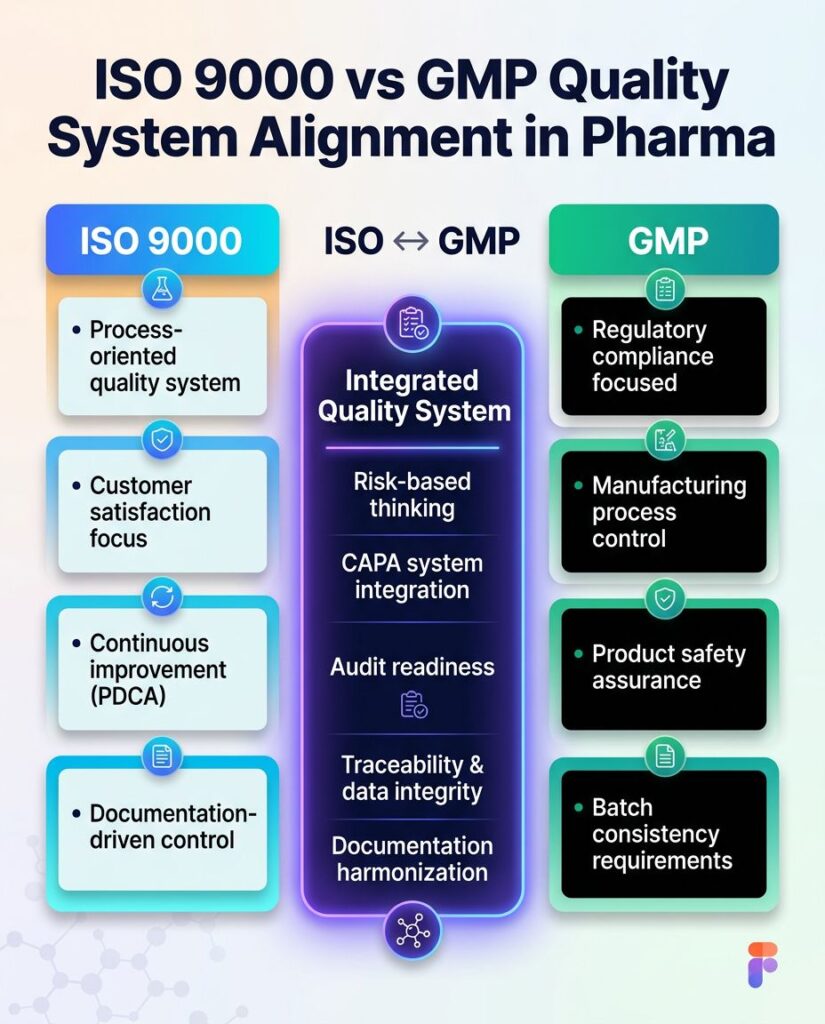
This infographic compares how ISO 9000 principles align with GMP requirements to optimize pharmaceutical quality systems and operational performance.

Infographic comparing ISO 9000 principles with GMP quality system requirements in pharma, covering manufacturing, QC laboratory testing, batch release, documentation control, and compliance workflows.
The ISO 9000 vs GMP alignment in pharma improves manufacturing, QC testing, batch release efficiency, data integrity, and overall regulatory compliance performance.

Common inspection findings in ISO-based pharma systems

ISO-based pharmaceutical systems often fail inspection due to recurring gaps in documentation control, CAPA execution, training effectiveness, and validation practices. These issues directly impact GMP compliance, and therefore inspectors frequently highlight them during audits. Moreover, weak system integration increases the risk of repeated findings and delays in corrective actions.

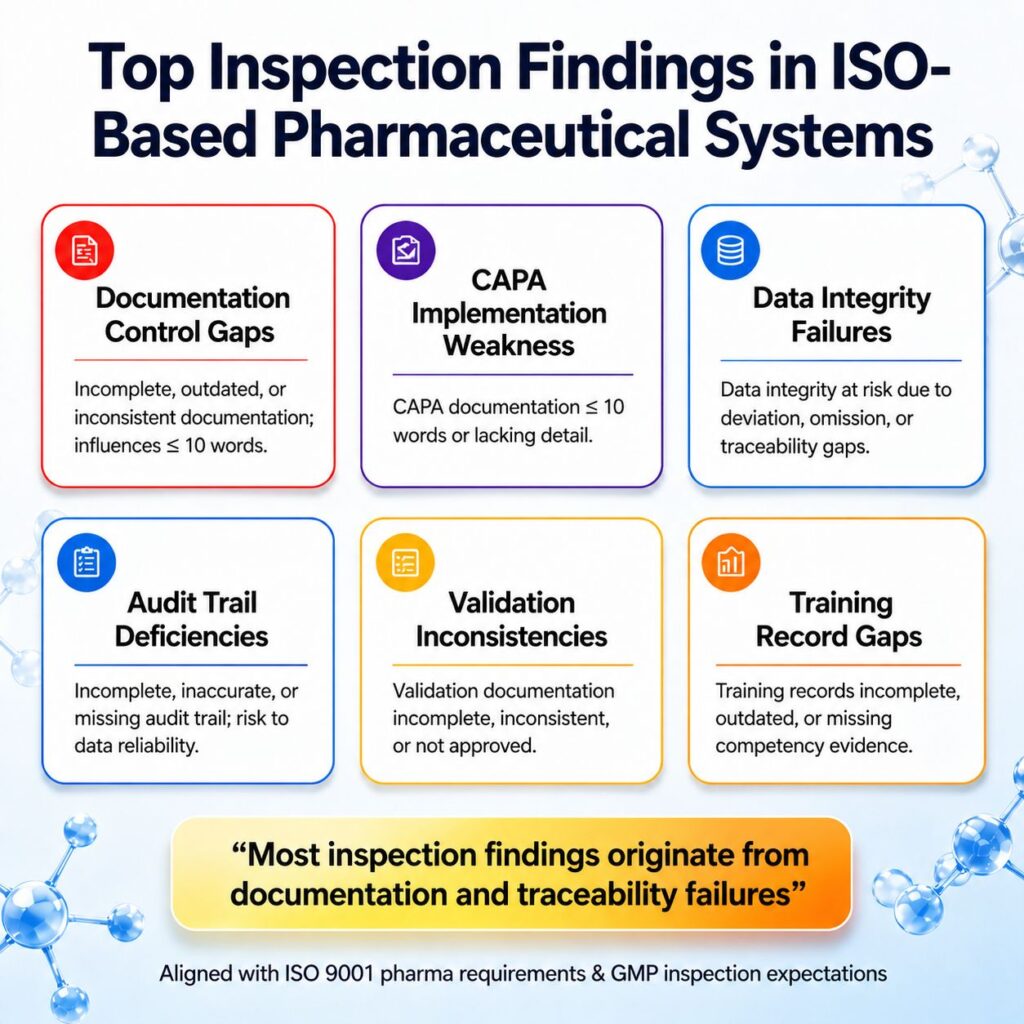
This infographic summarizes the most common inspection findings in ISO-based pharmaceutical quality systems, highlighting key compliance gaps that affect GMP performance.

Infographic showing top inspection findings in ISO-based pharmaceutical systems including documentation gaps, CAPA delays, training deficiencies, and validation issues in GMP environments.
Top inspection findings in ISO-based pharma systems include documentation gaps, CAPA delays, training issues, and validation deficiencies that directly impact GMP compliance and audit performance.

Final words

Inspection trend data shows that pharmaceutical regulators are becoming more system-focused, not issue-focused, with over 1,300 GMP inspection deficiencies reported in a single recent regulatory cycle, where the majority were linked to quality systems, documentation, and operational controls. This clearly confirms that iso 9000 in pharma industry is no longer optional in modern compliance environments, but a core driver of inspection readiness and quality stability.

Moreover, recent findings highlight a consistent rise in deviations related to documentation integrity, CAPA effectiveness, and process control gaps. Therefore, companies that strengthen ISO-based quality systems achieve better audit outcomes, fewer critical findings, and improved GMP compliance performance across manufacturing and QC operations.

FAQ

1️⃣How does ISO 9000 reduce GMP inspection findings?

It standardizes processes and strengthens documentation control, which reduces deviations and improves compliance during inspections.


2️⃣Why do QC errors and data integrity issues still occur?

They often result from weak process discipline or training gaps, but ISO 9000 improves traceability and data consistency in lab operations.

3️⃣How can companies improve audit readiness?

By strengthening internal audits and CAPA systems, while ISO 9000 ensures continuous improvement and better inspection readiness.

Picture of Mahtab Shardi
Mahtab Shardi

Mahtab is a pharmaceutical professional with a Master’s degree in Physical Chemistry and over five years of experience in laboratory and QC roles. Mahtab contributes reliable, well-structured pharmaceutical content to Pharmuni, helping turn complex scientific topics into clear, practical insights for industry professionals and students.

Laboratory scene illustrating ISO 9000 pharma compliance with GMP quality standards, showing documentation control, CAPA system processes, and internal audit pharmaceutical GMP practices aligned with regulatory compliance pharma requirements.

ISO 9000 in pharma industry in 2026: GMP compliance guide

This article explains how ISO 9000 in pharma industry strengthens GMP compliance by improving documentation control, CAPA systems, and internal audit effectiveness. It highlights key regulatory compliance pharma practices that enhance inspection readiness and reduce pharmaceutical quality management system gaps.

Read More »
Pharma quality assurance standards demonstrated through laboratory workflow showing QMS compliance, audit readiness and documentation, and process approach risk-based thinking in pharmaceutical manufacturing environment.

ISO 9001 in Pharma Industry: Compliance and Inspection 2026

This article explains how ISO 9001 strengthens pharma quality systems through structured QMS compliance, audit readiness and documentation, and continuous improvement in pharma operations. It highlights risk-based thinking and process approach for better product quality and customer satisfaction.

Read More »

Share