

ISO 9001 in Pharma Industry: Compliance and Inspection 2026

In 2024, regulatory authorities issued over 700 GMP-related observations globally, and a large share pointed to weak quality systems, poor documentation, and lack of risk-based thinking. Therefore, companies now look beyond basic compliance and focus on structured frameworks like iso 9001 in pharma industry to strengthen control and consistency. Moreover, ISO 9001 does not replace GMP; instead, it enhances pharma quality management by embedding process approach, continuous improvement, and audit readiness into daily operations. As a result, pharmaceutical teams that implement ISO 9001 effectively not only reduce inspection risks but also improve product quality, supplier control, and overall operational performance.

Table of Contents

What is ISO 9001 in Pharma Industry and Why It Matters for Quality Systems

ISO 9001 in pharma defines a structured framework to control processes, improve quality, and ensure inspection readiness. Moreover, it connects all activities from raw material to final release through a process approach. It also strengthens GMP compliance via risk-based thinking, documentation, and continuous improvement. As a result, companies build stronger quality systems and achieve better audits, control, and product quality across the lifecycle.

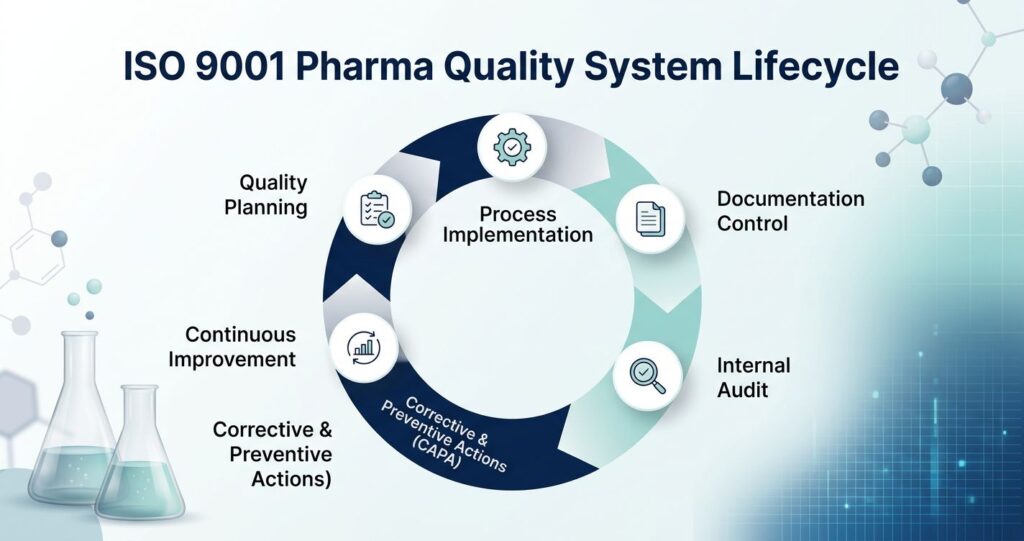
This infographic illustrates the complete ISO 9001 pharmaceutical quality system lifecycle, from quality planning to continuous improvement in a clear and visual format.

Infographic showing the ISO 9001 pharma quality system lifecycle including quality planning, process implementation, document control, internal audit, CAPA, and continuous improvement within a pharmaceutical quality management system.
The ISO 9001 pharma quality system lifecycle ensures GMP compliance, structured quality management, and continuous improvement across pharmaceutical processes.

Why ISO 9001 is Critical for Pharma Compliance and Inspection Readiness

ISO 9001 plays a critical role in strengthening compliance and preparing pharmaceutical companies for inspections. It creates a structured quality system where teams follow defined processes, control risks, and maintain clear documentation. Moreover, ISO 9001 aligns closely with GMP expectations, especially in areas like audit readiness, traceability, and continuous improvement. As a result, companies can identify gaps early, reduce audit findings, and respond to inspectors with confidence. Therefore, organizations that implement ISO 9001 effectively build a proactive quality culture and maintain consistent control across all operations.

ISO 9001 Practices that Strengthen Pharma Quality Systems and Audit Performance

ISO 9001 defines practical quality system behaviors that directly influence inspection outcomes in pharmaceutical environments. Moreover, it helps teams standardize processes, manage risks, and maintain audit-ready documentation. As a result, companies reduce variability, improve compliance, and strengthen overall GMP alignment.

This section explains the key operational practices that connect ISO 9001 principles with real-world pharma quality system performance and inspection readiness.

  • Process Documentation and Standardization (PDF)
  • Risk Management and Continuous Improvement (PDF)
  • Audit Preparedness and Internal Reviews (PDF)
  • Roles, Responsibilities, and Training (PDF)

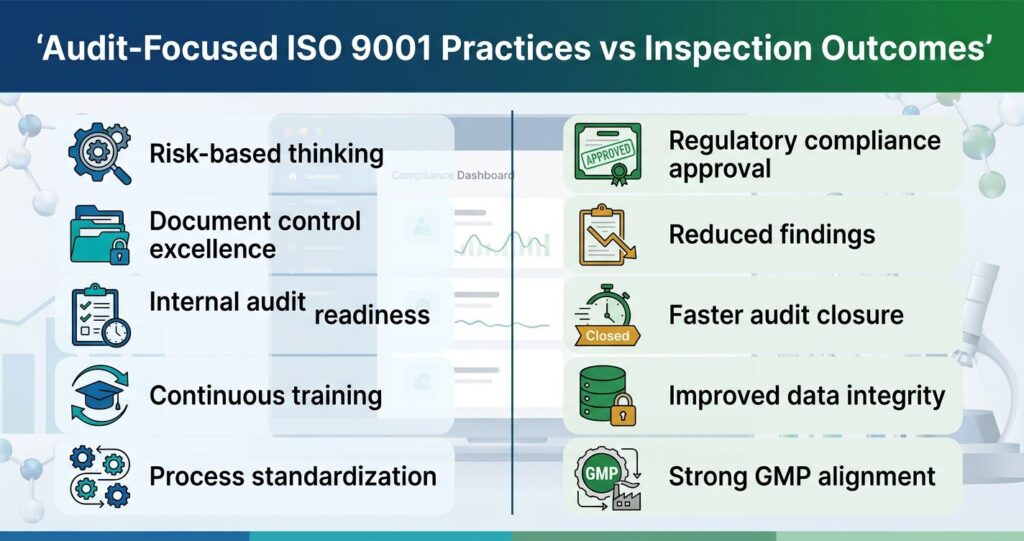
The infographic below compares core ISO 9001 quality practices with their direct impact on audit performance and inspection outcomes in pharmaceutical quality systems.

Comparison of ISO 9001 quality system practices in pharma including documentation, risk management, audits, and training mapped against inspection and audit outcomes
A visual breakdown showing how ISO 9001 practices in pharmaceutical quality systems improve audit readiness, reduce findings, and strengthen GMP inspection performance.

Process Documentation and Standardization (PDF)

Process documentation defines clear steps for pharmaceutical operations. It reduces variation and improves consistency across all activities. Moreover, standardization supports GMP compliance and makes audit checks easier. As a result, inspectors can quickly verify process control.

Download ISO 9001 SOP Documentation Checklists for QA Systems Here

Risk Management and Continuous Improvement (PDF)

Risk management helps identify quality risks before they affect products. In addition, teams use it to prioritize critical controls in GMP systems. Continuous improvement then enhances system performance over time. Therefore, both improve compliance and reduce audit findings.

Download ISO 9001 Risk-Based Thinking Framework Here

Audit Preparedness and Internal Reviews (PDF)

Audit readiness ensures companies stay prepared for inspections at all times. Internal reviews help detect gaps early and fix them quickly. Moreover, they strengthen documentation and GMP alignment. As a result, companies reduce inspection findings.

Download GMP Internal Audit Checklist Here

Roles, Responsibilities, and Training (PDF)

Clear roles improve accountability in pharma quality systems. Training ensures employees follow GMP requirements correctly. Moreover, structured training reduces operational errors. Therefore, organizations build stronger compliance culture.
Download GMP Training & Competency Guide under ISO 9001 Here

Integration with GMP and Regulatory Systems

ISO 9001 integrates with GMP by strengthening pharmaceutical quality systems through a unified, risk-based, and process-driven approach. Moreover, it aligns documentation control, deviation handling, and continuous improvement with regulatory expectations. As a result, companies build a harmonized compliance structure where ISO 9001 supports GMP instead of replacing it. Therefore, organizations achieve stronger inspection readiness, better data integrity, and more consistent quality across the product lifecycle.

The table below compares how ISO 9001 principles align with GMP regulatory requirements in pharmaceutical quality systems.

ISO 9001 Element GMP Requirement Alignment Regulatory Impact Outcome in Pharma Operations
Process Approach
Controlled manufacturing processes
Ensures batch consistency
Reduced variability and defects
Risk-Based Thinking
Risk management (ICH Q9)
Early identification of quality risks
Improved patient safety
Document Control
GMP documentation system
Ensures traceability and audit readiness
Strong inspection performance
Continuous Improvement
CAPA system
Systematic deviation correction
Fewer recurring issues
Internal Audit
GMP self-inspection
Identifies compliance gaps
Higher audit preparedness
Training & Competency
Personnel qualification
Ensures qualified workforce
Reduced human error
Supplier Management
Qualified suppliers system
Controls raw material quality
Stable supply chain quality

Common Inspection Findings and How to Avoid Them

In pharmaceutical quality systems, inspectors focus on real execution and system control. Therefore, most findings come from daily practice gaps rather than isolated errors.

  • Missing or incomplete process maps: Inspectors often see unclear process flows. As a result, roles and steps become confusing.
    How to avoid it: Create simple and updated process maps.
  • Weak CAPA traceability: CAPAs are recorded but not fully linked to root cause. Therefore, effectiveness becomes unclear.
    How to avoid it: Always connect CAPA to root cause and verify effectiveness.
  • Inconsistent documentation practices: Outdated templates create confusion during audits. Moreover, consistency becomes weak.
    How to avoid it: Use controlled and updated templates only.
  • Poor deviation management: Some deviations lack deep investigation. As a result, issues repeat.
    How to avoid it: Investigate every deviation with clear root cause analysis.
  • Incomplete training records: Training evidence is often missing or outdated. Therefore, competency cannot be verified.
    How to avoid it: Maintain an updated training matrix.
  • Lack of audit trail review: Audit trails exist but are not reviewed regularly. Moreover, data integrity weakens.
    How to avoid it: Review audit trails as part of routine QA checks.

Final words

Recent inspection trend analyses across regulated pharmaceutical environments show that nearly 20–25% of GMP audit findings are still linked to documentation gaps, weak risk-based thinking, and incomplete quality system integration. Moreover, this trend highlights that even well-established companies continue to struggle with consistent execution of ISO 9001 principles within pharma quality systems. Therefore, strengthening process control, documentation, and continuous improvement reduces inspection risk. As a result, ISO 9001 in pharma industry becomes a key driver of inspection readiness and quality maturity.

FAQ

1️⃣Why do inspection findings still appear even with ISO 9001 in place?

Because implementation often focuses on documents, not execution. Moreover, weak process control and CAPA gaps still lead to findings.


2️⃣How does ISO 9001 improve GMP compliance?

It standardizes processes, strengthens documentation, and embeds continuous improvement. As a result, audit readiness improves.

3️⃣What are the main gaps that affect audit readiness?

Weak CAPA traceability, inconsistent documentation, and poor training records. Therefore, inspection risk increases.

Picture of Mahtab Shardi
Mahtab Shardi

Mahtab is a pharmaceutical professional with a Master’s degree in Physical Chemistry and over five years of experience in laboratory and QC roles. Mahtab contributes reliable, well-structured pharmaceutical content to Pharmuni, helping turn complex scientific topics into clear, practical insights for industry professionals and students.

Pharma quality assurance standards demonstrated through laboratory workflow showing QMS compliance, audit readiness and documentation, and process approach risk-based thinking in pharmaceutical manufacturing environment.

ISO 9001 in Pharma Industry: Compliance and Inspection 2026

This article explains how ISO 9001 strengthens pharma quality systems through structured QMS compliance, audit readiness and documentation, and continuous improvement in pharma operations. It highlights risk-based thinking and process approach for better product quality and customer satisfaction.

Read More »

Share