

Free Pharma Courses: Learn Online and Get Certified in 2026

The internet makes learning simple, fast, and affordable. Today, you can study free pharma courses from home and build job-ready skills. Moreover, recognized platforms now offer accessible certificates that signal competence to employers. As the pharma industry expands with new products and stricter regulations, demand for trained talent keeps rising. Therefore, online certification courses help you start or advance your career without large costs. 

Meanwhile, the sector keeps growing. Evaluate’s 2025 World Preview reports that the industry is on track to surpass $1.75 trillion in prescription drug sales by the end of the decade, which keeps demand high for GMP, QA/QC and regulatory skills. Before you enrol anywhere, check two things separately: whether the learning is free, and whether the certificate is free. The sections below show how this works on Pharmuni and on other well-known platforms.

Table of Contents

Top Free Pharma Courses Online

Plenty of respected providers publish entry-level training. OpenWHO still provides free learning materials on health emergencies, but since its 2025 redesign it no longer issues certificates. The FDA’s CDERLearn site still hosts technical learning material that can strengthen baseline knowledge. However, the FDA states that CDERLearn is no longer being updated (as of June 2026) and that its continuing education program is not processing CE credits at this time, so treat it as reference reading rather than a source of certificates.  

Pharmuni offers free pharma courses for students and job seekers. These courses explain core industry topics in simple language. Learners can build confidence before applying for pharma roles.

Also, learners can explore GMP, sterile manufacturing, and drug safety. These topics help them understand real pharma work faster.

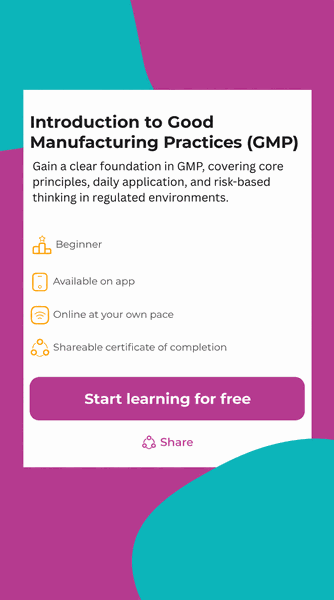
  • Introduction to GMP: Learn basic manufacturing rules.
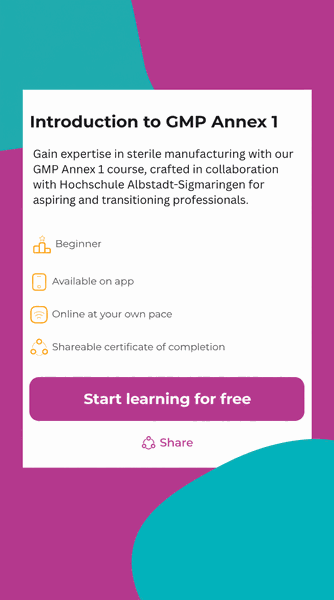
  • GMP Annex 1: Explore sterile production basics.
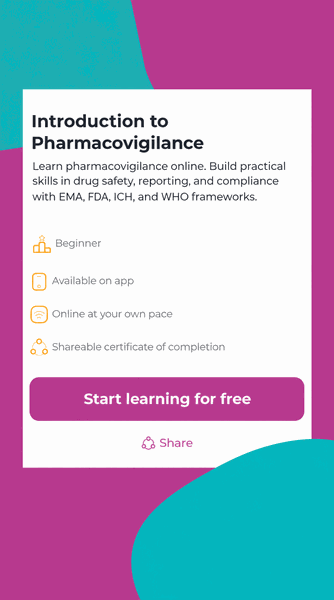
  • Introduction to Pharmacovigilance: Understand drug safety reporting.
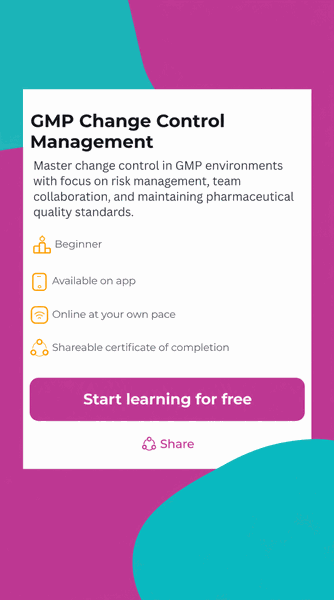
  • GMP Change Control Management: Master Change Control in GMP environments

Introduction to Good Manufacturing Practices GMP Free Course

This course helps learners understand technical GMP requirements. It connects quality rules with daily pharma work.

Also, learners think like QA, QC, and production teams. They learn how small errors create compliance risks.

  • Control GMP documentation.

  • Follow hygiene rules.

  • Identify deviations.

  • Support batch records.

Now Enroll in Introduction to Good Manufacturing Practices Free Course

GMP Annex 1 Free Course

This free course helps learners understand sterile manufacturing. It explains Annex 1 rules in clear steps. Also, learners connect cleanroom behavior with contamination control. They build practical knowledge for QA, QC, and production roles.

  • Apply contamination control basics.

  • Follow cleanroom behavior rules.

  • Understand aseptic processing risks.

  • Monitor sterile production areas.

  • Support inspection readiness.

Now Enroll in GMP Annex 1 Free Course

Introduction to Pharmacovigilance Free Course

Learners explore drug safety basics and patient protection. They learn how teams collect, review, and report safety information.

Also, they connect adverse event reporting with real pharma compliance work. This course supports entry-level PV career preparation.

  • Identify adverse drug reactions.

  • Report safety cases correctly.

  • Understand ICSR basics.

  • Follow pharmacovigilance timelines.

  • Support patient safety monitoring.

Now Enroll in Introduction to Pharmacovigilance Free Course 

GMP Change Control Management

Learners explore GMP change control basics and controlled change management. They learn how teams assess, approve, implement, and document changes. Also, they connect impact and risk assessments with real pharmaceutical quality work. This course supports entry-level QA and GMP career preparation.


  • Identify change control triggers.

  • Assess change impact correctly.

  • Apply risk assessment principles.

  • Understand change control roles.

  • Document and manage changes effectively.

Now Enroll in GMP Change Control Management Free Course

How to Choose the Right Free Pharma Course

Choosing the right free pharma course depends on your career goal. If you are new to the pharmaceutical industry, start with GMP because it explains the basic rules behind safe and compliant manufacturing. GMP knowledge helps learners understand documentation, hygiene, deviations, batch records, and inspection readiness.

If you want to work in sterile manufacturing, aseptic processing, cleanrooms, or contamination control, GMP Annex 1 is the better next step. This course helps you connect cleanroom behavior with real production risks.

If you are interested in drug safety, patient protection, adverse event reporting, or pharmacovigilance jobs, start with Introduction to Pharmacovigilance. This course gives you the basic vocabulary needed for PV interviews and entry-level drug safety roles.

Before enrolling, check three points:

  • Learning goal: Choose GMP for manufacturing, Annex 1 for sterile production, and PV for drug safety.
  • Certificate rule: Confirm whether the course is free to access and whether the certificate needs payment.
  • Career use: Add completed courses to your CV, LinkedIn profile, and interview preparation notes.
Learn free, build skills, get certified, and grow your pharma career.

Free Access vs. Free Certificate: What to Check Before You Enroll

When a course is advertised as free, that can mean three different things: free to start learning, a free completion certificate, or a credential backed by formal accreditation. These are not the same, and providers handle each one differently. Checking all three before you enroll saves time and avoids disappointment later.

How Pharmuni handles free access and certificates

On Pharmuni, you can start a course such as Introduction to Pharmacovigilance for free and learn at your own pace. The certificate is a separate step. Pharmuni course pages state that certificates are included with a paid plan, and they are awarded after you pass the final assessment quiz. The free Starter plan is described on the pricing page as access to introductory courses, with certificates available separately. Pharmuni certificates are issued through Zamann Pharma Support GmbH, which the course pages describe as TÜV-certified. Details on how Pharmuni credentials work are available on the pharma certification page.

Check whether a regulator’s training is still maintained

Agency-hosted resources can be frozen or retired. The FDA’s CDERLearn page, for example, states that the resource is no longer being updated as of June 2026 and that the FDA’s continuing education program cannot currently process CE applications or credits. The material may still help as reference reading, but it should not be treated as a source of current certificates or accredited credit. Before relying on any agency training page, look for a recent update date and a clear statement of what, if anything, you receive at the end.

How Can Free Pharma Courses Help Learners Get Certified?

Free pharma courses help learners build job-ready knowledge in GMP, pharmacovigilance, and quality systems. They also practice key terms for interviews, CVs, and LinkedIn profiles.

On Pharmuni, learners can start selected introductory courses for free. A downloadable certificate is available through an eligible paid subscription or a separate purchase where offered, after successfully completing the required assessment. If you need only one specific course, check whether individual purchase is available before choosing a subscription.

Final Words

Free learning lowers the barrier to entry. A certificate that requires a real assessment also shows discipline and a verified baseline of knowledge.

Moreover, certificates show discipline and a baseline of knowledge. Start with one focused module, then compound your progress with a second and third. Consequently, your resume will reflect both breadth and momentum. 

This guide highlighted Pharmuni’s introductory courses and other trusted learning options you can explore today.Choose your path, commit to a 90-day plan, and track each certificate. Finally, turn learning into action: apply for roles, volunteer projects, and keep refining your skills with Pharmuni

Build Your 90-Day Pharma Learning Plan

Completing several unrelated courses may not improve your job readiness. A structured plan connects foundational knowledge with role-specific skills and visible career evidence. The downloadable PowerPoint provides a simple 90-day framework for selecting courses, tracking progress, and applying new knowledge. You can use the plan to prepare stronger CV examples, LinkedIn updates, interview answers, and practical development goals without trying to study every pharmaceutical topic at once.

  • Days 1–30: Build GMP and pharmaceutical-industry foundations.
  • Days 31–60: Study one role-specific technical subject.
  • Days 61–90: Create CV, LinkedIn, and interview evidence.
  • Review progress and choose the next relevant skill gap.

Download the Free Pharma Course Selection Checklist

A free course should match your target role, available time, and current skill level. Before enrolling, compare the provider, course content, assessment, certificate conditions, and career relevance. Our downloadable checklist helps you evaluate these points in one place. 

Before you commit time to any free course, confirm the following:

  • Who issues the certificate: the learning platform, a company, or an accredited body.
  • What you must do to earn it: pass a final quiz, reach a score threshold, or simply view the content.
  • Whether the certificate costs money or is bundled into a paid plan.
  • Whether the certificate can be downloaded and shared on your CV or LinkedIn profile.
  • When the course page was last updated, so you know the information is current.

Additional checks:

  • Match courses with QA, QC, manufacturing, PV, or regulatory roles.
  • Compare free learning access with certificate costs.
  • Check course level, duration, assessments, and update dates.
  • Select one course that addresses a clear skills gap.

Start Learning Today

Choose Your Best Course

FAQs

What are free pharma courses?

Free pharma courses help learners understand basic pharmaceutical topics online. They cover areas like GMP, pharmacovigilance, quality systems, and sterile manufacturing.

Who should take free pharma courses?

Students, job seekers, immigrants, and career changers can take free pharma courses. These courses help them build basic knowledge before applying for pharma jobs.

Can free pharma courses help with certification?

Yes, but check the certificate terms first. Some free courses, such as the NIDA GCP course, issue a certificate after you pass the required quizzes. On Pharmuni, selected courses are free to start, while certificates are available through eligible paid plans or individual course purchases where offered.

Which free pharma course should beginners start with?

Beginners should start with Introduction to Good Manufacturing Practices GMP. Then, they can explore GMP Annex 1 and Introduction to Pharmacovigilance.

References

Picture of Stephanie Männicke

Stephanie Männicke

Digital Marketing Especialist at Zamann Pharma Support, brings 8 years of experience in Corporate and Digital Communication. Specializing in Digital Marketing and Content Creation, Stephanie is currently focused on creating strategic content for Pharmuni's networks, especially content on topics such as recruitment, onboarding and employer branding. Outside of work, Stephanie is a mum, a crocheter and a movie fan. An avid reader and in search of expanding her knowledge, Stephanie is always looking for ways to innovate communication in the digital environment and connect people in a genuine way.

Share