

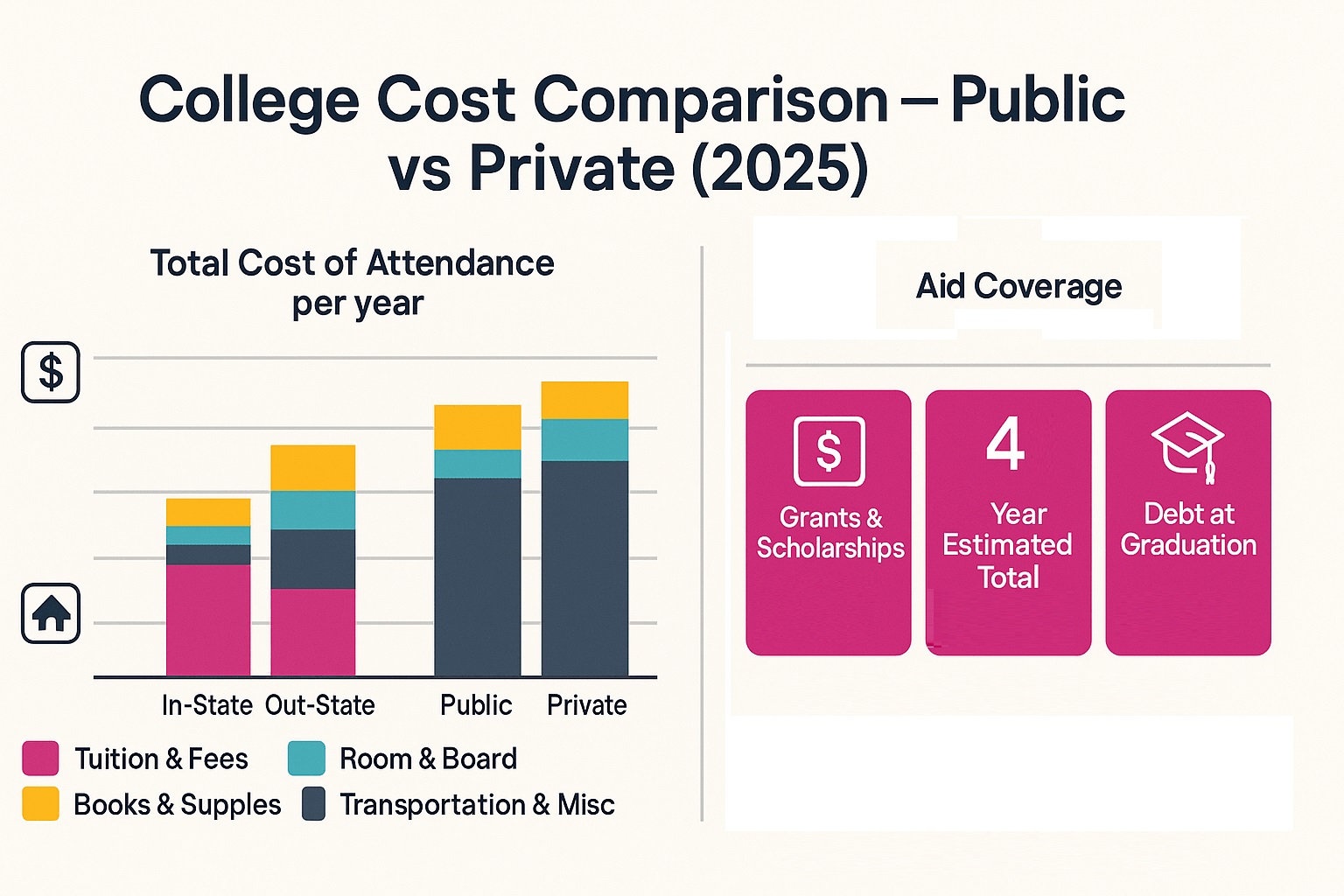
Choosing a pharma pathway often starts with cost. For many students, pharma courses fees determine whether they enroll now, delay, or pick faster alternatives. Tuition keeps climbing worldwide; in OECD data, average public bachelor tuition reaches $9,596 in the U.S., and $13,135 in England—among the highest globally.
Short, job-focused Pharma Courses certificate look attractive when the market remains hungry: U.S. medical scientist roles are projected to grow 9% from 2024–34, with about 9,600 openings annually. Learners want skills that hire quickly, not debt that lingers. That’s why learners compare scholarships, financing, and certificate ROI carefully before enrolling.
After reading, you’ll understand the full cost structure of studying pharmaceutical sciences.
We compare pharma courses fees across government, private, and international universities.
Table of Contents
Pharma Courses Fees Overview
Tuition is rising across pharmacy education—private programs cost more than public, and international rates are highest. Diplomas are lower-cost and skills-focused (fees vary with labs/placements), certificates remain the most affordable and modular; online/blended study can reduce living costs, and scholarships/employer funding matter more.
See the table for a quick comparison.
| Segment | Typical duration | Relative tuition level | Common pricing model | Extra cost drivers |
|---|---|---|---|---|
|
Degree (BPharm/MPharm/PharmD) – Public/Domestic |
3–6 yrs |
High |
Per-year tuition |
Labs, placements, insurance |
|
Degree – Private/Domestic |
3–6 yrs |
Very high |
Per-year tuition |
Facilities, small cohorts |
|
Degree – International students |
3–6 yrs |
Very high+ |
International rate per year |
Visas, travel, housing |
|
Post-grad Diploma/PGCert (clinical, industrial) |
6–18 mo |
Medium–High |
Flat program fee |
Lab access, practicum |
|
Advanced/Executive Diplomas (QA/RA/Industrial Pharmacy) |
9–24 mo |
High |
Per-module + capstone |
Industry projects |
Pharma Courses Fees in Government vs Private Colleges
Government colleges usually charge lower, subsidized tuition. Private colleges price higher for facilities, smaller cohorts, and services. Fees include tuition plus labs, exam/admin fees, and insurance; living costs sit on top. Net price depends on scholarships and aid. Diplomas cost less than degrees, so they fit tight budgets. Certificates drop costs further.
International students typically pay more than domestic students (often 1.5–3×). Hybrid/online delivery can reduce living costs and some campus fees. However, lab-heavy programs keep costs higher. Always verify current figures on official pages, since pricing changes each intake and by region.
Private programs often cost 1.5–4× comparable government programs
Lab/practicum and insurance can add $500–$3,000/year
Scholarships and fee waivers can cut net cost by 10–40%
EMI/payment plans and employer funding lower upfront burden
Pharma Course Fees by Country
Costs differ by country, program level, and student status. Public domestic options usually cost less; private and international rates rise fast. Lab intensity and clinical placements add fees. Online or hybrid study can trim living costs. Currency shifts and visa/insurance rules also affect budgets for international students. Compare pharma courses fees across the countries below.
| Country | Public/Domestic | International | Note |
|---|---|---|---|
|
USA |
$24k–$40k |
$35k–$60k; private up to ~$90k |
Highest overall |
|
UK |
£9,535 cap |
£31k–£33k |
Home fee cap |
|
Germany |
€0; €140–€860/yr contribution |
Same; +~€3,000/yr (BW, non-EU) |
Very low tuition |
|
India |
₹0.02–₹0.88 L/yr |
₹0.20–₹13.25 L/yr |
Wide spread |
|
Canada |
CAD $18,060–$21,520 |
~CAD $54,550 |
Mid–high |
Look beyond sticker price to total cost of attendance. Add insurance, exams, materials, and housing. Use scholarships, employer sponsorship, or payment plans to cut upfront costs. For faster ROI, stack short certificates into diplomas, and step up to degrees when required.
Cost of Pharma Certification Courses (Private & Online)
Today, many learners move from degrees to certification courses. However, degrees demand big budgets and years. Meanwhile, private and online certifications cost less and move faster. Additionally, you pay per course and control total spend.
Typical price: $200–$1,500 per course
Pricing: one-time, bundles, or subscription
Savings: sales, scholarships, or employer support
Certifications deliver practical, job-ready training for regulated roles. Therefore, you practice SOPs, CAPA, audits, and submissions. Moreover, micro-credentials stack toward diplomas or degrees. Consequently, you upskill quickly without leaving full-time work.
Duration: 2–12 weeks; workload: 5–8 hours weekly
Outcomes: portfolio tasks, badges, certificates
Progression: stack courses into advanced credentials
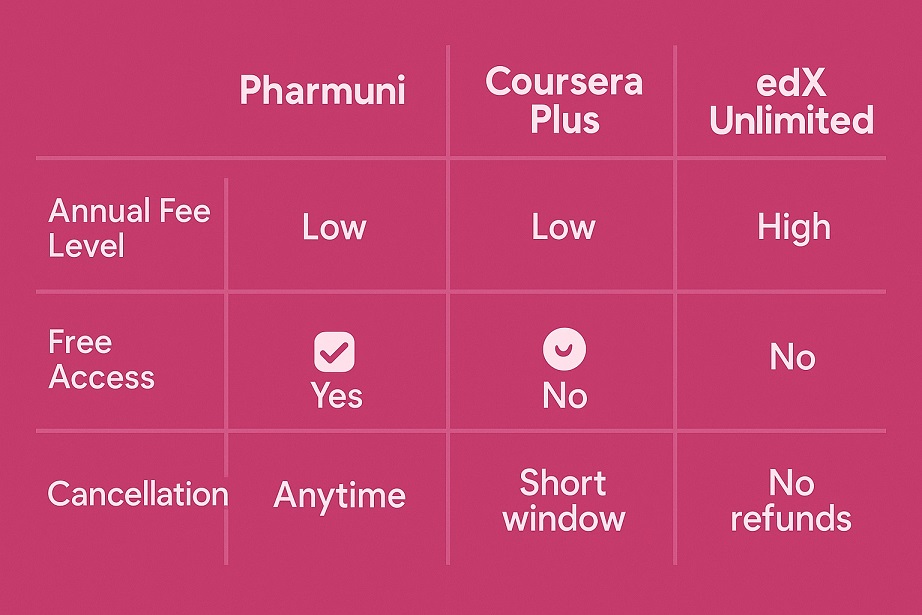
Why Choose Pharmuni Certification Courses?
Choose Pharmuni when you want results fast. Moreover, our certification courses fit busy work schedules. Additionally, modular lessons let you progress week by week. Furthermore, clear outcomes keep motivation and momentum strong.
Meanwhile, industry experts design content for real tasks. Therefore, you learn skills that employers value immediately. Also, you avoid bloated theory and long delays. Instead, you practice GMP, GCP, and regulatory workflows. Consequently, you build competence and confidence quickly. Likewise, assessments confirm progress after each milestone.
Pharmuni features
Stackable micro-credentials and guided Career Paths
Skill Tree for planning the next course
Interactive quizzes, projects, and competency badges
ISO-9001-backed certificates
Resume and Cover Letter Builder for pharma roles
VIP coaching and interview preparation
Flexible, mobile-friendly learning formats
Transparent pricing: per-course or subscription
How to Calculate the Real Cost of a Pharma Course
The advertised tuition fee is only one part of the total cost of a pharma course. Before enrolling, calculate all compulsory and optional expenses connected to the program. These may include registration, examinations, laboratory sessions, learning materials, accommodation, travel, insurance, and certificate fees. International students should also consider visa costs, currency conversion, and proof-of-funds requirements.
Scholarships, Employer Funding and Payment Plans
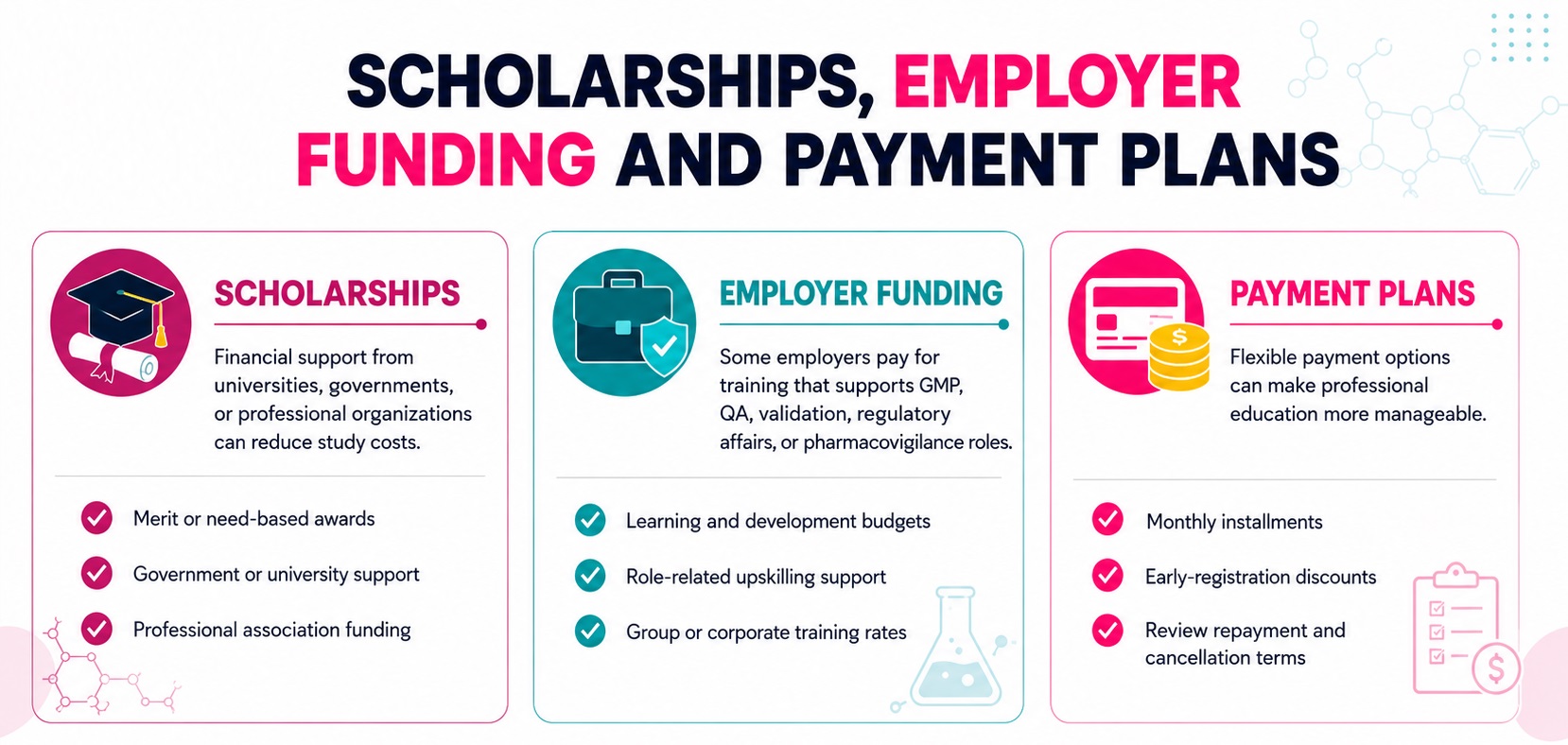
Course fees should not prevent you from developing relevant pharmaceutical skills. Many universities, training providers, employers, and professional organizations offer financial support. Available options may include scholarships, installment plans, employer-sponsored training, education allowances, discounts, and financial assistance.
Ask your employer whether the course supports your current responsibilities or future development plan. Training in GMP, quality assurance, validation, regulatory affairs, and pharmacovigilance may directly support compliance and business performance.
Possible funding options include:
- University or government scholarships
- Employer learning and development budgets
- Monthly or installment payment plans
- Early-registration discounts
- Group or corporate training rates
Download the Pharma Course Fees Comparison Checklist
Comparing pharma courses can be difficult when providers present prices, certificates, learning formats, and additional fees differently. The Pharma Course Fees Comparison Checklist gives you a structured way to evaluate several programs before making a payment.
Use the checklist to compare:
- Tuition and mandatory charges
- Certificate and examination fees
- Course duration and weekly workload
Check the Real Cost of Your Pharma Course
Final Words
Choosing wisely starts with the numbers. Public BPharm degrees often cost $1k–$6k, while private options reach $8k–$35k. In the UK, the home MPharm cap sits at £9,535. In Germany, semester contributions range from €140 to €860. International students regularly pay 1.5–3× more. Labs and insurance can add $500–$3,000 each year. Scholarships and waivers may reduce totals by 10–40%. Those figures define your baseline budget and risk. Now compare routes on value, not headlines. Prioritize total cost, speed to skill, and hiring impact.
Diplomas usually take 6–24 months. Certificates typically cost $200–$1,500 and run 2–12 weeks. Weekly loads average 5–8 hours online. Pharmuni aligns with that reality. You earn ISO-9001–backed certificates, drawn from 50+ courses and six guided career paths. You can start free, stack badges, and show progress fast. Then add coaching when needed with our VIP option. Plan one sprint now, ship results next month. Keep momentum every week.
FAQs
1️⃣ How much do pharma courses usually cost?
Public BPharm programs often range from about $1k–$6k per year, while private options can reach $8k–$35k. Certificates typically cost $200–$1,500 per course.
2️⃣ What drives the total cost beyond tuition?
Labs, clinical placements, insurance, exams, and housing add meaningful expenses. International students may also pay 1.5–3× tuition plus visa and health-insurance fees.
3️⃣ Are certificates worth it compared to degrees?
Certificates deliver targeted skills in 2–12 weeks at a lower price. Many stack toward diplomas or degrees, so you build credentials while working.
Refrences
Ershad Moradi, a Content Marketing Specialist at Zamann Pharma Support, brings 6 years of experience in the pharmaceutical industry. Specializing in pharmaceutical and medical technologies, Ershad is currently focused on expanding his knowledge in marketing and improving communication in the field. Outside of work, Ershad enjoys reading and attending industry related networks to stay up-to-date on the latest advancements. With a passion for continuous learning and growth, Ershad is always looking for new opportunities to enhance his skills and contribute to pharmaceutical industry. Connect with Ershad on Facebook for more information.
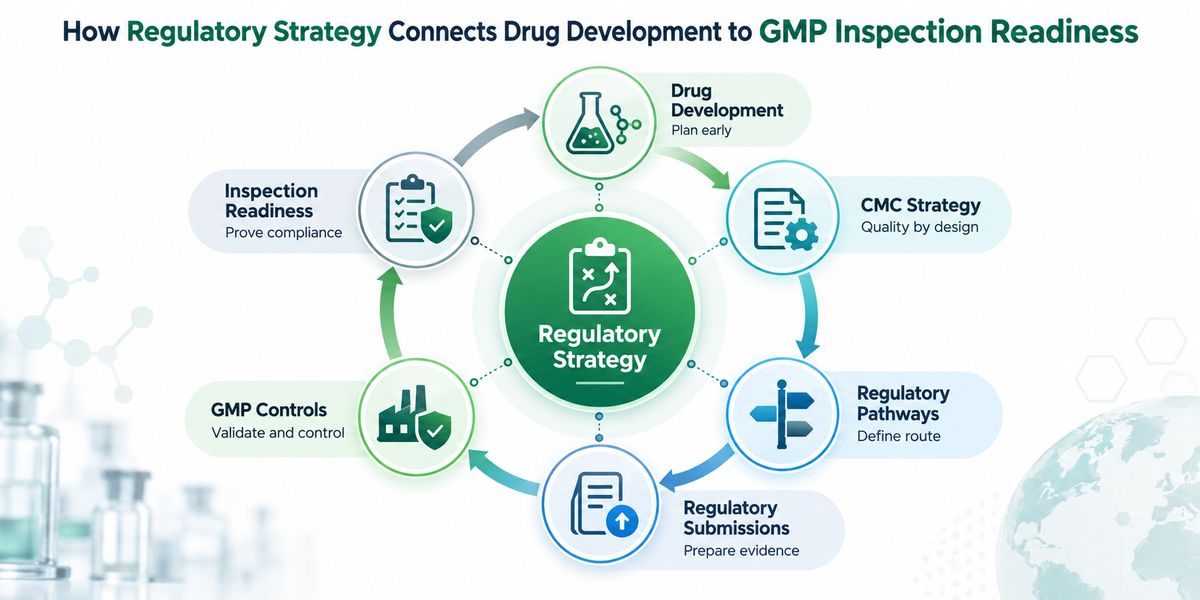
Regulatory Strategy in Pharma in 2026: From Drug Development to GMP Inspection Readiness
Effective regulatory planning connects drug development, CMC, submissions, manufacturing, and lifecycle obligations. This article explains how regulatory teams can reduce compliance gaps, prepare for inspections, manage post-approval changes, and make better decisions across the pharmaceutical product lifecycle.

Alison vs Pharmuni in 2026: Free Learning at Scale or a Guided Pharma Career System?
Alison offers 6,000+ free courses plus career tools and recruitment. Pharmuni is smaller but pharma-focused, with role assessments, Career Paths, CV tools, and 1,000+ life-science jobs.

Udemy vs Pharmuni in 2026: One Course Fast or a Full Pharma Career Path?
Udemy makes it easy to buy a specific self-paced course from a huge marketplace. Pharmuni takes a different approach, connecting pharma learning with assessments, Career Paths, competency visibility, CV tools, and job matching.