


Corrective and Preventive Action (CAPA) is a cornerstone of pharma quality management and regulatory compliance. WHO TRS 986, Annex 2, supports quality risk management, deviation control, and documented corrective actions. CAPA corrects existing failures and prevents recurrence through root-cause analysis.
In pharma quality assurance, CAPA also aligns with FDA 21 CFR 211 and ICH Q10 expectations. Accurate records, trained staff, and effectiveness checks improve audit readiness. Please share recent pharma data or case studies showing CAPA impact, delays, recurring deviations, and common implementation challenges.
Table of Contents
What is Corrective and Preventive Action (CAPA)?
Corrective and Preventive Action (CAPA) helps pharma teams fix quality problems. It also helps them stop the same issue from happening again.
Therefore, CAPA supports safer products, stronger compliance, and better audit results.
Find the quality issue
Investigate the root cause
Correct the current problem
Prevent future recurrence
Check if actions worked
How to Develop an Effective CAPA System for Pharmaceutical Manufacturing?
To develop an effective CAPA system for pharmaceutical manufacturing, start by clearly defining procedures. Train staff regularly to ensure proper implementation. Monitor processes continuously to identify deviations early. Also, document all CAPA activities precisely for audit readiness. Establish clear responsibilities and timelines for corrective actions.
Key steps include:
– Define CAPA policies and workflows
– Train employees on CAPA procedures
– Monitor manufacturing processes closely
– Document investigations and actions thoroughly
– Review and verify CAPA effectiveness regularly
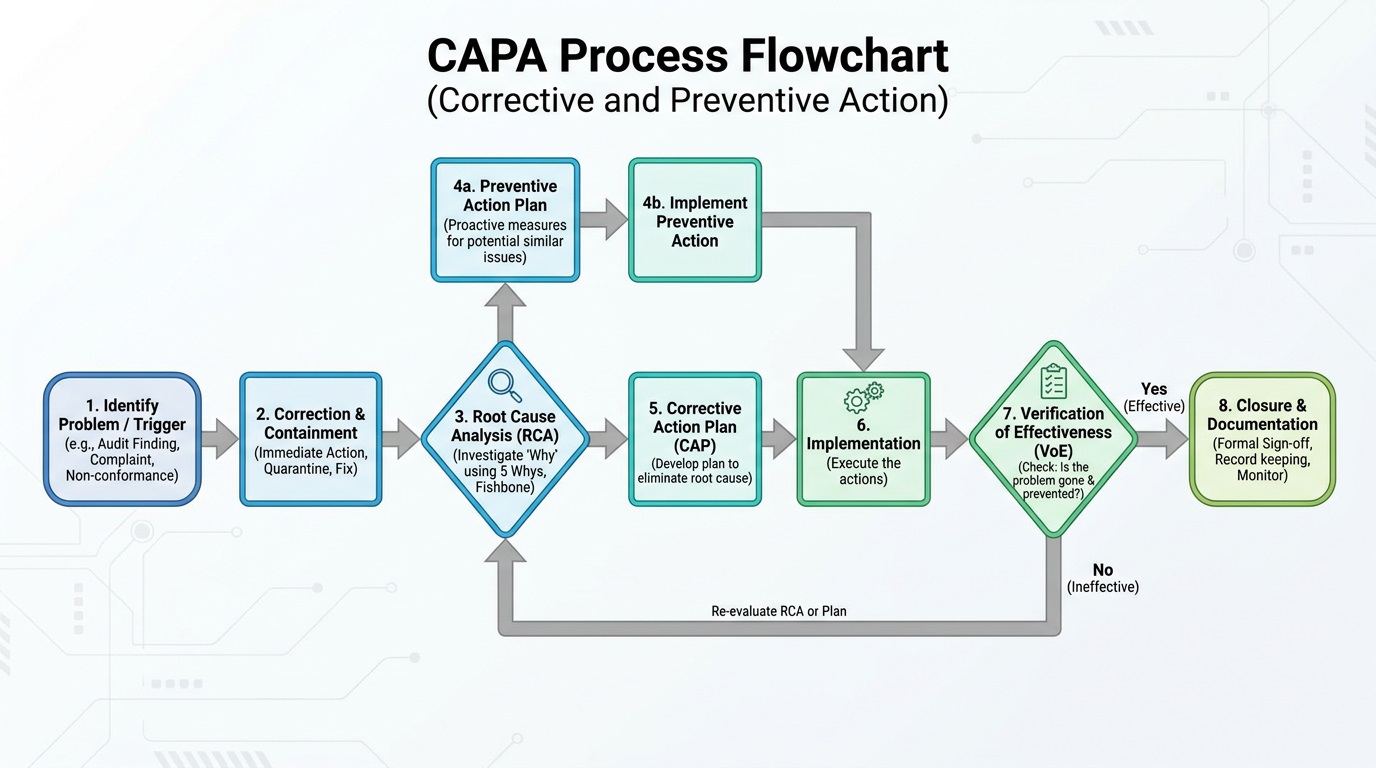
Steps to Investigate Root Causes and Implement Corrective Actions
Investigating root causes begins with clearly identifying the problem and gathering relevant data. Next, perform a thorough root cause analysis to find underlying issues. Then, develop an actionable plan to address these causes effectively. Finally, implement the plan and monitor results to ensure lasting improvements and prevent recurrence.
Key steps include:
Step 1: Problem Identification
Step 2: Root Cause Analysis
Step 3: Action Plan Development
Step 4: Implementation and Monitoring
Step 1 Problem Identification
Step 1 Problem Identification in CAPA pinpoints issues affecting product quality or safety. It helps prevent repeated errors by recognizing specific failures. Also, clear problem definition guides effective root cause analysis and corrective action planning.
Examples include:
- Equipment malfunction causing product defects
- Labeling errors leading to misbranding
- Contamination found during quality checks
- Supplier material non-conformance
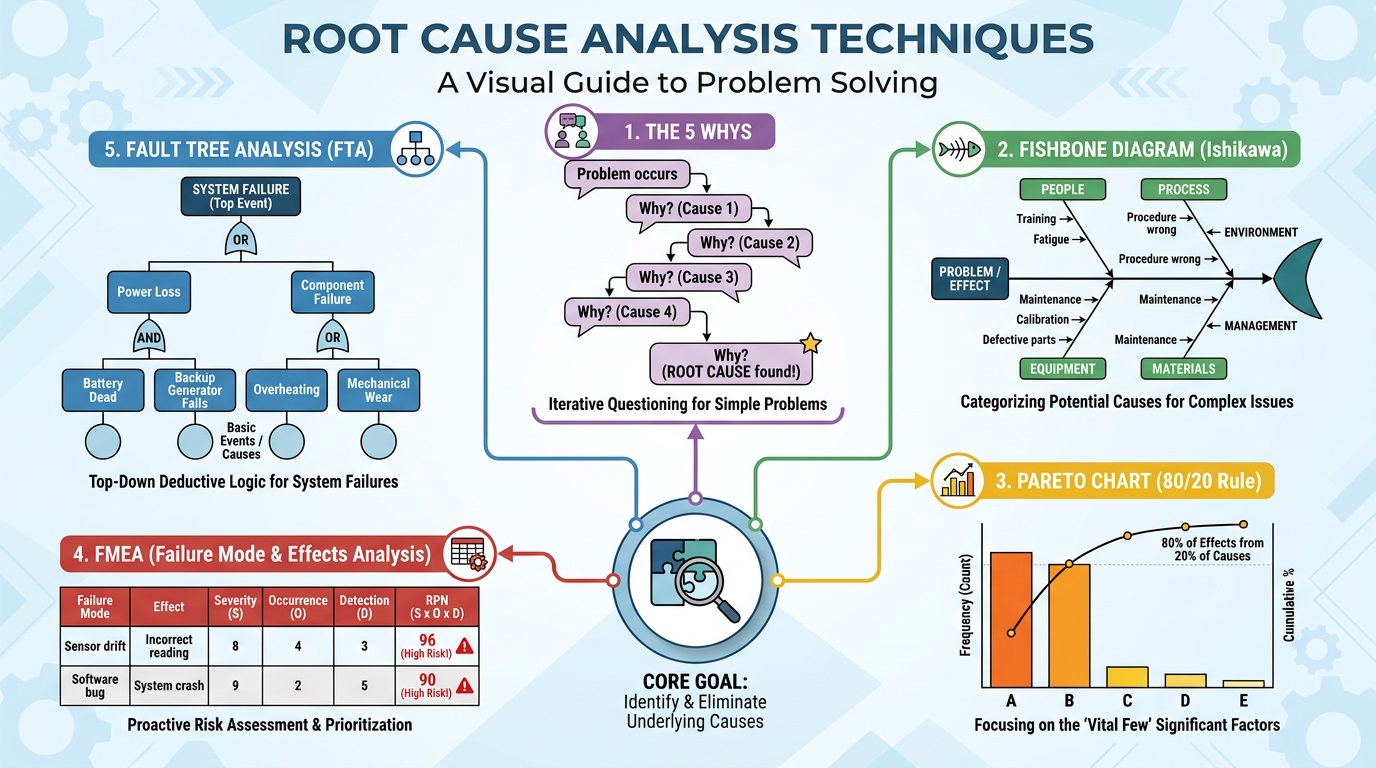
Step 2 Root Cause Analysis
Step 2 Root Cause Analysis (RCA) explores underlying factors causing problems in pharma processes. It prevents issue recurrence by addressing true causes, not just symptoms. RCA uses structured methods to improve problem-solving accuracy and effectiveness.
Key RCA levels include:
- Basic Cause: Simple, direct reason for the problem
- Contributing Cause: Factors that indirectly influence the issue
- Root Cause: The fundamental origin requiring corrective actions
Step 3 Action Plan Development
Step 3 Action Plan Development creates detailed steps to fix root causes found in pharma processes. It defines responsibilities, timelines, and resources needed. A solid plan ensures corrective actions are practical and effective. Also, it aligns team efforts toward preventing problem recurrence.
Key levels in action planning include:
- Immediate Actions: Quick fixes to stop ongoing issues
- Long-Term Actions: Sustainable solutions to prevent future problems
- Monitoring Actions: Follow-up checks to verify effectiveness
Common CAPA Non-Conformities and Corrective Actions
| Common CAPA Non-Conformities | Corrective Actions |
|---|---|
|
Incomplete root-cause analysis |
Conduct thorough investigations |
|
Delayed CAPA implementation |
Set strict timelines and monitor progress |
|
Poor documentation and records |
Improve record-keeping and staff training |
|
Recurring deviations |
Enhance preventive measures and controls |
Step 4 Implementation and Monitoring
Step 4 Implementation and Monitoring executes the action plan and tracks results in pharma processes. It ensures corrective measures are applied correctly and on time. Continuous monitoring detects any deviations early and supports ongoing improvement. Also, it documents progress for regulatory compliance.
Key levels include:
- Execution: Applying corrective and preventive actions as planned
- Tracking: Measuring and recording outcome metrics regularly
- Review: Assessing effectiveness and making adjustments if needed
CAPA Documentation Requirements and Record-Keeping for FDA Compliance
CAPA documentation helps pharma companies track and resolve quality issues effectively. It provides clear evidence of problem identification, investigation, and corrective actions. Accurate records support FDA audits and regulatory inspections. Also, thorough documentation prevents recurring problems and ensures continuous quality improvement.
Key steps include:
- Identify and document non-conformities clearly
- Perform detailed root cause analysis
- Develop and record corrective and preventive actions
- Monitor CAPA implementation and effectiveness
- Maintain organized, accessible records for audit readiness
How to Conduct CAPA Effectiveness Checks and Follow-Ups
Conduct CAPA effectiveness checks by defining clear metrics and criteria for success. Review outcomes regularly to identify any gaps or issues. Document findings accurately to maintain traceability. Also, take additional measures promptly if initial actions are insufficient. This process guarantees lasting quality improvements.
Key steps include:
- Define Metrics and Criteria
- Review Outcomes
- Document Findings
- Take Additional Measures if Needed
Define Metrics and Criteria
Define metrics and criteria clearly to measure CAPA effectiveness accurately. Using measurable indicators helps track progress and ensures accountability. For example, reducing product defects by 30% can be a clear metric. Also, criteria should be realistic and aligned with regulatory expectations. Clear metrics guide corrective actions and support continuous improvement efforts.
Review Outcomes
Review outcomes regularly to assess CAPA success and identify any gaps. Analyze results against predefined metrics to ensure goals are met. For example, if defect rates remain above targets, further action is required. Also, involve relevant teams to provide insights. Timely reviews help maintain quality and regulatory compliance.
Document Findings
Document findings thoroughly to create a clear record of CAPA activities. Record all observations, test results, and corrective actions taken. For example, note specific deviations found during inspections. Also, keep documentation organized for easy retrieval during audits. Accurate records support transparency and regulatory compliance.
Take Additional Measures if Needed
Take additional measures promptly if CAPA outcomes do not meet objectives. Reassess the root cause and adjust actions accordingly. Communicate changes clearly to all stakeholders. Also, implement intensified monitoring to ensure issue resolution. Continuous improvement prevents recurrence and strengthens quality systems.
Key steps include:
– Reevaluate root cause analysis
– Revise corrective and preventive actions
– Inform relevant teams and management
– Increase monitoring frequency
– Document all changes and follow-ups
Role of CAPA in FDA Audits and Regulatory Inspections
CAPA plays a critical role in FDA audits by demonstrating a company’s commitment to quality and compliance. It shows how firms identify, investigate, and resolve issues systematically. Effective CAPA processes help prevent recurring problems and reduce regulatory risks. Also, FDA inspectors review CAPA records to assess corrective measures and ongoing improvements.
Strong CAPA implementation builds regulator confidence and supports successful audit outcomes. It signals proactive quality management and helps avoid warning letters or penalties. Furthermore, CAPA guides continuous compliance and enhances overall product safety.
Final Words
CAPA plays a vital role in sustaining pharmaceutical quality and ensuring regulatory compliance. According to GMP guidelines, effective CAPA systems reduce deviations and non-compliance by up to 35%. Continuous improvement relies on thorough documentation and regular staff training to address root causes and prevent recurrence. Properly maintained CAPA processes strengthen quality management systems and regulatory readiness.
We invite readers and industry experts to share recent pharma references, CAPA case studies, and regulatory updates. Collaborative efforts help overcome CAPA challenges, promote best practices, and enhance overall industry standards. Together, we can drive continuous quality improvement in pharma.
FAQs
CAPA stands for Corrective and Preventive Action, focusing on fixing issues and preventing recurrence via root-cause analysis.
CAPA aligns with FDA 21 CFR 211 by maintaining records, training staff, and ensuring effectiveness checks for audits.
They define metrics, review outcomes regularly, document findings, and adjust actions as needed.
References

Ershad Moradi
Ershad Moradi, a Content Marketing Specialist at Zamann Pharma Support, brings 6 years of experience in the pharmaceutical industry. Specializing in pharmaceutical and medical technologies, Ershad is currently focused on expanding his knowledge in marketing and improving communication in the field. Outside of work, Ershad enjoys reading and attending industry related networks to stay up-to-date on the latest advancements. With a passion for continuous learning and growth, Ershad is always looking for new opportunities to enhance his skills and contribute to pharmaceutical industry. Connect with Ershad on Facebook for more information.

Deviation vs Nonconformance 2026: 5 Critical GMP Mistakes to Avoid
Explore 5 critical differences between deviation and nonconformance in pharma, including GMP investigations, OOS, risk assessment, and CAPA.

Root Cause Analysis in Pharmaceutical Industry: 6 Powerful Methods in 2026
Explore 6 powerful root cause analysis methods in pharma to investigate deviations, strengthen CAPA, ensure GMP compliance, and protect patient safety.

Quality Culture in Pharma Industry 2026: Proven Ways to Build Trust
Explore how to build a strong quality culture in the pharmaceutical industry in 2026 through leadership commitment, ICH Q10 principles, meaningful GMP metrics, effective CAPA, and continuous improvement.