

Cleaning validation in pharma is a critical process that ensures manufacturing equipment is clean and prevents cross-contamination. According to WHO, inadequate cleaning contributes to nearly 25% of product quality issues worldwide. Validated cleaning procedures help maintain product safety and meet regulatory compliance, reducing risks of contamination and product recalls. Pharma companies closely follow guidelines from FDA, EMA, and WHO to implement effective cleaning validation.
Pharma validation, including cleaning validation, supports consistent product quality and regulatory approval. Studies show that companies with robust validation programs experience 30% fewer inspection deficiencies. This process protects patients and strengthens industry trust. Therefore, cleaning validation remains essential in pharma manufacturing and quality assurance.
Table of Contents
What is Cleaning Validation in Pharma?
Cleaning validation confirms pharmaceutical equipment is properly cleaned to prevent product contamination. According to FDA data, 40% of inspection warnings relate to cleaning failures. This process protects product safety and ensures regulatory compliance. Also, it helps maintain consistent manufacturing quality.
Effective cleaning validation includes:
- Defining cleaning procedures clearly
- Setting acceptance criteria and cleaning limits
- Sampling and testing residues thoroughly
- Documenting validation results accurately
Step-by-step Procedures to Perform Cleaning Validation Effectively
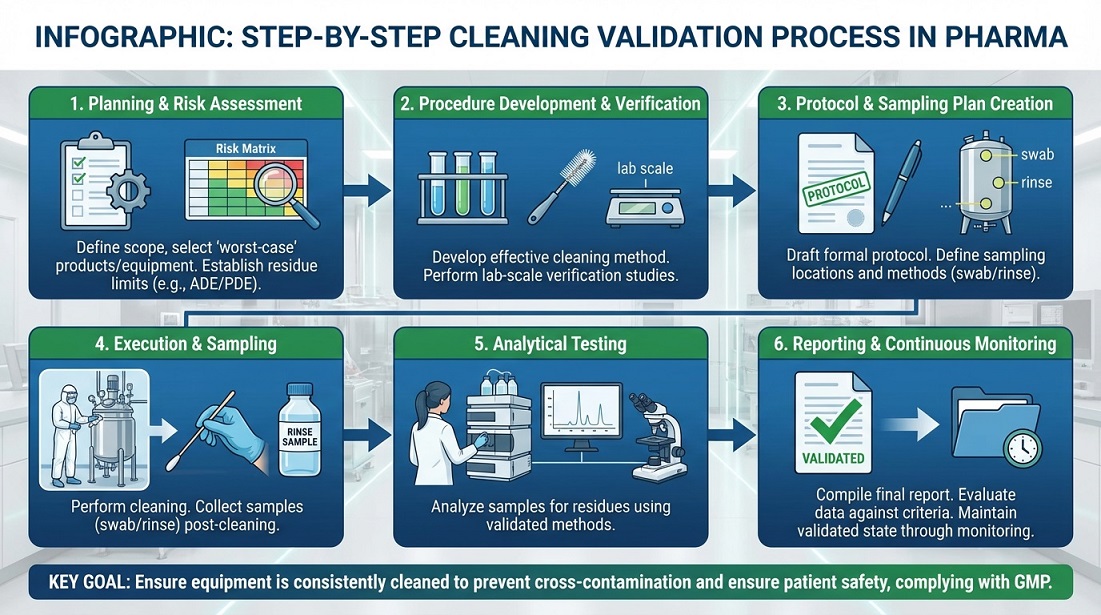
To perform cleaning validation effectively, start by defining the scope and cleaning procedures clearly. Next, set acceptance criteria and cleaning limits based on safety standards. Then, develop and approve detailed validation protocols to guide testing. Afterward, execute sampling and testing using proper methods. Finally, review data thoroughly and document all results accurately.
Key steps include:
- Step 1: Define Scope and Cleaning Procedures
- Step 2: Set Acceptance Criteria and Cleaning Limits
- Step 3: Develop and Approve Validation Protocols
- Step 4: Execute Sampling and Testing
- Step 5: Review Data and Document Results
Step 1: Define Scope and Cleaning Procedures
Define Scope and Cleaning Procedures sets clear boundaries for cleaning validation activities. Identify equipment, products, and processes needing validation. Also, specify cleaning methods and agents used. Clear definition reduces ambiguity and guides effective validation planning. This step ensures all critical areas receive proper cleaning attention.
Key focus areas include:
- Identify equipment and product contact surfaces
- Define cleaning agents and methods
- Set cleaning frequency and schedules
- Outline exclusion criteria
- Align scope with regulatory requirements
Step 2: Set Acceptance Criteria and Cleaning Limits
Set acceptance criteria and cleaning limits to ensure safe and effective cleaning validation. These limits protect patients by preventing contamination and residue buildup. Also, they comply with regulatory requirements from FDA, EMA, and WHO. Clear criteria help teams evaluate cleaning effectiveness accurately.
Key acceptance criteria include:
- Maximum residue limits (MRLs)
- Microbial limits
- Visual cleanliness standards
- Endotoxin limits
- Allergen controls
- Toxicological thresholds
Step 3: Develop and Approve Validation Protocols
Develop and approve cleaning validation protocols to guide testing and ensure compliance. These protocols define objectives, sampling methods, and acceptance criteria clearly. Also, they assign responsibilities and outline testing schedules. Well-prepared protocols reduce errors and support regulatory audits.
Key protocol sections include:
- Validation objectives
- Sampling and analytical methods
- Acceptance criteria
- Roles and responsibilities
- Testing schedule
- Documentation and reporting
Step 4: Execute Sampling and Testing
Execute sampling and testing carefully to verify cleanliness and compliance. Use proper techniques for accurate results. Also, maintain aseptic methods to avoid contamination. Consistent sampling supports reliable validation. These actions ensure manufacturing safety and product quality.
Key sampling and testing methods include:
- Swab sampling from critical surfaces
- Rinse sampling of equipment parts
- Visual inspections for residuals
- Microbial testing for contamination
- Analytical testing for chemical residues
- Endotoxin testing where applicable
Cleaning Validation Sampling Techniques: Swab vs. Rinse
| Sampling Technique | Description | Best Use Cases | Advantages | Limitations |
|---|---|---|---|---|
|
Swab Sampling |
Collects residue from specific surface areas using sterile swabs |
Flat or hard-to-reach surfaces |
Targets exact contamination spots |
May miss residues in crevices |
|
Rinse Sampling |
Uses rinse solutions to collect residues from equipment interiors |
Hollow or complex equipment |
Covers large surface areas |
Dilutes residues, less precise |
Step 5: Review Data and Document Results
Review data carefully to confirm cleaning effectiveness and meet acceptance criteria. Analyze all test results for trends or deviations. Also, ensure data accuracy and completeness. This thorough review supports quality assurance and audit readiness. Proper documentation preserves transparency and traceability.
Key parts of data review and documentation include:
- Collecting all raw data
- Analyzing test outcomes
- Identifying deviations or anomalies
- Documenting corrective actions
- Preparing summary reports
- Archiving validation records
Regulatory Requirements for Cleaning Validation According to FDA, EMA, and WHO Guidelines
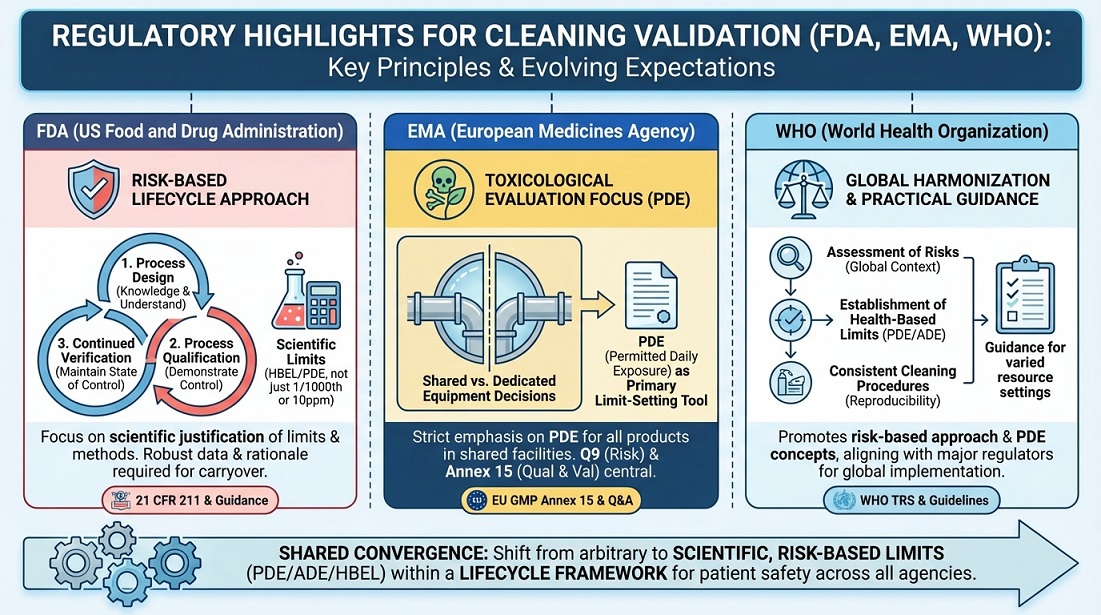
Regulatory agencies like FDA, EMA, and WHO set strict cleaning validation requirements for pharma companies. The FDA Guide to Inspections emphasizes documented cleaning processes and acceptance criteria. According to EMA guidelines, companies must use a risk-based approach and maintain thorough records.
WHO also sets standards for cleaning validation to ensure product safety and prevent cross-contamination. Following these guides ensures regulatory compliance and product quality.
FDA Guide to Inspections of Cleaning Validation
The FDA Guide to Inspections of Cleaning Validation provides clear instructions to ensure effective cleaning processes. It emphasizes detailed documentation and setting acceptance limits. Moreover, it highlights proper sampling techniques to verify cleanliness. This guide helps companies avoid regulatory issues and maintain product safety.
Key focus areas include:
- Defining cleaning procedures and validation scope
- Maintaining accurate records and protocols
WHO Validation of Cleaning Procedures
The WHO Validation of Cleaning Procedures sets standards to ensure pharmaceutical equipment is free from residues. It guides companies to develop effective cleaning methods and acceptance criteria. Also, it emphasizes documenting validation activities clearly. This helps manufacturers maintain product safety and regulatory compliance.
Key topics include:
- Defining cleaning protocols and limits
- Ensuring robust documentation and review
EMA Guideline on Health-Based Exposure Limits
The EMA Guideline on Health-Based Exposure Limits helps set safe cleaning limits in pharma manufacturing. It guides risk assessments to prevent cross-contamination. Moreover, it encourages consistent validation practices. This guideline supports product safety and regulatory compliance.
Key focus areas include:
- Establishing health-based exposure limits
- Applying risk-based cleaning validation
Access the full EMA guideline on setting health based exposure limits here
How to Develop and Approve Cleaning Validation Protocols and Reports Compliant with GMP
Develop cleaning validation protocols by first defining clear objectives and scope. Next, choose appropriate sampling and analytical methods. Then, set acceptance criteria based on safety standards. Afterward, assign responsibilities and timelines to team members. Finally, review and approve the protocol before execution.
During validation, collect data accurately and document every step. Prepare detailed reports summarizing results and deviations. Also, include corrective actions and approvals. These steps ensure protocols and reports meet GMP requirements.
Key steps:
- Define objectives and scope
- Select sampling and analysis methods
- Set acceptance criteria
- Assign responsibilities and timelines
- Review and approve documentation
Best Practices to Define Cleaning Limits and Acceptance Criteria
Set cleaning limits based on toxicological and risk assessment data to ensure safety. Define acceptance criteria clearly to measure residue levels effectively. Also, use validated analytical methods to support accuracy. Consistent criteria help prevent cross-contamination and product recalls.
Moreover, regularly review cleaning limits to reflect process changes and regulations. Train staff on these best practices to maintain compliance. Clear communication ensures all teams understand and follow standards. These actions improve cleaning validation success and product quality.
Comparison of Cleaning Limit Criteria Across Major Guidelines
| Guideline | Cleaning Limit Basis | Key Features | Example Limits |
|---|---|---|---|
|
FDA |
Toxicological risk assessment |
Focus on health-based exposure |
≤ 10 ppm for product residues |
|
EMA |
Health-based exposure limits |
Emphasizes risk identification |
Limits based on PDE (Permitted Daily Exposure) |
|
WHO |
Worst-case scenario and safety |
Practical, global approach |
Varies by product toxicity and dosage |
Final words
Cleaning validation in pharma plays a vital role in ensuring manufacturing equipment is free from harmful residues. According to FDA data, nearly 40% of inspection warning letters relate to inadequate cleaning processes. Robust cleaning validation protocols and thorough documentation help companies maintain product safety and regulatory compliance. These practices reduce contamination risks and prevent costly product recalls, making cleaning validation essential for pharma quality assurance.
A Cleaning Validation Career Path offers growing opportunities due to increasing regulatory scrutiny. Professionals with strong knowledge of cleaning methods, validation strategies, and documentation find high demand. Moreover, continuous learning and certifications enhance job prospects and career advancement in this specialized field.
FAQs
Cleaning validation ensures that equipment is free from harmful residues to prevent contamination.
It protects product safety, complies with regulations, and reduces cross-contamination risks.
Define scope, set acceptance criteria, develop protocols, conduct sampling, and review results.
References

Ershad Moradi
Ershad Moradi, a Content Marketing Specialist at Zamann Pharma Support, brings 6 years of experience in the pharmaceutical industry. Specializing in pharmaceutical and medical technologies, Ershad is currently focused on expanding his knowledge in marketing and improving communication in the field. Outside of work, Ershad enjoys reading and attending industry related networks to stay up-to-date on the latest advancements. With a passion for continuous learning and growth, Ershad is always looking for new opportunities to enhance his skills and contribute to pharmaceutical industry. Connect with Ershad on Facebook for more information.
Deviation vs Nonconformance 2026: 5 Critical GMP Mistakes to Avoid
Explore 5 critical differences between deviation and nonconformance in pharma, including GMP investigations, OOS, risk assessment, and CAPA.
Root Cause Analysis in Pharmaceutical Industry: 6 Powerful Methods in 2026
Explore 6 powerful root cause analysis methods in pharma to investigate deviations, strengthen CAPA, ensure GMP compliance, and protect patient safety.
Quality Culture in Pharma Industry 2026: Proven Ways to Build Trust
Explore how to build a strong quality culture in the pharmaceutical industry in 2026 through leadership commitment, ICH Q10 principles, meaningful GMP metrics, effective CAPA, and continuous improvement.