


Pharma jobs for freshers are crucial entry points into the pharmaceutical industry, offering roles across manufacturing, quality control, regulatory affairs, and sales. According to WHO, nearly 40% of new pharma professionals start in such positions. These roles help build foundational skills, preparing freshers for advanced responsibilities while launching their careers in this competitive field.
Pharma jobs continue to grow, but the competition intensifies each year. Employers increasingly seek candidates with strong technical expertise and soft skills. Therefore, freshers should focus on continuous learning and skill development to stand out and succeed in pharma jobs.
Table of Contents
What are Pharma Jobs for Freshers?
Pharma jobs for freshers offer entry points into manufacturing, quality control, and research roles. According to industry reports, 35% of pharma companies hire fresh graduates annually. These jobs help develop skills in GMP, documentation, and lab techniques. Moreover, freshers gain hands-on experience and build a strong career foundation.
These roles vary widely, including positions in QA, QC, production, and regulatory affairs. Also, employers value adaptability and willingness to learn. For example, internships boost job placement rates by 20%. Therefore, freshers can explore diverse pharma career paths and grow professionally.
Entry-level Job Opportunities in Pharmaceutical Companies
Pharmaceutical companies offer many entry-level job opportunities for freshers. For example, Quality Control Analyst jobs grew by 25% last year. Also, there are roles like Production Technician and Regulatory Affairs Assistant. Companies hire Research Assistants and Validation Specialists regularly. These jobs build essential skills and experience.
Moreover, companies seek candidates for Supply Chain Coordinator positions. According to industry data, 30% of pharma hiring focuses on quality-related roles. Entry-level jobs prepare freshers for career growth. Therefore, freshers should target these in-demand positions to start strong.
Common Entry-Level Pharma Job Roles and Key Responsibilities
| Job Role | Key Responsibilities |
|---|---|
|
Quality Control Analyst |
Test products, record results, report issues |
|
Production Technician |
Operate equipment, monitor manufacturing process |
|
Regulatory Affairs Assistant |
Prepare documentation, assist with compliance |
|
Research Assistant |
Support experiments, collect and analyze data |
|
Validation Specialist |
Plan and execute equipment/process validation |
Required Technical Skills for Freshers in Pharma Industry
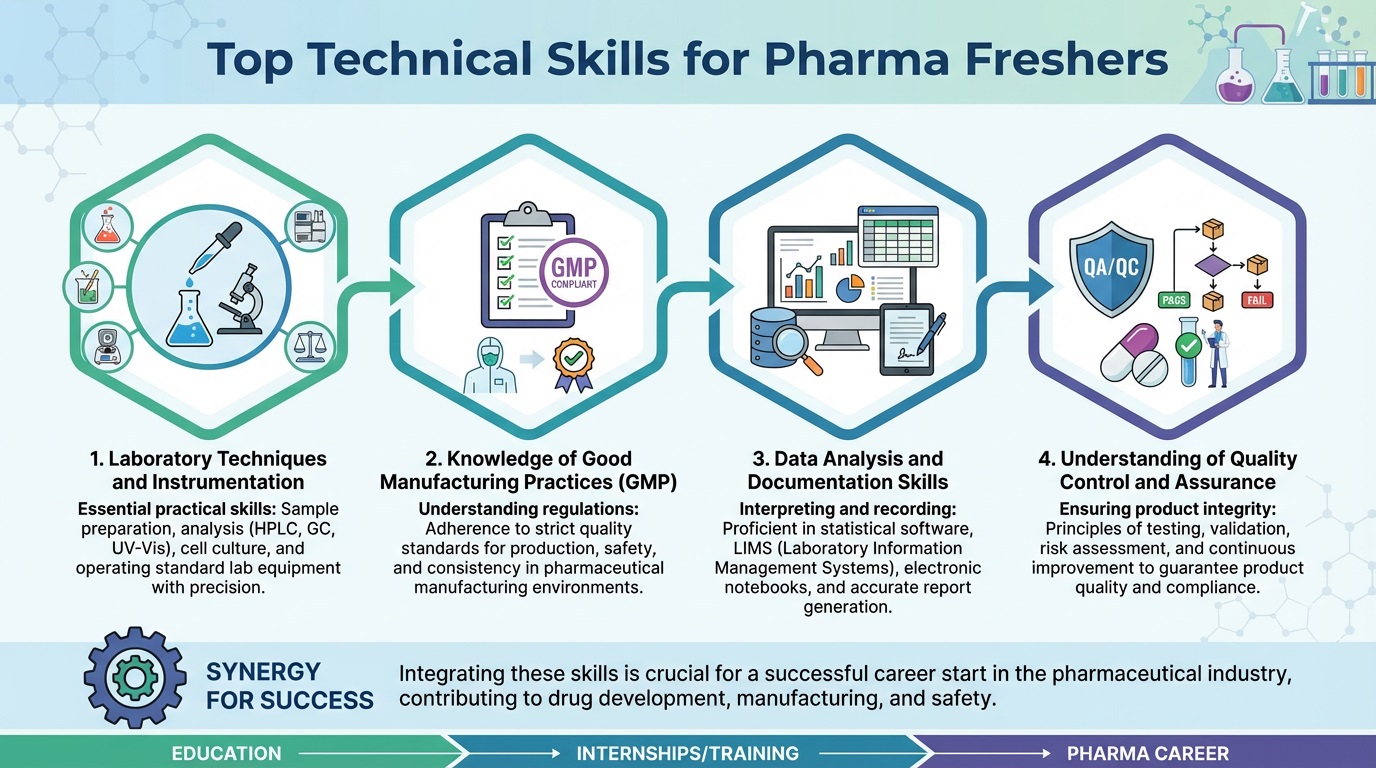
Freshers in the pharma industry must master key technical skills to perform well. They use laboratory techniques and operate instruments confidently. Also, they follow Good Manufacturing Practices (GMP) to maintain product safety. Additionally, they analyze data accurately and document results clearly.
Moreover, freshers understand quality control and assurance to support production standards. These skills help ensure compliance and product consistency. Key technical skills include:
- Skill 1: Laboratory Techniques and Instrumentation
- Skill 2: Knowledge of Good Manufacturing Practices (GMP)
- Skill 3: Data Analysis and Documentation Skills
- Skill 4: Understanding of Quality Control and Assurance
Skill 1 Laboratory Techniques and Instrumentation
Freshers in pharma must master laboratory techniques to perform accurate tests and experiments. They operate instruments like chromatographs and spectrometers carefully. Also, they prepare samples following standard methods. Moreover, they ensure equipment calibration and maintenance to get reliable results. These skills support quality product development and safety.
Key tasks include:
- Operating analytical instruments safely
- Preparing and handling samples correctly
- Calibrating lab equipment regularly
- Recording and interpreting test data
- Following laboratory safety protocols
Skill 2 Knowledge of Good Manufacturing Practices (GMP)
Pharma freshers need strong knowledge of Good Manufacturing Practices (GMP) to ensure product quality. They follow GMP guidelines strictly during manufacturing and testing. Also, they help maintain clean and controlled environments. Moreover, they monitor processes to prevent contamination and errors. These skills protect patient safety and meet regulatory standards.
Key GMP tasks include:
- Adhering to manufacturing protocols
- Maintaining hygiene and cleanliness
- Documenting processes accurately
- Conducting routine inspections
- Training staff on GMP compliance
Skill 3 Data Analysis and Documentation Skills
Pharma freshers must analyze data carefully to identify trends and ensure product quality. They document all results accurately to maintain clear records. For example, a fresh QA analyst detected a contamination trend early by reviewing batch data. This helped prevent product recalls and ensured compliance.
Moreover, clear documentation supports audits and regulatory inspections. Freshers learn to organize reports and follow data integrity principles. These skills improve decision-making and operational efficiency. Overall, data analysis and documentation are essential for pharma success.
Skill 4 Understanding of Quality Control and Assurance
Pharma freshers learn quality control (QC) to test products and ensure they meet standards. They inspect samples and record results carefully. For example, a QC analyst detected contamination early, helping avoid product recalls. This early action protected patient safety and company reputation.
Additionally, quality assurance (QA) monitors processes to maintain compliance. QA teams train staff and manage corrective actions. Together, QC and QA keep production consistent and safe. These skills build a strong foundation in pharma careers.
Career growth and salary expectations for pharma freshers
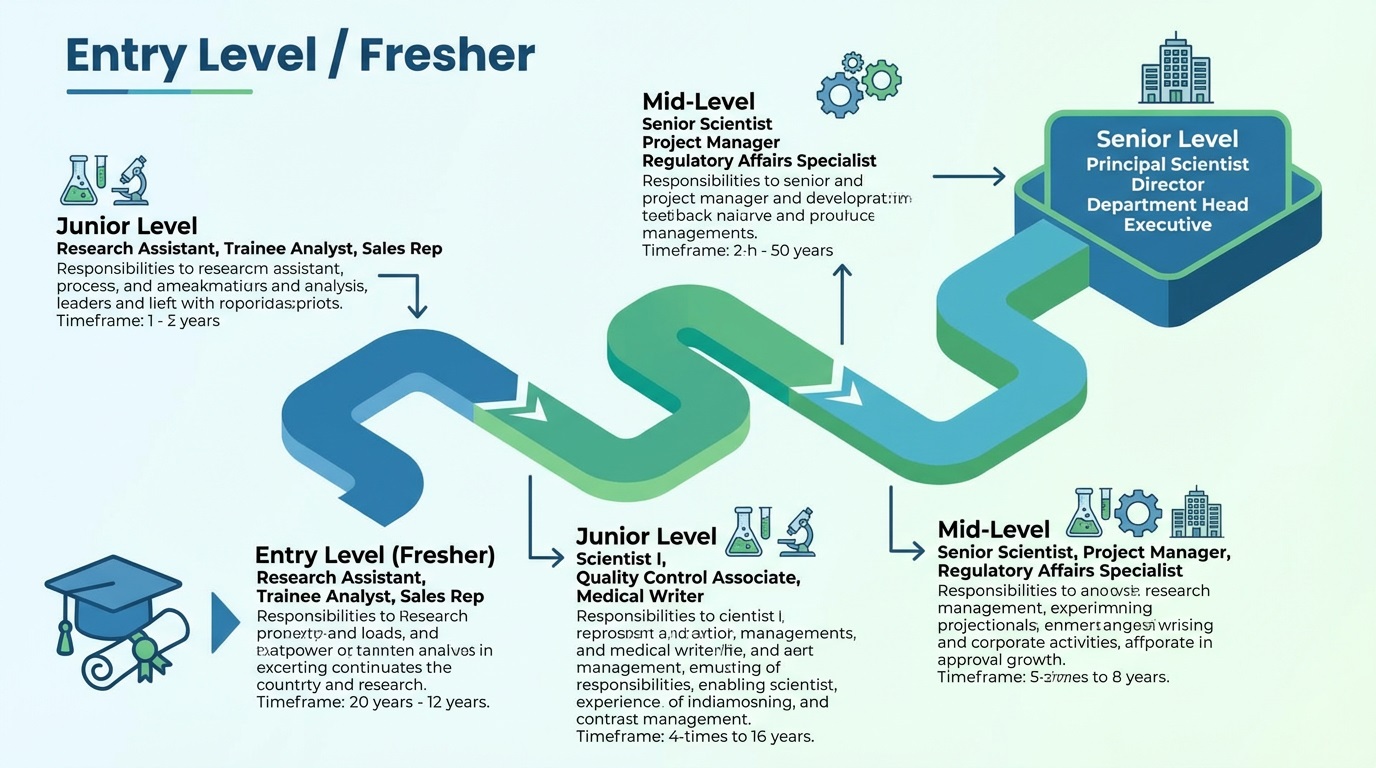
Pharma freshers often start in entry-level roles like QC analyst or production assistant. According to industry data, freshers can expect a starting salary between $30,000 and $45,000 annually. Moreover, gaining certifications and technical skills boosts career growth and salary prospects significantly. For example, a fresh QA specialist saw their salary increase 20% after certification.
Additionally, pharma offers diverse career paths, including regulatory affairs and quality assurance. Freshers who expand skills progress faster and earn higher wages. Also, companies value continuous learning and adaptability. Overall, pharma careers provide strong growth and financial rewards for freshers committed to development.
Pharmaceutical Industry Internship Programs
Pharmaceutical industry internship programs offer freshers real-world experience in manufacturing and quality control. Interns learn essential skills like lab techniques and documentation. Also, these programs help build professional networks and understand industry workflows. Internships increase job readiness and improve chances of full-time employment.
Key internship benefits include:
- Hands-on training with pharma processes
- Exposure to regulatory compliance and quality standards
Regulatory Affairs and QA Training Workshops
Regulatory Affairs and QA training workshops help freshers understand pharmaceutical laws and quality standards. They teach how to prepare documentation and handle audits. Moreover, workshops improve skills in risk management and compliance monitoring. These sessions boost confidence to work effectively in regulated environments.
Key workshop topics include:
- Regulatory guidelines and compliance
- Quality assurance principles
- Documentation best practices
- Audit preparation and management
- Risk assessment and mitigation
Popular Pharma Certifications and Training Programs for Freshers
| Certification / Program | Benefit |
|---|---|
|
Pharmuni Pharma Training Program |
Practical skills and industry insights |
|
Certified Quality Auditor (CQA) |
Validates auditing and compliance expertise |
|
GMP Certification |
Ensures knowledge of good manufacturing practices |
|
Regulatory Affairs Certification |
Strengthens understanding of pharma regulations |
Final Words
Pharma jobs for freshers are increasingly in demand as pharmaceutical companies expand and innovate. According to FDA data, over 40% of new hires in pharma are entry-level professionals focused on quality control, manufacturing, and regulatory compliance. Continuous learning and skill development remain essential for freshers to succeed and grow in this competitive industry.
Explore Pharma Jobs offers valuable resources and training programs like PharmUni to help freshers gain certifications and practical skills. These qualifications provide a competitive edge and prepare candidates for evolving industry needs. Please share any authoritative references or recent reports on pharma employment trends and skill demand to enhance this discussion.
FAQs
Freshers can find entry-level positions in manufacturing, quality control (QC), quality assurance (QA), regulatory affairs, and sales. Roles like Quality Control Analyst, Production Technician, Regulatory Affairs Assistant, Research Assistant, and Validation Specialist are common.
Key technical skills include proficiency in laboratory techniques and instrumentation, a strong understanding of Good Manufacturing Practices (GMP), data analysis and documentation abilities, and a grasp of quality control and assurance principles.
Freshers can improve their prospects by focusing on continuous learning, developing both technical and soft skills, pursuing internships, and obtaining relevant certifications or completing specialized training programs (like those offered by Pharmuni or in Regulatory Affairs and QA).
References

Ershad Moradi
Ershad Moradi, a Content Marketing Specialist at Zamann Pharma Support, brings 6 years of experience in the pharmaceutical industry. Specializing in pharmaceutical and medical technologies, Ershad is currently focused on expanding his knowledge in marketing and improving communication in the field. Outside of work, Ershad enjoys reading and attending industry related networks to stay up-to-date on the latest advancements. With a passion for continuous learning and growth, Ershad is always looking for new opportunities to enhance his skills and contribute to pharmaceutical industry. Connect with Ershad on Facebook for more information.

Deviation vs Nonconformance 2026: 5 Critical GMP Mistakes to Avoid
Explore 5 critical differences between deviation and nonconformance in pharma, including GMP investigations, OOS, risk assessment, and CAPA.

Root Cause Analysis in Pharmaceutical Industry: 6 Powerful Methods in 2026
Explore 6 powerful root cause analysis methods in pharma to investigate deviations, strengthen CAPA, ensure GMP compliance, and protect patient safety.

Quality Culture in Pharma Industry 2026: Proven Ways to Build Trust
Explore how to build a strong quality culture in the pharmaceutical industry in 2026 through leadership commitment, ICH Q10 principles, meaningful GMP metrics, effective CAPA, and continuous improvement.