


Batch Surveillance in Pharma monitors lots using complaints, OOS/OOT trends, and stability results. FDA links this to CGMP under FD&C Act 501(a)(2)(B) and expects deviation investigations per 21 CFR 211.192. Early signal detection can prevent exposure to contaminated, mislabeled, or subpotent medicine and reduce recall size.
Effective batch management in pharmaceutical industry depends on QA systems required by 21 CFR 211.22 and CAPA to correct trends. FDA Enforcement Reports list recall actions, but I don’t have the latest annual totals; cite the report for your year. Surveillance strengthens patient safety, product quality, and regulatory adherence.
Table of Contents
What is Batch Surveillance in Pharma?
Batch surveillance in pharma tracks each batch after release to spot problems fast daily. Teams review complaints, lab trends, and stability results against specifications.
So, they act quickly, quarantine stock, and start investigations under 21 CFR 211.192. This work protects patients, supports consistent quality, and helps meet FDA CGMP rules.
How Does Batch Surveillance Ensure Pharmaceutical Safety?
Batch surveillance checks every lot for safety signals after release.
- Trend complaints and lab results to catch contamination early.
- Verify labels, potency, and sterility against specifications.
Therefore, teams quarantine suspect lots and start CAPA within hours.
- Document investigations under 21 CFR 211.192 and close deviations.
- Target 100% traceability and 100% review of critical deviations.
- Alert FDA during required recall actions.
Batch Surveillance Procedures and Protocols in Pharma
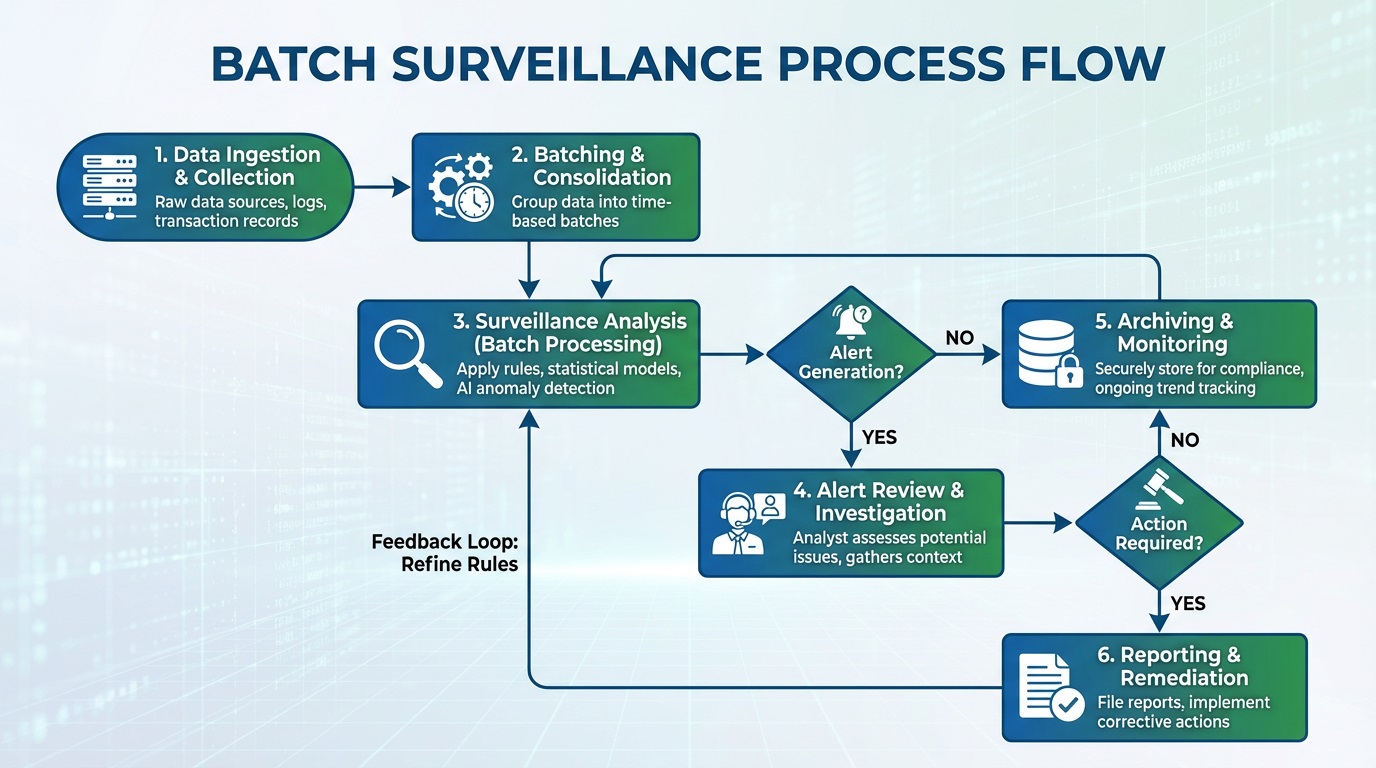
Batch surveillance uses clear steps to control risk and keep quality.
- Sampling Methods and Frequency: Set schedules and sample sizes per product risk.
- Testing Parameters and Standards: Test identity, potency, purity, and microbial limits.
Therefore, teams track results and prove compliance with every lot.
- Data Recording and Analysis: Log data, trend shifts, and flag outliers quickly.
- Quality Assurance and Documentation: Review records, approve actions, and archive evidence.
Sampling Methods and Frequency
Batch Surveillance in Pharma uses planned sampling to detect risks early.
- Teams sample raw materials, in-process blends, and finished lots.
- They pick units across the batch to represent start, middle, end.
- They increase sampling after deviations, complaints, or process changes.
Therefore, they set frequency using risk and history, not guesswork.
- Many plants run at least 1 release sample per batch.
- Teams often review trends weekly and finalize reports within 30 days.
Testing Parameters and Standards
Testing parameters define what you must measure to release each batch. Teams test identity, potency, purity, and dissolution for tablets and capsules. They test sterility and endotoxins for injectables and biologics.
Therefore, standards set clear limits and trigger fast decisions. Teams follow USP, ICH Q6A, and FDA cGMP expectations.
Data Recording and Analysis
Teams record batch data to control quality and support traceability. They log results, dates, instruments, analysts, and batch numbers in LIMS. They attach deviations, investigations, and corrective actions to each record. Therefore, teams analyze trends to spot drift before failures. They chart control limits, compare lots, and flag outliers quickly.
Quality Assurance and Documentation
Quality assurance guides batch surveillance and protects product quality. QA reviews records, checks data integrity, and approves each batch release. Teams follow SOPs, train staff, and manage changes to prevent errors. So, documentation proves control and supports inspections. They keep traceable logs, audit trails, and CAPA records for each batch.
Comparison of Sampling Methods & Their Applications
| Sampling method | Typical application in pharma | Best for |
|---|---|---|
|
Random (simple) sampling |
Routine in-process or finished product checks |
General representativeness |
|
Stratified sampling |
Batches with known subgroups (e.g., shifts, lines, container sizes) |
Comparing subgroups fairly |
|
Systematic sampling |
Continuous production (e.g., every 15 minutes or every Nth unit) |
Detecting time-based variation |
|
Risk-based/targeted sampling |
After deviations, supplier changes, or complaint signals |
Focusing on likely failure points |
|
Composite sampling |
Raw materials or large lots where many increments combine |
Estimating average quality quickly |
Role of Batch Surveillance in Regulatory Compliance
Batch surveillance supports regulatory compliance and protects patient safety.
Teams monitor process data, review deviations, and confirm validated limits.
Therefore, teams document actions and show control during audits.
They follow GMP rules and maintain traceable batch records.
- Ensuring Facilitating Audit Readiness and Traceability
- Compliance with Regulatory Standards
Ensuring Compliance with Regulatory Standards
Teams ensure compliance by following GMP procedures and current regulatory guidance. They train staff, control changes, and review deviations to prevent repeat errors.
- Follow approved SOPs every time
- Document actions in real time
- Monitor trends and investigate quickly
Close CAPA on schedule
Facilitating Audit Readiness and Traceability
Pharma groups stay audit-ready by keeping complete, accurate records for each batch. They log actions in real time and link them to SOPs and approvals. Therefore, inspectors can trace decisions quickly and confirm controlled processes. Teams review records often and fix gaps before audits and release.
– Use clear batch numbers and timestamps
– Store records in one controlled system
– Track changes with approvals and reasons
– Reconcile materials, yields, and labels
– Review logbooks and e-records weekly
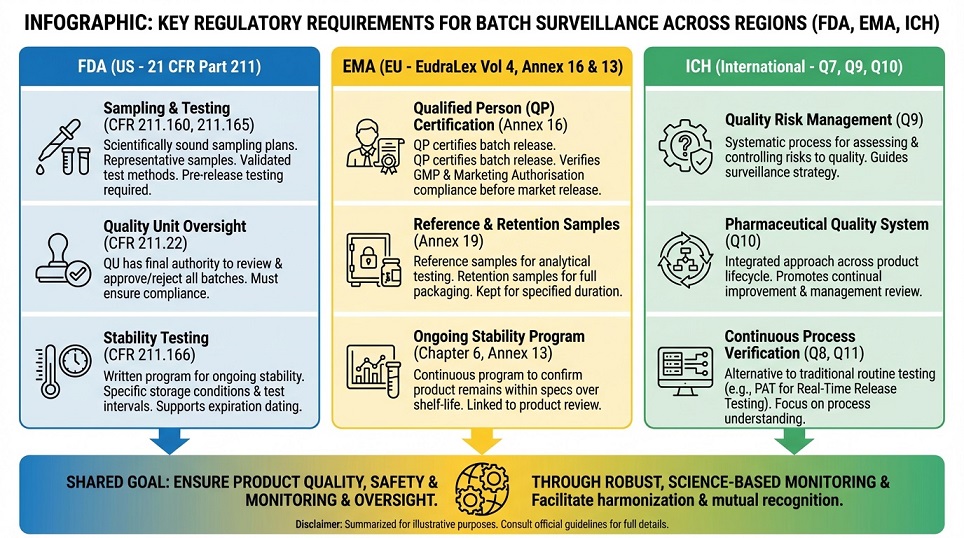
Key Regulatory Requirements for Batch Surveillance across Regions (FDA, EMA, ICH)
Batch Release vs. Batch Surveillance: Key Differences
Batch release confirms a batch meets specifications before distribution and patient use. Quality teams review test results, deviations, and approvals to sign release on time. However, batch surveillance tracks trends across batches to spot drift early, quickly. Teams analyze process data and complaints to prevent failures and improve compliance overall.
Final words
Batch surveillance strengthens Patient Safety Importance by monitoring every lot after release across sites and markets. WHO estimates 10% medical products in LMICs are substandard or falsified, so firms must trend assay, impurities, and stability. Continuous checks trigger CAPA and prevent recalls.
Pharmacovigilance links batch signals with complaints and adverse events; WHO estimates medication errors cost US$42 billion yearly. Align surveillance with FDA cGMP, ICH Q10/Q9, and USP chapters to prove control globally. Add citations to these standards in your SOPs and reports.
FAQs
It monitors released lots using complaints, stability, and OOS/OOT trend data to detect quality signals early.
Batch release confirms one lot meets specs before distribution; surveillance trends many lots after release to spot drift.
21 CFR 211.192 requires thorough investigations of discrepancies and failures, including trends.
References

Ershad Moradi
Ershad Moradi, a Content Marketing Specialist at Zamann Pharma Support, brings 6 years of experience in the pharmaceutical industry. Specializing in pharmaceutical and medical technologies, Ershad is currently focused on expanding his knowledge in marketing and improving communication in the field. Outside of work, Ershad enjoys reading and attending industry related networks to stay up-to-date on the latest advancements. With a passion for continuous learning and growth, Ershad is always looking for new opportunities to enhance his skills and contribute to pharmaceutical industry. Connect with Ershad on Facebook for more information.

Root Cause Analysis in Pharmaceutical Industry: 6 Powerful Methods in 2026
Explore 6 powerful root cause analysis methods in pharma to investigate deviations, strengthen CAPA, ensure GMP compliance, and protect patient safety.

Quality Culture in Pharma Industry 2026: Proven Ways to Build Trust
Explore how to build a strong quality culture in the pharmaceutical industry in 2026 through leadership commitment, ICH Q10 principles, meaningful GMP metrics, effective CAPA, and continuous improvement.

GMP Training Effectiveness 2026: Proven Ways to Build Real Competence
GMP training effectiveness goes beyond attendance records and quiz scores. Learn how role-based assessments, on-the-job observation, and meaningful KPIs help verify employee competence, strengthen training records, and address recurring performance gaps across pharmaceutical operations.