

Good Manufacturing Practices training in 2026: FDA inspection requirements

In 2025 inspection trend data shows that nearly 65% of FDA Form 483 findings are linked to training gaps and documentation issues in pharmaceutical manufacturing sites. This clearly highlights how critical structured training is for compliance and inspection success.

In this context, Good Manufacturing Practices training ensures that personnel consistently follow controlled procedures, while Good Manufacturing Practices (GMP) define the regulatory backbone for quality, documentation, and employee qualification. However, inspections still reveal frequent gaps in training effectiveness and record accuracy, which increase compliance risks.

Therefore, companies must treat GMP training as a core compliance system that directly supports FDA inspection readiness, reduces deviations, and strengthens overall product quality.

Table of Contents

What is Good Manufacturing Practices training in pharmaceutical compliance?

Good Manufacturing Practices training in pharmaceutical compliance is a structured system that ensures employees understand and correctly apply regulatory requirements in daily operations. It builds personnel competence through standardized procedures and role-based learning, while improving consistency in production activities. Moreover, it reduces errors and strengthens documentation accuracy. Therefore, effective GMP training directly supports regulatory compliance, improves inspection readiness, and ensures consistent pharmaceutical quality.

How training gaps impact inspection outcomes?

Inadequate GMP training increases inspection risks in pharmaceutical manufacturing. When employees lack proper training, they make documentation errors and create data integrity issues. Moreover, inspectors quickly detect these gaps during FDA audits and issue regulatory observations. Therefore, weak training directly leads to poor inspection outcomes and higher compliance risks.

Key elements of a GMP training system for inspection readiness

A strong GMP training system ensures that pharmaceutical teams perform tasks correctly, consistently, and in line with regulatory expectations. It connects employee competence with controlled procedures and inspection requirements. Moreover, it strengthens compliance by reducing operational errors and improving documentation quality. Therefore, companies must build structured training systems that directly support FDA inspection readiness and audit performance.

We will discuss the following key components of this system:

  • Role-based GMP training and employee qualification
  • SOP integration and controlled document training
  • Training records management and audit traceability
  • Training effectiveness evaluation and requalification cycles

Role-based GMP training and employee qualification

Pharmaceutical companies assign training based on each employee’s specific role to ensure accurate task execution. Moreover, they assess employee qualification to confirm that every individual meets regulatory and operational standards.

SOP integration and controlled document training

Training programs align directly with approved SOPs to ensure employees follow consistent procedures in daily operations. In addition, companies use controlled document systems to guarantee that staff always access the latest approved instructions.

Training records management and audit traceability

Organizations maintain detailed training records to document who completed each training activity and when. Furthermore, they ensure full audit traceability so inspectors can verify compliance quickly during FDA inspections.

Training effectiveness evaluation and requalification cycles

Companies evaluate training effectiveness to confirm that employees correctly apply what they learn in real operations. Therefore, they schedule regular requalification cycles to maintain competency and support continuous GMP compliance.

Building an FDA inspection-ready GMP training program

A structured GMP training program helps pharmaceutical companies develop employee competence, maintain regulatory compliance, and ensure consistent operational performance. Moreover, it connects training activities directly to FDA inspection expectations. Therefore, organizations can reduce compliance risks and improve audit readiness by designing a clear and controlled training system.

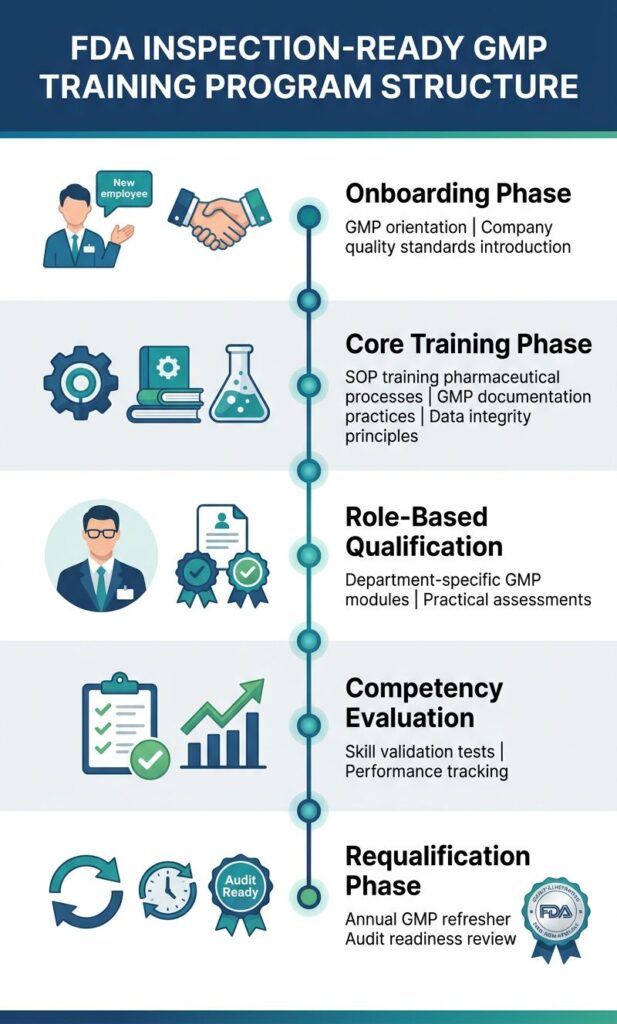
This infographic illustrates the complete FDA inspection-ready GMP training program structure, from onboarding new employees to continuous requalification cycles.

FDA inspection-ready GMP training program workflow showing employee onboarding, SOP-based training, records management, and requalification process in pharmaceutical manufacturing.
Step-by-step structure of an FDA inspection-ready GMP training program covering onboarding, SOP training, documentation control, and requalification.

Common FDA inspection findings related to GMP training gaps

FDA inspections frequently reveal recurring issues linked to weak GMP training systems in pharmaceutical manufacturing. When training programs fail to ensure proper employee qualification, companies face documentation errors, data integrity issues, and inconsistent execution of procedures. Moreover, inspectors quickly identify these gaps during audits, which often leads to Form 483 observations and increased compliance risks.

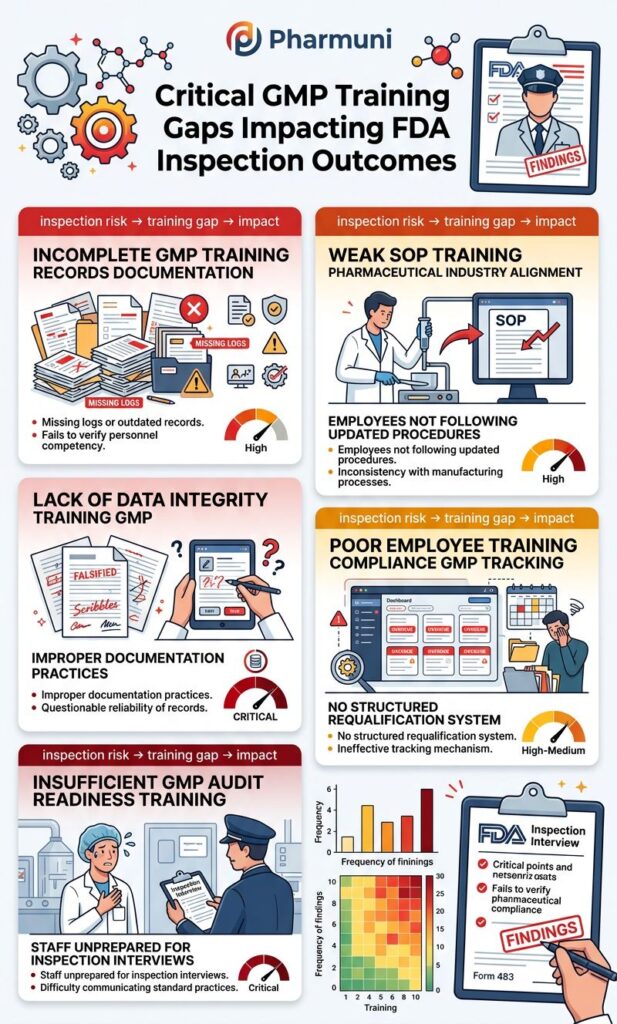
This infographic presents the most common GMP training gaps that lead to FDA inspection findings and highlights their direct impact on pharmaceutical compliance.

Infographic showing top GMP training gaps leading to FDA inspection findings including SOP non-compliance, poor training records, and lack of qualification tracking.
Key GMP training deficiencies identified during FDA inspections and their impact on documentation, data integrity, and regulatory compliance in pharmaceutical manufacturing.

The table below summarizes the most frequent GMP training-related inspection findings and their root causes with corresponding corrective actions.

Training Gap FDA Inspection Finding Root Cause Corrective Action (CAPA)
Incomplete role-based training
Operator errors in batch records
Lack of structured qualification plan
Implement role-based training matrix with competency verification
Weak SOP adherence
Deviations from approved procedures
Outdated or unclear SOP training
Strengthen SOP-controlled document training system
Poor training documentation
Missing or inconsistent training records
Manual tracking system
Deploy digital training record management system
No training effectiveness check
Repeated procedural errors
Lack of evaluation process
Introduce periodic assessments and requalification cycles

Final words

In recent inspection trend analyses across pharmaceutical manufacturing sites, nearly 60–65% of FDA Form 483 observations continue to be linked to training deficiencies, documentation issues, and weak GMP execution systems. This highlights a consistent regulatory focus on how well companies implement and maintain training programs in real operational settings.

Overall, Good Manufacturing Practices training remains a critical factor in inspection success because it directly influences employee performance, data integrity, and compliance behavior. Therefore, organizations that invest in structured, continuous training systems significantly reduce regulatory risks and improve long-term audit readiness.

FAQ

1️⃣What are the most common training issues found during FDA inspections?

Most inspection findings come from incomplete role-based training, weak SOP alignment, and missing training records. These gaps directly lead to Form 483 observations.

2️⃣How do inspectors evaluate training effectiveness during audits?

Inspectors review training records, employee competency evidence, and deviation history. They check whether training translates into correct real-world execution.

The most effective approach is implementing structured role-based training with documented assessments and continuous requalification cycles.

Picture of Mahtab Shardi
Mahtab Shardi

Mahtab is a pharmaceutical professional with a Master’s degree in Physical Chemistry and over five years of experience in laboratory and QC roles. Mahtab contributes reliable, well-structured pharmaceutical content to Pharmuni, helping turn complex scientific topics into clear, practical insights for industry professionals and students.

Share