

Sterile Processing Technician Jobs Guide in 2026

In 2025, about 33% of hospitals reported documented problems in sterile processing workflows and compliance during quality reviews, revealing how crucial skilled technicians have become to patient safety and inspection readiness. Sterile Processing Technician Jobs now rank among the most in‑demand roles in healthcare as facilities strengthen infection control, sterilization validation procedures, and SPD workflow integrity. Moreover, these positions offer competitive pay and clear steps for career growth, making them a compelling choice for professionals pursuing Pharma Jobs that blend hands‑on technical work with direct impact on clinical outcomes. For job seekers who value responsibility and growth, sterile technician roles provide both stability and purpose.

Table of Contents

What do Sterile Processing Technicians jobs do in regulated environments?

Sterile Processing Technician Jobs play a vital role in ensuring compliance with GMP and healthcare regulations. These professionals handle medical instruments, perform meticulous sterilization procedures, and prevent contamination across the SPD workflow. Daily responsibilities include inspecting, cleaning, and packaging surgical tools, validating sterilization cycles, and maintaining detailed documentation for audits. Those in sterile technician jobs directly support infection control standards and inspection readiness, making their work essential for both patient safety and regulatory compliance. By combining technical precision with rigorous adherence to protocols, they form the backbone of effective hospital sterilization systems.

How sterile processing roles support compliance and inspection readiness

Sterile processing roles play a critical part in GMP compliance because they directly control contamination risk at the source. During inspections, auditors don’t just review outcomes they trace every step, and that’s exactly where sterile processing teams add value. They ensure precise cleaning, validated sterilization cycles, and complete batch traceability. Moreover, they maintain accurate, real-time documentation, so nothing gets lost or delayed. As a result, companies reduce deviation rates and respond faster to audit findings. In fact, without strong sterile processing controls, inspection readiness quickly collapses, because gaps in traceability and documentation immediately raise red flags for regulators.

Critical Roles Impacting Inspection Performance

Sterile Processing Technician Jobs play a key part in protecting the integrity of surgical and production instruments in pharmaceutical environments. These professionals guide every sterilization workflow, so inspection outcomes often shift based on their daily performance. Moreover, they strengthen contamination control, ensure consistent compliance, and support quality assurance across operations. Because of their direct impact, understanding the roles that most strongly influence inspection readiness and results is essential for maintaining high standards and audit success.

In this section, we explore the compliance‑driven responsibilities that directly shape inspection outcomes.

  • Instrument sterilization and contamination control
  • Documentation and traceability of sterilization cycles
  • Equipment maintenance and validation support (PDF)
  • Cross-functional coordination with QA and infection control teams


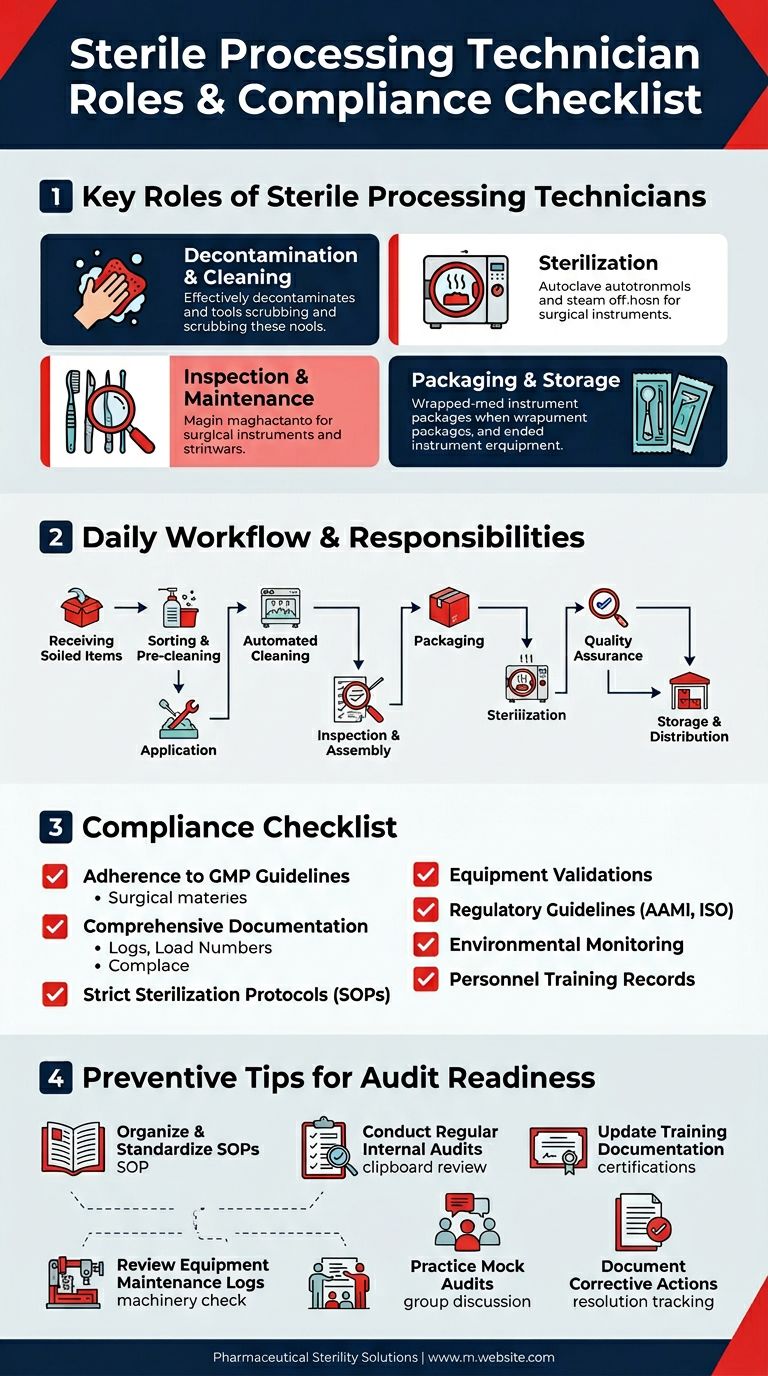
The infographic below visualizes the core sterile processing technician roles and the compliance checkpoints that have the highest impact on pharmaceutical inspection outcomes.

Infographic illustrating key sterile processing technician roles and compliance requirements that influence pharmaceutical inspection outcomes.
A complete view of sterile processing technician responsibilities and compliance controls that drive successful inspection performance in pharmaceutical settings.

Instrument sterilization and contamination control

Sterile processing technicians clean, disinfect, and sterilize instruments according to validated protocols. As a result, they reduce contamination risks and protect product quality and patient safety.

Documentation and traceability of sterilization cycles

Technicians record every sterilization cycle and verify each parameter during the process. Therefore, teams maintain full traceability and quickly demonstrate compliance during inspections.

Equipment maintenance and validation support (PDF)

Technicians monitor sterilization equipment and report performance issues immediately. In addition, they support validation activities and ensure the equipment operates within approved specifications.

Cross-functional coordination with QA and infection control teams

Technicians collaborate closely with QA and infection control teams to align procedures with compliance standards. Consequently, organizations strengthen inspection readiness and maintain consistent contamination control practices.

Sterile Technician Career Path: Skills, Certifications, and Growth Roadmap

A Sterile Technician plays a key role in ensuring patient safety and clinical quality, so you must build the right skills and certifications to advance your career. Below is a clear roadmap that shows what you need at each stage, from entry-level work to expert roles in sterile processing.

This table outlines the essential competencies, certifications, and experience required to grow as a Sterile Technician in healthcare and pharmaceutical settings.

Career Stage Education & Experience Certifications Key Technical Skills
Entry-Level Technician
High school diploma + basic training
Basic sterilization procedures, attention to detail
Certified Technician
6–12 months hands-on experience
CRCST (Certified Registered Central Service Technician)
Autoclave operation, infection control, instrument tracking
Experienced Technician
1–3 years clinical experience
CSPDT or CBSPD certificates
Complex sterilization processes, quality assurance checks
Instrument Specialist
Advanced field experience + focused training
CIS (Certified Instrument Specialist)
Specialized instrument care, advanced troubleshooting
Lead/Supervisor Roles
5+ years experience + leadership skills
CHL or SPD management credentials
Team coordination, workflow optimization

In the early stages, focus on mastering infection control basics and sterilization techniques. As you gain experience, earn certifications like CRCST to boost your credibility and unlock new opportunities. With time and advanced credentials, you can move into specialized or supervisory roles that influence sterile processing quality and efficiency.

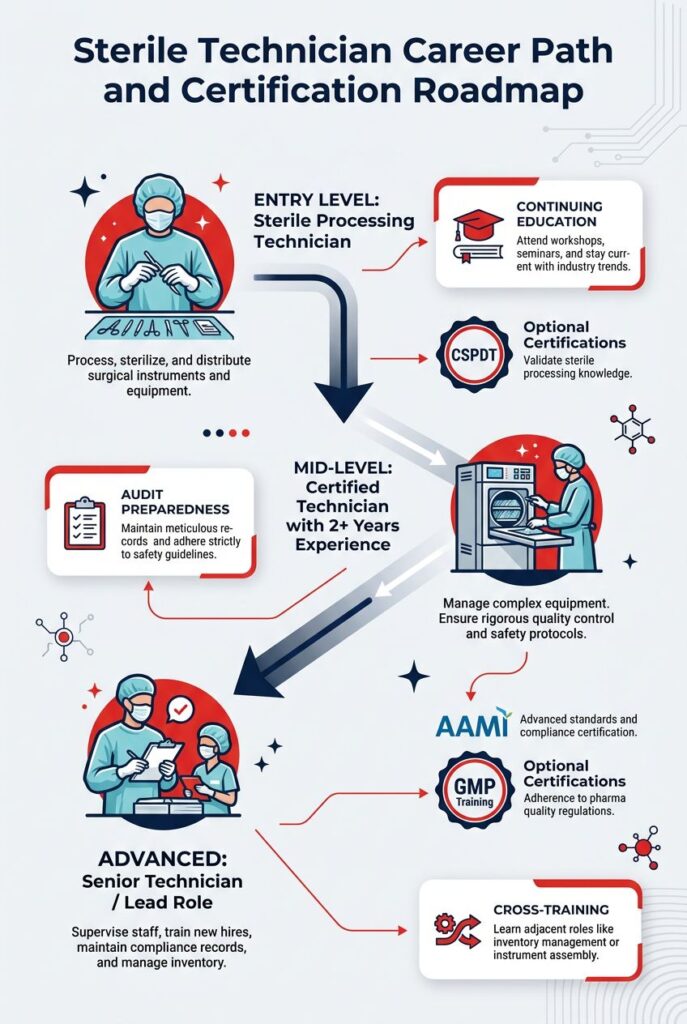
Explore the complete career path and essential certifications every Sterile Technician needs to succeed in healthcare and pharma.

Infographic showing Sterile Technician career stages, required skills, technical competencies, and certification roadmap for advancement in healthcare and pharmaceutical settings
Sterile Technician Career Roadmap: Key Skills, Certifications, and Professional Growth Path for Healthcare Professionals

Where Sterile Technicians Work and How Their Careers Advance

Sterile Technicians keep medical instruments safe, clean, and ready for use, working across hospitals, pharmaceutical companies, research labs, and outpatient centers. They ensure infection control, support surgeries, maintain lab equipment, and help deliver safe medications. As they gain experience, they can specialize, lead teams, and grow into advanced roles, building a clear and rewarding career path in healthcare and pharma.

Latest Sterile Processing Technician Jobs: Find Opportunities by Role and Employer

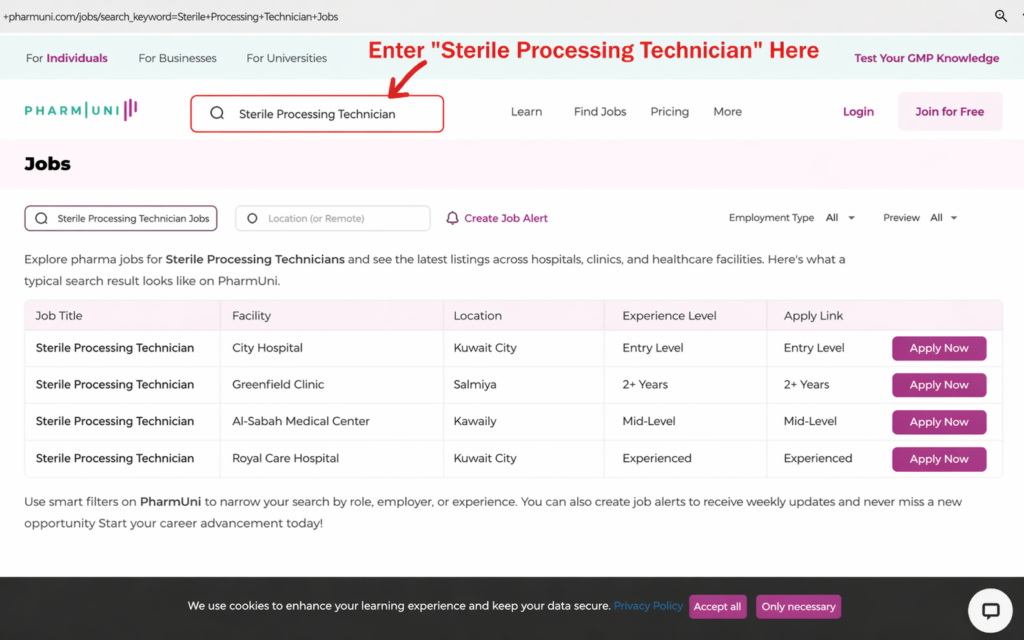
Explore pharma jobs and advance your healthcare career on PharmUni. On this platform, you can browse and search jobs by role, hospital, clinic, or experience level using smart filters that make finding the right position easy. Start exploring now and connect directly with top employers.

Explore updated Sterile Processing Technician jobs across hospitals, clinics, and healthcare facilities. Filter roles by experience level, job position, and employer to find the right opportunity faster.

Final words

Sterile Processing Technician Jobs remain essential across hospitals, laboratories, and pharmaceutical settings, ensuring patient safety and smooth clinical operations. In 2023, nearly 114,000 sterile processing technicians were actively employed in the United States, reflecting strong demand and stable growth. Industry trends indicate continued emphasis on infection control, quality assurance, and operational excellence, making this career both reliable and rewarding for skilled professionals.

FAQ

1️⃣How do Sterile Processing Technicians prevent contamination in pharma operations?

Technicians follow strict sterilization protocols, regularly monitor instruments, and maintain controlled workflows to ensure every tool meets safety and quality standards.

2️⃣What certifications matter most for career advancement in sterile processing?

Key certifications like CRCST, CBSPD, or CIS demonstrate technical competence, enhance credibility, and open opportunities for specialized or supervisory roles in pharmaceutical environments.

3️⃣How does daily performance affect inspection outcomes?

Consistent attention to sterilization processes, accurate documentation, and compliance with SOPs directly influence inspection readiness and regulatory results.

Picture of Mahtab Shardi
Mahtab Shardi

Mahtab is a pharmaceutical professional with a Master’s degree in Physical Chemistry and over five years of experience in laboratory and QC roles. Mahtab contributes reliable, well-structured pharmaceutical content to Pharmuni, helping turn complex scientific topics into clear, practical insights for industry professionals and students.

Sterile technician performing medical device sterilization compliance tasks within an SPD workflow, ensuring accurate documentation and infection control standards in hospital settings.

Sterile Processing Technician Jobs Guide in 2026

Sterile Processing Technician Jobs offer a structured career path in healthcare, combining technical precision with compliance expertise. From sterilization validation procedures to SPD workflow management, these roles are essential for infection control, patient safety, and regulatory inspection readiness.

Read More »
Professionals working on pharma marketing roles using data and clinical insights while applying FDA marketing regulations and ethical pharma advertising principles in campaign development

Pharma Marketing Career in 2026: Compliance Skills and Growth Path

A pharma marketing career today demands more than creativity. Professionals must combine healthcare marketing strategy, regulatory awareness, and analytical skills to succeed in pharmaceutical marketing jobs while ensuring compliance with drug promotion rules and delivering scientifically accurate, ethical communication.

Read More »

Share