


Pharmaceutical QMS jobs focus on managing quality systems that ensure drug safety, efficacy, and compliance. According to WHO, nearly 30% of pharmaceutical defects link to poor quality management, underlining the importance of skilled QMS professionals. These experts uphold Good Manufacturing Practices (GMP), manage risks, conduct audits, and ensure process integrity, making their roles vital for maintaining high product standards.
Pharma jobs in quality systems continue to grow as companies face stricter regulations. Professionals in these roles help reduce recalls and compliance issues. Their expertise supports consistent product quality, regulatory adherence, and patient safety, making pharmaceutical QMS jobs essential in the industry’s success.
Table of Contents
What are Pharmaceutical QMS Jobs?
Pharmaceutical QMS jobs involve managing quality systems to ensure drug safety and compliance. These roles include risk assessment, audits, and upholding GMP standards. Also, QMS professionals help prevent costly recalls and maintain product integrity.
Moreover, pharma companies rely on QMS experts to manage documentation and training programs. Data shows firms with strong QMS reduce compliance issues by 25%. Therefore, QMS jobs are vital for consistent quality and regulatory success.
What are the Key Responsibilities in Pharmaceutical QMS Roles?
Pharmaceutical QMS roles focus on ensuring product quality and regulatory compliance. Professionals manage processes that maintain Good Manufacturing Practices (GMP) and reduce risks. Also, they oversee audits and continuous improvement initiatives to keep standards high.
Key responsibilities include:
- Developing and maintaining quality management systems
- Conducting internal and external audits
- Managing corrective and preventive actions (CAPA)
- Training staff on quality standards
- Documenting processes and compliance activities
Different Types of QMS Jobs
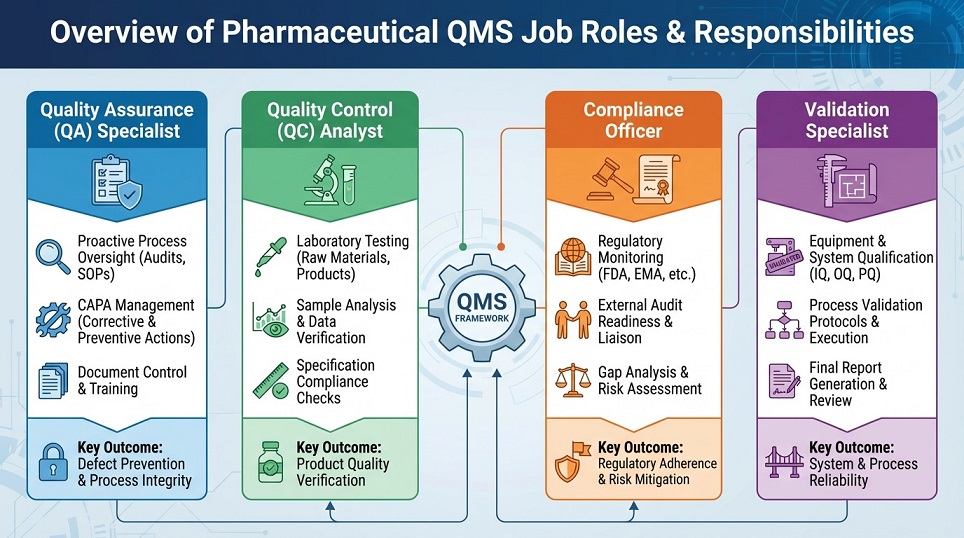
Pharmaceutical companies offer various QMS jobs to maintain product quality and compliance. Each role focuses on specific quality aspects, ensuring safe and effective medicines. Also, these jobs require collaboration for successful quality management.
Common QMS jobs include:
- Quality Assurance (QA) Specialist, who develops and enforces quality systems
- Quality Control (QC) Analyst, who tests products for defects
- Compliance Officer, who ensures regulatory adherence
- Validation Specialist, who verifies equipment and processes meet standards
Quality Assurance (QA) Specialist
Quality Assurance (QA) Specialists ensure pharmaceutical products meet strict quality and safety standards. According to industry data, companies with strong QA teams reduce product recalls by up to 30%. They develop quality systems, conduct audits, and enforce compliance. Also, QA Specialists train staff to follow GMP guidelines consistently.
These professionals play a vital role in regulatory approvals and manufacturing efficiency. Moreover, they monitor processes to prevent defects before product release.
Quality Control (QC) Analyst
A Quality Control (QC) Analyst tests products to ensure they meet quality standards. They check samples, record results, and report issues quickly. Moreover, they follow safety rules to keep the lab safe. Their work helps prevent bad products from reaching customers.
QC Analysts also use special tools to measure product quality. They solve problems and suggest improvements. They work closely with production teams. Together, they keep products safe and effective.
- Sample Testing: Check product samples for quality.
- Data Recording: Log test results accurately.
- Troubleshooting: Find and fix quality problems.
- Team Collaboration: Work with production for quality.
Compliance Officer
A Compliance Officer ensures a company follows laws and regulations in the pharma industry. They review processes carefully and train staff to meet standards. Moreover, they conduct audits to find any issues. Their work protects the company from fines and reputational damage.
They also update company policies regularly to match new regulations. They report compliance status to management clearly. Finally, they help solve compliance problems quickly and effectively.
- Policy Development: Create and update company rules.
- Staff Training: Teach employees about regulations.
- Auditing: Inspect processes for compliance.
- Reporting: Inform management about compliance issues.
Validation Specialist
A Validation Specialist checks that equipment and processes work correctly in pharma production. They plan tests, collect data, and confirm results. Additionally, they ensure validation meets regulatory standards. Their role improves product safety and quality.
They also write reports and fix issues found during validation. They coordinate with QA and production teams regularly. This teamwork keeps operations smooth and compliant.
– Test Planning: Design validation test protocols.
– Data Collection: Gather test results carefully.
– Report Writing: Document validation findings clearly.
– Issue Resolution: Address problems and improve processes.
Required technical skills for pharma QMS professionals
Pharma QMS professionals must know Good Manufacturing Practices (GMP) well. They use this knowledge to ensure product safety and quality. Additionally, they manage quality risks and implement CAPA to fix issues. These skills help prevent errors and improve processes.
They also conduct audits and assess compliance regularly. Moreover, they control documents and manage system changes efficiently. These skills keep the quality system strong and up to date.
- Knowledge of Good Manufacturing Practices (GMP)
- Quality Risk Management and CAPA Implementation
- Auditing and Compliance Assessment Skills
- Document Control and Change Management Systems
Knowledge of Good Manufacturing Practices (GMP)
Pharma QMS professionals must understand Good Manufacturing Practices (GMP) deeply. For example, they ensure clean equipment and proper documentation. They follow GMP to keep products safe. Also, they train staff to follow GMP rules every day.
They monitor processes closely and correct errors quickly. Moreover, they create reports to prove GMP compliance. This work helps avoid regulatory problems and improves product quality.
Quality Risk Management and CAPA Implementation
Pharma QMS professionals use Quality Risk Management to identify and prevent potential problems. A study showed 70% fewer product defects after risk assessments. They analyze data and act quickly to maintain quality. Also, they collaborate with teams to manage risks well.
They implement CAPA to fix issues and stop them from recurring. Professionals track CAPA effectiveness to ensure continuous improvement. Moreover, they document every step to meet regulatory expectations. This approach reduces errors and saves costs significantly.
Furthermore, these skills support FDA and EMA compliance. For example, 85% of pharma companies cite CAPA as essential for audits. They review processes regularly and update controls accordingly. Therefore, Quality Risk Management and CAPA strengthen product safety.
Auditing and Compliance Assessment Skills
Pharma QMS professionals perform audits to ensure regulations and policies are met. For example, 40% of FDA inspection issues link to weak audit processes. They check documents and processes carefully. Moreover, they find problems and suggest solutions.
- Prepare thorough audit checklists and plans
- Review documents and observe processes closely
- Identify non-compliance and report clearly
- Suggest corrective actions and track progress
- Train staff on compliance and audit practices
Document Control and Change Management Systems
Pharma QMS professionals manage documents carefully to ensure accuracy and accessibility. Studies show 60% fewer errors with good document control. They organize files and track versions regularly. Also, they maintain records to meet regulatory demands.
They manage change by reviewing and approving modifications systematically. Professionals update processes and communicate changes clearly. Moreover, they prevent mistakes by controlling document access tightly. Change management helps maintain product quality consistently.
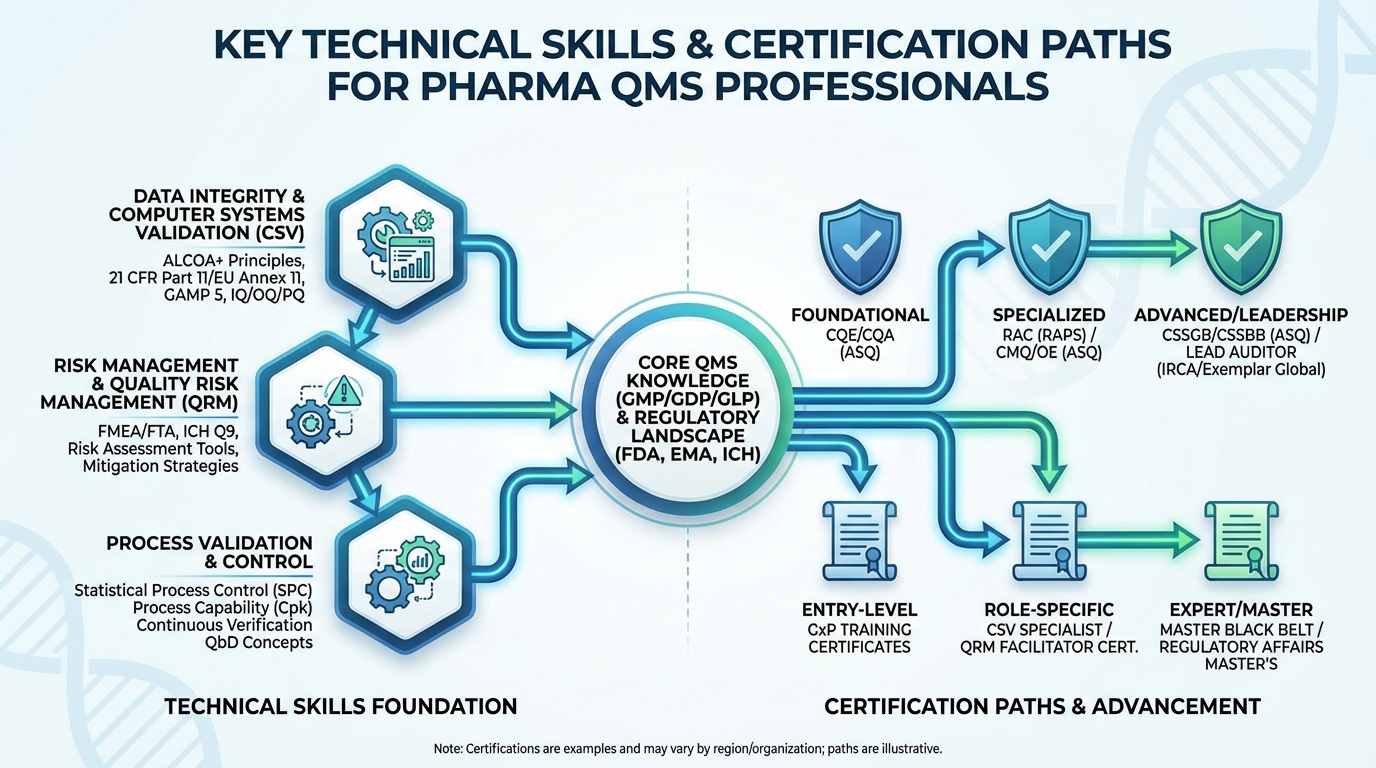
Required Certifications and Training for Pharmaceutical QMS Jobs
Pharma QMS jobs require certifications and training to ensure quality and compliance. Pharmuni offers great courses to build these skills. They cover essential topics like GMP, auditing, and risk management. Also, certifications improve job prospects and professional growth.
Training teaches employees how to follow regulations strictly and handle documentation well. Pharmuni’s programs help workers stay updated with industry standards. Moreover, ongoing learning supports continuous quality improvements in pharma companies. This training boosts confidence and efficiency.
Popular Certifications for Pharmaceutical QMS Jobs and Their Benefits
| Certification | Benefit |
|---|---|
|
Certified Quality Pharma Auditor (CQPA) |
Validates auditing expertise and boosts career opportunities |
|
Good Manufacturing Practices (GMP) Training |
Ensures compliance with industry regulations |
|
Risk Management Certification |
Improves ability to identify and mitigate quality risks |
|
Pharmuni Pharma Quality Courses |
Offers practical knowledge and updated industry skills |
Final Word
Pharmaceutical QMS roles are vital for maintaining drug quality and regulatory compliance. According to the FDA, over 50% of warning letters cite quality system failures. QMS professionals ensure processes meet standards, preventing costly FDA 483 observations. Continuous learning and certifications, like those offered by Pharmuni, help these experts stay updated on evolving regulations and technologies.
Adaptability is key in this fast-changing industry. Professionals who embrace ongoing education can better manage risks and improve product safety. To grow your career, Explore Pharma Jobs and invest in quality training through Pharmuni.
FAQs
Pharmaceutical QMS jobs involve managing quality systems, ensuring drug safety, compliance, and risk management.
QMS professionals develop quality systems, conduct audits, manage CAPA, train staff, and maintain documentation.
They need strong knowledge of GMP, quality risk management, auditing, document control, and change management.

Ershad Moradi
Ershad Moradi, a Content Marketing Specialist at Zamann Pharma Support, brings 6 years of experience in the pharmaceutical industry. Specializing in pharmaceutical and medical technologies, Ershad is currently focused on expanding his knowledge in marketing and improving communication in the field. Outside of work, Ershad enjoys reading and attending industry related networks to stay up-to-date on the latest advancements. With a passion for continuous learning and growth, Ershad is always looking for new opportunities to enhance his skills and contribute to pharmaceutical industry. Connect with Ershad on Facebook for more information.
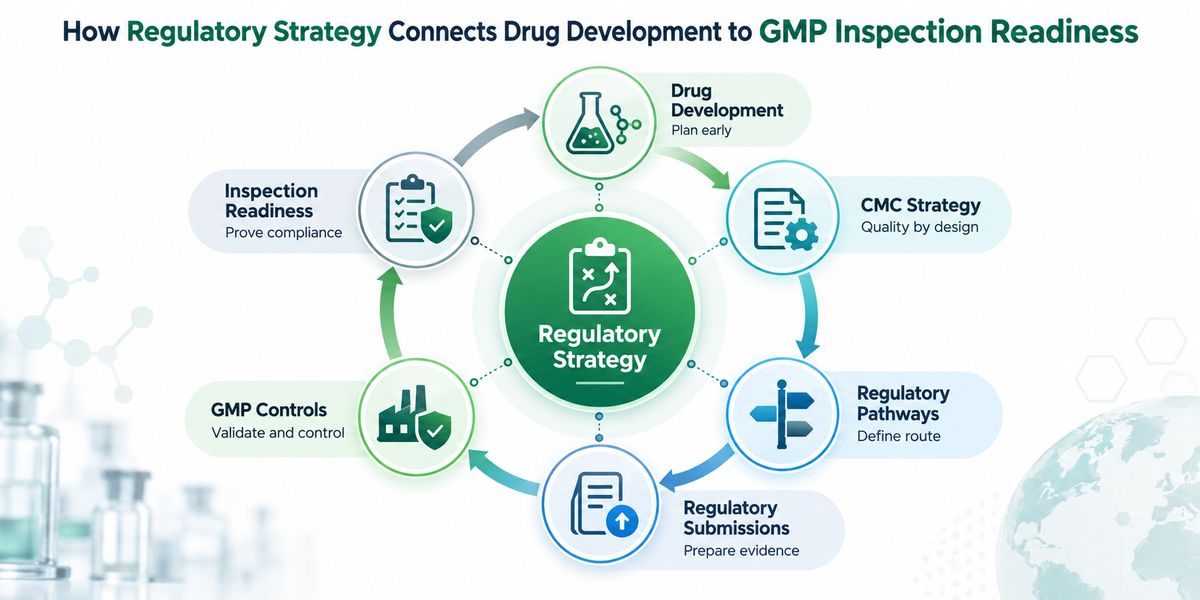
Regulatory Strategy in Pharma in 2026: From Drug Development to GMP Inspection Readiness
Effective regulatory planning connects drug development, CMC, submissions, manufacturing, and lifecycle obligations. This article explains how regulatory teams can reduce compliance gaps, prepare for inspections, manage post-approval changes, and make better decisions across the pharmaceutical product lifecycle.

Alison vs Pharmuni in 2026: Free Learning at Scale or a Guided Pharma Career System?
Alison offers 6,000+ free courses plus career tools and recruitment. Pharmuni is smaller but pharma-focused, with role assessments, Career Paths, CV tools, and 1,000+ life-science jobs.

Udemy vs Pharmuni in 2026: One Course Fast or a Full Pharma Career Path?
Udemy makes it easy to buy a specific self-paced course from a huge marketplace. Pharmuni takes a different approach, connecting pharma learning with assessments, Career Paths, competency visibility, CV tools, and job matching.