

Pharma Marketing Career in 2026: Compliance Skills and Growth Path

In 2024, regulators issued more than 1,000 FDA warning letters and compliance actions related to drug promotion and marketing practices worldwide, a signal that pharmaceutical companies now watch their marketing teams as closely as their manufacturing lines. Because of this growing scrutiny, a pharma marketing career no longer focuses only on creativity and brand visibility. Instead, it combines marketing strategy with regulatory awareness, data analysis, and compliance with healthcare laws. As a result, professionals who want to enter Pharma Jobs today must understand how drug promotion rules, FDA marketing regulations, and ethical communication shape every campaign. In this environment, successful pharma marketers blend scientific understanding with responsible messaging while meeting regulatory expectations.

Table of Contents

What is a pharma marketing career?

A pharma marketing career focuses on promoting medicines while following strict regulatory rules. Unlike general marketing, professionals must align campaigns with FDA and EMA regulations. They work with medical, legal, and regulatory teams before launching campaigns and translate clinical data into clear communication for healthcare professionals and patients. As a result, this role combines healthcare marketing strategy, scientific understanding, and regulatory awareness.

How compliance expectations shape marketing roles

Pharmaceutical marketing jobs operate under strict regulatory expectations, so compliance shapes daily work. Authorities like the FDA and EMA closely monitor promotion, so teams design campaigns with rules in mind from the start. They review clinical data, verify claims, and align messages with the approved label before releasing materials. Promotional content also goes through medical, legal, and regulatory (MLR) review to prevent unsupported or misleading claims. As a result, professionals must understand drug promotion compliance, FDA marketing regulations, and ethical advertising.

Key Responsibilities That Drive Success in Pharma Marketing

Success in this field requires more than creative campaigns or strong brand messaging. Professionals must balance marketing performance with strict regulatory discipline. Therefore, teams plan activities with compliance, medical accuracy, and regulatory review in mind. In addition, they collaborate with internal stakeholders to keep promotional strategies aligned with approved product information and healthcare marketing standards.

In the following sections, we explore the core responsibilities that define effective and compliant pharmaceutical marketing work:

  • Managing promotional material review workflows
  • Aligning campaigns with regulatory guidelines
  • Coordinating with medical and legal teams
  • Monitoring post-launch compliance risks


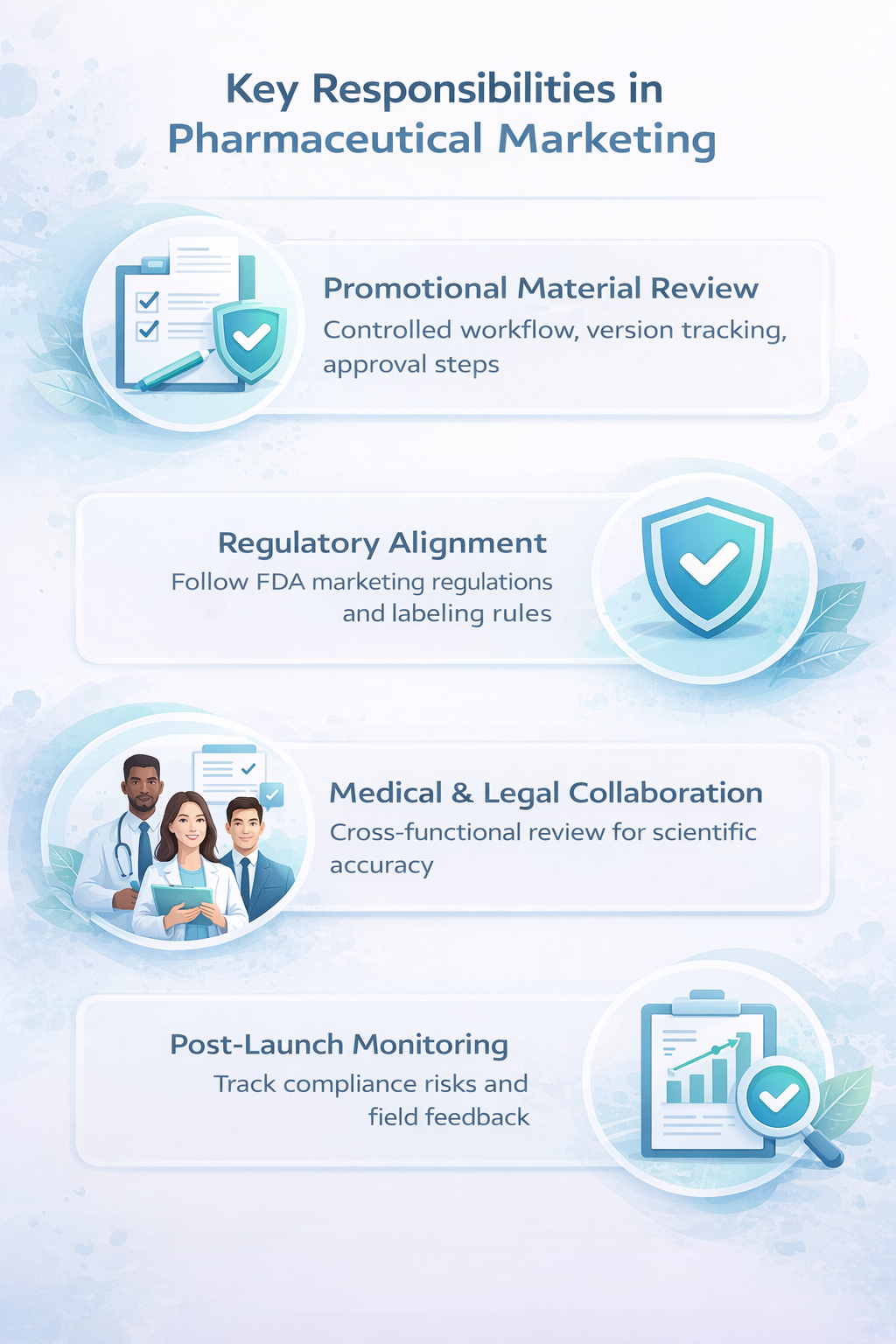
The infographic below highlights the core operational responsibilities that support compliant and effective pharmaceutical marketing.

Key responsibilities in pharmaceutical marketing including promotional review, regulatory alignment, medical collaboration, and compliance monitoring
Key responsibilities that drive success in pharmaceutical marketing roles and compliance oversight

Managing promotional material review workflows

Teams create structured review workflows to move promotional materials from draft to approval in a controlled process. They track versions, assign responsibilities, and document comments for inspection readiness.

Aligning campaigns with regulatory guidelines

Marketers align every claim, image, and message with regulatory rules to ensure campaigns respect product labeling and ethical standards. They study authority guidance and industry codes and apply them in daily planning.

Coordinating with medical and legal teams

Specialists collaborate with medical and legal teams to confirm scientific accuracy and legal compliance. They review feedback and finalize wording before any promotional material is released.

Monitoring post-launch compliance risks

After launch, teams monitor how materials are used and perform in the field. They track complaints, audits, and inspection feedback, then adjust content and processes to close compliance gaps.

Skills required to succeed in this field

Professionals in pharmaceutical marketing jobs need a mix of strategic thinking, regulatory awareness, and scientific understanding. Unlike traditional marketing, they must translate complex clinical data into clear and responsible communication. Therefore, they need to understand healthcare marketing strategy while respecting drug promotion compliance and regulatory expectations. Strong analytical and communication skills also help them evaluate campaigns and collaborate with medical, regulatory, and legal teams.

Career path and progression opportunities

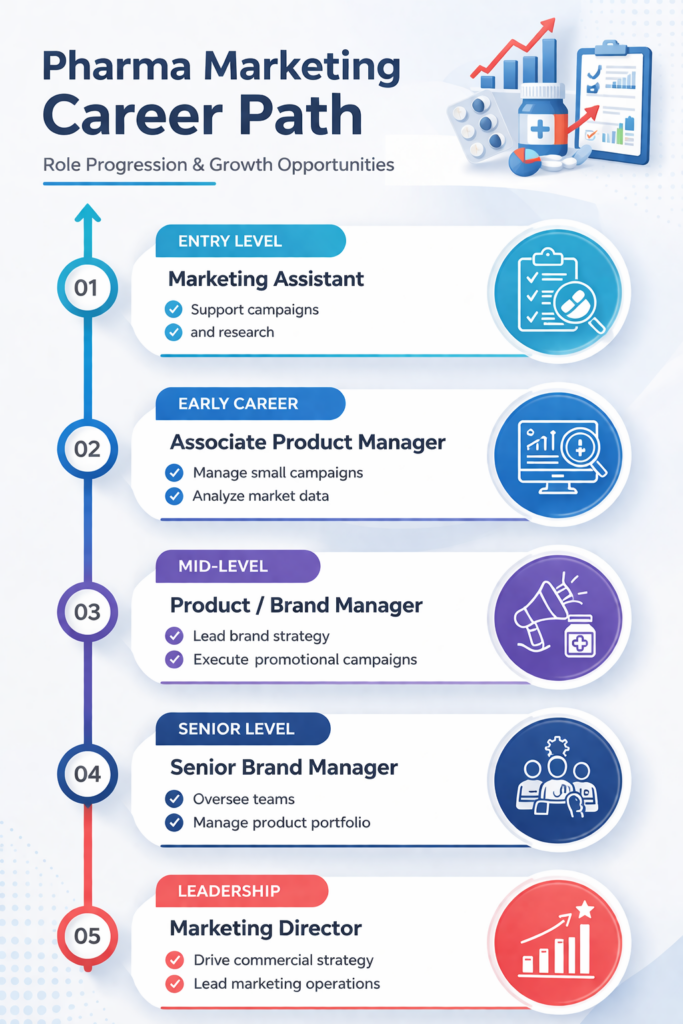
A career in entry‑level pharma marketing often begins with support roles focused on market research, campaign coordination, and promotional materials. However, professionals move into more strategic positions as they gain experience with product launches, healthcare marketing strategy, and regulatory review. As a result, many progress from operational roles to brand leadership and portfolio management positions.

Career Level Typical Job Title Core Responsibilities Experience Range
Entry Level
Marketing Assistant / Marketing Coordinator
Support campaigns, research markets, prepare materials, and coordinate reviews
0–2 years
Early Career
Product Executive / Associate Product Manager
Manage small campaigns, analyze market data, support brand strategy, coordinate with sales teams
2–4 years
Mid-Level
Product Manager / Brand Manager
Lead brand strategy, manage marketing budgets, oversee promotional campaigns, ensure regulatory alignment
4–8 years
Senior Level
Senior Brand Manager / Marketing Manager
Lead product portfolio strategy, manage cross functional teams, oversee launch planning and compliance strategy
8–12 years
Leadership
Marketing Director / Head of Marketing
Define commercial strategy, supervise multiple brands, lead global or regional marketing operations
12+ years

The infographic below shows the typical pharma marketing career path, from entry‑level roles to senior leadership as responsibilities expand.

Pharmaceutical marketing career progression from marketing assistant to marketing director
Pharma marketing career path from entry level roles to marketing leadership

How to Start and Find Opportunities in Pharma Marketing

Breaking into a pharmaceutical marketing role requires a mix of industry knowledge, regulatory awareness, and the right job platform. First, build a strong understanding of healthcare marketing, compliance principles, and drug promotion regulations. Then focus on platforms that specialize in life‑science careers rather than general job boards.

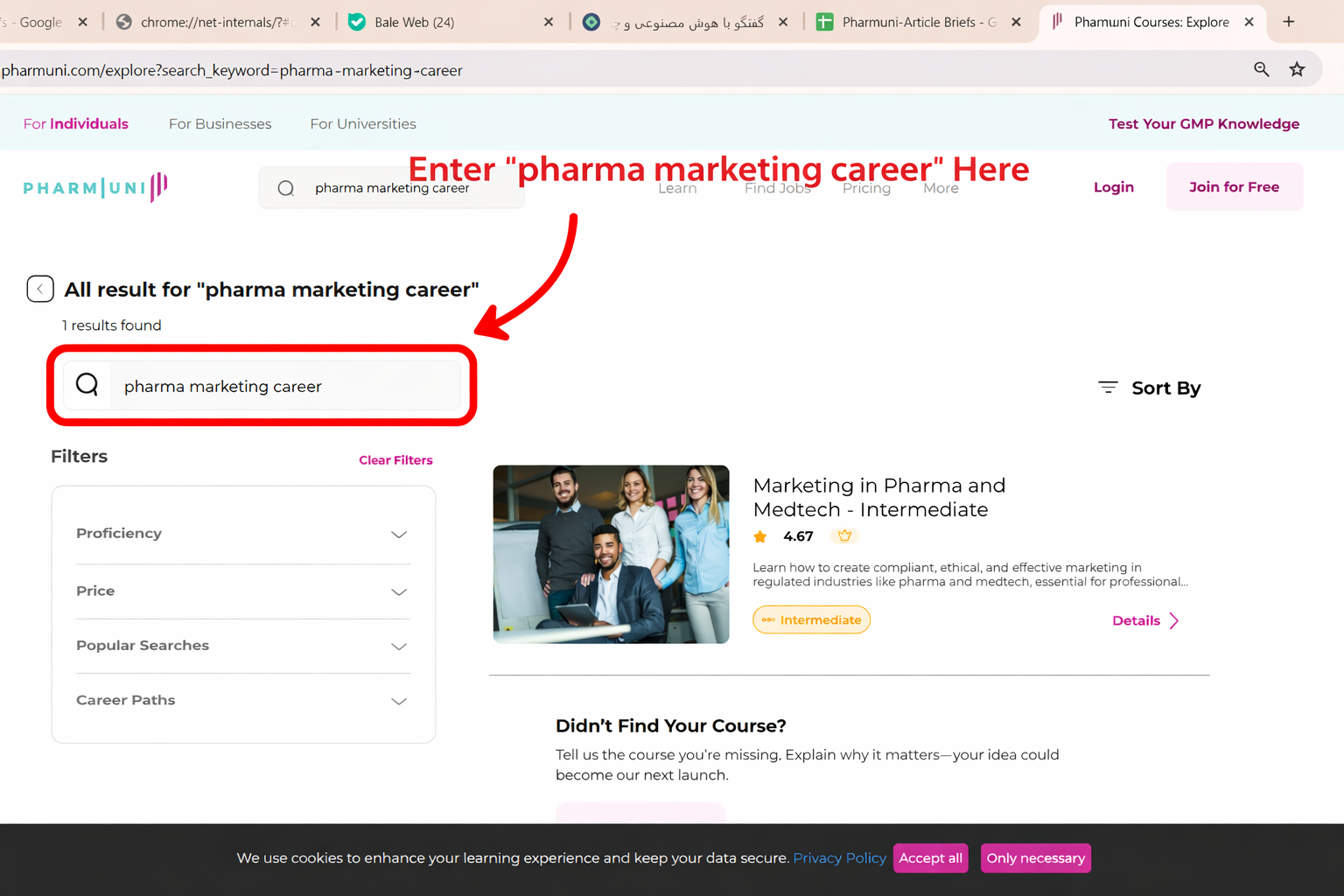
For example, you can Explore Pharma Jobs on PharmUni, a specialized platform that helps professionals discover compliance‑focused pharmaceutical marketing roles across the industry. As a result, candidates can quickly identify opportunities that match their skills in healthcare marketing, regulatory alignment, and brand strategy.

PharmUni pharma jobs platform showing pharma marketing career opportunities, compliance-focused pharmaceutical marketing roles, and job search interface for industry professionals
Explore Pharma Jobs on PharmUni to discover compliance-focused pharma marketing roles, including brand management, digital pharma marketing, and regulatory-driven career opportunities.

Final words

In the last few years, FDA enforcement has quietly intensified: between 2020 and 2023, inspection and warningletter activity for promotional violations rose by well over 30%, with digital and social media materials facing the sharpest scrutiny. This trend sends a clear signal to anyone considering a pharma marketing career: long‑term success now depends on how well you internalize inspection logic, document your decisions, and build compliant campaigns that can stand up to detailed regulatory review not just on how creative your ideas look in a slide deck.

FAQ

1️⃣Do you need a science degree to work in pharmaceutical marketing?

Not always. A science background helps, but learning healthcare compliance and medical communication can also open the door.

2️⃣Why do marketing teams in healthcare work so closely with medical and regulatory departments?

Because every claim must match approved evidence. This cross‑functional review prevents misleading messages and reduces compliance risk.

3️⃣What skills matter most for growth in healthcare product marketing roles?

Analytical thinking, regulatory awareness, and clear communication. These help translate data, follow promotion rules, and collaborate with teams.

Picture of Mahtab Shardi
Mahtab Shardi

Mahtab is a pharmaceutical professional with a Master’s degree in Physical Chemistry and over five years of experience in laboratory and QC roles. Mahtab contributes reliable, well-structured pharmaceutical content to Pharmuni, helping turn complex scientific topics into clear, practical insights for industry professionals and students.

Professionals working on pharma marketing roles using data and clinical insights while applying FDA marketing regulations and ethical pharma advertising principles in campaign development

Pharma Marketing Career in 2026: Compliance Skills and Growth Path

A pharma marketing career today demands more than creativity. Professionals must combine healthcare marketing strategy, regulatory awareness, and analytical skills to succeed in pharmaceutical marketing jobs while ensuring compliance with drug promotion rules and delivering scientifically accurate, ethical communication.

Read More »
Pharmacy student reviewing pharmaceutical manufacturing training materials during a pharma student internship to build GMP exposure and quality assurance internship experience.

Pharma Student Job: What Gets You Hired in 2026

Finding the right pharma student internship can shape your future in the pharmaceutical industry. PharmUni helps pharmacy and life science students discover pharmaceutical internship positions worldwide, gain GMP exposure, and build essential pharma industry skills through real student opportunities.

Read More »

Share