

Pharma Student Job: What Gets You Hired in 2026

In 2025, the global pharmaceutical market exceeds $1.6 trillion, while industry data shows that more than 65% of entry‑level roles now come from internship pipelines. Therefore, competition for any pharma student job continues to rise each year. At the same time, companies receive dozens of applications for a single student role, so hiring managers quickly focus on candidates who already understand GMP, manufacturing workflows, and basic regulatory thinking. As a result, students who gain early industry exposure move faster toward full‑time Pharma Jobs. Even one focused internship, a small QA project, or practical pharmaceutical manufacturing training can signal real industry readiness and immediately strengthen a student’s profile in a competitive hiring market.

Table of Contents

What Is a Pharma Student Job in the Pharmaceutical Industry

A pharma student job usually means an internship where pharmacy or pharmaceutical science students gain real industry experience before graduation. Most students enter through pharmaceutical internship positions in manufacturing, quality assurance, regulatory support, or laboratory teams. Here, they review batch records, observe GMP procedures, support documentation, or assist with routine lab testing. As a result, they finally see how medicines move from development to large‑scale production. However, this experience differs from university training. While universities focus on theory and experiments, the pharmaceutical industry focuses on compliance, documentation, and strict quality standards. Therefore, industry exposure helps students turn academic knowledge into practical pharma industry skills.

Why Internship Experience Matters for Pharmaceutical Industry Hiring

Pharmaceutical companies value internship experience because it shows that a student already understands how the industry works. During a pharmacy student internship, students enter regulated environments where strict rules guide every step. They observe GMP practices, handle controlled documents, and learn why accurate records protect product quality and patient safety. As a result, they build strong documentation discipline and attention to detail. Internships also expose them to real production timelines, quality checks, and regulatory expectations. Therefore, hiring managers trust candidates with industry exposure more because they already think and work with an industry‑ready compliance mindset.

Core Competencies That Pharmaceutical Companies Look for in Student Interns

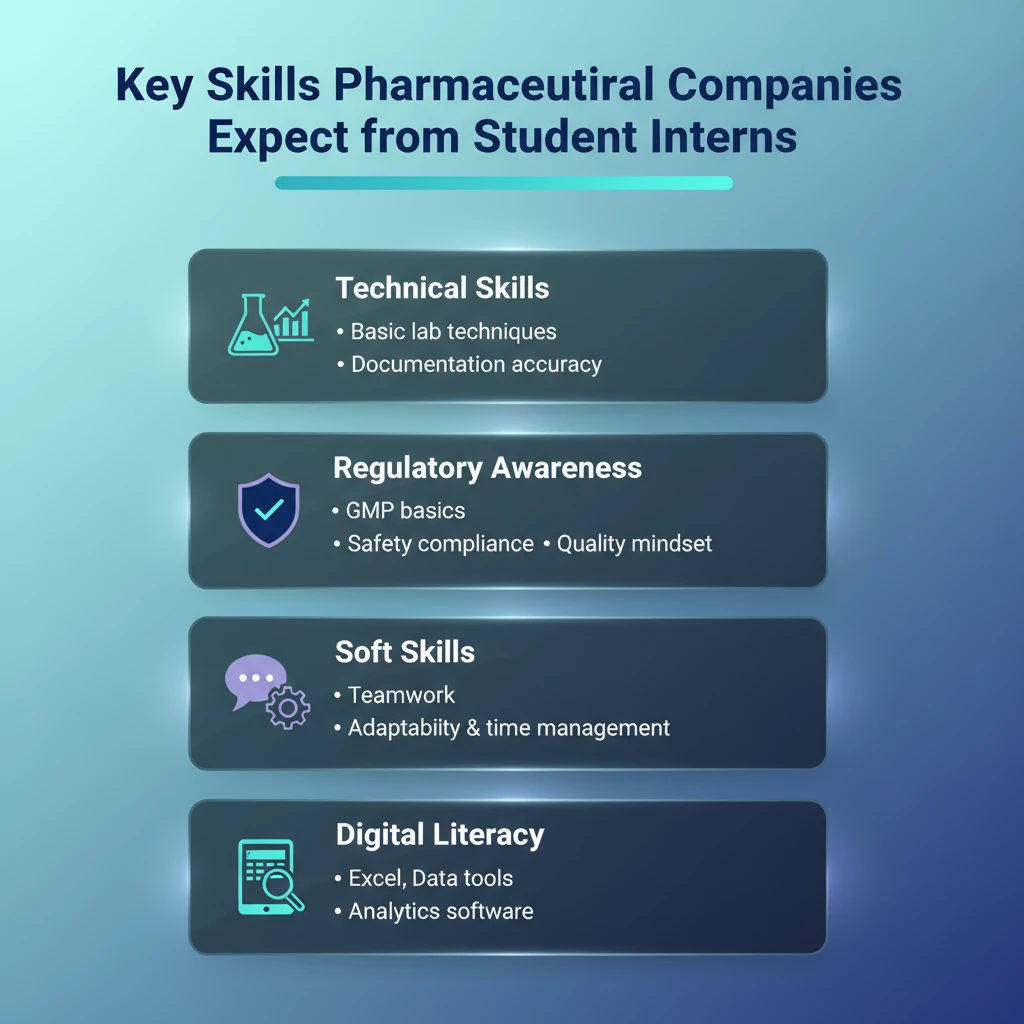
Pharmaceutical companies do not expect students to know everything on day one. However, they look for clear signs that a candidate can function inside a regulated industry. Strong interns usually show curiosity, attention to detail, and respect for procedures. In addition, they learn quickly and follow documentation rules carefully. Therefore, even basic exposure to GMP environments or quality systems can make a big difference during hiring. When recruiters review candidates for a pharmaceutical industry internship, they often focus on a small group of practical competencies that signal real industry readiness.

This infographic highlights the essential industry skills that help students stand out in pharmaceutical internships and move faster toward real hiring opportunities.

Infographic showing the top skills pharma companies look for in student interns, including GMP basics, documentation discipline, quality systems, deviation reporting, and manufacturing awareness.
A clear breakdown of the core competencies that help pharma students succeed during internships and increase their chances of landing future roles in the pharmaceutical industry.

In the sections below, we explore the core competencies that pharmaceutical companies expect from student interns:

  • Understanding GMP Basics and Documentation Discipline
  • Familiarity With Quality Systems and Deviation Reporting
  • Laboratory and Manufacturing Environment Awareness
  • Communication and Cross Team Coordination in Regulated Workplaces

Understanding GMP Basics and Documentation Discipline

Students who know basic GMP rules settle into pharma workflows quickly. They also keep clean, accurate records, which helps teams work smoothly.

Familiarity With Quality Systems and Deviation Reporting

Interns who learn quality systems understand how companies track issues. Therefore, they respond to deviations faster and support QA with confidence.

Laboratory and Manufacturing Environment Awareness

Students who enter labs or production floors understand real‑world workflows better. As a result, they follow instructions clearly and respect safety standards.

Communication and Cross Team Coordination in Regulated Workplaces

Interns who communicate well keep projects moving and reduce confusion. Moreover, strong coordination skills help them work easily with QA, production, and lab teams.

Typical Internship Roles Available for Pharmacy Students

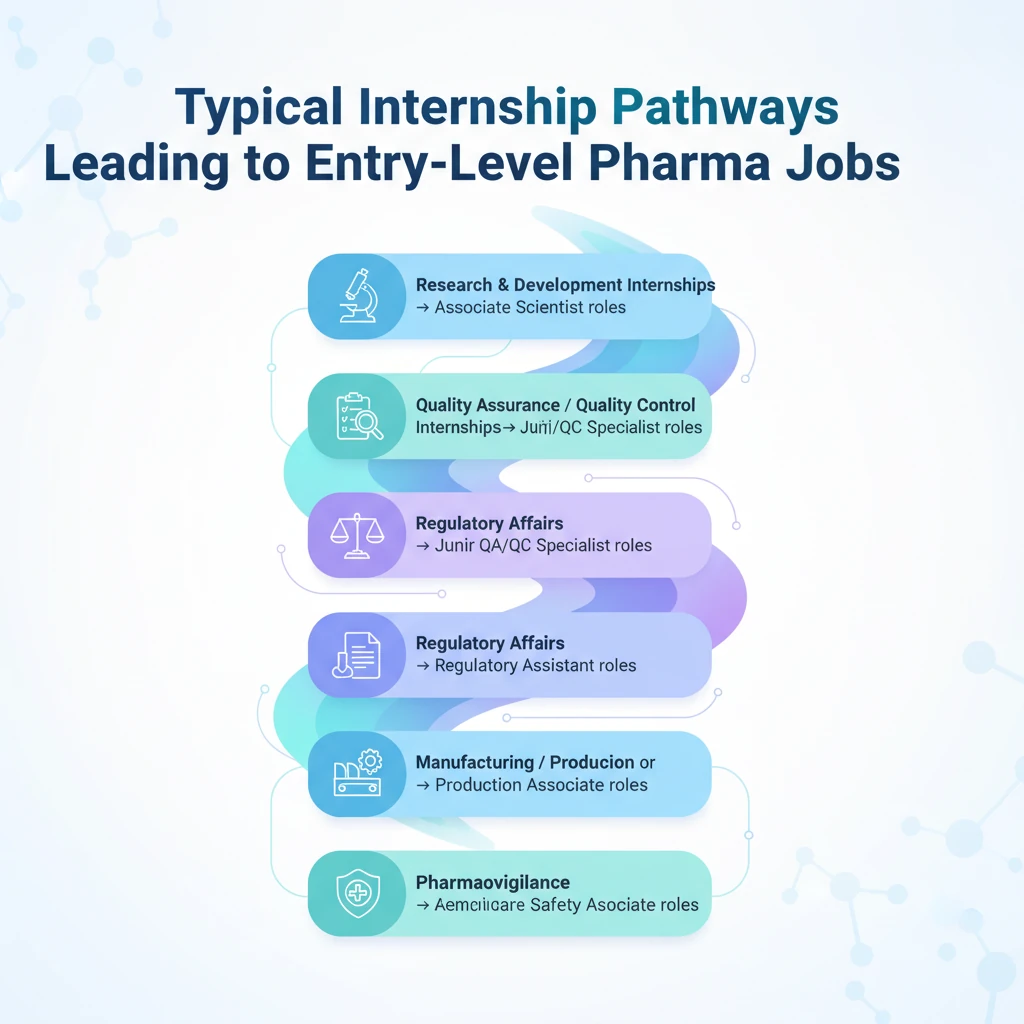
Most pharmacy students enter the industry through internships that expose them to real pharmaceutical operations. Common roles include QA interns who review documents and support audits, production support interns who observe manufacturing workflows, QC laboratory trainees who assist with product testing, and regulatory documentation assistants who organize compliance files. Therefore, these internships help students gain practical experience and move more easily toward entry‑level Pharma Jobs.

This infographic visually maps the most common internship tracks that guide students from university training into full‑time pharmaceutical roles.

Infographic showing typical pharma student internship roles such as QA intern, production support intern, QC lab trainee, and regulatory documentation assistant in pharmaceutical industry.
A clear visual guide to internship positions that help pharma students gain practical exposure and smoothly move toward entry level roles in the pharmaceutical industry.

How Students Can Strengthen Their Chances of Getting Hired

Getting a pharmacy student internship rarely happens by chance. First, students need to build GMP awareness, because companies value candidates who already understand regulated environments. Next, they should develop strong documentation discipline, since pharmaceutical work depends on accurate records and SOP compliance. Finally, pursuing structured pharmaceutical internships in QA, QC, manufacturing, or regulatory teams helps students gain real industry exposure. As a result, recruiters quickly recognize candidates who already understand how the pharmaceutical industry works.

The table below highlights practical actions that significantly increase hiring chances for pharmacy students entering the pharmaceutical industry.

Action Students Take What Students Actually Do Why Pharma Companies Value It
Gain Basic GMP Knowledge
Complete GMP training modules, learn cleanroom behavior, understand batch records and data integrity basics
Shows readiness for regulated pharmaceutical environments
Build Documentation Discipline
Practice writing clear lab records, follow SOP style procedures in university labs, maintain traceable notes
Demonstrates attention to detail and compliance mindset
Pursue Structured Internships
Apply for internships in QA, QC, manufacturing, or regulatory departments
Provides real exposure to pharmaceutical workflows
Learn Quality Systems Basics
Understand deviations, CAPA concepts, change control, and audit preparation
Indicates awareness of quality culture in pharma companies
Develop Lab and Manufacturing Awareness
Gain experience with analytical instruments, formulation labs, or pilot manufacturing environments
Helps students adapt faster to industrial settings
Improve Communication Skills
Present lab results, write short reports, collaborate with cross functional student teams
Reflects ability to work within multidisciplinary pharma teams
Stay Updated on Industry Trends
Follow regulatory updates, attend pharma webinars, read industry case studies
Shows curiosity and commitment to pharmaceutical careers

How to Find the Right Pharma Student Job Using PharmUni

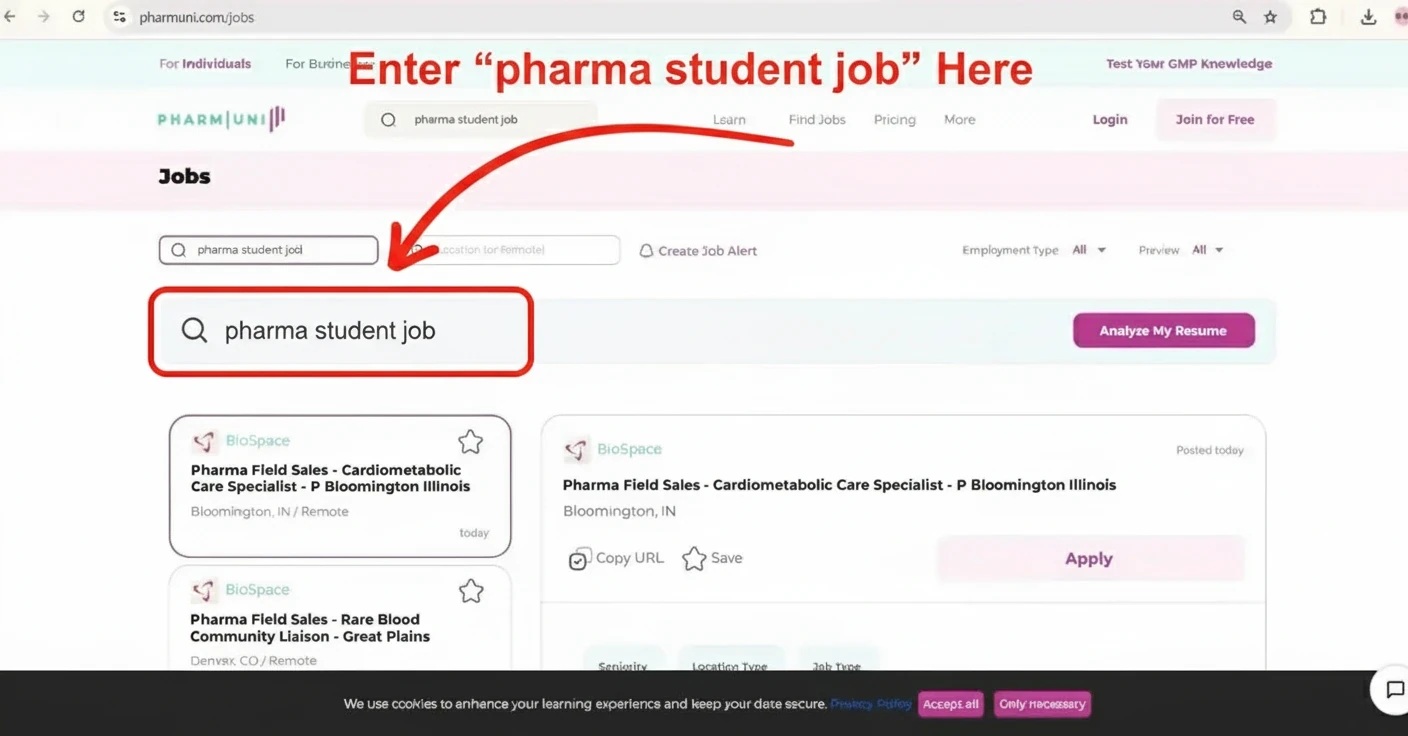
PharmUni makes it easy for pharmacy and life science students to discover the right pharmaceutical internship positions and gain valuable industry experience. Through its global job platform, you can quickly explore opportunities in regulatory affairs, clinical research, quality assurance, manufacturing, and more. With smart filters for location, specialization, and career path, PharmUni helps you find student roles across leading pharmaceutical companies, biotech firms, and CROs worldwide. Instead of searching multiple websites, you can explore pharma jobs in one place and identify opportunities that build real skills and strengthen your CV before graduation.

Student using PharmUni job portal on laptop to find pharma internships and entry-level pharmaceutical jobs, highlighting career search in pharma industry.
Pharma student exploring career opportunities on PharmUni platform, searching for internships and entry-level pharmaceutical jobs with focus on GMP and industry skills.

Final words

As you venture into the competitive world of pharma student jobs, remember that practical experience and a demonstrated understanding of industry standards are paramount. Companies actively seek candidates who can hit the ground running, making internships and focused skill development your most powerful assets. With the global pharmaceutical market projected to reach over $2.1 trillion by 2027, the opportunities are vast, but they are increasingly awarded to those who have proactively prepared. Therefore, leverage your academic learning, actively seek relevant experiences, and showcase your industry readiness to secure your place in this dynamic field.

FAQ

1️⃣How can I gain industry relevant GMP knowledge fast?

Take short certified GMP courses and learn cleanroom rules, contamination control, and documentation basics. This shows employers you already understand regulated pharma work.

2️⃣What skills matter most during pharmaceutical internships?

Focus on documentation, quality systems, and lab accuracy. These skills prove you can work safely and precisely in pharma settings.

3️⃣How much does industry exposure affect hiring?

Real experience from internships or research projects strongly improves your hiring chances because it proves you can handle real pharmaceutical operations.

Picture of Mahtab Shardi
Mahtab Shardi

Mahtab is a pharmaceutical professional with a Master’s degree in Physical Chemistry and over five years of experience in laboratory and QC roles. Mahtab contributes reliable, well-structured pharmaceutical content to Pharmuni, helping turn complex scientific topics into clear, practical insights for industry professionals and students.

Pharmacy student reviewing pharmaceutical manufacturing training materials during a pharma student internship to build GMP exposure and quality assurance internship experience.

Pharma Student Job: What Gets You Hired in 2026

Finding the right pharma student internship can shape your future in the pharmaceutical industry. PharmUni helps pharmacy and life science students discover pharmaceutical internship positions worldwide, gain GMP exposure, and build essential pharma industry skills through real student opportunities.

Read More »
Hold Time in Pharma

Hold Time Study in Pharma 2026: Mastering Critical Manufacturing Timelines for Uncompromised Quality

A Hold Time Study is vital in pharma manufacturing to ensure materials and products remain stable during processing delays. These studies protect drug quality, prevent contamination, and help meet FDA regulations such as avoiding 483 observations. By scientifically determining safe hold durations, companies maintain product safety and comply with GMP standards.

Read More »

Share