

Train Validation Test in Pharma in 2026: Model Validation and Data Integrity

Recent inspection trends show that over 58% of data-related findings in regulated systems link to poor dataset control, including improper splitting and validation gaps, which directly impacts model reliability and compliance. As AI adoption grows, regulators now expect clear justification for how teams structure train validation test datasets and prevent bias or data leakage. Therefore, organizations must align model development with strict data governance and validation principles. In addition, teams working in pharma quality assurance must ensure traceability, auditability, and reproducibility across the entire model lifecycle. As a result, inspectors increasingly evaluate not only model performance but also how consistently companies control data integrity and validation logic.

Table of Contents

What train validation test means in GMP and data-driven systems

In regulated environments, teams must structure datasets in a way that supports both model performance and compliance expectations. Therefore, train validation test defines how data is split to enable reliable training, controlled parameter tuning, and independent performance verification. Moreover, this structure helps teams prevent data leakage and reduce model bias, which directly impacts inspection outcomes. At the same time, regulators expect clear documentation, traceability, and justification for every dataset decision. In addition, when teams align data splitting with validation principles, they create models that are not only accurate but also auditable and trustworthy.

Why data splitting failures trigger inspection findings

Data splitting failures create serious risks in regulated systems because they directly affect model credibility and validation outcomes. When teams misuse train validation test, they often introduce data leakage or hidden bias, which leads to misleading performance results. Moreover, inspectors quickly identify when validation data is not truly independent or when models rely on overlapping datasets. As a result, these gaps raise concerns about data integrity and decision reliability. In addition, poor documentation and unclear splitting logic make it difficult to justify model behavior during inspections, which increases the likelihood of findings.

How dataset separation defines model validation credibility

Clear dataset separation ensures reliable and compliant model validation. When teams keep training, validation, and testing data fully independent, they prevent bias and avoid misleading performance results. Moreover, regulators expect transparency and strong control over how datasets are defined and used. Therefore, proper separation strengthens both model credibility and inspection readiness.

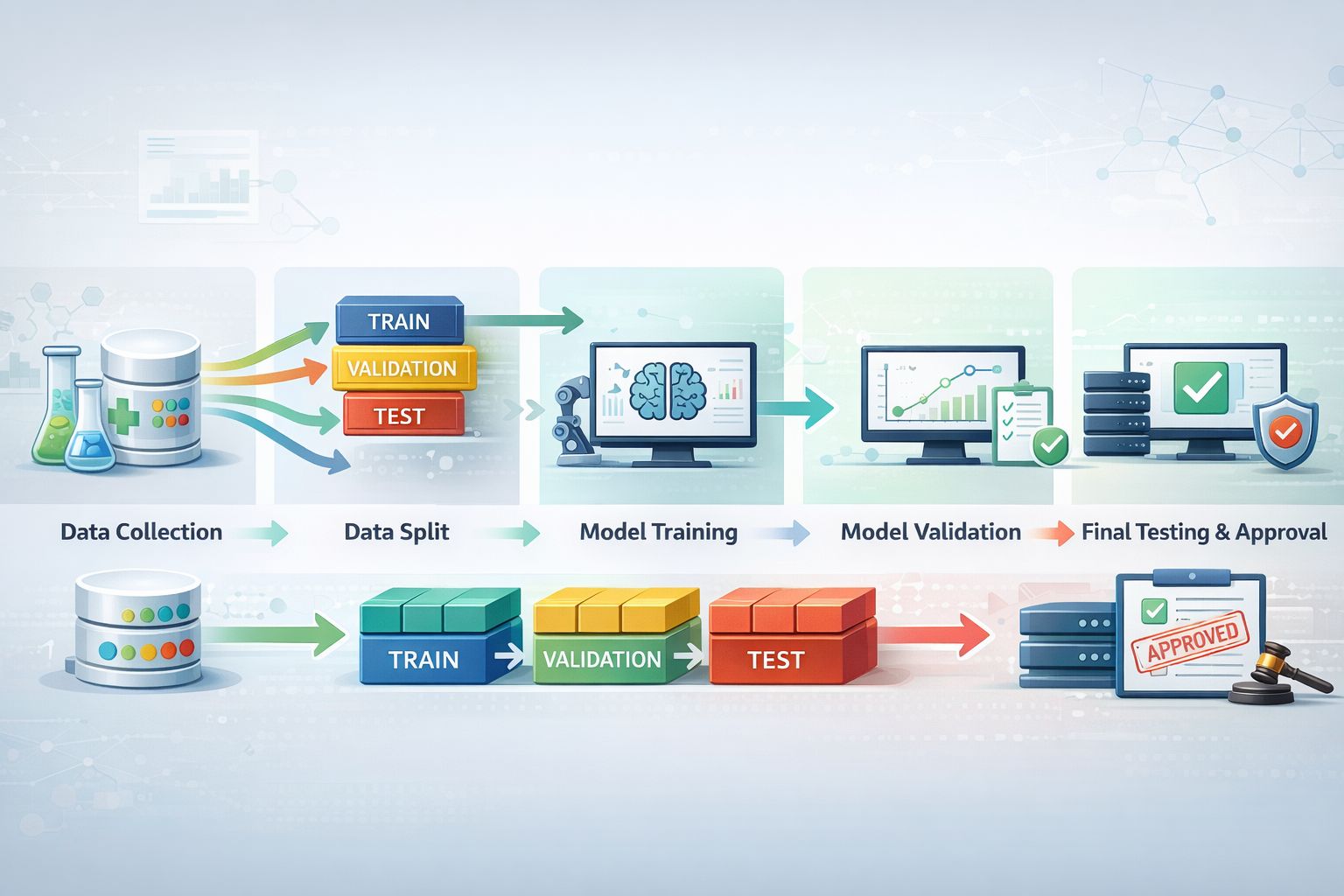
The infographic below visualizes how structured dataset splitting and validation steps support reliable model development and approval in regulated pharmaceutical environments.

Train validation test workflow in pharmaceutical systems showing data split, model training, validation, testing, and approval with focus on data integrity and validation control
A clear overview of how data splitting, validation control, and performance verification shape reliable model approval in regulated pharma systems.

In the following sections, we break down the key risks and control points that define credible dataset separation and inspection-ready model validation:

  • Training data selection and hidden bias risks (PDF)
  • Validation misuse and overfitting exposure (PDF)
  • Test data independence and false performance signals (PDF)
  • Data leakage pathways and control failures (PDF)

Training data selection and hidden bias risks (PDF)

Poor data selection introduces hidden bias. This leads to unreliable and non-generalizable model performance.

Validation misuse and overfitting exposure (PDF)

Misusing validation data causes overfitting during model tuning. As a result, performance appears higher than it actually is.

Test data independence and false performance signals (PDF)

Test data must remain fully independent from training and validation sets. Otherwise, results become misleading and cannot be trusted.

Data leakage pathways and control failures (PDF)

Data leakage occurs when information unintentionally flows into training. Therefore, models produce falsely strong performance signals.

Inspection signals in model validation and data splitting

Inspection signals often expose deeper weaknesses in how teams handle datasets and validate models in regulated environments. When data splitting lacks control, teams create gaps in validation logic and reduce model reliability. Moreover, inspectors quickly identify missing documentation, unclear dataset boundaries, and inconsistent validation approaches. As a result, these issues raise concerns about data integrity and decision traceability. In addition, recurring patterns such as data leakage or biased validation trigger more detailed scrutiny. Therefore, companies must align dataset handling, validation methods, and documentation practices to demonstrate consistent control and inspection readiness.

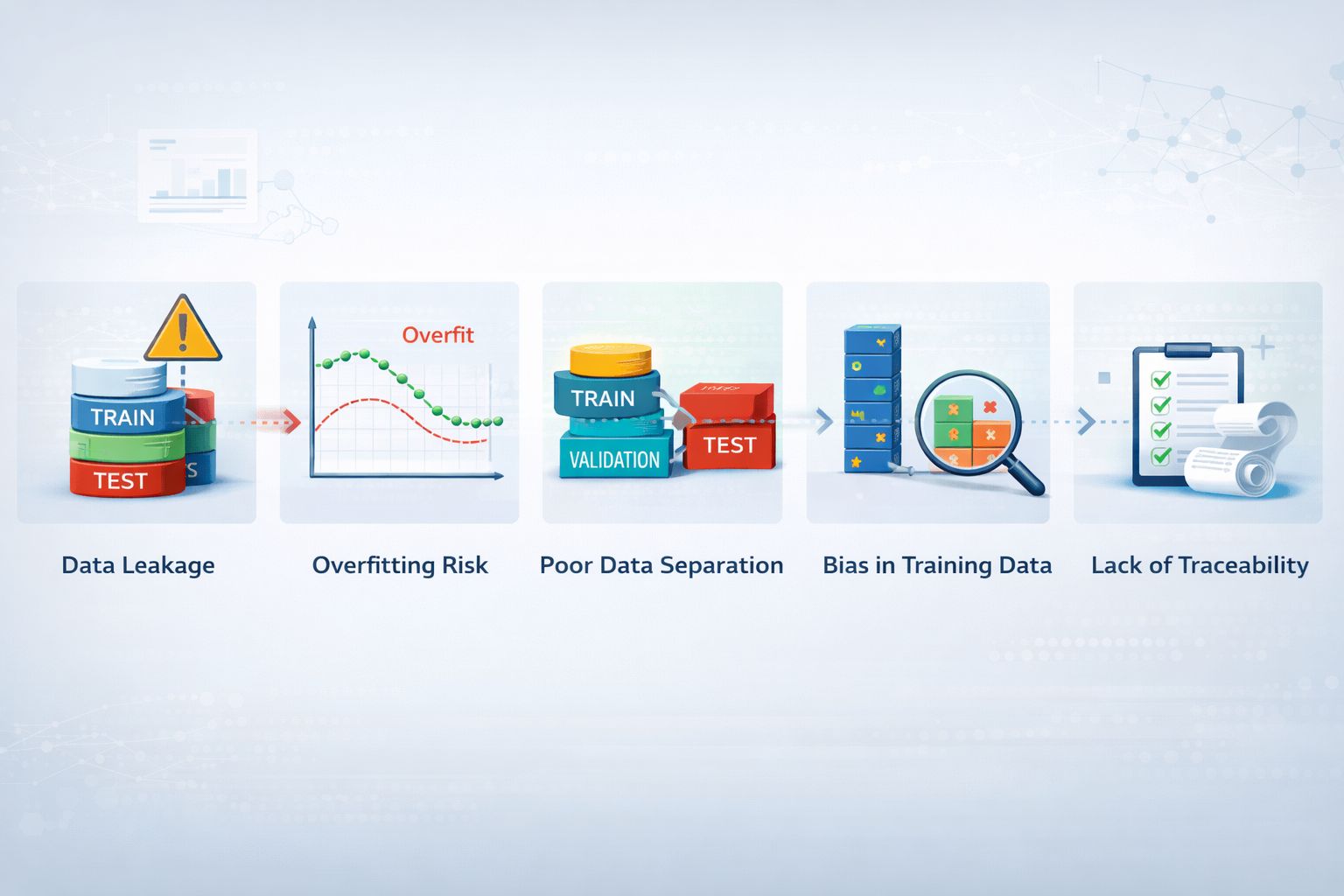
The infographic below highlights key inspection signals related to data splitting failures and validation risks in regulated model development.

Model validation risks in pharma showing data splitting failures, data leakage, overfitting, and validation gaps affecting data integrity and system reliability
A visual summary of common inspection signals in model validation, focusing on data splitting failures, validation gaps, and risks that impact data integrity and model reliability in regulated environments.

Designing inspection-ready data splitting frameworks

Inspection-ready frameworks help teams control dataset separation and improve model reliability. When teams define clear boundaries and document data flow, they ensure traceability and prevent risks like bias or data leakage. Therefore, structured and well-documented frameworks support consistent validation and stronger inspection outcomes.

The table below outlines key elements of inspection-ready data splitting frameworks and the common gaps that trigger regulatory findings:

Framework Element (Compliant Practice) Common Gap (Inspection Finding) Regulatory Impact
Clear separation of train, validation, and test datasets
Overlapping datasets or unclear boundaries
Data leakage and invalid model validation
Documented data selection criteria
No justification for dataset composition
Weak traceability and audit concerns
Independent test dataset for final evaluation
Test data reused during model tuning
Inflated performance results
Controlled access and versioning of datasets
Uncontrolled data changes
Data integrity risks (ALCOA violations)
Defined validation strategy and protocols
Ad-hoc or inconsistent validation methods
Lack of reproducibility
Audit trails for dataset usage and changes
Missing data history
Critical inspection findings
Periodic review and revalidation of models
No lifecycle monitoring
Increased risk of model failure over time

Final words

Recent regulatory analyses show that up to 60–80% of pharmaceutical warning letters include data integrity and data governance failures, which directly reflects weaknesses in dataset handling and validation logic. Therefore, organizations that overlook structured data splitting and validation controls will continue to face repeated inspection findings. In contrast, those that design transparent, traceable, and risk-based approaches can demonstrate real control over model performance and reliability. As a result, train validation test is no longer just a technical step; it has become a critical indicator of compliance maturity and inspection readiness in modern pharmaceutical systems.

FAQs

1️⃣Why do inspectors flag dataset splitting in validated systems?

Because overlapping or poorly defined datasets create data leakage. Inspectors expect clear separation, documented logic, and full traceability aligned with data integrity principles.

2️⃣How can teams prove model validation credibility during inspections?

They must show independent test data, controlled validation steps, and complete audit trails. In regulated environments, reproducibility and documented evidence are critical.

3️⃣What causes unreliable model performance in regulated data workflows?

Hidden bias, overfitting, and weak validation design reduce reliability. In addition, poor control over dataset handling and lack of risk-based validation trigger inspection concerns.

Picture of Mahtab Shardi
Mahtab Shardi

Mahtab is a pharmaceutical professional with a Master’s degree in Physical Chemistry and over five years of experience in laboratory and QC roles. Mahtab contributes reliable, well-structured pharmaceutical content to Pharmuni, helping turn complex scientific topics into clear, practical insights for industry professionals and students.

Pharmaceutical professionals working in a modern lab environment aligned with Kuwait Ministry of Health regulations and GMP compliance standards in the Gulf pharmaceutical industry.

Pharma Jobs in Kuwait in 2026: GCC Hiring and Compliance Insights

Kuwait’s pharmaceutical sector continues to expand under strict Ministry of Health regulations and GCC compliance frameworks. This guide explains regulatory pathways, major employers, salary expectations, and licensing requirements for professionals pursuing pharmaceutical careers within Kuwait’s growing Gulf healthcare market.

Read More »

Share