


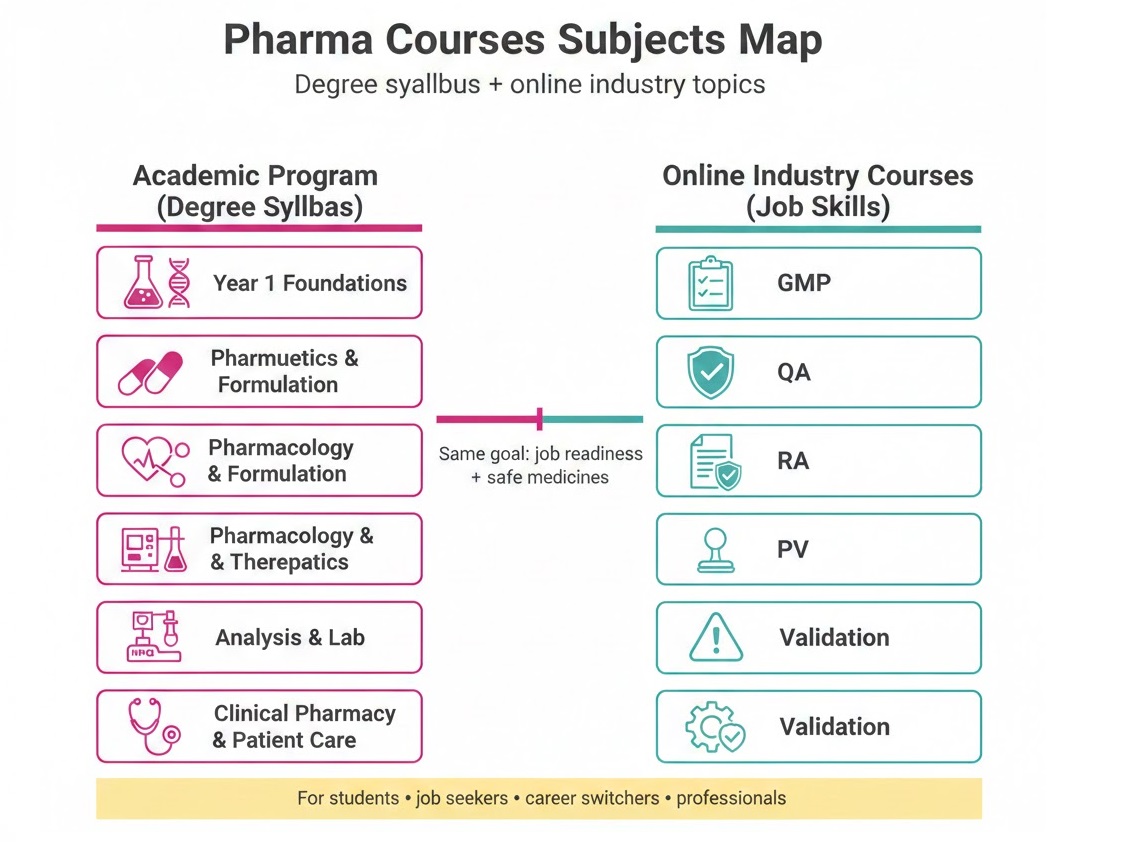
People use pharma courses subjects in 2 ways: degree syllabi and online industry topics. In a degree, you study 4 core sciences—chemistry, biology, pharmaceutics, pharmacology—plus labs. Online learning adds 3 job skills: GMP, regulatory affairs, pharmacovigilance. WHO encourages competency-based learning, so you connect subjects to real tasks.
A Pharma Course serves 4 groups: students, job seekers, career switchers, and professionals upskilling. Students build basics. Job seekers validate skills quickly. Career switchers spot gaps and plan learning. Professionals refresh GMP topics, data integrity, and inspections. Use 3 filters: goal, level, and proof for your next role.
Table of Contents
What is Pharma Courses Subjects?
Pharma course subjects cover what you learn for pharma jobs. They include degree topics and online industry skills. You study core science to understand medicines and patients. You also learn compliance to work safely in regulated companies. Therefore, choose subjects based on your goal and role.
Study chemistry, biology, and pharmacology basics.
Learn GMP, documentation, and quality systems skills.
Practice regulatory, safety reporting, and data integrity tasks.
Main Pharma Subjects
Main pharma subjects explain medicine design, testing, and safe use. Programs cover chemistry, biology, pharmacology, and pharmaceutics. Courses add microbiology, statistics, and clinical skills.
Quality topics teach documentation, risk control, and readiness. Laboratory modules build skills in sample handling, assay accuracy, and contamination prevention. Regulatory modules introduce EMA, FDA, ethics in promotion, and safety reporting. Therefore, select a clear path based on role and time.
- Degree programs (B.Pharm, Pharm.D, M.Pharm)
- Diplomas (D.Pharm, pharmacy technician)
- Industry Courses (GMP, QA, RA, PV, Validation)
Degree Programs (B.Pharm, Pharm.D, M.Pharm)
B.Pharm builds strong foundations in medicine and pharmacy science. Pharm.D focuses on clinical practice, patient care, and therapeutics.
Therefore, M.Pharm adds advanced study in formulation, analysis, or regulation. Each degree supports careers in industry, hospitals, research, and compliance.
Diplomas (D.Pharm, Pharmacy Technician)
Diplomas like D.Pharm prepare learners for entry-level pharmacy roles. Pharmacy technician programs teach practical dispensing and store operations. Training builds speed, accuracy, and patient-safe habits.
Therefore, these diplomas support fast job readiness.
Learn prescription handling and labeling rules.
Practice inventory control and cold-chain basics.
Build communication skills for patients and teams.
Industry Courses (GMP, QA, RA, PV, Validation)
Industry courses build job-ready skills for regulated pharma work. GMP teaches clean processes, records, and audit readiness. QA and Validation focus on quality systems and proven performance. Therefore, these courses support faster hiring and smarter upskilling.
RA explains submissions, labeling, and change impact.
PV covers safety cases, signals, and reporting timelines.
Validation builds IQ, OQ, PQ and risk-based thinking.
Pharma Course Subjects in Academic Programs
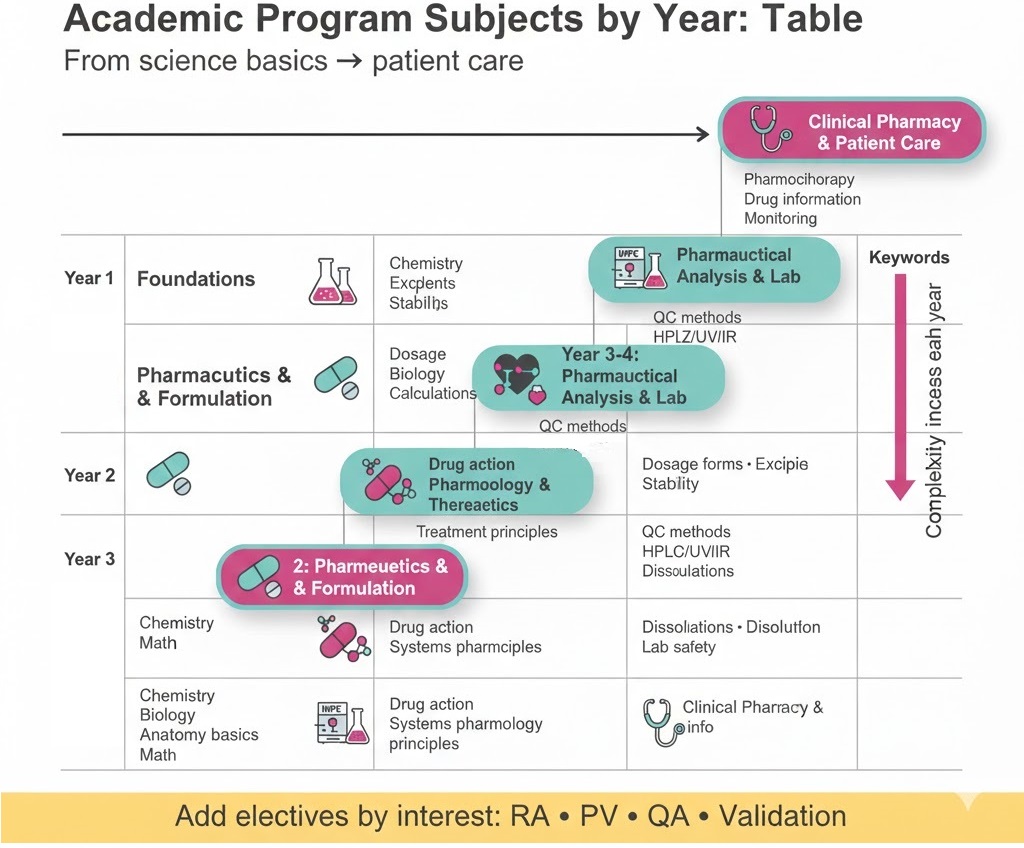
Academic pharma course subjects start with science and build toward patient care. Year 1 covers chemistry, biology, and basic body systems. Next, pharmaceutics explains dosage forms and formulation choices. Pharmacology and therapeutics show how drugs act and treat disease.
Therefore, later subjects link lab proof to clinical decisions.
Year 1 foundations: chemistry, biology, and basics.
Pharmaceutics and formulation: dosage forms and manufacturing principles.
Analysis and labs: QC methods, instruments, and lab safety.
Clinical pharmacy: pharmacotherapy, counseling, and drug information.
Year 1 Foundations (Chemistry, Biology, Basics)
Year 1 foundations build the science base for pharmacy studies. Courses cover chemistry, biology, and basic body systems. Labs train safe handling, measurements, and clear note-taking. Strong basics make later pharma subjects easier.
Learn general and organic chemistry basics.
Study cell biology, biochemistry basics, and microbiology basics.
Review anatomy, physiology basics, and math for dosing.
Pharmaceutics and Formulation Subjects
Pharmaceutics and formulation subjects teach how teams turn drug molecules into usable medicines. They explain dosage forms like tablets, capsules, injections, and creams. They cover excipients, stability, dissolution, and controlled release.
Therefore, these subjects support safe manufacturing and consistent product quality. They introduce processes like mixing, granulation, sterilization, and packaging. They also build skills in calculations, scale-up basics, and quality checks.
Pharmacology and Therapeutics Subjects
Pharmacology and therapeutics subjects explain how drugs work in the body. They cover drug targets, effects, side effects, and interactions.
They also link diseases to treatment choices and safe dosing. Therefore, these subjects support better clinical and industry decisions.
Learn system pharmacology for major organs.
Study therapeutics guidelines and rational medicine use.
Review toxicity, contraindications, and monitoring basics.
Pharmaceutical Analysis and Lab Subjects
Pharmaceutical analysis and lab subjects teach how teams test medicine quality. They cover identity, purity, strength, and stability checks. Labs build accuracy, safety, and clean documentation habits.
Finally , these subjects support strong QC and compliant release decisions.
Learn titration, spectroscopy, and chromatography basics.
Practice HPLC, UV, IR, and dissolution testing.
Follow sampling rules, lab safety, and GLP habits.
Document results clearly and investigate out-of-spec trends.
Clinical Pharmacy and Patient Care Subjects
Clinical pharmacy and patient care subjects focus on safe medicine use. They teach how to select therapy and monitor outcomes. Courses build communication skills for counseling and adherence support.
Therefore, these subjects prepare for patient-facing and team-based roles.
Learn pharmacotherapy, drug information, and guideline-based decisions.
Practice patient counseling, medication review, and safety monitoring.
Pharma course subjects by specialization
Pharma course subjects change by specialization and career goal.
Quality roles focus on testing, deviation control, and documentation. Regulatory roles focus on submissions, labeling, and lifecycle changes. So, specialization guides the most useful learning path.
Drug safety roles study PV, ICSR basics, and signal detection.
Validation roles study equipment qualification, CSV, and risk methods.
Online pharma industry courses and their “subjects”
Online pharma industry courses teach practical subjects for regulated work. They focus on what teams do daily in pharma companies. Common subjects include GMP basics, good documentation, and audit readiness.
Many courses also cover CAPA, deviations, change control, and risk management. Online subjects help faster job readiness and upskilling.
Courses in QA and QC teach testing, release, and trending skills. RA subjects cover submissions, labeling, and lifecycle updates. PV subjects cover case intake, ICSR validity, and reporting timelines.
Online Industry Courses vs Academic Subjects
| Key point | Online Industry Courses | Academic Subjects |
|---|---|---|
|
Goal |
Build job-ready skills fast |
Build science foundation + professional depth |
|
Topics |
GMP, QA, RA, PV, Validation |
Chemistry, biology, pharmaceutics, pharmacology, labs, clinical |
|
Duration |
Hours to weeks |
Months to years |
|
Proof |
Certificates + practical tasks |
Degree/diploma + exams + internships |
How to Choose the Right Pharma Subjects
Choosing the right pharma subjects starts with a clear career target.
Pick subjects that match daily tasks in the desired role. Next, check job ads and list repeated skills and tools. Then, build from basics to advanced topics step by step.
Use a simple method to decide fast and stay focused.
Match subjects to roles: QC labs, QA systems, RA submissions, PV safety, Validation.
Verify fit using 2 checks: entry requirements and proof like projects or certificates.
Final Words
This article explains pharma courses subjects in degrees and online training for roles. Academic subjects cover chemistry, pharmaceutics, pharmacology, and lab analysis. Online modules add compliance topics tied to FDA cGMP rules in 21 CFR Parts 210 and 211, and Form FDA 483.
It also maps audiences into 4 groups: students, job seekers, career switchers, professionals upskilling. FDA data shows 972 drug quality inspections in FY2024 and 105 drug-quality warning letters. These numbers show why GMP, QA, RA, PV, and validation matter.
FAQ
Common subjects include GMP basics, good documentation, deviations, CAPA, and data integrity. Validation topics support controlled processes and consistent product quality.
Form FDA 483 records inspection observations at inspection closeout. Training that supports clean records and compliant actions reduces observation risk.
FDA reported 105 quality-related warning letters for human drug manufacturing sites in FY2024. This signal supports demand for GMP, QA, and validation learning.
References

Ershad Moradi
Ershad Moradi, a Content Marketing Specialist at Zamann Pharma Support, brings 6 years of experience in the pharmaceutical industry. Specializing in pharmaceutical and medical technologies, Ershad is currently focused on expanding his knowledge in marketing and improving communication in the field. Outside of work, Ershad enjoys reading and attending industry related networks to stay up-to-date on the latest advancements. With a passion for continuous learning and growth, Ershad is always looking for new opportunities to enhance his skills and contribute to pharmaceutical industry. Connect with Ershad on Facebook for more information.

GMP Audit Checklist 2026: The Essential Guide for Risk-Based Audits
Master your GMP Audit Checklist with a practical, risk-based approach to pharmaceutical self-inspections. Explore five essential audit steps, FDA’s six-system model, GMP documentation and evidence sampling, audit findings, CAPA tracking, and effectiveness verification to strengthen compliance and inspection readiness.
Orphan Drug Designation in 2026: FDA and EMA Eligibility Criteria
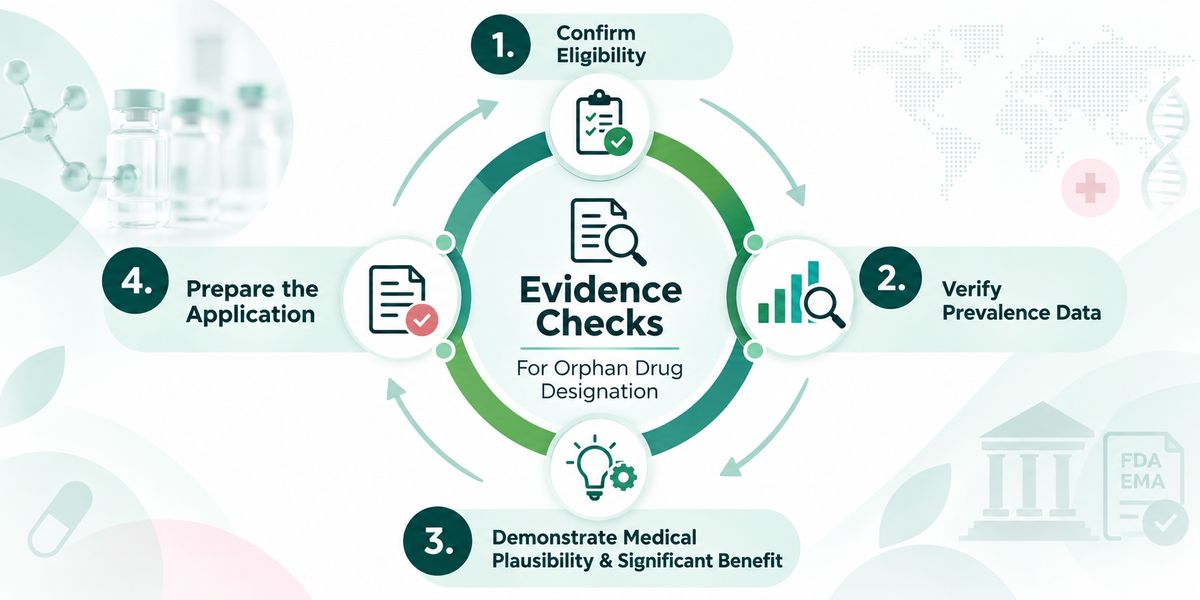
Discover how orphan drug designation works in 2026. Compare FDA and EMA eligibility criteria, rare disease prevalence thresholds, scientific evidence requirements, and regulatory incentives. Learn what pharmaceutical sponsors need to prepare for successful regulatory submissions

CEP certificate in pharma: What QA Must Verify in 2026
Learn how QA teams verify EDQM certificates, assess API suppliers, and prepare for GMP inspections. This guide explains CEP 2.0 updates, impurity controls, and essential records that help maintain regulatory compliance and inspection readiness across pharmaceutical manufacturing operations.