


The global pharmaceutical market is worth about $1.6 trillion a year, and every tablet, vial, and syringe depends on good manufacturing practices in quality assurance to reach patients safely. With complex supply chains and high-risk products, even a single data error or contamination event can trigger serious recalls and harm trust.
Regulators see the impact clearly. EMA authorities requested around 180 GMP inspections in a single year, while FDA issued dozens of quality-related warning letters to drug manufacturers in FY2023. In this environment, QA teams use Good Manufacturing Practices (GMP) to reduce deviations, prevent recalls, and protect patients.
Table of Contents
What is Good Manufacturing Practices in Quality Assurance?
GMP in quality assurance means clear rules for safe, consistent medicines every day. First, it gives teams simple procedures, records, and checks for every key step.
It defines hygiene, equipment, and material standards for all GMP areas.
It requires complete, readable, and timely documentation for every batch and activity.
It links daily shop-floor work to patient safety and regulatory expectations.
Next, QA teams use these rules to monitor processes and stop problems early. They review batch records, track deviations, and make sure fixes truly work.
| Common GMP Issue | Impact | How QA Prevents It |
|---|---|---|
|
Incomplete batch records |
No traceability; batch at risk |
Reviews records and uses checklists |
|
Untrained staff |
Handling errors; more deviations |
Maintains training plans and tracking |
|
Outdated or unapproved SOPs |
Non-compliant and inconsistent work |
Controls documents and versions |
|
Uncontrolled process/equipment change |
Hidden quality risks; failed batches |
Runs formal change control and approval |
|
Data integrity lapses |
Findings, warning letters, lost trust |
Audits data and trains on ALCOA+ |
Why GMP Matters for Product Quality and Patient Safety?
GMP strongly protects product quality and patient safety in every step. First, it sets clear rules for materials, equipment, and people. Then it controls each process, so teams catch errors early.
Moreover, it supports consistent batches that meet strict quality targets. For example, GMP defines cleaning steps and records checks.
Next, QA teams use GMP to analyze risks and trends. They review deviations and close gaps before problems reach patients. Finally, they work with regulators to keep standards high.
- Reducing the Risk of Defective Batches and Recalls
- Protecting Patients from Contaminated or Ineffective Products
- Supporting Regulatory Approval and Market Access
- Building Trust with Healthcare Professionals and Patients
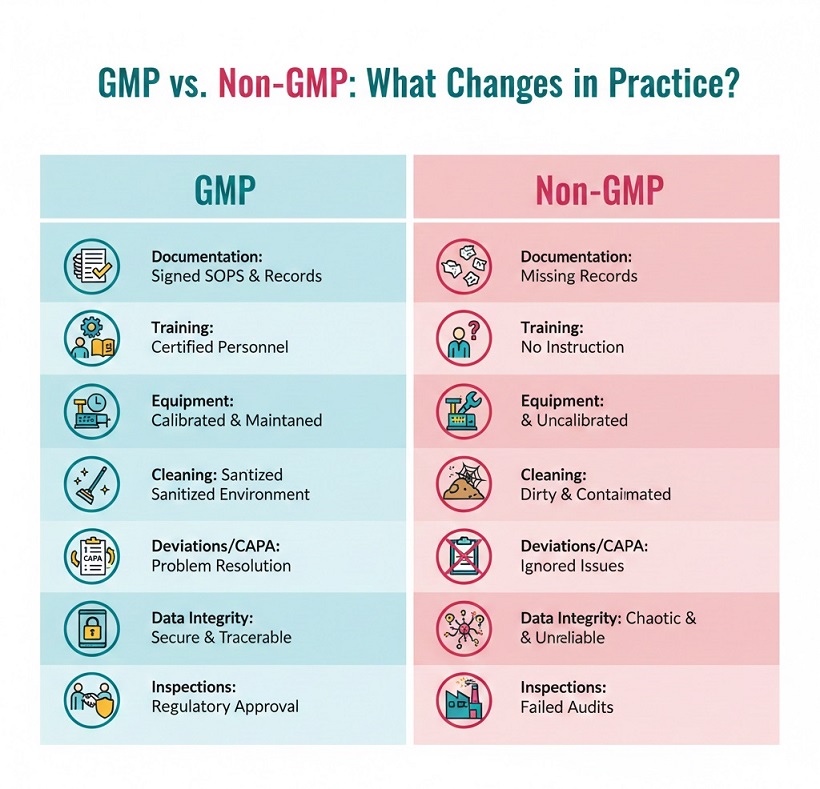
Reducing the Risk of Defective Batches and Recalls
GMP helps QA teams spot issues early in production. Therefore, they reduce defects and protect patients from bad products.
Review batch records before final release
Check parameters after each key step
Block risky batches and start investigations
Protecting Patients from Contaminated or Ineffective Products
GMP helps QA teams keep products safe for patients. Moreover, they control contamination risks from people, equipment, and environments. This way, patients receive reliable, effective treatment every time.
Check raw materials before use and reject anything suspicious
Verify strength and stability, so each dose works as intended
Stop unsafe batches and investigate problems before products reach patients
Supporting Regulatory Approval and Market Access
Good manufacturing practices in quality assurance helps companies meet rules and reach markets. QA teams use GMP to build audit-ready systems. Therefore, they reduce approval delays and protect growth. Each GMP step gives regulators proof of safe processes.
Document changes, risks, and actions in records.
Align procedures with EMA and FDA rules.
Answer regulator questions quickly using accurate data.
Building Trust with Healthcare Professionals and Patients
GMP helps companies earn trust from doctors, pharmacists, and patients. Moreover, QA teams prove that every batch follows clear, controlled processes.
Strong GMP performance shows real care for patient safety and treatment results. Healthcare professionals remember this reliability when they choose products for patients.
Share transparent quality reports
Answer safety questions without delay
Explain issues and clear fixes
The Link Between GMP and Quality Assurance Functions
GMP sets clear rules for making safe, consistent medicines. Quality assurance turns these rules into daily checks and decisions. Moreover, QA teams coordinate training, documentation, and oversight across departments.
GMP focuses on what processes must achieve and document. QA functions track deviations, investigate root causes, and drive corrective actions. Together, GMP and QA protect patients and strengthen company reputation.
| Aspect | GMP Focus | QA Function |
|---|---|---|
|
Processes |
Define and standardize steps |
Monitor and improve execution |
|
Documentation |
Require complete, clear records |
Review, approve, and archive records |
|
Deviations |
Demand investigation and control |
Lead RCA and verify CAPA effectiveness |
Key GMP Guidelines QA Teams Must Know (EU, FDA, WHO)
QA teams use key GMP guidelines from EU, FDA, and WHO. These texts explain what regulators expect from safe, consistent manufacturing. Moreover, they help QA align procedures, records, and training with global standards.
QA leaders study these guidelines and update systems when rules change. They then train colleagues, strengthen audits, and prepare for inspections using real clauses. This focus keeps products compliant and supports faster approval and market access. So, strong GMP knowledge becomes a daily tool, not just theory.
Key GMP guideline references (download Link):
Download EU GMP – EudraLex Volume Here
Find FDA cGMP – 21 CFR Part 211 Here
Core QA Skills for Effective GMP Compliance
Core QA skills keep GMP compliance strong and reliable. QA professionals understand processes and question every unclear step. Moreover, clear communication supports fast decisions and strong corrective actions.
QA staff analyze trends and detect early quality risks.
QA teams document decisions and maintain complete, traceable records.
QA leads drive root cause analysis and realistic CAPA plans.
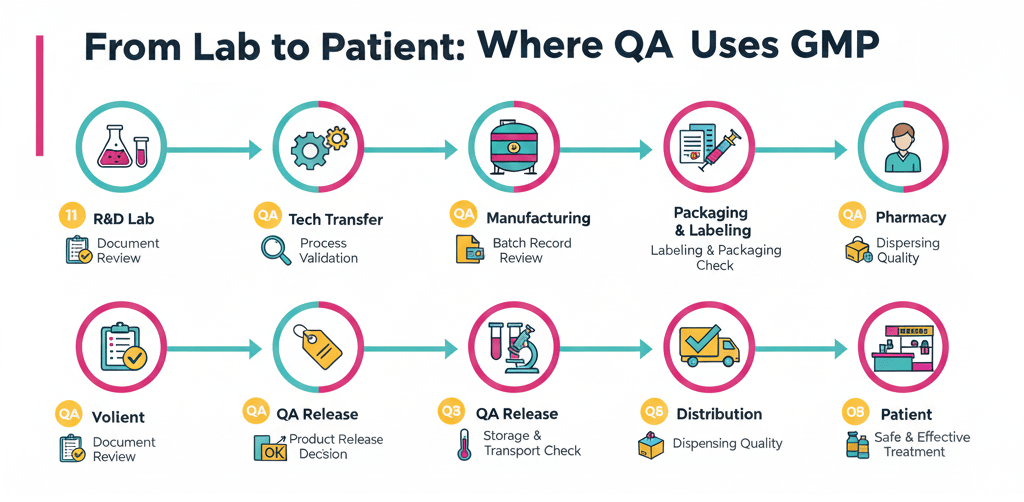
Final words
Global spending on medicines reached about $1.2 trillion in 2018 and will likely pass $1.5 trillion by 2023. At this scale, even one failure can harm many patients. Therefore, GMP and quality assurance give companies structure, discipline, and clear control. They guide teams from raw material receipt to final batch release.
WHO reports that around one in ten medicines in poorer countries fails quality checks. These substandard or falsified products can cause treatment failure, harm, or death. GMP and quality assurance reduce this risk through strict procedures, training, and oversight. They help companies keep unsafe medicines off the market and protect trust.
FAQs
Standard Operating Procedures (SOPs)
Batch manufacturing and packaging records
Cleaning and maintenance logs
QA keeps these documents current, complete, and easy to trace.
- QA professionals need strong attention to detail and clear communication skills.
- Process understanding and basic statistics help with trend analysis.
- Root cause analysis skills support strong CAPA work.
- Continuous learning keeps knowledge aligned with EU, FDA, and WHO updates.
Run regular internal audits and walk-throughs.
Update SOPs after every major deviation or system change.
Invest in practical GMP and QA training for all roles.
Use data dashboards to track deviations, CAPA, and training status.
Encourage staff to report issues early without fear.
References

Ershad Moradi, a Content Marketing Specialist at Zamann Pharma Support, brings 6 years of experience in the pharmaceutical industry. Specializing in pharmaceutical and medical technologies, Ershad is currently focused on expanding his knowledge in marketing and improving communication in the field. Outside of work, Ershad enjoys reading and attending industry related networks to stay up-to-date on the latest advancements. With a passion for continuous learning and growth, Ershad is always looking for new opportunities to enhance his skills and contribute to pharmaceutical industry. Connect with Ershad on Facebook for more information.
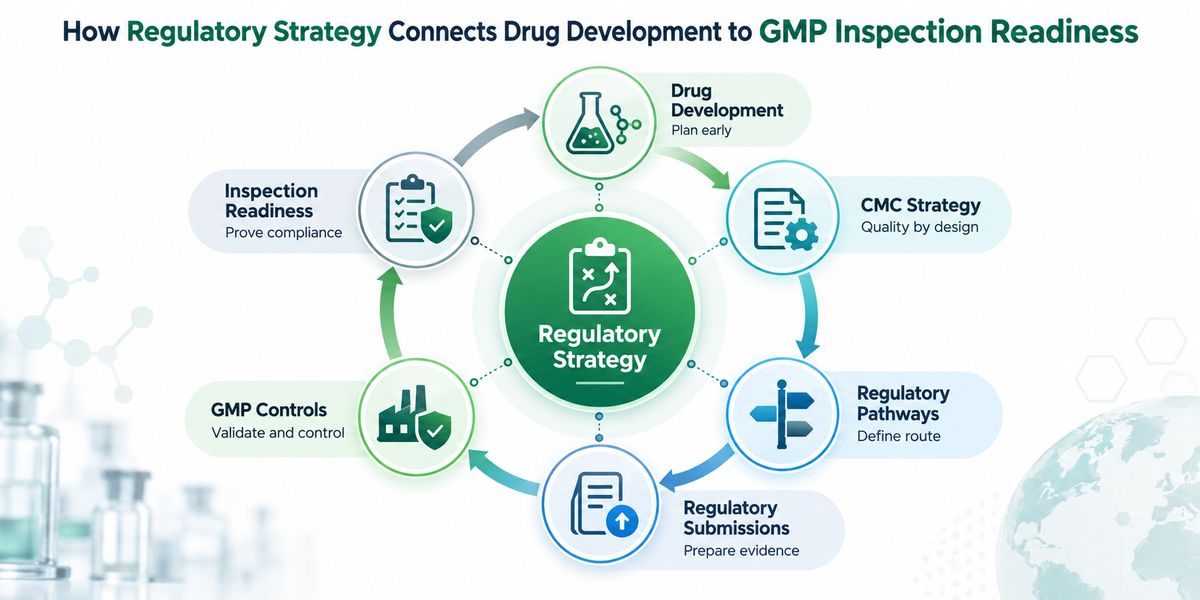
Regulatory Strategy in Pharma in 2026: From Drug Development to GMP Inspection Readiness
Effective regulatory planning connects drug development, CMC, submissions, manufacturing, and lifecycle obligations. This article explains how regulatory teams can reduce compliance gaps, prepare for inspections, manage post-approval changes, and make better decisions across the pharmaceutical product lifecycle.

Alison vs Pharmuni in 2026: Free Learning at Scale or a Guided Pharma Career System?
Alison offers 6,000+ free courses plus career tools and recruitment. Pharmuni is smaller but pharma-focused, with role assessments, Career Paths, CV tools, and 1,000+ life-science jobs.

Udemy vs Pharmuni in 2026: One Course Fast or a Full Pharma Career Path?
Udemy makes it easy to buy a specific self-paced course from a huge marketplace. Pharmuni takes a different approach, connecting pharma learning with assessments, Career Paths, competency visibility, CV tools, and job matching.