


FDA pharma regulations play a critical role in ensuring drug safety and facilitating market access. According to WHO, non-compliance with regulatory standards contributes to nearly 20% of drug recalls worldwide. Strict adherence to FDA guidelines on GMP, thorough documentation, and regular inspections helps reduce risks and maintain product integrity.
Pharma regulation requires continuous vigilance to meet evolving compliance demands. Companies following these regulations improve product quality and protect patient safety. Effective implementation of FDA standards also fosters trust with healthcare providers and regulators, supporting long-term business success.
Table of Contents
What are FDA Pharma Regulations?
FDA pharma regulations set standards to ensure drug safety, quality, and efficacy. They guide manufacturing, labeling, testing, and distribution processes. Compliance minimizes risks and ensures products meet legal requirements. These regulations protect consumers and promote trust in pharmaceutical products.
Key technical aspects include:
- Good Manufacturing Practices (GMP) enforcement
- Documentation and record-keeping requirements
- Inspection and audit protocols
- Reporting of adverse events and product recalls
How to Comply with FDA Good Manufacturing Practices (GMP) in Pharma?
To comply with FDA Good Manufacturing Practices (GMP) in pharma, companies must establish robust quality systems. They should train staff on GMP requirements and maintain detailed documentation. Regular equipment calibration and facility inspections also ensure compliance. Effective implementation reduces errors and product risks.
Key compliance steps include:
- Develop and enforce standard operating procedures (SOPs)
- Train employees regularly on GMP practices
- Maintain accurate batch production records
- Conduct routine facility and equipment inspections
Key Documentation Required for FDA Regulatory Submissions and Inspections
Pharma companies must maintain key documentation to comply with FDA submissions and inspections. These records demonstrate control over manufacturing and quality processes. Proper documentation supports traceability and regulatory compliance. Also, it helps address audit questions efficiently.
Essential documents include:
- Batch Production Records
- Equipment Calibration Logs
- CAPA Documentation
- Training Records
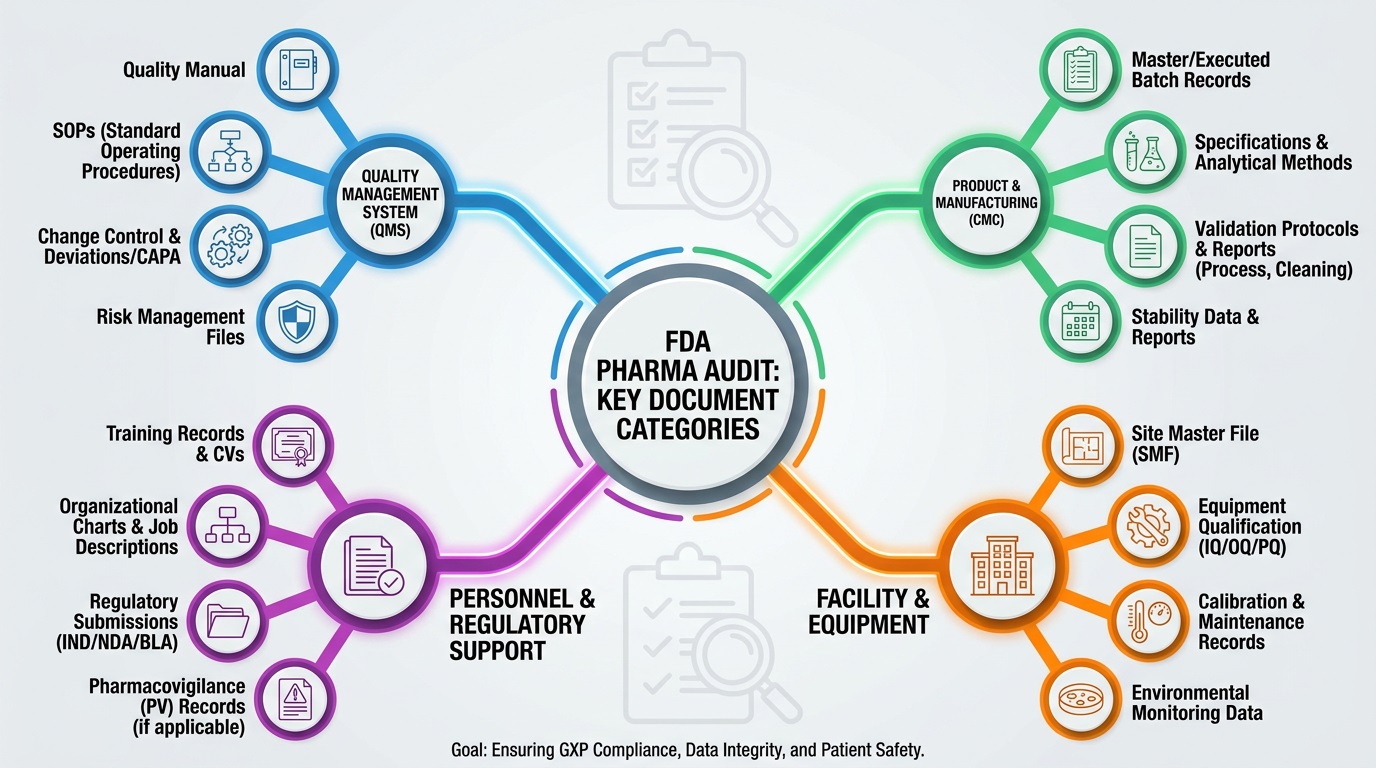
Batch Production Records
Batch Production Records (BPR) detail every step of manufacturing for a specific batch. They include raw materials, process parameters, and quality checks. Accurate BPRs help ensure product consistency and regulatory compliance. Also, they support traceability and audit readiness.
Types of BPRs include manual logs, electronic records, and hybrid formats. Mainly, they document production history, deviations, and approvals to maintain transparency. These records confirm that manufacturing follows established procedures.
Equipment Calibration Logs
Equipment calibration logs record the regular calibration activities of manufacturing and testing instruments. These logs ensure equipment operates accurately and meets quality standards. Proper logs prevent errors and support regulatory compliance. Also, they provide evidence during audits and inspections.
Types of calibration logs include paper-based, electronic, and hybrid records. Main documents show calibration dates, standards used, results, and technician details. Keeping thorough logs maintains equipment reliability and product quality consistently.
CAPA Documentation
CAPA documentation tracks corrective and preventive actions to fix and avoid quality issues. It helps identify root causes, implement solutions, and verify effectiveness. Clear CAPA records improve product quality and support regulatory compliance. Also, they enable continuous process improvement.
Different types and main CAPA documents include:
- CAPA initiation reports
- Root cause analysis documents
- Action plans and timelines
- Verification and closure reports
Training Records
Training records document employee education on FDA pharma regulations and good manufacturing practices. They prove staff competence and regulatory compliance. Proper records help identify training gaps and support audit readiness. Also, they ensure continuous improvement in employee skills.
Different types and main training documents include:
- Training schedules and plans
- Attendance logs
- Training materials and presentations
- Employee assessments and certifications
Main Steps to Prepare for FDA Audits and Inspections
Prepare for FDA audits by establishing thorough internal audit procedures to identify compliance gaps. Conduct mock inspections to simulate FDA visits and train staff on protocols. Also, maintain clear regulatory communication to address questions promptly and transparently. These steps ensure readiness and reduce audit risks.
Key preparation activities include:
Internal Audit Procedures
Mock Inspection Practices
Regulatory Communication
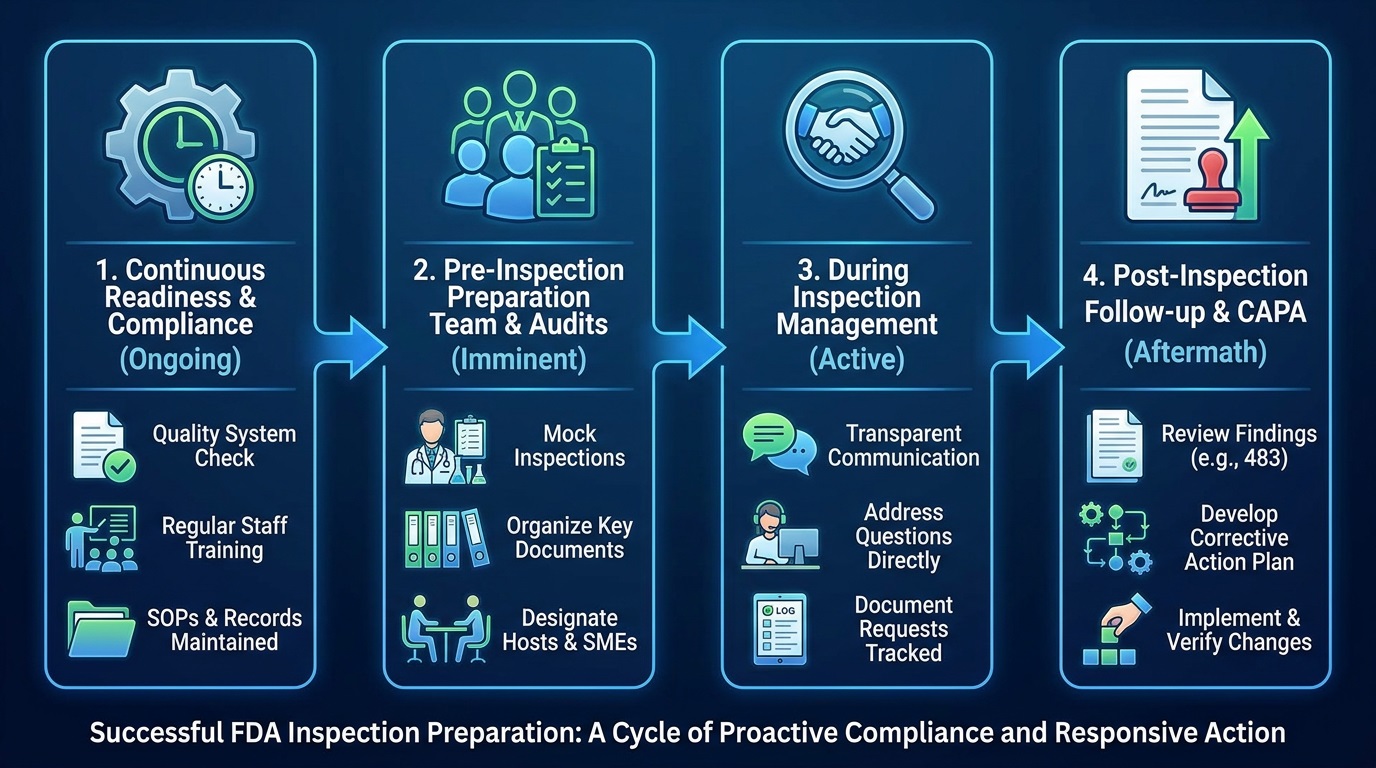
Internal Audit Procedures
Internal audit procedures assess compliance with FDA pharma regulations regularly. They identify gaps and ensure corrective actions. Clear documentation supports continuous improvement and audit preparation. Also, audits verify effectiveness of quality systems and employee adherence to policies.
Different types and main internal audit documents include:
- Audit plans and schedules
- Audit reports and findings
- Corrective action tracking logs
Mock Inspection Practices
Mock inspection practices simulate FDA audits to prepare pharma companies for real inspections. They identify weaknesses and improve compliance readiness. These exercises train employees to handle audit questions professionally. Also, they help refine documentation and corrective actions.
Different types and main mock inspection documents include:
- Inspection checklists
- Observation and report logs
- Training records from drill sessions
Regulatory Communication
Regulatory communication involves clear, timely interaction with FDA during audits and inspections. It helps address questions, provide requested documents, and clarify processes. Effective communication builds trust and facilitates smoother regulatory reviews. Also, it ensures transparency and compliance with regulations.
Different types and main regulatory communication documents include:
Meeting minutes and correspondence
Formal responses to FDA inquiries
Submission acknowledgment and status reports
FDA Guidelines on Pharmaceutical Quality Systems and Risk Management
FDA guidelines emphasize pharmaceutical quality systems to ensure consistent product safety and efficacy. Studies show companies with robust quality systems reduce defects by 40%. Quality systems manage processes, monitor deviations, and drive continual improvements. Also, FDA expects documented quality management across manufacturing.
Risk management is central to FDA quality guidance. It prioritizes risks based on severity and likelihood. Effective risk management reduces compliance failures by 30%. Companies use risk assessments to focus validation and control efforts appropriately.
How to Implement FDA Regulations for Labeling and Packaging in Pharma
To implement FDA regulations for labeling and packaging, companies must ensure accuracy and compliance. Studies show 25% of product recalls result from labeling errors. Clear, legible labels with correct information reduce risks and improve patient safety. Companies train staff and routinely audit labels for quality.
Additionally, packaging must protect drug integrity during storage and transport. Companies use tamper-evident seals and child-resistant designs per FDA guidance. Also, they document all labeling and packaging processes to meet regulatory expectations. Proper implementation avoids regulatory actions and enhances consumer trust.
FDA Pharma GMP Compliance Checklist
| FDA Pharma GMP Compliance Checklist | Description |
|---|---|
|
Facility Cleanliness & Maintenance |
Keep production areas clean and well-maintained. |
|
Equipment Calibration & Validation |
Regularly calibrate and validate all equipment |
|
Personnel Training & Hygiene |
Train staff and enforce hygiene protocols |
|
Documentation Accuracy & Control |
Ensure accurate, controlled, and complete records |
|
Raw Material Quality Control |
Test and verify all incoming raw materials |
Final Words
Adhering to FDA pharma regulations is crucial for long-term success in the pharmaceutical industry. Companies must maintain continuous documentation updates to comply with evolving These regulations, including ICH guidelines like Q7 and Q9, help ensure product safety and quality. Standards. Additionally, regular staff training is essential to understand and apply the latest regulatory requirements effectively.
We invite readers and industry experts to share recent pharma references, case studies, or regulatory changes related to FDA pharma regulations. Collaboration helps the industry stay informed and improves compliance across all sectors.
FAQs
FDA regulations focus on Good Manufacturing Practices (GMP), documentation, labeling, and quality control to ensure safe drug production.
Documentation proves compliance, supports traceability, and helps during FDA audits to demonstrate control over manufacturing processes.
Regular training, typically annually or when regulations change, ensures staff understand and follow current FDA requirements.
References

Ershad Moradi
Ershad Moradi, a Content Marketing Specialist at Zamann Pharma Support, brings 6 years of experience in the pharmaceutical industry. Specializing in pharmaceutical and medical technologies, Ershad is currently focused on expanding his knowledge in marketing and improving communication in the field. Outside of work, Ershad enjoys reading and attending industry related networks to stay up-to-date on the latest advancements. With a passion for continuous learning and growth, Ershad is always looking for new opportunities to enhance his skills and contribute to pharmaceutical industry. Connect with Ershad on Facebook for more information.

Deviation vs Nonconformance 2026: 5 Critical GMP Mistakes to Avoid
Explore 5 critical differences between deviation and nonconformance in pharma, including GMP investigations, OOS, risk assessment, and CAPA.

Root Cause Analysis in Pharmaceutical Industry: 6 Powerful Methods in 2026
Explore 6 powerful root cause analysis methods in pharma to investigate deviations, strengthen CAPA, ensure GMP compliance, and protect patient safety.

Quality Culture in Pharma Industry 2026: Proven Ways to Build Trust
Explore how to build a strong quality culture in the pharmaceutical industry in 2026 through leadership commitment, ICH Q10 principles, meaningful GMP metrics, effective CAPA, and continuous improvement.