


Temperature mapping is a vital process ensuring pharma product quality during storage and transport. According to WHO, improper temperature control causes up to 10% of product losses annually worldwide. Since 2015, temperature mapping protocols have become stricter to reduce these risks. Accurate mapping helps identify critical points and prevent temperature excursions that harm drug efficacy.
Pharma quality assurance depends on regular temperature mapping to maintain compliance and product safety. Studies show companies using temperature mapping reduce quality failures by 25%. Also, industry targets focus on achieving near-zero excursion incidents. Sharing latest data and compliance success rates can improve monitoring practices and outcomes globally.
Table of Contents
What is Temperature Mapping?
Temperature mapping identifies temperature variations within pharmaceutical storage and transport areas. It helps pinpoint hotspots and cold spots that risk product quality. According to WHO, temperature excursions cause 10% of pharmaceutical losses globally. Also, mapping supports compliance with regulatory standards like FDA and USP.
Proper temperature mapping improves environmental control and reduces product spoilage. It uses sensors placed strategically to collect detailed data. This process helps companies maintain drug safety and regulatory compliance consistently.
Temperature Mapping Execution Steps
Temperature mapping starts by defining clear objectives and environmental conditions for monitoring. Next, select and place calibrated temperature sensors strategically across storage areas. Then, collect temperature data continuously over the specified monitoring period. Finally, analyze the data to identify temperature variations and critical control points.
Key steps include:
- Step 1: Define mapping objectives and conditions
- Step 2: Select and place calibrated sensors
- Step 3: Collect temperature data
- Step 4: Analyze data for variations
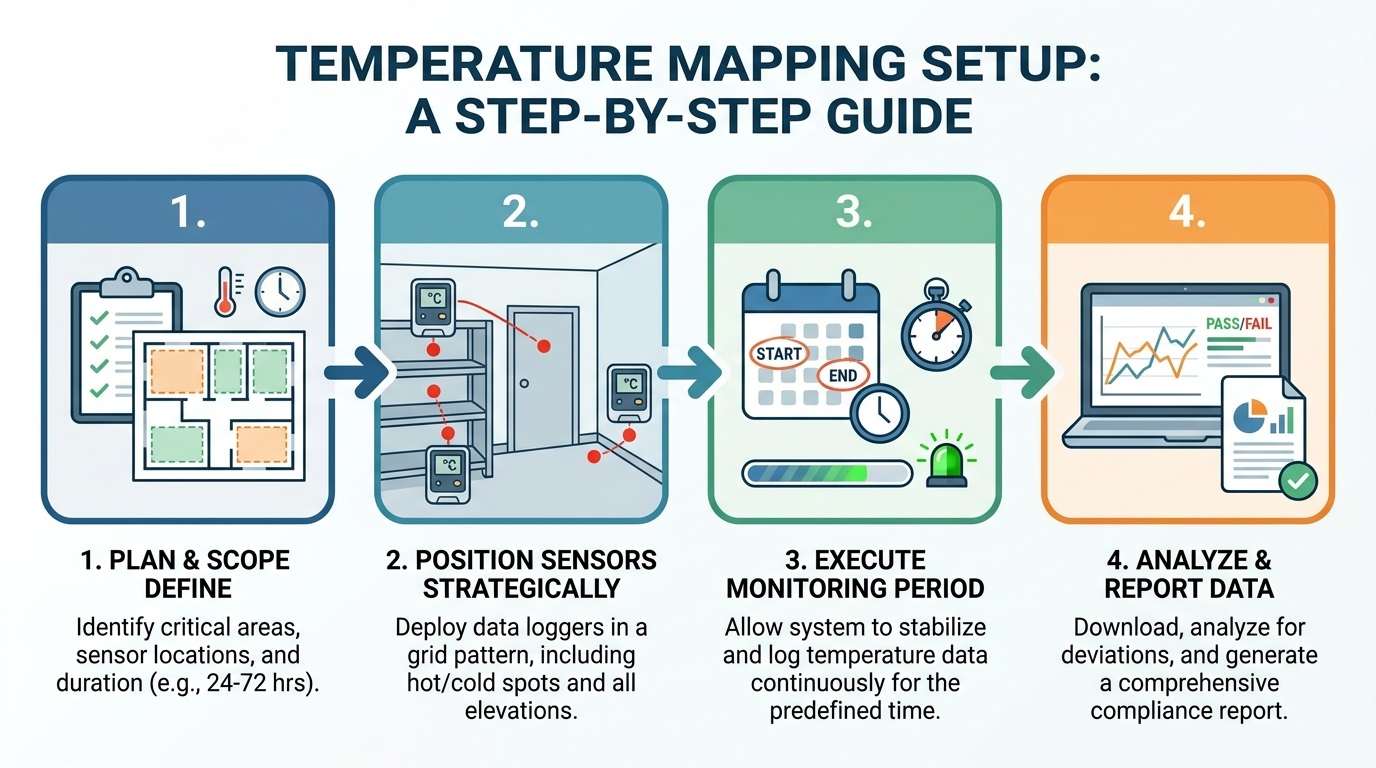
Step 1 : Define mapping objectives and environmental conditions
Define mapping objectives clearly to guide effective temperature monitoring. Identify environmental conditions impacting product stability. Consider storage area layout, airflow, and temperature zones. Set measurable goals to ensure the mapping meets regulatory standards. Clear objectives help target critical areas and improve data accuracy.
Points to consider include:
- Product storage requirements
- Seasonal temperature variations
- Equipment and facility design
- Airflow patterns and circulation
- Frequency and duration of monitoring
- Regulatory and compliance needs
Step 2 : Select and place calibrated temperature sensors strategically
Select calibrated temperature sensors that meet accuracy and compliance standards. Place sensors where temperature variations occur most frequently. Also, position sensors at different heights to capture stratification. Proper selection and placement ensure reliable monitoring and early detection of temperature excursions.
Points to consider include:
- Sensor accuracy and calibration status
- Locations prone to temperature fluctuations
- Diverse heights for complete coverage
Step 3 : Collect temperature data over a specified monitoring period
Collect temperature data continuously during the specified monitoring period to record accurate environmental conditions. Use automated systems to ensure consistent data capture without gaps. Also, monitor for any deviations and log all readings systematically. This process supports reliable analysis and compliance.
Points to consider include:
- Duration of monitoring according to regulations
- Frequency of data recording
- Secure storage of temperature data
Step 4 : Analyze data to identify temperature variations
Analyze temperature data to spot variations and ensure product safety. Use statistical tools to detect trends and anomalies. Also, identify critical control points where temperature fluctuations impact drug quality most. Accurate analysis helps prevent product degradation and supports compliance.
Points to consider include:
Use software for detailed data analysis
Focus on temperature excursions and duration
Prioritize areas with significant variance
Regulatory Frameworks and Compliance
Regulatory frameworks guide temperature control to ensure pharmaceutical product quality and safety. FDA Cold Chain Guidance outlines best practices for managing storage and transport conditions. EMA Temperature Control Standards set strict requirements for maintaining controlled environments. Also, WHO Storage and Transport Requirements provide global recommendations for consistent product handling.
Key regulatory documents include:
FDA Cold Chain Guidance
EMA Temperature Control Standards
WHO Storage and Transport Requirements
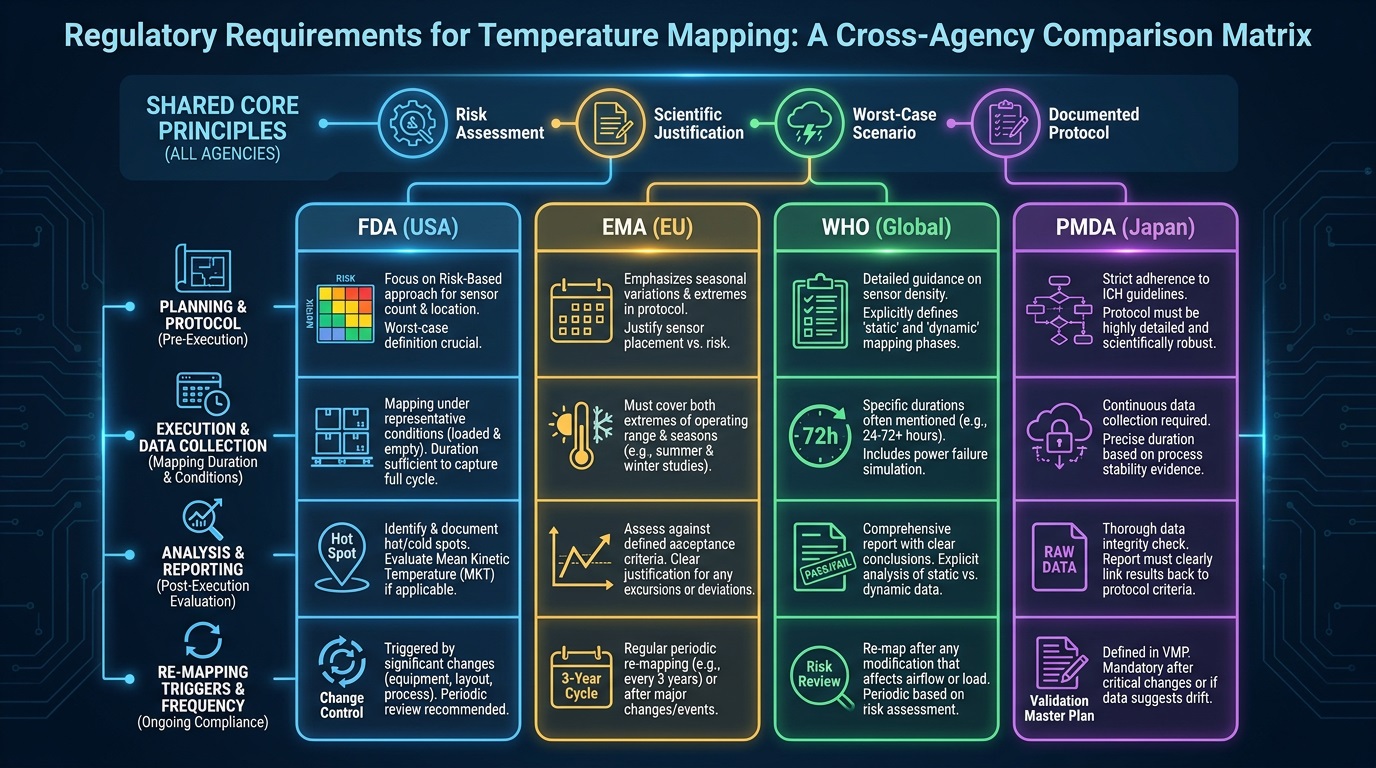
FDA Cold Chain Guidance
The FDA Cold Chain Guidance helps pharmaceutical companies maintain proper temperature control during storage and transport. It outlines best practices to prevent product degradation and ensure patient safety. The guidance emphasizes monitoring, documentation, and corrective actions. Following FDA cold chain standards reduces regulatory risks and improves compliance.
Additionally, companies use this guidance to develop effective cold chain systems. It supports continuous quality assurance from manufacturing to delivery.
EMA Temperature Control Standards
The EMA Temperature Control Standards set strict requirements for pharmaceutical storage and transportation. These standards ensure medicines remain safe and effective by controlling environmental conditions. Companies must follow EMA guidelines to comply with EU regulations and avoid product degradation. Adherence improves patient safety and regulatory approval.
Moreover, EMA emphasizes risk-based approaches for temperature monitoring and control systems. It encourages continuous review and documentation of temperature data. This maintains consistent quality throughout the supply chain.
WHO Storage and Transport Requirements
The WHO Storage and Transport Requirements guide pharmaceutical companies to maintain drug quality. They set standards for temperature, humidity, and handling during storage and shipment. Following WHO recommendations reduces product spoilage and ensures safety. Companies use these guidelines to comply with international regulations and protect patients.
Additionally, WHO emphasizes risk management and proper documentation throughout the supply chain. It supports consistent quality and traceability from manufacturer to end user. These practices help prevent temperature excursions effectively.
Sensor Selection and Placement
Selecting and placing sensors correctly ensures accurate temperature monitoring in pharma environments. Choose sensor types that fit specific needs, like data loggers or wireless transmitters. Then, apply placement strategies to cover critical areas and avoid false readings. Proper calibration maintains sensor accuracy and regulatory compliance.
Key points include:
- Sensor types and features
- Strategic sensor placement
- Regular calibration schedules
Sensor Types
Sensor types vary from data loggers to wireless transmitters, each offering unique features. Data loggers record temperature over time, while wireless sensors provide real-time monitoring. Companies select sensors based on accuracy, range, and environmental suitability. Proper sensor choice improves monitoring effectiveness and compliance.
Additionally, sensor features include battery life, communication protocols, and ease of calibration. Choosing features that match operational needs ensures reliable data collection. Correct sensor use supports regulatory requirements and product safety.
Comparison of Temperature Sensors for Pharma Monitoring
| Feature | Data Loggers | Wireless Sensors | Infrared Thermometers |
|---|---|---|---|
|
Data Type |
Continuous temperature record |
Real-time temperature alerts |
Spot temperature measurement |
|
Installation |
Portable or fixed placement |
Fixed, wireless installation |
Handheld, portable |
|
Accuracy |
High with calibration |
High, instant feedback |
Moderate, surface-level only |
|
Monitoring Period |
Long-term monitoring |
Continuous monitoring |
Instant checks |
|
Data Retrieval |
Data downloaded post-monitoring |
Real-time via network |
Manual reading |
Placement Strategies
Proper sensor placement ensures comprehensive temperature monitoring and accurate data collection. Position sensors near vents, doors, and high-traffic areas prone to temperature fluctuations. Also, place sensors at different heights to capture temperature stratification. Strategic placement reduces risk of missed excursions.
Key placement strategies include:
- Position around air supply and return vents
- Place near frequently opened doors
- Install at multiple heights and corners
- Cover cold storage and packaging areas
Calibration Requirements
Calibrate sensors regularly to maintain measurement accuracy and comply with regulatory standards. Use traceable calibration standards and follow documented procedures. Calibration prevents data errors and ensures consistent temperature monitoring. Also, record calibration results for audit readiness and quality control.
Key calibration practices include:
- Use NIST-traceable temperature standards
- Perform calibration at set intervals
- Document all calibration activities
- Validate data logger firmware and software
Final Words
Medical device regulatory submissions rely heavily on accurate temperature mapping to ensure product quality during storage and transport. According to ICH guidelines, effective temperature mapping reduces the risk of product degradation by up to 30%. Proper mapping identifies critical control points and temperature variations, helping companies maintain compliance and patient safety. As technology advances, continuous updates to mapping methods enhance data accuracy and monitoring capabilities.
Pharma quality assurance depends on ongoing review of regulatory guidelines and adoption of innovative temperature mapping solutions. Regularly updating equipment and protocols prevents costly product losses. Also, staying aligned with global standards strengthens compliance and market access. This commitment drives sustained product integrity and regulatory success.
FAQs
Temperature mapping identifies temperature variations during pharmaceutical storage and transport to ensure product quality.
Improper temperature control causes up to 10% of global pharmaceutical product losses, risking efficacy.
FDA Cold Chain Guidance, USP <1079>, WHO reports, and ISPE standards provide regulatory frameworks.
Refrences

Ershad Moradi
Ershad Moradi, a Content Marketing Specialist at Zamann Pharma Support, brings 6 years of experience in the pharmaceutical industry. Specializing in pharmaceutical and medical technologies, Ershad is currently focused on expanding his knowledge in marketing and improving communication in the field. Outside of work, Ershad enjoys reading and attending industry related networks to stay up-to-date on the latest advancements. With a passion for continuous learning and growth, Ershad is always looking for new opportunities to enhance his skills and contribute to pharmaceutical industry. Connect with Ershad on Facebook for more information.

Root Cause Analysis in Pharmaceutical Industry: 6 Powerful Methods in 2026
Explore 6 powerful root cause analysis methods in pharma to investigate deviations, strengthen CAPA, ensure GMP compliance, and protect patient safety.

Quality Culture in Pharma Industry 2026: Proven Ways to Build Trust
Explore how to build a strong quality culture in the pharmaceutical industry in 2026 through leadership commitment, ICH Q10 principles, meaningful GMP metrics, effective CAPA, and continuous improvement.

GMP Training Effectiveness 2026: Proven Ways to Build Real Competence
GMP training effectiveness goes beyond attendance records and quiz scores. Learn how role-based assessments, on-the-job observation, and meaningful KPIs help verify employee competence, strengthen training records, and address recurring performance gaps across pharmaceutical operations.