


Over 60% of critical GMP inspection findings are linked to lapses in contamination prevention, highlighting that even minor oversights can have major compliance consequences. For QA professionals, embedding robust Pharma Quality Assurance practices throughout manufacturing not only safeguards patient safety but also demonstrates operational maturity to regulators. Effective contamination control integrates facility design, personnel practices, process validation, and environmental monitoring into a cohesive strategy—ensuring products consistently meet quality standards while minimizing inspection risk. In a landscape where regulators increasingly scrutinize real-world outcomes, proactive contamination management has become a core differentiator between compliant and high-risk facilities.
Table of Contents
What Is Contamination Control in a GMP Context
Preventing microbial, chemical, and physical contamination in pharmaceuticals requires a structured contamination control strategy across facilities, processes, and products. It integrates cleanroom design, personnel practices, process validation, and environmental monitoring into a cohesive risk management framework. This approach ensures that quality standards are consistently met and patient safety is protected throughout the manufacturing lifecycle.
A well-designed contamination strategy anticipates, prevents, and monitors risks that could compromise product quality or safety.
Why Contamination Control Matters for GMP Compliance
Maintaining effective contamination safeguards is a critical measure of process integrity, product safety, and overall quality system performance. Regulatory inspectors evaluate whether contamination risks are identified, controlled, and continuously monitored. Weaknesses in this area often result in critical GMP observations, highlighting gaps in governance and operational maturity. Implementing robust preventive and monitoring measures demonstrates that an organization maintains high standards, reduces inspection risks, and ensures consistent product quality.
How Inspectors Evaluate Cross Contamination Prevention Systems
Inspectors review cross contamination prevention systems holistically. Key elements include environmental monitoring, personnel practices, process validation, and facility design, ensuring microbial, chemical, and physical contamination risks are effectively managed throughout production.
• Facility design and environmental controls
• Personnel practices and gowning discipline
• Process controls and equipment cleaning
• Environmental monitoring and trend analysis
Regulatory teams check if contamination risks are identified, controlled, and monitored effectively. Inspections assess whether systems prevent, detect, and mitigate contamination consistently.
Facility Design and Environmental Controls
Cleanroom layout, zoning, and HVAC systems are closely evaluated for compliance with GMP and regulatory expectations. Inspectors assess whether airflow patterns, pressure differentials, and physical segregation effectively minimize cross-contamination risks. Real-world inspection reports show that design deficiencies, such as inadequate zoning or airflow issues, are among the most common contributors to repeated critical findings. Consistently robust facility design not only supports aseptic operations but also demonstrates operational maturity to regulators.
Personnel Practices and Gowning Controls
Operator behavior plays a critical role in preventing contamination within pharmaceutical manufacturing environments. Common lapses observed during inspections include incorrect gowning techniques, inadequate hand hygiene, and unauthorized access to controlled areas. Implementing robust training programs, continuous supervision, and clearly documented gowning and operational procedures not only mitigates cross-contamination risks but also strengthens compliance evidence. Regulatory inspectors consistently view disciplined personnel practices as a key indicator of GMP maturity and operational reliability.
Process Controls and Equipment Cleaning
Effective process controls are essential to prevent contamination and ensure product quality. This includes thorough cleaning validation, proper equipment sterilization, and proactive in-process contamination prevention. Inspectors focus on protocol completeness, traceability, and consistent execution across all manufacturing cycles. Common GMP deficiencies arise from undocumented cleaning procedures, gaps in validation records, or inconsistent adherence to established protocols. Maintaining structured and well-documented cleaning processes not only reduces cross-contamination risk but also demonstrates operational maturity and strengthens inspection readiness.
Environmental Monitoring and Trend Analysis
Comprehensive environmental monitoring programs track both viable and non-viable particulates to maintain a controlled manufacturing environment. Trend analysis helps identify deviations early, detect emerging contamination patterns, and support timely corrective actions. Inspectors expect clear documentation linking monitoring results to defined action plans, showing that potential risks are assessed and mitigated proactively. Robust monitoring systems not only prevent contamination from affecting product quality but also demonstrate a mature risk management approach and strengthen overall inspection readiness.
Microbial Contamination Pharma Issues Identified During GMP Inspections
Frequent microbial contamination issues often lead to critical GMP observations, highlighting gaps in environmental monitoring, process adherence, or personnel compliance.
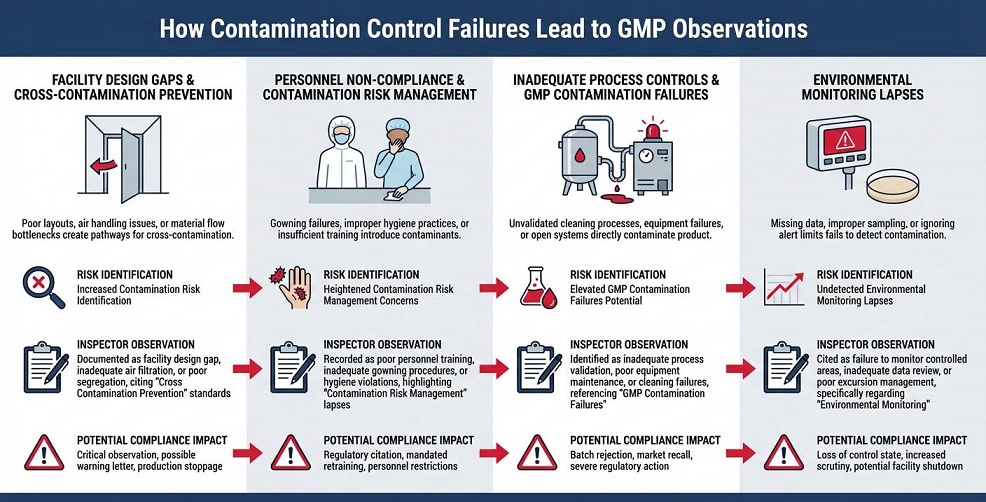
Frequent microbial contamination issues include:
- Surface or air contamination exceeding limits
- Water system microbial failures
- Cross-contamination due to improper segregation
- Inconsistent sterility testing
These failures often point to gaps in environmental monitoring, process adherence, or personnel compliance. Inspectors interpret these patterns as indicators of weak GMP contamination governance.
A structured cross contamination prevention strategy to minimize GMP risk
Implementing a structured cross contamination prevention strategy aligns design, operational practices, and monitoring to reduce GMP inspection risk.
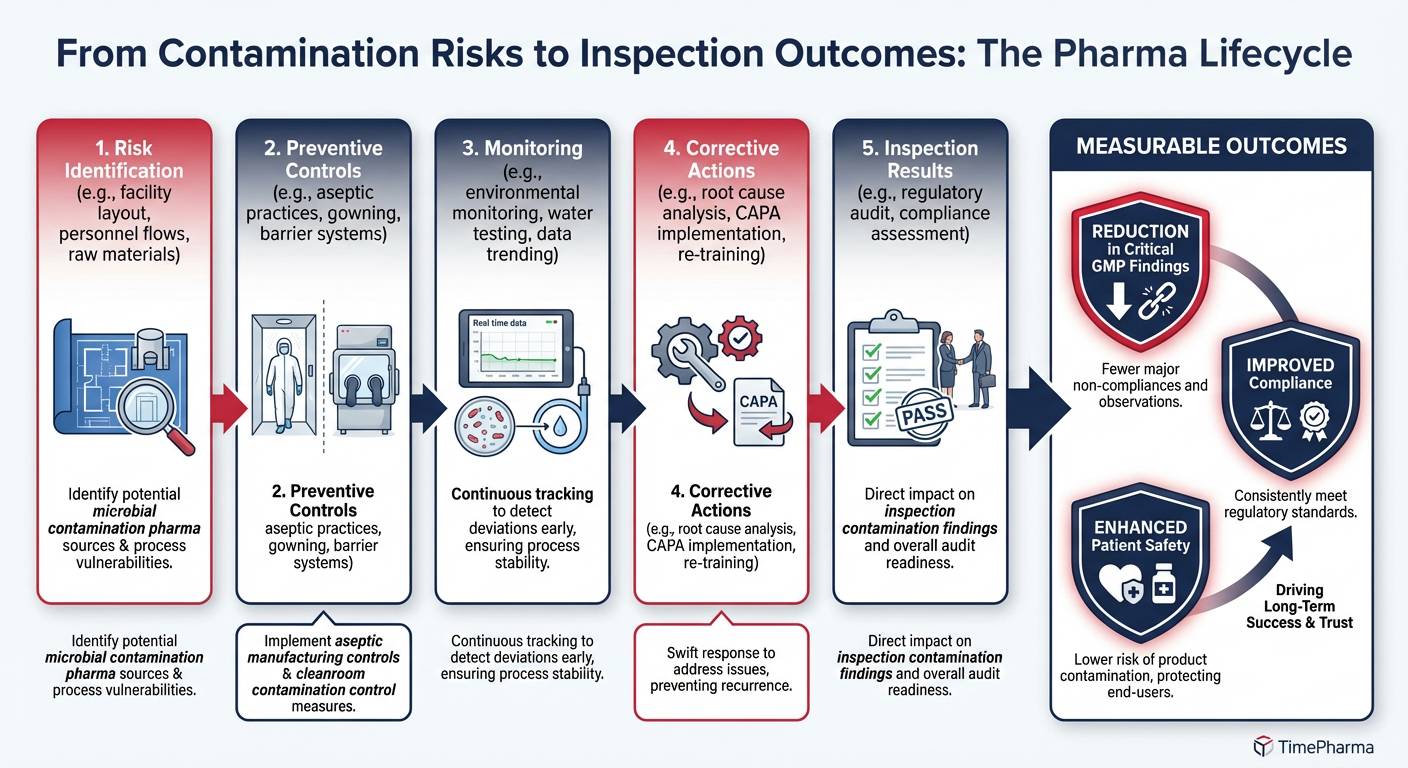
A structured cross contamination prevention strategy aligns facility design, operational practices, and monitoring data to minimize GMP risk.
| Control Element | Best Practice | Inspection Expectation |
|---|---|---|
|
Cleanroom Design |
Zoning, HVAC, airflow validation |
Verified design supporting aseptic processes |
|
Personnel |
Training, gowning, behavior oversight |
Documented compliance and supervision |
|
Processes |
Cleaning validation, equipment sterilization |
Traceable, repeatable procedures |
|
Environmental Monitoring |
Viable/non-viable sampling, trend tracking |
Documented trends with defined corrective actions |
Effective strategies integrate preventive and detective controls. Organizations that maintain such systems consistently demonstrate GMP maturity and reduce the likelihood of critical observations.
Final Words
Recent EMA inspections indicate that facilities with robust contamination control report 25% fewer critical GMP findings compared to peers. Weak contamination oversight correlates strongly with patient safety risk and regulatory scrutiny. Teams that combine proactive design, disciplined personnel practices, validated processes, and continuous environmental monitoring not only protect products but also reduce inspection friction.
Micro-credentials: In multiple inspections, documented monitoring trends directly mitigated potential critical findings. Embedding cleanroom contamination management into routine operations demonstrates operational maturity to regulators.
FAQs
Execution gaps, inconsistent gowning, and insufficient cleaning validation often undermine formal processes.
Inspectors focus on environmental controls, operator behavior, process hygiene, and trend-based monitoring.
Implement structured controls, document all environmental and process decisions, and proactively act on monitoring trends.
References

Mahtab Shardi
Mahtab is a pharmaceutical professional with a Master’s degree in Physical Chemistry and over five years of experience in laboratory and QC roles. Mahtab contributes reliable, well-structured pharmaceutical content to Pharmuni, helping turn complex scientific topics into clear, practical insights for industry professionals and students.

Root Cause Analysis in Pharmaceutical Industry: 6 Powerful Methods in 2026
Explore 6 powerful root cause analysis methods in pharma to investigate deviations, strengthen CAPA, ensure GMP compliance, and protect patient safety.

Quality Culture in Pharma Industry 2026: Proven Ways to Build Trust
Explore how to build a strong quality culture in the pharmaceutical industry in 2026 through leadership commitment, ICH Q10 principles, meaningful GMP metrics, effective CAPA, and continuous improvement.

GMP Training Effectiveness 2026: Proven Ways to Build Real Competence
GMP training effectiveness goes beyond attendance records and quiz scores. Learn how role-based assessments, on-the-job observation, and meaningful KPIs help verify employee competence, strengthen training records, and address recurring performance gaps across pharmaceutical operations.