

ECA collected 169 responses for its OOS investigation survey. The survey opened in February 2026. It closed in mid-April 2026. ECA published its first summary on May 21, 2026.
The findings may reshape retesting, CAPA, and laboratory investigation guidance.
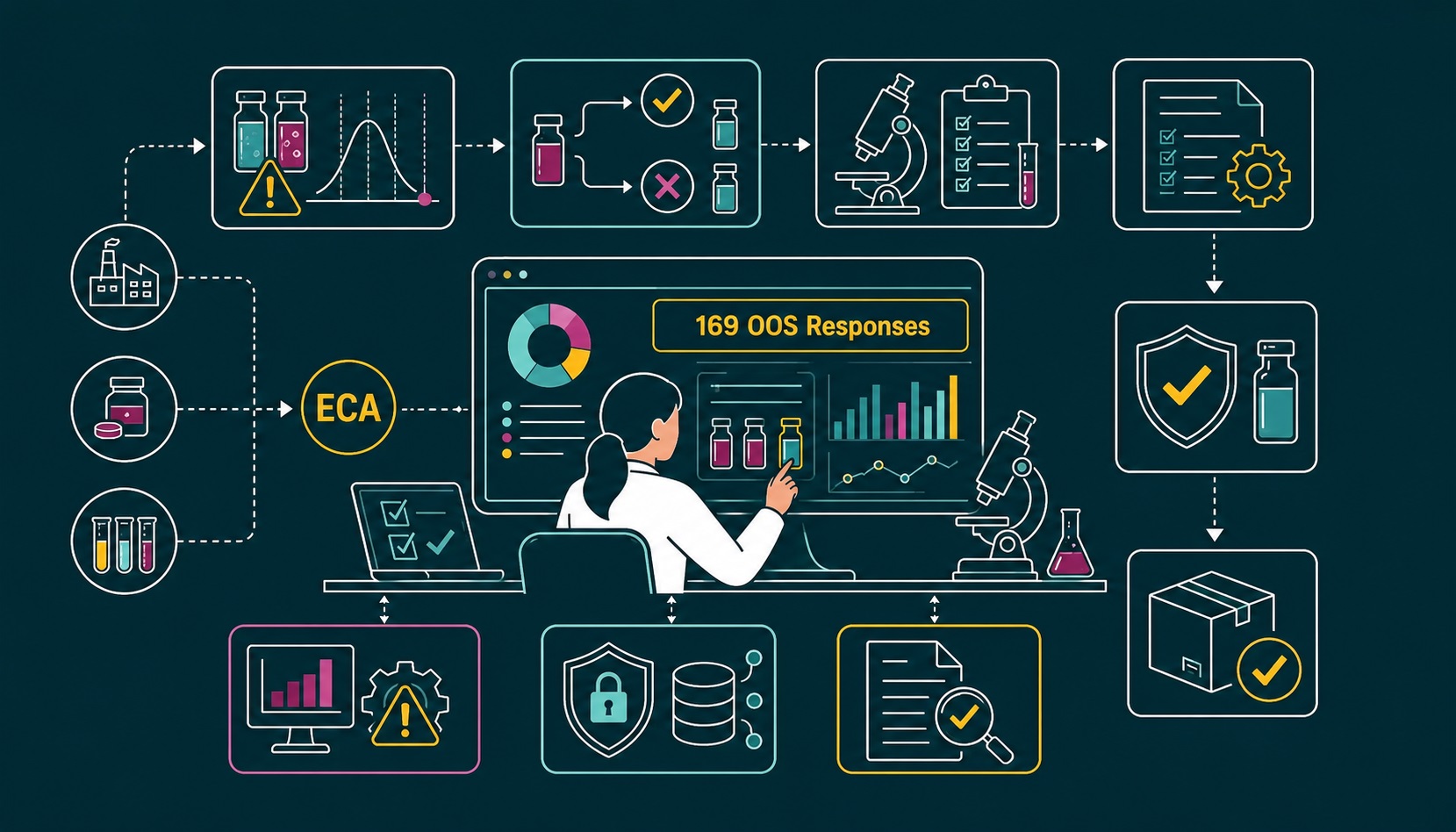
Why Are 169 OOS Responses Important for Laboratories?
ECA collected 169 responses to support revision of its 2013 OOS guideline. The survey examined laboratory investigations, retesting, hypothesis testing, manufacturing investigations, CAPA, and analytical SOPs. The problem is inconsistent practice across quality control laboratories. Without clear justification, repeat testing can hide original failures, weaken data integrity, and undermine FDA expectations for scientifically sound OOS evaluations and documented final conclusions.
Uncontrolled Retesting Creates Wider Compliance Risks
Poor OOS investigations can cause testing into compliance, delayed batch release, product rejection, and regulatory findings. Retesting, CAPA, and data integrity must work together because invalidating a result requires scientific evidence. The survey creates a positive opportunity to compare industry practices and improve guidance. Stronger SOPs could standardize hypothesis testing, expand manufacturing investigations appropriately, and help quality units reach faster, more defensible conclusions without ignoring laboratory data or patient risks.
Why OOS, CAPA, and SOPs Matter to Pharma Professionals
Reliable OOS management connects laboratory science, manufacturing evidence, and quality oversight. Quality control analysts, quality assurance professionals, and manufacturing investigators must understand when to retest, expand investigations, protect original data, and document conclusions that support defensible batch decisions during inspections.
Quality Control and Laboratory Teams
Quality control analysts must preserve original results, assess assignable laboratory causes, and follow approved retesting plans. Weak hypotheses or repeated analyses can conceal failures and damage data integrity during reviews.
- Preserve every original analytical result.
- Justify retesting through approved protocols.
Quality Assurance Professionals
Quality assurance professionals must challenge invalidation decisions, approve investigation scope, and verify CAPA effectiveness. Their oversight prevents testing into compliance and protects batch release from unsupported laboratory conclusions during inspections.
- Challenge unsupported laboratory invalidation decisions.
- Verify CAPA effectiveness before closure.
Manufacturing Investigation Teams
Manufacturing investigators must evaluate processes, materials, equipment, and personnel when laboratory causes remain unproven. A narrow investigation can miss root causes affecting related batches, stability results, product quality, and patients.
- Expand investigations beyond laboratory assumptions.
- Assess related batches for potential impact.
What Could Stronger OOS Guidance Achieve?
ECA received 169 survey responses between February and mid-April 2026. Their evaluation could support a clearer update to the 2013 OOS guideline and reduce inconsistent investigation practices. Companies should compare current SOPs against FDA expectations, restrict unjustified retesting, preserve original data, and strengthen CAPA before revised guidance is formally published.
Want to strengthen OOS investigation skills? Read Pharmuni’s Out of Specification (OOS) in Pharma Industry: Complete Investigation Guide & Prevention in 2026. It explains laboratory phases, root cause analysis, CAPA, documentation, and prevention methods for more defensible GMP quality decisions.