

Regulatory Strategy in Pharma in 2026: From Drug Development to GMP Inspection Readiness

In FY2025, the FDA issued more than 125 warning letters to drug manufacturers, showing how quickly compliance gaps can become regulatory concerns. Therefore, a strong regulatory strategy in pharma must connect development decisions, CMC controls, submissions, and manufacturing practice. At the same time, teams need to understand how pharma regulation affects decisions across the product lifecycle. A clear strategy helps companies manage regulatory risk and stay prepared for inspections.

Table of Contents

What Is Regulatory Strategy in Pharma?

Regulatory strategy in pharma is an evidence-based plan for moving a product through development, approval, and lifecycle management. It connects regulatory pathways, scientific evidence, submissions, and health authority expectations. Therefore, regulatory teams can identify requirements early and reduce avoidable gaps. Moreover, a clear strategy helps align development decisions with ongoing regulatory obligations after approval.

Why Regulatory Planning Matters for GMP Compliance?

Regulatory planning keeps development decisions, CMC controls, manufacturing practices, and approved commitments aligned. As a result, teams can manage changes more effectively and reduce compliance gaps. Moreover, strong regulatory compliance supports clearer evidence during inspections and across the product lifecycle.

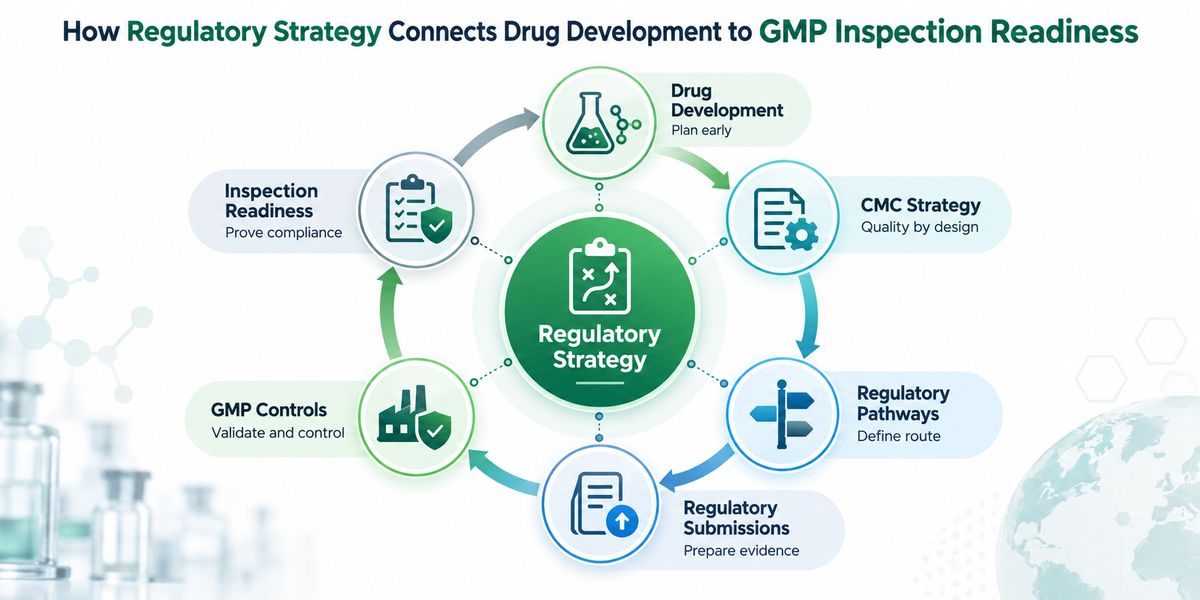
This infographic shows how regulatory strategy links drug development, CMC decisions, GMP controls, and inspection readiness across the product lifecycle.

Regulatory strategy for drug development connecting CMC controls, GMP compliance, and inspection readiness
How regulatory strategy for drug development supports GMP inspection readiness

4 Regulatory Decisions That Shape Inspection Readiness

Readiness depends on more than having the right documents. Regulatory teams must connect pathway choices, CMC evidence, approved commitments, and lifecycle changes to real GMP controls. Therefore, each major regulatory decision should leave a clear and defensible trail for reviewers and inspectors.

The four areas below show where regulatory strategy has the greatest impact on inspection readiness.

  • Choose the Regulatory Pathway and Time Authority Interactions (Available PDF)
  • Build the CMC Evidence Around the CTD (Available PDF)
  • Translate Regulatory Commitments into GMP Controls (Available PDF)
  • Plan Post Approval CMC Changes Before Implementation (Available PDF)

Choose the Regulatory Pathway and Time Authority Interactions (Available PDF)

Choose the right regulatory pathway early and align development plans with authority expectations. Use timely agency interactions to resolve key CMC, clinical, and submission questions before they cause delays.

Download the FDA PDUFA Meetings Guidance here.

Build the CMC Evidence Around the CTD (Available PDF)

Organize CMC evidence so regulators can clearly assess product quality and manufacturing controls. Use the CTD structure to present drug substance, drug product, specifications, and support quality data consistently.

Download the ICH M4Q(R1) Quality Guideline here.

Translate Regulatory Commitments into GMP Controls (Available PDF)

Ensure approved regulatory commitments match the controls used in routine manufacturing. Align quality systems, validation, production, laboratory controls, and change management with inspection expectations.

Download Drug Manufacturing Inspections Here

Plan Post Approval CMC Changes Before Implementation (Available PDF)

Assess the regulatory impact of CMC changes before implementation. Define reporting requirements, supporting evidence, and change-control actions as part of lifecycle management.

Download the ICH Q12 Lifecycle Management Guidance here.

How to Build an Inspection-Ready Regulatory Plan

A strong regulatory plan should connect regulatory requirements with the evidence and controls used throughout the product lifecycle. First, teams should define the regulatory pathway, CMC requirements, and key risks. Then, they should assign responsibilities and maintain clear evidence for regulatory decisions. As a result, the strategy stays aligned with GMP operations, submissions, and inspection expectations.

The table below shows the key elements of an inspection-ready regulatory plan and the evidence each element should produce.

Regulatory Plan Element What the Team Should Define Key Evidence or Output Why It Matters for Inspection Readiness
Regulatory Pathway
Applicable markets, submission route, and major regulatory milestones
Regulatory strategy and development plan
Keeps development activities aligned with regulatory requirements
Authority Interactions
Questions that require regulator feedback and the right timing for discussions
Meeting requests, briefing packages, and meeting records
Creates a documented basis for important regulatory decisions
CMC Evidence
Product, process, specifications, controls, stability, and manufacturing information
CTD quality documentation and supporting data
Shows that CMC decisions are scientifically justified and traceable
Quality Risk Management
Risks that could affect product quality, patients, or compliance
Risk assessments and mitigation actions
Helps teams focus controls and resources on higher-risk areas

Keeping Regulatory Strategy Current Across the Product Lifecycle

Regulatory strategy should evolve as the product, process, and regulatory environment change. Therefore, teams should reassess it after major development results, authority feedback, inspections, manufacturing changes, or post approval changes. Regular review also helps keep regulatory intelligence, CMC decisions, and approved commitments aligned throughout the product lifecycle.

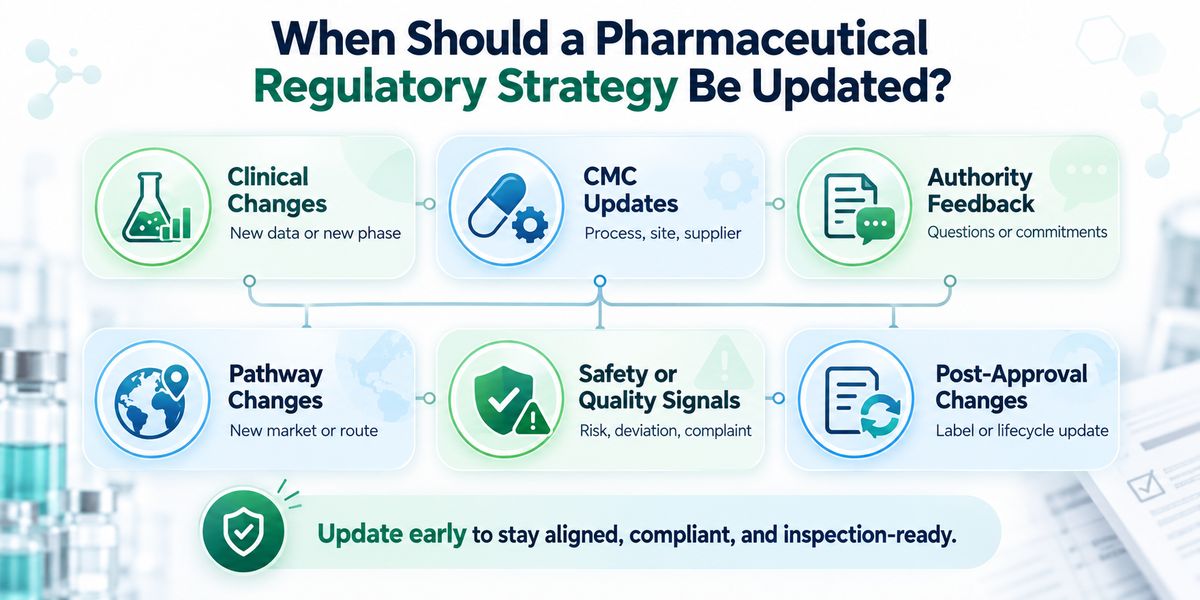
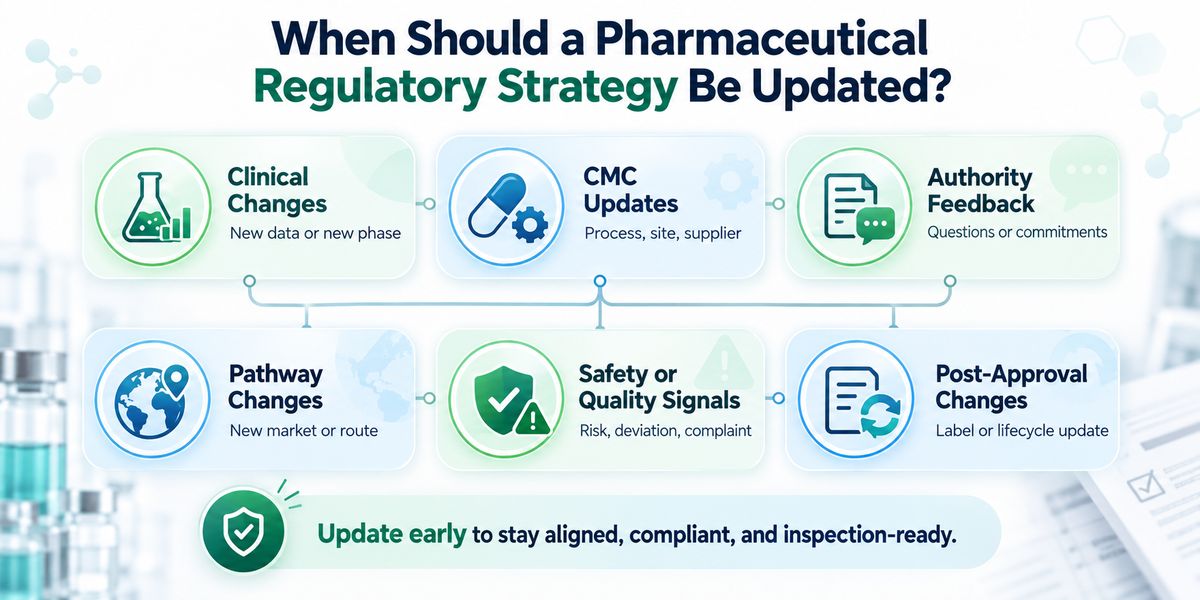
This infographic highlights the key events that should trigger a regulatory strategy review to keep development, compliance, and lifecycle decisions aligned.

Pharmaceutical regulatory strategy update triggers across development, inspections, manufacturing changes, and post approval changes
When regulatory intelligence and post approval changes should trigger a strategy update

Final Word

FDA reports that more than 90% of inspections find CGMP compliance acceptable, yet inspection readiness still requires constant attention. Therefore, an effective regulatory strategy in pharma should keep CMC decisions, approved commitments, manufacturing controls, and lifecycle changes aligned. As regulatory expectations evolve, teams must review their strategy regularly to maintain compliance and inspection readiness.

FAQs

1️⃣ When does a CMC change require a regulatory submission?


A CMC change may require a submission when it affects approved manufacturing conditions, product quality, controls, specifications, or other registered information. The reporting category depends on the change’s risk and the applicable regulatory requirements.

2️⃣ How can regulatory commitments be checked during a GMP inspection?


Inspectors can compare approved commitments with current procedures, specifications, validation records, manufacturing controls, and change-control documentation. Therefore, companies need clear traceability between the approved dossier and actual GMP operations.

3️⃣ When should a regulatory strategy be updated after product approval?


Update the strategy after significant manufacturing changes, new regulatory guidance, inspection findings, authority feedback, new quality risks, or post approval changes. Regular review keeps regulatory intelligence and lifecycle decisions aligned with current requirements.

Picture of Mahtab Shardi

Mahtab Shardi

Mahtab is a pharmaceutical professional with a Master’s degree in Physical Chemistry and over five years of experience in laboratory and QC roles. Mahtab contributes reliable, well-structured pharmaceutical content to Pharmuni, helping turn complex scientific topics into clear, practical insights for industry professionals and students.

Share