


Process Performance Qualification (PPQ) confirms that a commercial process can perform reproducibly. FDA’s 2011 Process Validation Guidance defines validation across 3 lifecycle stages, with PPQ forming the second element of Stage 2 after facility, utility, and equipment qualification.
PPQ should rely on commercial-scale data, predefined acceptance criteria, trained personnel, and statistically sound evaluation. FDA also states that PPQ must be successfully completed before commercial distribution begins. Explore Pharma Validation.
Table of Contents
What is Process Performance Qualification
Process performance qualification evaluates the complete commercial manufacturing process. Teams use qualified facilities, utilities, equipment, personnel, procedures, and materials. They manufacture planned batches under approved operating conditions. Meanwhile, enhanced sampling reveals within-batch and between-batch variation.
Results must meet predefined critical quality attributes and acceptance criteria. PPQ also tests whether the control strategy works at scale. Consequently, successful batches provide evidence for routine commercial distribution. They do not prove permanent perfection. Continued process verification must sustain assurance throughout the product lifecycle.
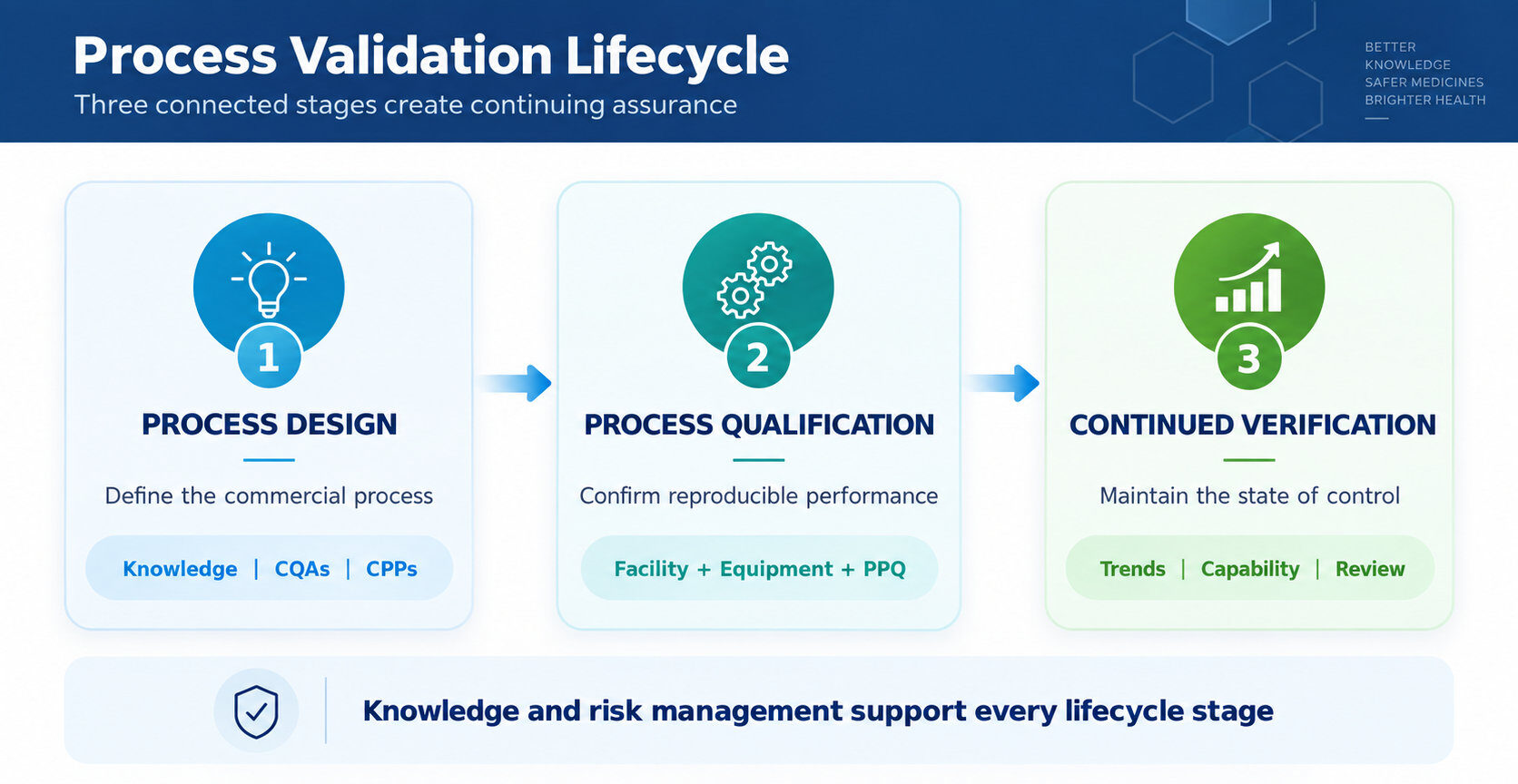
PPQ in the Process Validation Lifecycle
Stage 1 develops process understanding and defines the commercial control strategy. Stage 2 first qualifies facilities, utilities, and manufacturing equipment. Next, PPQ challenges the integrated commercial process under routine conditions. Stage 3 then monitors process performance and product quality continuously. Therefore, knowledge should move forward between every stage. Deviations may also send learning backward toward process design. Digital platforms can integrate historian, laboratory, deviation, and batch-record data.
This integration strengthens traceability and accelerates signal review. This lifecycle supports change control, CAPA, and continual improvement.
PPQ Lifecycle stage
| Lifecycle stage | Primary question | Typical evidence |
|---|---|---|
|
Stage 1 Process Design |
Can the designed process control meaningful variation? |
Development studies, risk assessments, CQAs, CPPs, and control strategy |
|
Stage 2 Process Qualification |
Can qualified systems reproduce commercial quality? |
Qualification records, PPQ protocol, batch data, deviations, and report |
|
Stage 3 Continued Verification |
Does routine production remain controlled? |
Trend reports, capability measures, complaints, deviations, and periodic reviews |
PPQ Versus Process Validation and Equipment Qualification Key Types
These terms describe different evidence layers. Process validation covers the complete lifecycle. Equipment qualification verifies intended equipment performance. PPQ evaluates the integrated commercial process. Continued verification tracks routine performance after PPQ. Requalification addresses significant changes, drift, or adverse trends. Therefore, teams should not use these terms interchangeably. Clear definitions improve protocols, responsibilities, and inspection discussions.
Type 1 Process Validation
Type 2 Equipment Qualification
Type 3 Process Performance Qualification
Type 4 Continued Process Verification
Type 5 Requalification
Type 1 Process Validation: Lifecycle Framework Demonstrating Ongoing Process Control
Process Validation provides documented evidence that a manufacturing process can consistently deliver products meeting predefined quality requirements. It applies a lifecycle approach covering process design, qualification, and ongoing verification.
- Identifies critical process parameters and critical quality attributes.
- Establishes scientifically justified operating ranges and control strategies.
Type 2 Equipment Qualification: Documented Fitness of Facilities, Utilities, Systems, and Equipment
Equipment Qualification confirms that facilities, utilities, systems, and equipment are suitable for their intended use. It provides documented assurance through risk-based qualification activities.
- Covers Design Qualification, Installation Qualification, Operational Qualification, and Performance Qualification.
- Verifies installation, calibration, operating ranges, alarms, controls, and supporting utilities.
Acceptance criteria must be defined and approved before qualification testing begins.
Type 3 Process Performance Qualification: Commercial-Scale Confirmation of Process Reproducibility
Process Performance Qualification demonstrates that the commercial manufacturing process can perform effectively and reproducibly. It is executed using qualified equipment, trained personnel, approved procedures, and established controls.
- Evaluates consecutive commercial-scale batches under routine operating conditions.
- Confirms that process parameters and quality attributes remain within approved limits.
Sampling plans should provide sufficient data to assess intra-batch and inter-batch variability. Deviations and unexpected results must be investigated before the PPQ conclusion is approved.
Type 4 Continued Process Verification: Routine Monitoring that Maintains the Validated State
Continued Process Verification confirms that the manufacturing process remains in a state of control during routine production. It uses ongoing data collection, statistical analysis, and periodic performance review.
Type 5 Requalification: Targeted Confirmation After Significant Change, Drift, or Adverse Trend
Requalification reassesses whether qualified equipment, systems, utilities, or processes remain suitable for their intended use. It may be performed periodically or initiated by a defined event.
- Common triggers include significant changes, major repairs, relocation, and recurring deviations.
- The scope is determined through documented quality risk assessment and change control.
Requalification may repeat selected tests or the complete original qualification protocol. Acceptance criteria should reflect current procedures, specifications, and regulatory expectations.
How to Develop a Risk-Based PPQ Protocol
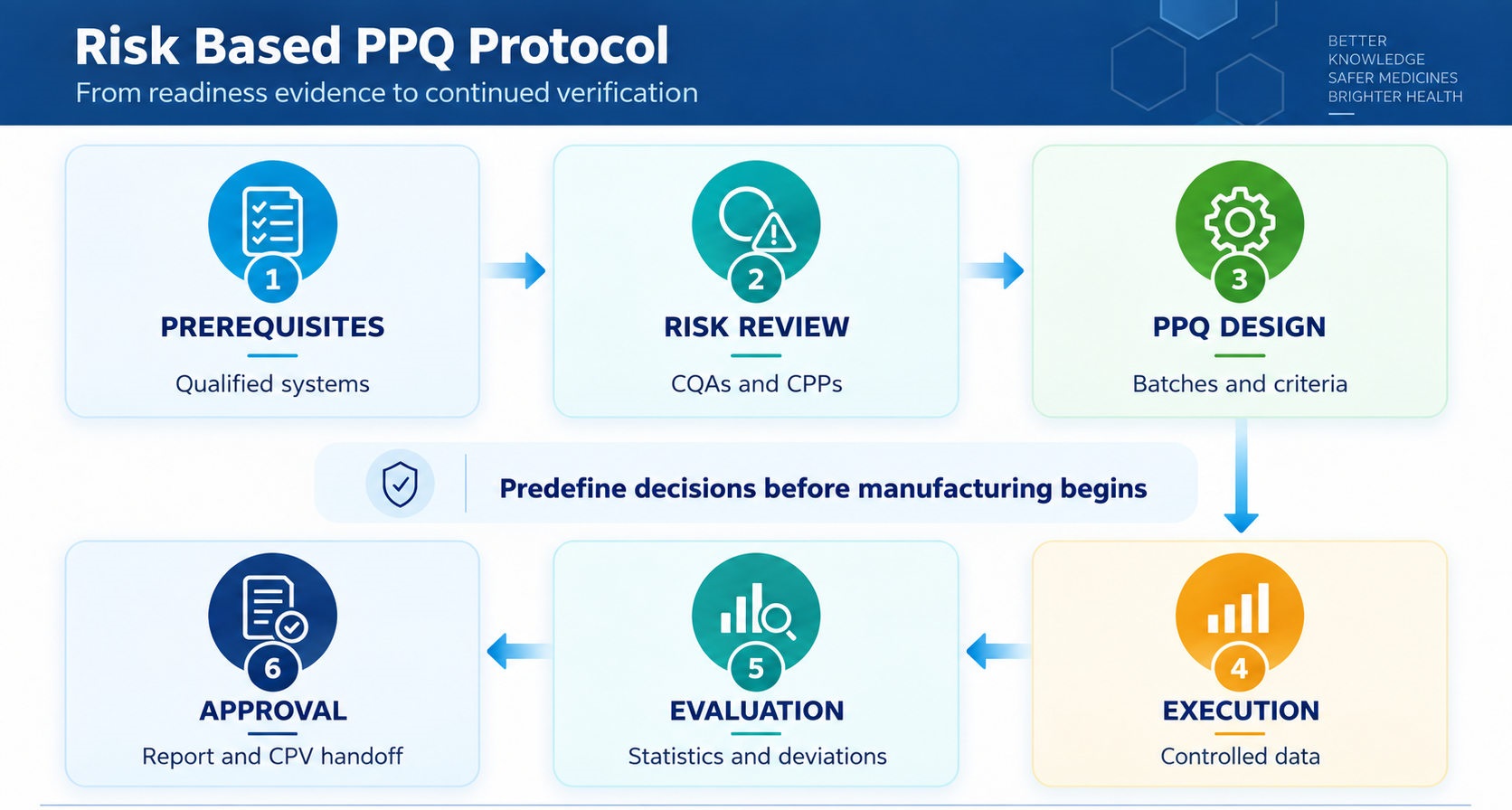
A strong PPQ protocol converts process knowledge into predefined decisions. First, confirm readiness across people, methods, materials, facilities, and systems. Then, link every measurement with an identified product or process risk. Sampling should cover locations, times, units, and conditions representing expected variation.
The protocol should define these essential elements:
- Manufacturing conditions, operating ranges, limits, and material inputs
- Selected CQAs, CPPs, in-process controls, and supporting rationale
- PPQ batch number, size, sequence, and scientific justification
How PPQ Batches Are Executed and Evaluated
Execution should follow approved records and routine commercial practices. Operators should receive protocol-specific training before the first batch. Quality oversight should confirm readiness without directing undocumented adjustments. Moreover, teams must preserve contemporaneous and attributable data. Every exception needs timely documentation and scientifically sound investigation. The following actions protect PPQ evidence:
- Verify line clearance, calibration, qualification, and material status
- Record actual settings, interventions, alarms, holds, and processing times
- Collect every sample according to the approved sampling plan
PPQ Batch Execution and Data Collection
PPQ usually applies greater sampling and scrutiny than routine production. This approach estimates variability across locations, stages, and consecutive batches. However, more samples do not automatically create better evidence. Sampling must represent known risks and plausible variation sources.
Teams should capture raw data, metadata, interventions, and environmental context. Additionally, laboratory methods must remain suitable and validated. Complete records support trustworthy batch release and final PPQ conclusions.
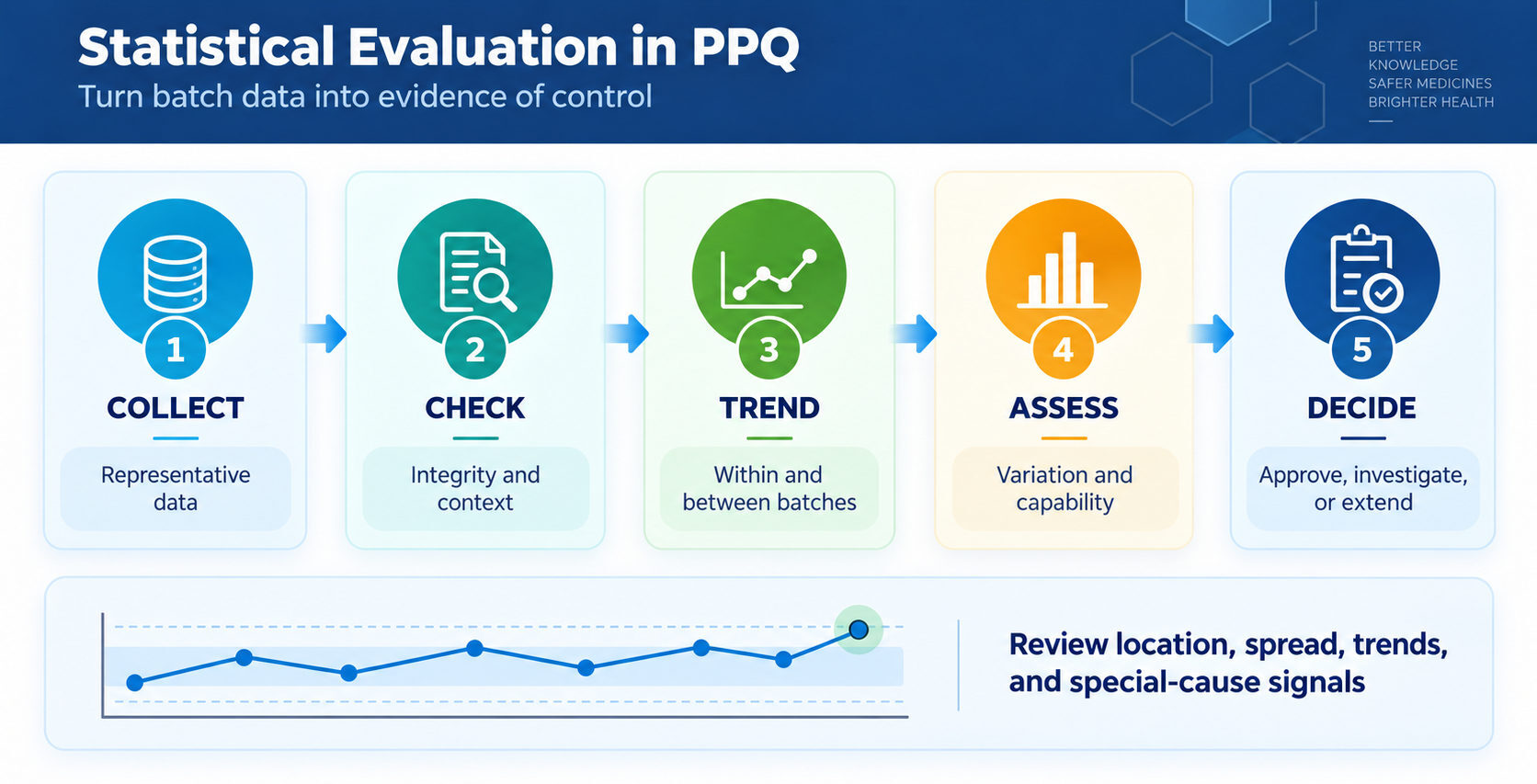
Statistical Evaluation Deviations and PPQ Report Approval
Statistical evaluation should examine location, spread, trends, and unusual signals. Analysts should compare within-batch and between-batch performance. Capability metrics help only when data meet their assumptions. Therefore, teams should avoid isolated indices without graphical review. Visual trends should show results, limits, and meaningful data stratification.
Analysts should document exclusions, transformations, and calculation choices. Deviations require documented impact assessments and root-cause investigations. A passing release result does not erase a process concern.
Common PPQ Challenges and How to Prevent Them
Most PPQ failures begin before manufacturing starts. Weak process knowledge produces vague criteria and unhelpful sampling. Similarly, incomplete qualification can confuse equipment problems with process variability. Teams may also change instructions after seeing unfavorable results. That practice weakens scientific credibility and data integrity. Instead, prevention requires disciplined readiness and escalation. Focus on these controls:
- Resolve open qualification issues before authorizing PPQ execution
- Trace each protocol measure to a documented risk or requirement
- Separate product release criteria from overall PPQ acceptance
Common challenge and Preventive action for PPQ
| Common challenge | Likely consequence | Preventive action |
|---|---|---|
|
Automatic three-batch assumption |
Insufficient or excessive supporting evidence |
Justify batch numbers using risk, complexity, and prior knowledge |
|
Vague acceptance criteria |
Subjective conclusions after execution |
Define measurable criteria and decision rules beforehand |
|
Unrepresentative sampling |
Hidden gradients or local variation |
Map risks across time, location, and unit operations |
|
Unresolved deviations |
Unsupported PPQ approval |
Complete impact assessment, investigation, CAPA, and documented disposition |
Final Word
Process Performance Qualification (PPQ) creates evidence that a commercial manufacturing process can consistently deliver quality products. The FDA Process Validation Guidance (2011) introduced the modern 3-stage lifecycle approach: Process Design, Process Qualification, and Continued Process Verification. PPQ is performed during Stage 2 to demonstrate manufacturing readiness.
A traditional approach often used 3 consecutive successful PPQ batches, but FDA (2011) allows manufacturers to justify the batch number using scientific knowledge and risk assessment. Modern PPQ integrates statistical analysis, continued monitoring, and data-driven verification throughout the product lifecycle.
FAQs
No universal number suits every process. A traditional approach generally accepts three consecutive batches. However, another number may be scientifically justified. Consider process complexity, knowledge, variability, scale, technology, and comparable manufacturing experience.
Possibly, when the batch meets every approved release requirement. However, release does not establish PPQ success. Teams must investigate failures and assess process impact. Quality units should document separate release and validation decisions.
PPQ confirms reproducible commercial performance during Stage 2. CPV monitors routine performance during Stage 3. PPQ supplies initial commercial evidence. CPV detects drift, new variation, and improvement opportunities throughout production.

Ershad Moradi
Ershad Moradi, a Content Marketing Specialist at Zamann Pharma Support, brings 6 years of experience in the pharmaceutical industry. Specializing in pharmaceutical and medical technologies, Ershad is currently focused on expanding his knowledge in marketing and improving communication in the field. Outside of work, Ershad enjoys reading and attending industry related networks to stay up-to-date on the latest advancements. With a passion for continuous learning and growth, Ershad is always looking for new opportunities to enhance his skills and contribute to pharmaceutical industry. Connect with Ershad on Facebook for more information.
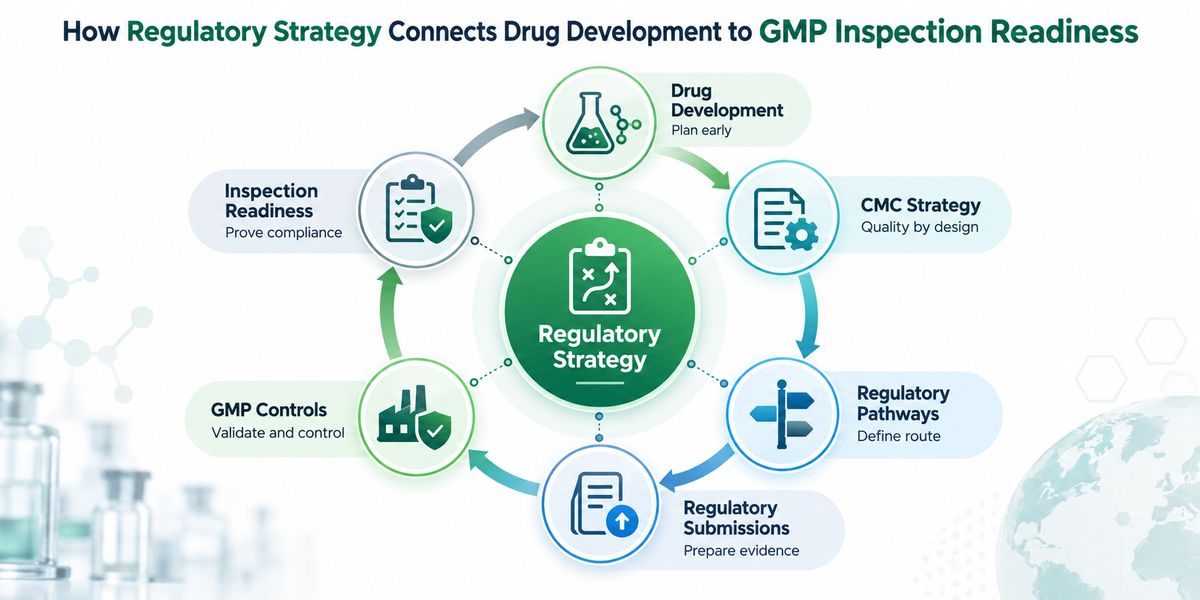
Regulatory Strategy in Pharma in 2026: From Drug Development to GMP Inspection Readiness
Effective regulatory planning connects drug development, CMC, submissions, manufacturing, and lifecycle obligations. This article explains how regulatory teams can reduce compliance gaps, prepare for inspections, manage post-approval changes, and make better decisions across the pharmaceutical product lifecycle.

Alison vs Pharmuni in 2026: Free Learning at Scale or a Guided Pharma Career System?
Alison offers 6,000+ free courses plus career tools and recruitment. Pharmuni is smaller but pharma-focused, with role assessments, Career Paths, CV tools, and 1,000+ life-science jobs.

Udemy vs Pharmuni in 2026: One Course Fast or a Full Pharma Career Path?
Udemy makes it easy to buy a specific self-paced course from a huge marketplace. Pharmuni takes a different approach, connecting pharma learning with assessments, Career Paths, competency visibility, CV tools, and job matching.