


Quality Control (QC) in the pharmaceutical industry is a systematic process that ensures drug products meet established standards for safety, efficacy, and quality. According to the World Health Organization (WHO), approximately 10% of medicines in low- and middle-income countries fail quality tests, highlighting the vital role of QC in detecting substandard or counterfeit products. Effective QC helps manufacturers comply with regulatory requirements while protecting patient health by preventing defective or unsafe medicines from reaching the market.
Good Manufacturing Practices (GMP) provide the comprehensive framework supporting Quality Control activities. The WHO GMP guidelines emphasize rigorous procedures for production, quality testing, and documentation to minimize risks of contamination, errors, and deviations. Adhering to GMP not only strengthens QC but also improves overall product consistency, ensuring that pharmaceutical companies deliver safe and effective medicines worldwide.
Table of Contents
What is Quality Control (QC) in pharma?
Quality Control (QC) in pharma checks medicines to ensure they meet quality standards. It helps prevent unsafe or ineffective drugs from reaching patients. QC tests raw materials, in-process samples, and finished products. It follows strict guidelines to maintain safety and efficacy. Also, QC verifies product consistency before release. These actions protect patients and comply with regulations.
QC includes several key activities such as:
- Testing drug purity and potency
- Checking packaging integrity
- Recording test results accurately
- Investigating deviations or failures
- Reporting findings to quality teams
Together, these steps ensure safe, effective medicines for patients.
Importance of Quality Control in pharmaceutical manufacturing
Quality Control plays a vital role in pharmaceutical manufacturing by ensuring product safety and effectiveness. It detects errors early, reducing costly recalls and health risks. For example, ISO 9001 standards guide companies to maintain consistent quality. Furthermore, QC helps companies meet strict regulatory requirements globally, boosting patient trust and market access.
In addition, effective Quality Control protects companies from financial losses and legal issues. It improves manufacturing efficiency by identifying process weaknesses quickly. Therefore, investing in QC systems strengthens overall production and safeguards public health.
Key Quality Control processes and procedures in pharma
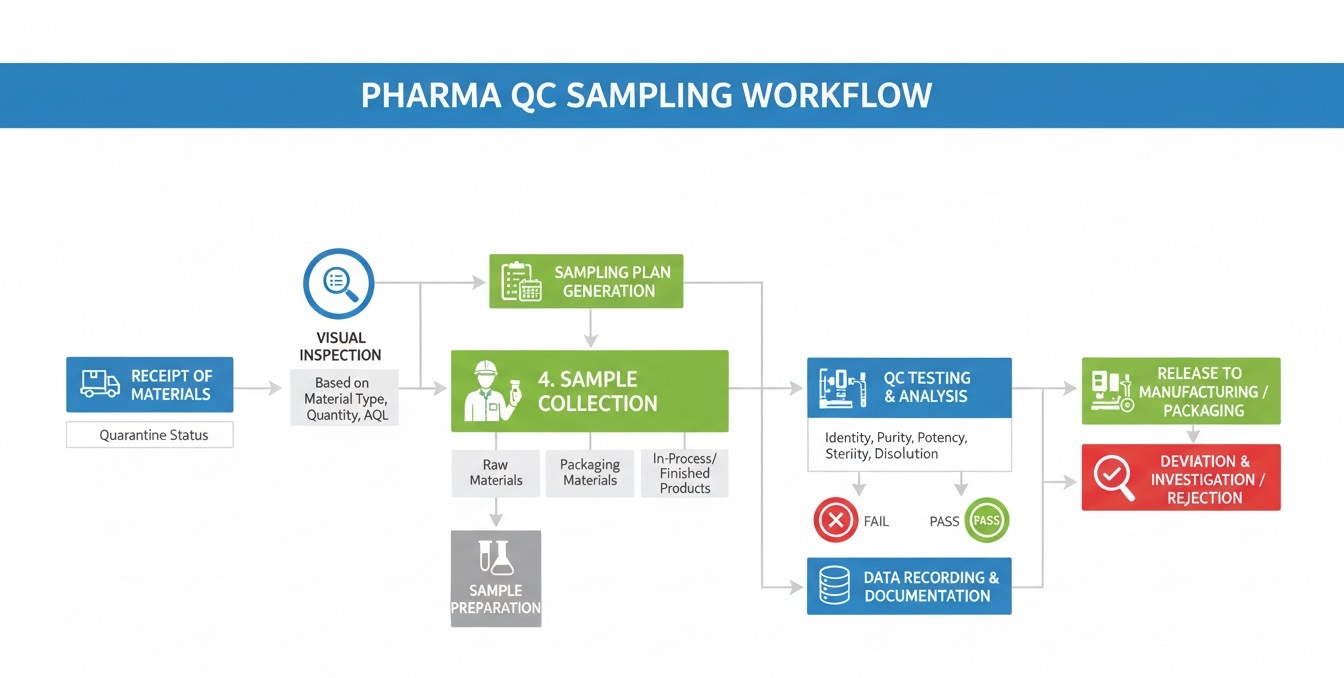
Pharma companies follow key Quality Control processes to ensure product safety and quality. First, they perform careful sampling and sample preparation. Then, they use accurate analytical testing methods. These steps help detect defects and ensure consistency. Also, companies keep detailed documentation and records to track quality data and support audits.
Additionally, deviation handling and reporting play a crucial role in QC. Staff identify and report any quality issues quickly. They investigate problems and take corrective actions. Thus, these processes maintain high standards and comply with regulations.
Key QC processes include:
- Number 1 Sampling and Sample Preparation
- Number 2 Analytical Testing Methods
- Number 3 Documentation and Record Keeping
- Number 4 Deviation Handling and Reporting
Number 1 Sampling and Sample Preparation
Analytical testing methods ensure drug quality and safety in pharma. The FDA provides clear guidelines in the “Guidance for Industry: Analytical Procedures and Methods Validation” to help companies implement these methods correctly. Similarly, ICH’s Q2(R1) guideline offers detailed validation procedures for analytical tests. Both sources improve testing accuracy and reliability.
You can download the FDA Guide Analytical Procedures and Methods Validation for Drugs and Biologics here
Number 2 Analytical Testing Methods
Analytical testing methods help pharma companies check drug quality and safety. They use tests like chromatography and spectroscopy to identify ingredients and impurities. Also, these methods ensure products meet standards and regulatory rules. Companies choose tests based on the drug type and required accuracy.
Key analytical testing methods include:
- Chromatography for separating mixtures
- Spectroscopy for measuring light absorption
- Titration for concentration analysis
- Microbial testing for contamination detection
Number 3 Documentation and Record Keeping
Documentation and record keeping help maintain transparency and traceability in Quality Control (QC). Companies record test results, procedures, and equipment details to track quality over time. Also, they update documents regularly to prevent errors and ensure compliance with regulations.
For example, a test report logs sample data and results. Similarly, a calibration record tracks instrument accuracy and maintenance.
Number 4 Deviation Handling and Reporting
Deviation handling helps companies identify and fix problems during production or testing. Workers report deviations quickly and investigate root causes to prevent repeats. Also, they document actions taken to maintain product quality and meet regulations.
For example, a missed temperature check triggers a deviation report. Similarly, an unexpected test result leads to a detailed investigation.
Common Quality Control tests for pharmaceutical products
Quality Control tests check pharmaceutical products to ensure they are safe and effective. These tests measure physical, chemical, and microbiological properties. Also, they help detect any defects or contamination before products reach patients.
Common tests include:
- Physical tests like hardness, friability, and dissolution
- Chemical tests such as assay, impurity profiling, and content uniformity
- Microbiological tests including sterility, microbial limits, and endotoxin testing
Physical Tests (e.g., hardness, friability, dissolution)
Physical tests help ensure tablets and capsules have the right strength and quality. These tests check how products behave during handling and use. Also, they identify issues that affect medicine performance.
Common physical tests include:
- Hardness measures tablet strength under pressure
- Friability tests tablet resistance to breaking
- Dissolution checks medicine release rate
- Thickness measures tablet size
- Weight variation checks consistency
- Disintegration tests tablet breaking time
Chemical Tests (e.g., assay, impurity profiling, content uniformity)
Chemical tests check the medicine’s ingredients and purity. They ensure the correct amount of active substance exists. Also, these tests find harmful impurities that affect safety.
Key chemical tests include assay, impurity profiling, content uniformity, and pH measurement. These tests help maintain medicine quality and patient safety at all times.
Common Chemical Tests & Parameters
| Test | Parameter Measured | Purpose | Method Used |
|---|---|---|---|
|
Assay |
Active ingredient content |
Confirm correct dosage |
HPLC, UV Spectroscopy |
|
Impurity Profiling |
Impurity types and levels |
Detect harmful substances |
GC, LC-MS |
|
Content Uniformity |
Dosage consistency |
Ensure uniform medicine dose |
UV Spectroscopy |
|
pH Measurement |
Acidity or alkalinity |
Check solution stability |
pH Meter |
Microbiological Tests (e.g., sterility, microbial limits, endotoxin testing)
Microbiological tests help ensure products stay safe and clean. They check for bacteria, fungi, and toxins that may harm users. For example, sterility tests verify no live microbes exist. Additionally, microbial limits tests confirm the microbes stay within safe levels. Endotoxin tests detect harmful bacterial toxins quickly.
These tests provide important quality control in many industries. They also prevent contamination during production and storage. Companies use different methods to keep products safe and effective. Key microbiological tests include:
- Sterility testing to ensure no viable microorganisms exist
- Microbial limit testing to check total microbial count
- Endotoxin testing to detect harmful bacterial toxins
- Fungal count testing to find any fungal contamination
Microbiological Test Types & Purposes
| Test Type | Purpose | Sample Tested | Common Method Used |
|---|---|---|---|
|
Total Viable Count |
Determine total microbial load |
Raw materials, products |
Plate Count Method |
|
Sterility Test |
Confirm absence of microorganisms |
Parenteral products |
Membrane Filtration |
|
Microbial Limit Test |
Ensure microbes within limits |
Non-sterile products |
Plate Count, MPN |
|
Endotoxin Test |
Detect bacterial endotoxins |
Injectable products |
LAL Assay |
How to implement Quality Control systems in pharma
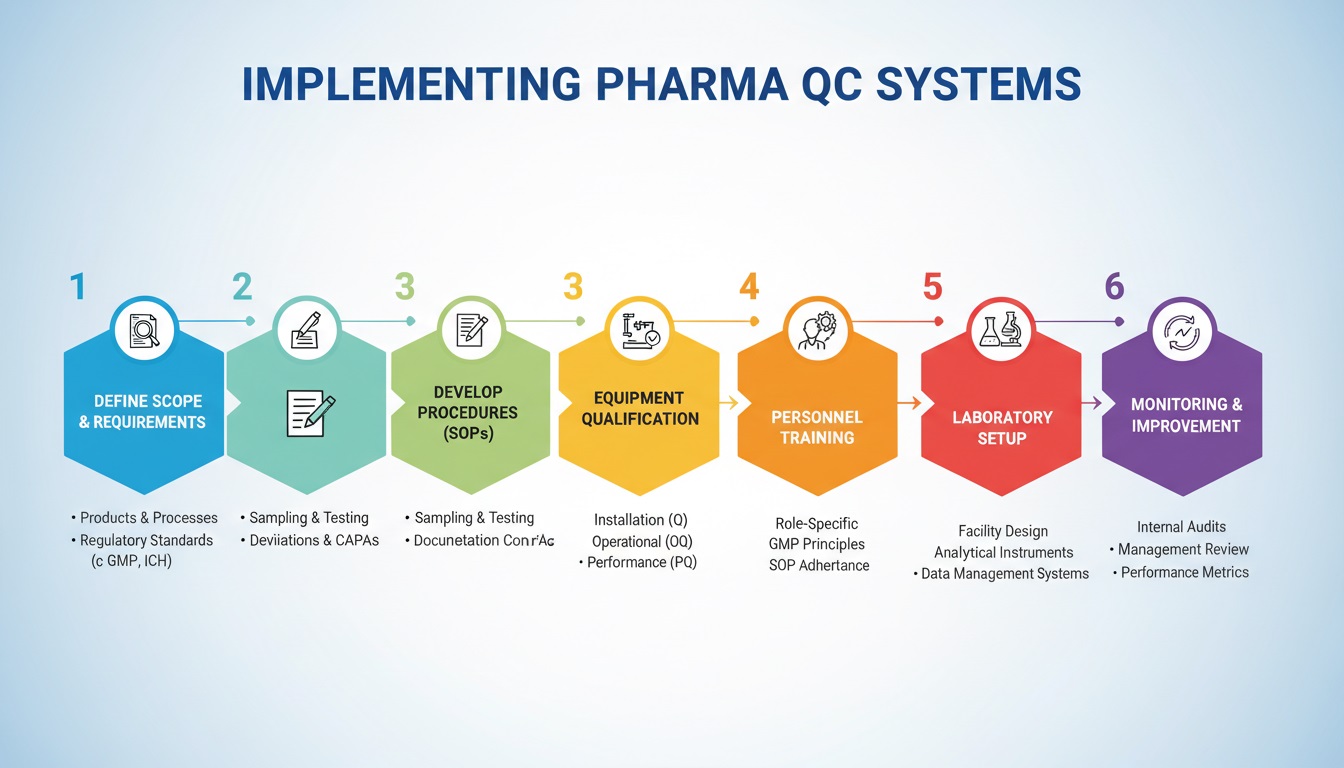
To implement quality control systems in pharma, start by training staff clearly. Next, establish standard procedures for every production step. Also, monitor processes constantly to catch problems early. Moreover, document all actions carefully to ensure full traceability and compliance.
Focus areas include:
- Train employees on quality standards and procedures
- Create clear, simple operating procedures
- Monitor production with regular checks
- Keep detailed records of all processes
Final Word
Out of Specification (OOS) events accounted for 2.3% of pharmaceutical samples tested in 2026, based on WHO data. These events require detailed investigations lasting 14 to 21 days, affecting production timelines and compliance. Regulatory bodies, including the FDA, demand thorough root cause analyses and corrective actions to ensure drug safety. Ignoring OOS issues risks regulatory sanctions or product recalls, which can damage public trust and restrict market access.
In conclusion, minimizing OOS incidents is vital for pharmaceutical quality and patient safety. Adhering to Good Manufacturing Practices (GMP) reduces OOS rates by up to 35%, according to WHO estimates. Companies should invest in training, strong quality controls, and robust investigations to maintain compliance. For further data, sources like IQVIA Institute reports, FDA Market Data Dashboards, and WHO Global Market Analysis provide valuable insights. Addressing OOS proactively supports continuous improvement and regulatory success.
FAQs
Quality Control ensures that pharmaceutical products meet safety, efficacy, and quality standards before release.
QC tests raw materials, in-process samples, and finished products to catch defects and contamination early.
Common tests include physical (hardness, dissolution), chemical (assay, impurity profiling), and microbiological (sterility, endotoxin) tests.

Ershad Moradi
Ershad Moradi, a Content Marketing Specialist at Zamann Pharma Support, brings 6 years of experience in the pharmaceutical industry. Specializing in pharmaceutical and medical technologies, Ershad is currently focused on expanding his knowledge in marketing and improving communication in the field. Outside of work, Ershad enjoys reading and attending industry related networks to stay up-to-date on the latest advancements. With a passion for continuous learning and growth, Ershad is always looking for new opportunities to enhance his skills and contribute to pharmaceutical industry. Connect with Ershad on Facebook for more information.

Quality Control (QC) in Pharma Industry: Top Strategies, Tests & Insights in 2026
Quality Control (QC) in the pharmaceutical industry is a vital process that ensures medicines meet stringent safety and quality standards. By detecting defects and contamination early, QC protects patients and supports regulatory compliance worldwide. Implementing strong QC systems safeguards the integrity and trustworthiness of pharmaceutical products.

Pharma Jobs in Melbourne in 2026: GMP Inspection and Salary Trends
Melbourne’s pharmaceutical sector continues to expand under strict TGA oversight. This analysis explores pharmaceutical manufacturing jobs Victoria, GMP inspection trends, salary benchmarks, and regulatory qualification pathways shaping compliance-driven career growth across sterile and biotech operations.

Out of Specification (OOS) in pharma Industry: Complete Investigation Guide & Prevention in 2026
Out of Specification (OOS) events represent a crucial quality challenge in pharmaceuticals, impacting product safety and regulatory compliance. Occurring in 2.3% of samples in 2026, these events demand thorough investigations and corrective actions. This blog explores the causes, investigation steps, and prevention strategies to help pharmaceutical companies strengthen their quality systems and maintain trust in their products.