
Features
Topics
Discover

Unlock the potential of your career in the Pharma industry with our online courses and qualifications.

Career Path

Pick a career path, follow its guided course roadmap, and secure industry-verified credentials in a few months.

Courses

Earn career credentials from industry leaders that demonstrate your expertise.

Good Manufacturing Practices (GMP) Courses in 2025: What GMP Is and What You Learn Online

A good manufacturing practices course should start with a reality check. WHO estimates one in ten medicines in low- and middle-income countries are substandard or falsified. Since 2013, WHO has received 1,500 reports of these cases. Those numbers show real GMP risk and prove why regulators track problems closely right now. 

In this article, you will learn Good Manufacturing Practices (GMP) basics and core course content. You will cover hygiene, documentation, deviations, CAPA, and validation basics. You will also learn how a strong online course turns rules into daily habits in production, QC, and warehouses.

Table of Contents

What Is a Good Manufacturing Practices Course?

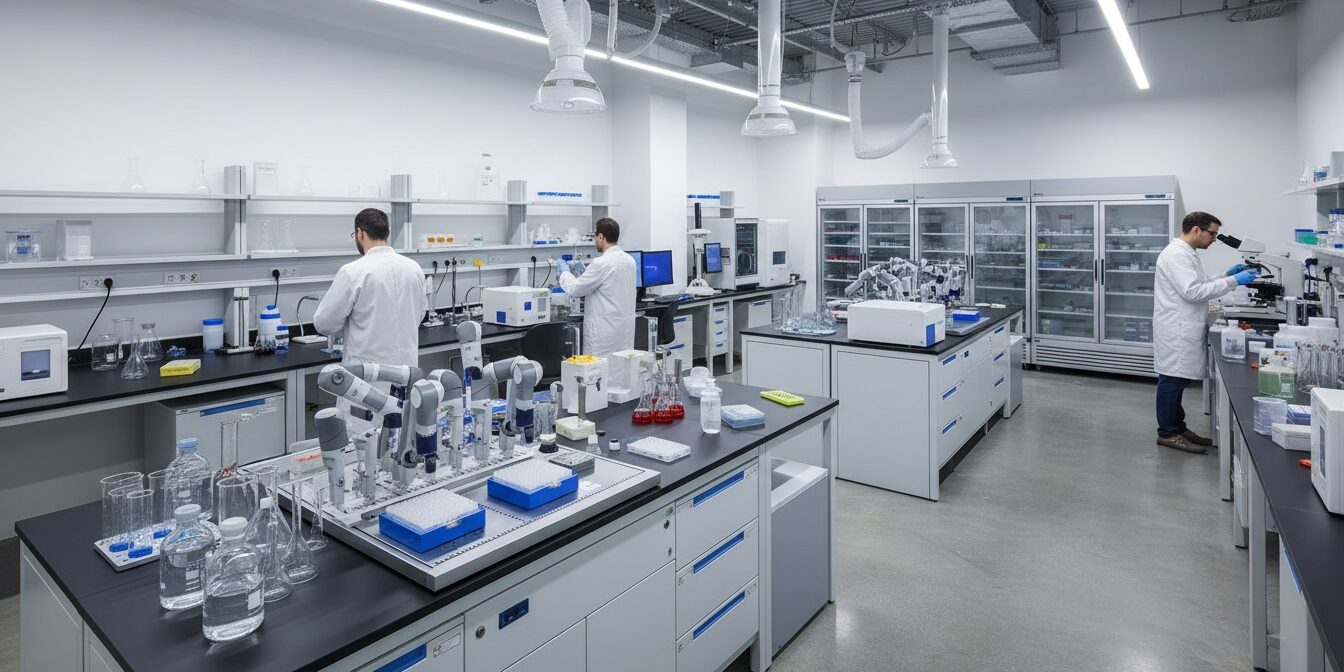
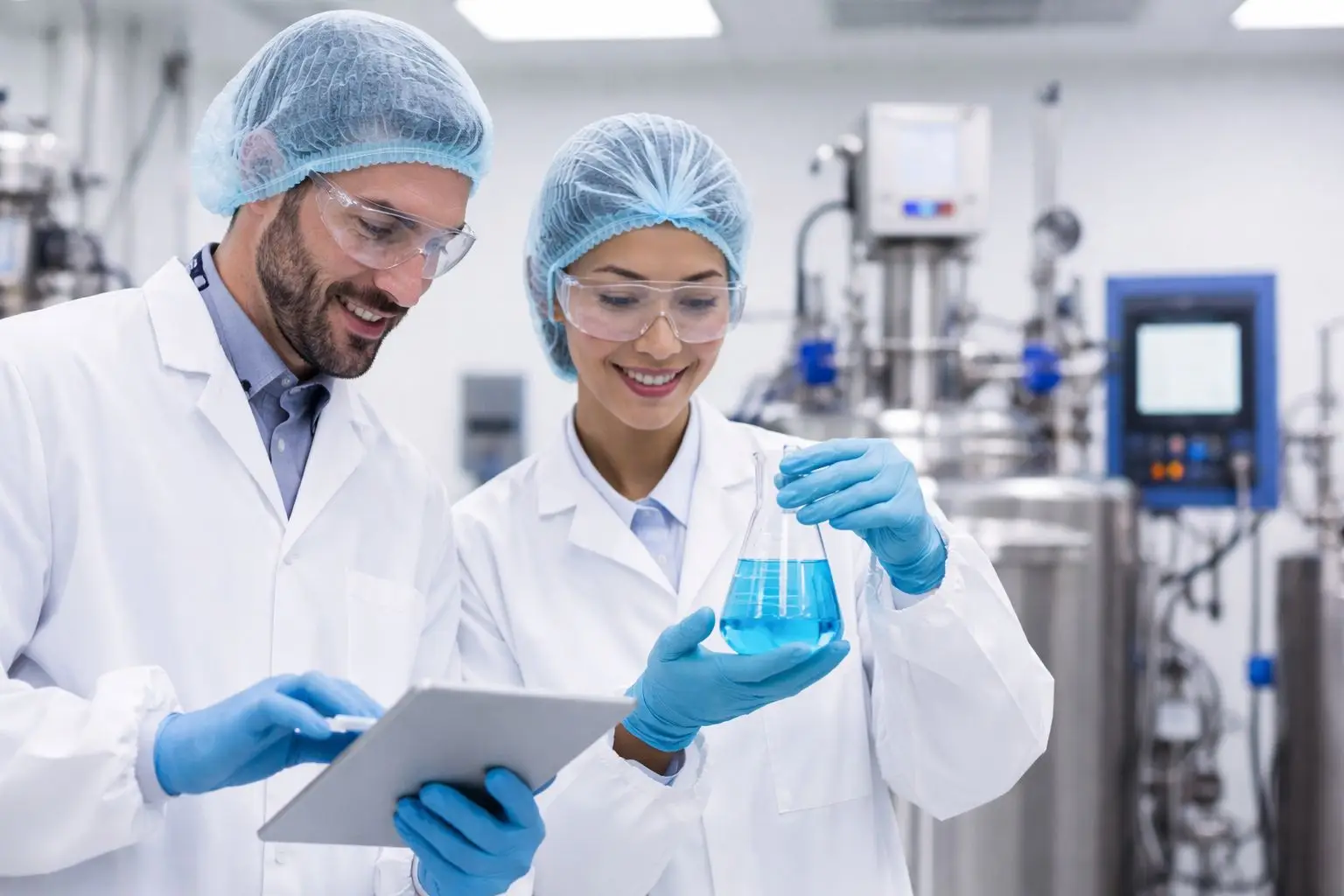
A GMP course teaches how to keep medicines safe and consistent. You learn rules for hygiene, clean areas, and controlled materials. You practice writing SOPs, batch records, and clear log entries. You understand how GMP links directly to patient risk, recalls, and compliance costs. Therefore, you build habits that help during audits and daily work.

  • Follow 3 core steps: plan, perform, and document each task.

  • Spot deviations early and start CAPA with evidence and timelines.

  • Apply GMP in production, QC labs, warehouses, and packaging lines.

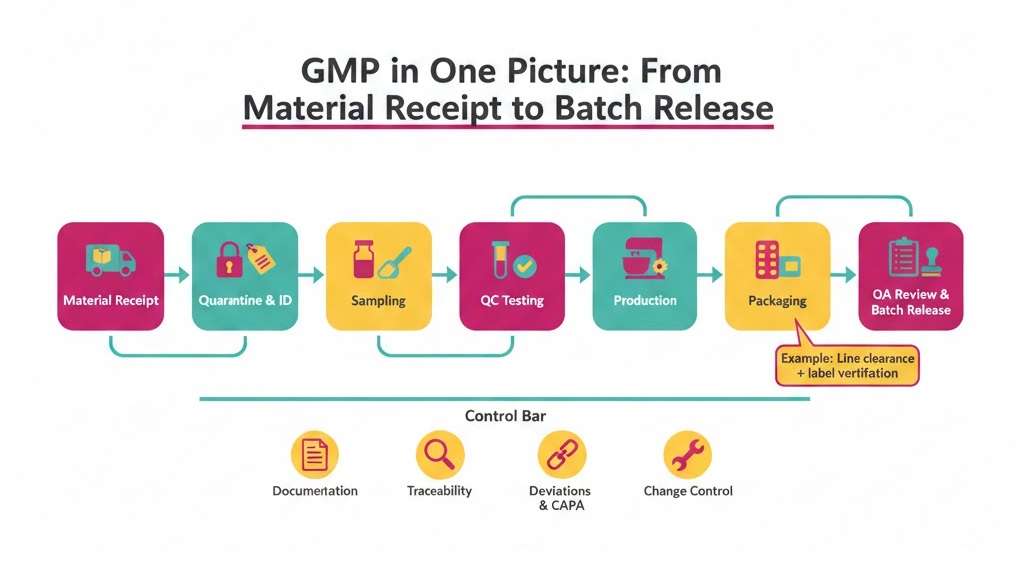
One-GMP-flow-start-to-finish-receipt-to-batch-releas
Trace every step: materials, testing, production, packaging, QA sign-off

GMP in plain language: the goal and the promise

GMP means you build quality into every step, not only at testing. It aims to prevent contamination, mix-ups, and data errors. It protects patients and teams.

First you follow clear procedures, then you record results, so inspectors trust evidence. GMP aligns with FDA 21 CFR 210/211 and EU GMP Annex 1.

  • You train people and define roles for production, QC, and QA.

  • You control materials, equipment, and changes with documented checks.

  • You investigate deviations fast and close CAPA with proof.

Where GMP shows up in real work?

GMP shows up on the line before every batch starts. Teams clean equipment, check status, and confirm materials. They complete line clearance and verify labels match the order.

First, analysts log samples; then they check controls; finally they record results. Warehouses track temperatures and quarantine stock to protect quality.  Teams monitor cold-chain shipments to avoid excursions. 

These GMP tasks cover daily work across production, QC, warehousing, and batch release.

  • Production and packaging routines

  • QC lab controls and sample handling

  • Warehouse and cold-chain discipline

  • Labeling, traceability, and batch release support

Production and packaging routines

Production teams follow SOPs and verify materials before each batch. Then operators set up equipment, check parameters, and document results.

  • Perform line clearance and remove old labels.

  • Verify label version, barcode, and expiry data.

  • Reconcile counts and report any deviation fast.

QC lab controls and sample handling

QC teams label samples and log chain of custody. They use clean tools and prevent mix-ups during transfers. Then analysts prepare standards, run tests, and record results. They check controls, review outliers, and report deviations fast.

Warehouse and cold-chain discipline

Warehouse teams receive goods, verify labels, and store items correctly. Then they monitor temperatures and keep areas clean.

  • Quarantine suspect stock and record status changes.

  • Follow FIFO/FEFO rules and prevent expired picks.

  • Check cold-chain logs and react fast to excursions.

Labeling, traceability, and batch release support

Teams control labels and track each unit through the process. Then QA reviews records and confirms every required check.

  • Verify label versions, lot numbers, and expiry dates.

  • Reconcile counts and investigate any mismatch immediately.

  • Sign batch records and support release decisions with evidence.

What Will You Learn in a GMP Online Course?

A GMP online course teaches hygiene, documentation, and deviation control. You learn how SOPs, batch records, and checks prevent errors. Then you practice using CAPA to fix root causes and stop repeats.

You also learn validation basics and data integrity habits. You connect daily work to 21 CFR 210/211 and EU GMP expectations. You finish with practical steps you can apply in production, QC, and warehousing.

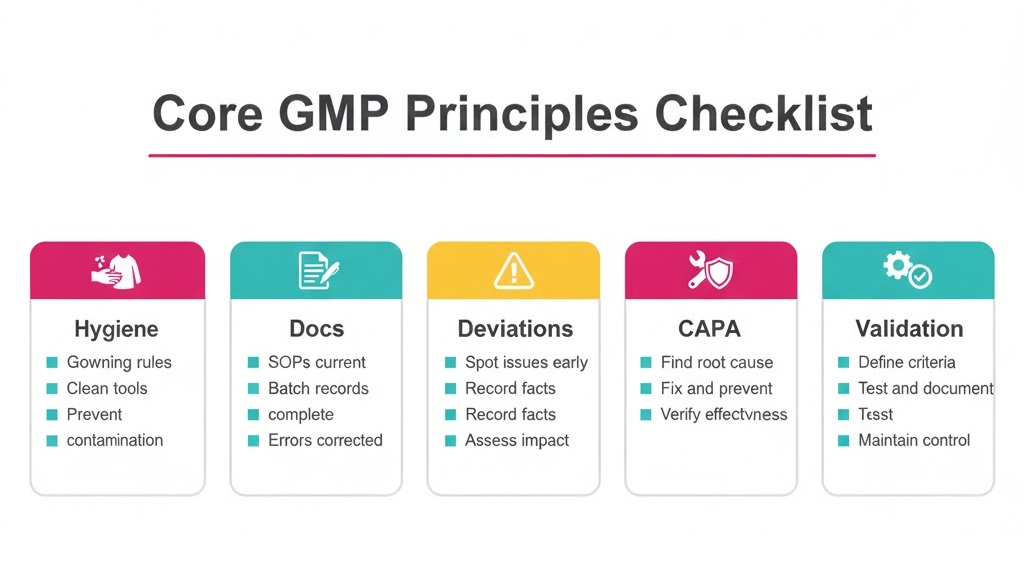
GMP checklist: 5 habits that keep every batch inspection-ready.
Hygiene, docs, deviations, CAPA, validation—master the basics fast.

GMP vs GDP vs GLP vs ISO 9001: Where Each Fits

GMP controls manufacturing so medicines meet safety and quality requirements. It sets rules. GDP controls storage and distribution so products keep quality in transit.

GLP controls nonclinical lab studies for reliable data. ISO 9001 builds a general QMS for any industry; therefore it supports, not replaces, GMP. See the table below for purpose, scope, and users.

Standard Purpose Scope Who uses it
GMP
Ensure safe, consistent product quality
Manufacturing and quality control
Production, QA, QC, engineering
GDP
Protect quality during storage and transport
Distribution, warehousing, logistics
Warehouses, wholesalers, logistics
GLP
Produce reliable nonclinical study data
Lab study planning, conduct, reporting
R&D labs, toxicology teams, CROs
ISO 9001
Improve processes and customer-focused quality
Company-wide QMS
Any industry, including life sciences

Which Regulations Should a GMP Online Course Align With?

A strong GMP online course aligns with EU GMP and FDA 21 CFR 210/211. It teaches inspection-ready documentation, validation basics, and deviation/CAPA discipline.

Therefore, check the table for what each framework expects you to learn.

  • Focus on Annex 1 contamination control and quality systems for sterile products.

  • Practice FDA-style batch records, data integrity, and audit readiness.

Framework What a course should cover
EU GMP
GMP principles, QMS basics, documentation, Annex 1 contamination control strategy
FDA expectations
21 CFR 210/211 basics, batch record discipline, investigations, data integrity habits
PIC/S
Harmonized GMP expectations, inspection mindset, risk-based thinking, Annex coverage

Final words

A good manufacturing practices course teaches control, not luck, in regulated production. WHO reports at least 1 in 10 medicines in low- and middle-income countries are substandard or falsified, costing about US$30.5 billion each year. 

You will learn GMP basics, course modules, and real shop-floor examples for pharma, biotech, and MedTech teams. You will cover hygiene, documentation, deviations, CAPA, and validation basics. You will also map GMP vs GDP, GLP, and ISO 9001, and check EU, FDA, and PIC/S alignment. WHO has received 1,500 reports of substandard or falsified cases since 2013.  Explore GMP Courses to build practical, audit-ready GMP skills fast.
.

FAQs:

1️⃣ Who should take a GMP online course?

Operators, QA/QC staff, warehouse teams, and new hires benefit most.

2️⃣ Which regulations should the course align with?

Look for EU GMP, FDA 21 CFR 210/211, and PIC/S alignment.

3️⃣ Does a GMP course help with audits and jobs?

Yes, it builds inspection-ready habits and supports GMP-focused roles.

References

Picture of Ershad Moradi
Ershad Moradi

Ershad Moradi, a Content Marketing Specialist at Zamann Pharma Support, brings 6 years of experience in the pharmaceutical industry. Specializing in pharmaceutical and medical technologies, Ershad is currently focused on expanding his knowledge in marketing and improving communication in the field. Outside of work, Ershad enjoys reading and attending industry related networks to stay up-to-date on the latest advancements. With a passion for continuous learning and growth, Ershad is always looking for new opportunities to enhance his skills and contribute to pharmaceutical industry. Connect with Ershad on Facebook for more information.

GMP in the UK: 2025 Guide

GMP in UK sets the quality rules that keep medicines safe, consistent, and inspection-ready. In this 2026 guide, you will learn how MHRA enforces UK GMP requirements, what changes after Brexit still matter, and how UK GMP compares with EU GMP and PIC/S.

Read More »

Share