

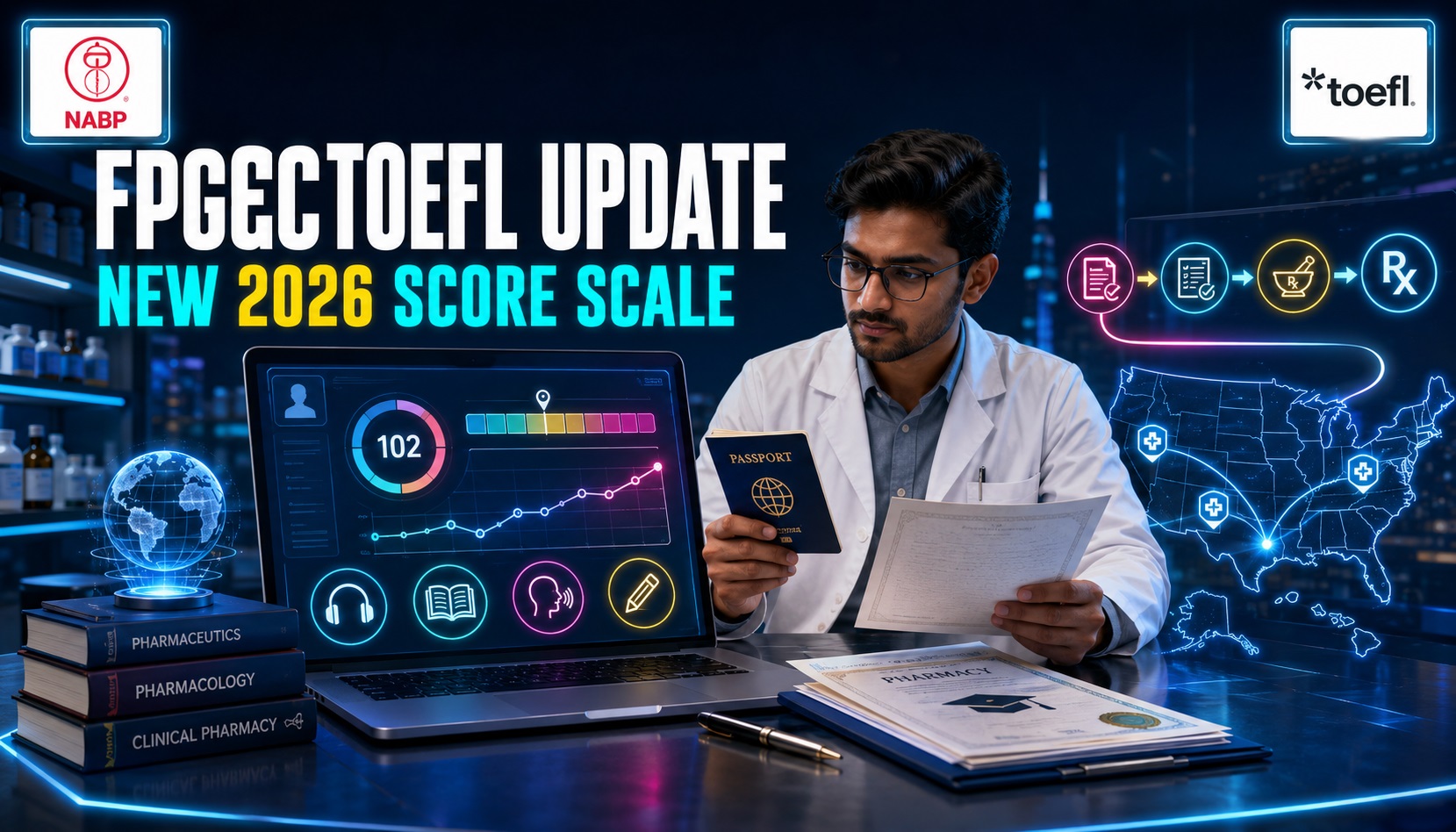
NABP applied an updated TOEFL score scale on January 21, 2026. FPGEC candidates still need minimum scores in four language sections. The revised scale changes score numbers, not the certification pathway. Foreign pharmacists must also satisfy education, documentation, and examination requirements. The result requires careful score interpretation before licensure planning.
How Do foreign pharmacist, licensing exam, and work permit Change Work?
Candidates may compare scores from different TOEFL scales incorrectly and misunderstand their FPGEC status. NABP published separate minimum section scores for tests taken before and after January 21, 2026. The updated scale covers Reading, Listening, Writing, and Speaking scores from January 21, 2026.
Impact Across foreign pharmacist, licensing exam, and work permit
Positive effect: Clear scale guidance helps applicants interpret results and plan retesting more accurately. Risk: The change does not remove document evaluation, the FPGEE, state requirements, or immigration constraints. Implementation challenge: Applicants must coordinate testing, credential documents, state-board rules, and personal timelines.
Career Skills for foreign pharmacist, licensing exam, and work permit
The update matters because it changes how organisations plan, document, communicate, or control regulated work. Professionals do not need to predict every outcome. They should understand the verified change, identify role impacts, and build evidence around the most relevant skills.
For Immigrant Pharmacists: Practical Career Impact
Immigrant pharmacists should map each licensing stage and avoid treating FPGEC as full licensure. Candidates should connect this impact with evidence from projects, training, placements, or regulated workplace responsibilities.
- Daily-work impact: Immigrant pharmacists should map each licensing stage and avoid treating FPGEC as full licensure.
- Learn or review: FPGEC documentation, TOEFL score interpretation, and state-board research.
Next Results After 4 language sections
Candidates should verify current NABP and state-board requirements before paying fees or booking tests. Professionals should monitor the official source, assess documented gaps, and prepare role-specific examples before interviews, audits, submissions, or implementation work.
Build context with Pharmaceutical Job Search and Biotech Careers and strengthen practical knowledge through Introduction to Life Science Compliance.