

BioPharm International reported two ADC cleaning challenges. The Q&A was published on May 22, 2026. It followed an INTERPHEX panel held in April 2026. The risks involve degradation profiles, HBELs, and analytical methods. These gaps can weaken control in multi-product facilities.
Why Is ADC Cleaning Validation More Complex?
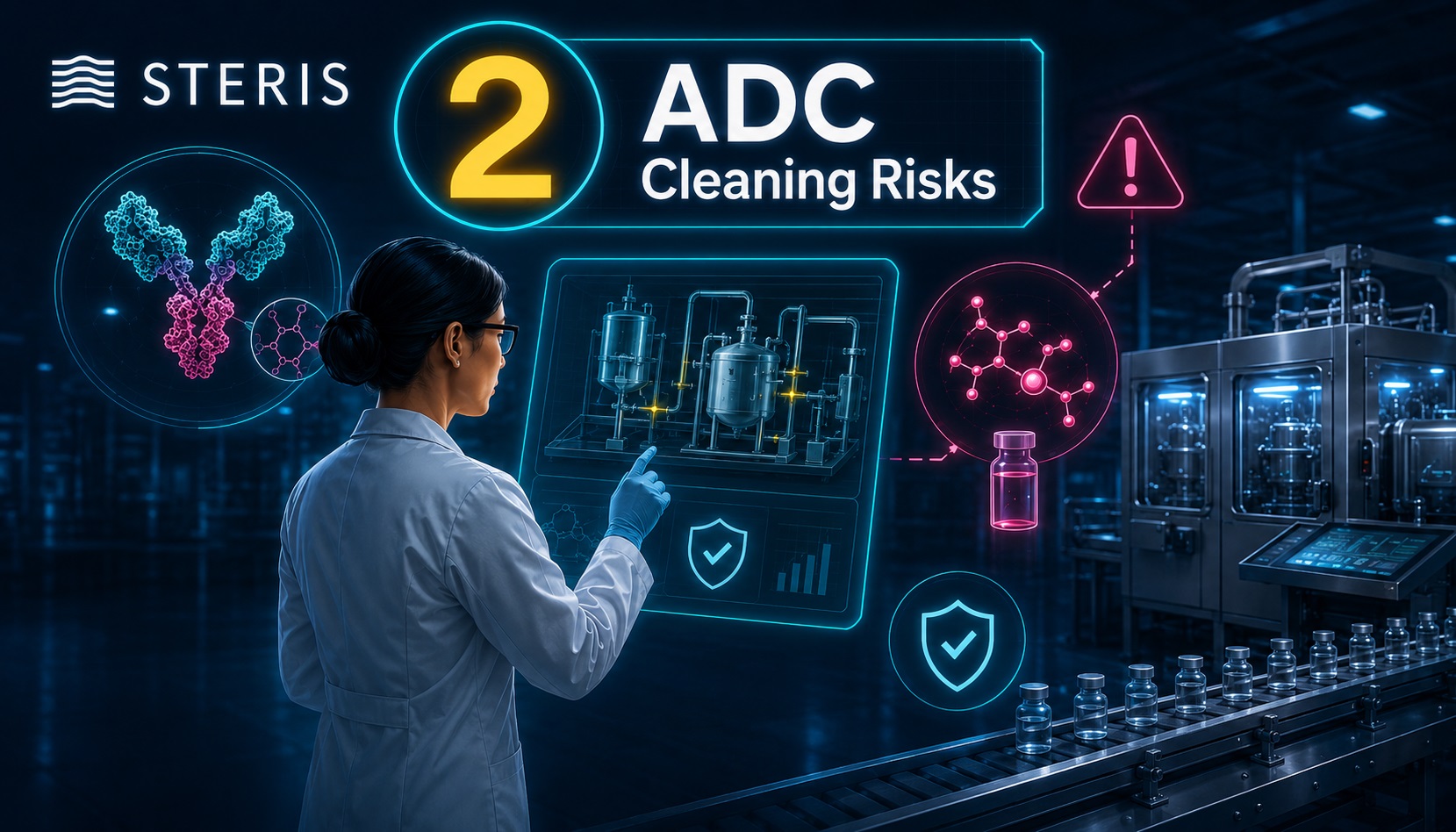
STERIS described two linked cleaning challenges within antibody-drug conjugate manufacturing: a large-molecule biologic and a highly potent small-molecule payload. BioPharm International reported that degradation behavior, HBEL selection, and analytical method suitability can differ between both components. These differences complicate cleaning validation, shared-equipment decisions, wastewater management, and proof that residues remain below scientifically justified limits after every manufacturing campaign in facilities.
ADC Cleaning Risks Affect Manufacturing Control
Weak ADC cleaning validation can expose manufacturers to cross-contamination, toxic degradation products, failed analytical verification, and production delays. HBELs, degradation profiling, and validated analytical methods create an opportunity for safer shared facilities and more defensible release decisions. However, companies must understand both molecular components before choosing cleaning conditions. A process that safely degrades the biologic may create a more hazardous payload-related residue or invalidate the test method during routine verification.
Why ADCs, HBELs, and Analytical Methods Matter to Pharma Professionals
ADC cleaning validation directly affects quality assurance, analytical laboratories, and manufacturing teams. Each group must understand how HBELs, degradation pathways, and shared equipment influence contamination control. Their combined decisions determine whether cleaning evidence remains scientifically justified, reproducible, and inspection-ready today.
Quality Assurance Professionals
Quality assurance professionals must approve risk assessments, acceptance limits, and validation evidence. They should challenge unsupported assumptions because weak ADC controls can compromise shared equipment, patient safety, and batch decisions.
- Review HBEL assumptions for every ADC.
- Verify quality oversight across shared equipment.
Analytical Laboratory Teams
Analytical laboratory teams must confirm that methods detect relevant ADC residues and degradation products. Inadequate specificity, recovery, or sensitivity can produce misleading results and weaken scientifically justified cleaning conclusions overall.
- Validate recovery for every target residue.
- Investigate degradation products before method approval.
Manufacturing and Validation Teams
Manufacturing and validation teams must define worst-case products, equipment locations, and cleaning parameters. They should verify that reusable systems safely control carryover when single-use technology cannot support required processing solvents.
- Define worst-case ADC cleaning conditions.
- Assess reusable equipment for carryover risks.
What Could Stronger ADC Controls Achieve?
BioPharm International’s May 22, 2026 report highlights two molecular cleaning challenges within every ADC. Stronger HBEL selection, degradation studies, and analytical verification could reduce cross-contamination risks and support reliable manufacturing. Companies should reassess shared equipment, worst-case products, sampling plans, and cleaning SOPs before expanding highly potent production safely and responsibly.
Want to strengthen high-potency cleaning controls? Explore Pharmuni’s Advanced Cleaning Validation: Residue Limits and Sampling course. Learn how hazard severity, acceptable carryover, analytical capability, recovery, and shared-equipment risks shape defensible validation decisions for complex pharmaceutical manufacturing.