

Novartis unveiled a major pharmaceutical manufacturing hub in North Carolina as part of its long-term US expansion strategy. The project includes a 700,000-square-foot campus and is expected to create approximately 700 jobs. Announced in 2026, the investment aims to strengthen domestic pharmaceutical manufacturing and improve supply chain resilience. The initiative addresses growing concerns about global supply chain disruptions and medicine availability. Industry experts view the hub as an important step toward expanding advanced therapy production and future pharmaceutical capacity.
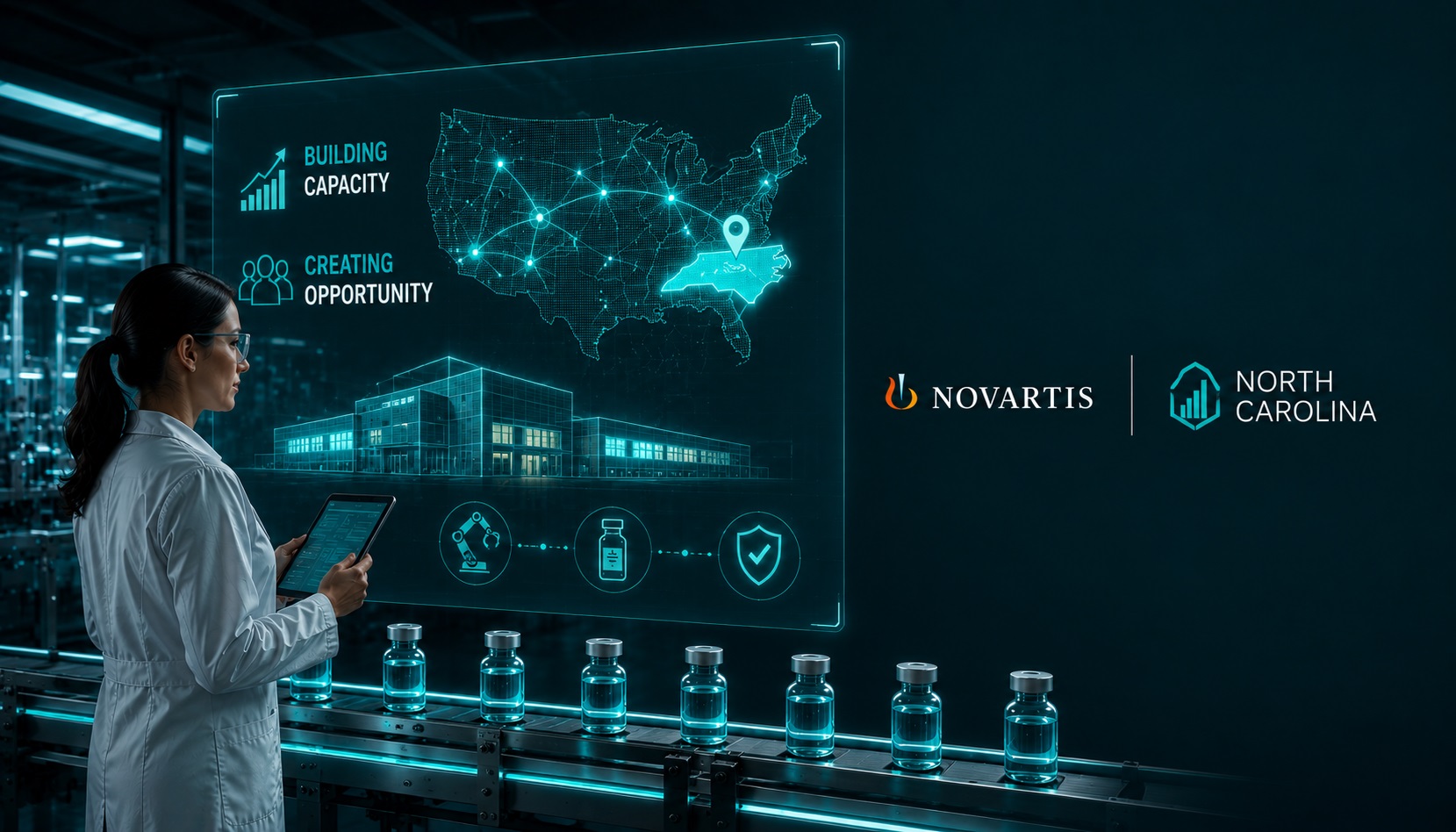
Novartis' 700-Job Manufacturing Hub a Turning Point for North Carolina
Novartis’ new North Carolina manufacturing hub represents a significant investment in pharmaceutical manufacturing capacity and workforce development. The project’s 700 planned jobs highlight the growing demand for domestic production and supply chain security. Historically, pharmaceutical companies relied heavily on global manufacturing networks, creating vulnerability to disruptions. This investment matters because it supports local production, advanced therapies, and long-term manufacturing resilience.
Effect on Pharma Manufacturing and Supply Chains
The new facility could strengthen Pharmaceutical Manufacturing, Supply Chain Management, and Pharmaceutical Production across the United States. Positive effects include increased manufacturing capacity, stronger supply chain resilience, new employment opportunities, and expanded domestic production capabilities. However, challenges remain, including workforce training requirements, construction execution risks, regulatory complexity, and significant investment costs. The project reflects a broader Future Growth Strategy focused on improving manufacturing flexibility and reducing dependence on external supply networks.
Importance for Manufacturing, GMP, and Biotechnology Careers
Large-scale pharmaceutical manufacturing investments often create new hiring opportunities, increase demand for technical expertise, and accelerate workforce development initiatives. Manufacturing professionals, GMP specialists, students, and biotechnology job seekers should closely monitor these projects because they frequently influence future career pathways and industry hiring trends.
GMP Manufacturing, Automation, and Facility Operations
Modern facilities increasingly combine GMP Manufacturing, automation technologies, and operational excellence initiatives. These investments support production growth while creating demand for specialized manufacturing expertise.
- Expand advanced manufacturing opportunities.
- Increase automation-related job demand.
Quality Assurance, Regulatory Affairs, and Compliance
Large manufacturing hubs require strong quality systems, regulatory oversight, and inspection readiness programs. Quality Assurance and Regulatory Affairs professionals play critical roles in maintaining compliance.
- Strengthen GMP compliance activities.
- Support regulatory inspection readiness.
Students, Job Seekers, and Immigrant Pharmacists
Emerging professionals should monitor major pharmaceutical investments because they often create new entry points into manufacturing, quality, regulatory, and biotechnology careers.
- Identify future employment opportunities.
- Build skills aligned with industry demand.
What Could 700 New Jobs Deliver?
The creation of approximately 700 jobs could strengthen local workforce development while expanding pharmaceutical manufacturing capacity. In the short term, the project may boost hiring and construction activity. Long term, the facility could improve supply chain resilience, increase advanced therapy production, and enhance the United States’ position in global pharmaceutical manufacturing.
Could new manufacturing hubs create more pharma jobs? Read GMP Jobs in Pharma: Roles, Skills, and How to Start Your Career and build job-ready skills.