

Novartis plans to cut around 220 jobs in Germany as it closes its Wehr production site by the end of 2028. The site manufactures tablets and capsules and was described as no longer competitive. Reuters reported that Novartis said the closure is not linked to its U.S. manufacturing investments or Germany’s new healthcare measures. For immigrant and local pharma workers, this news shows why reskilling in advanced manufacturing, QA, validation, automation, sterile production, and biologics can reduce career risk.
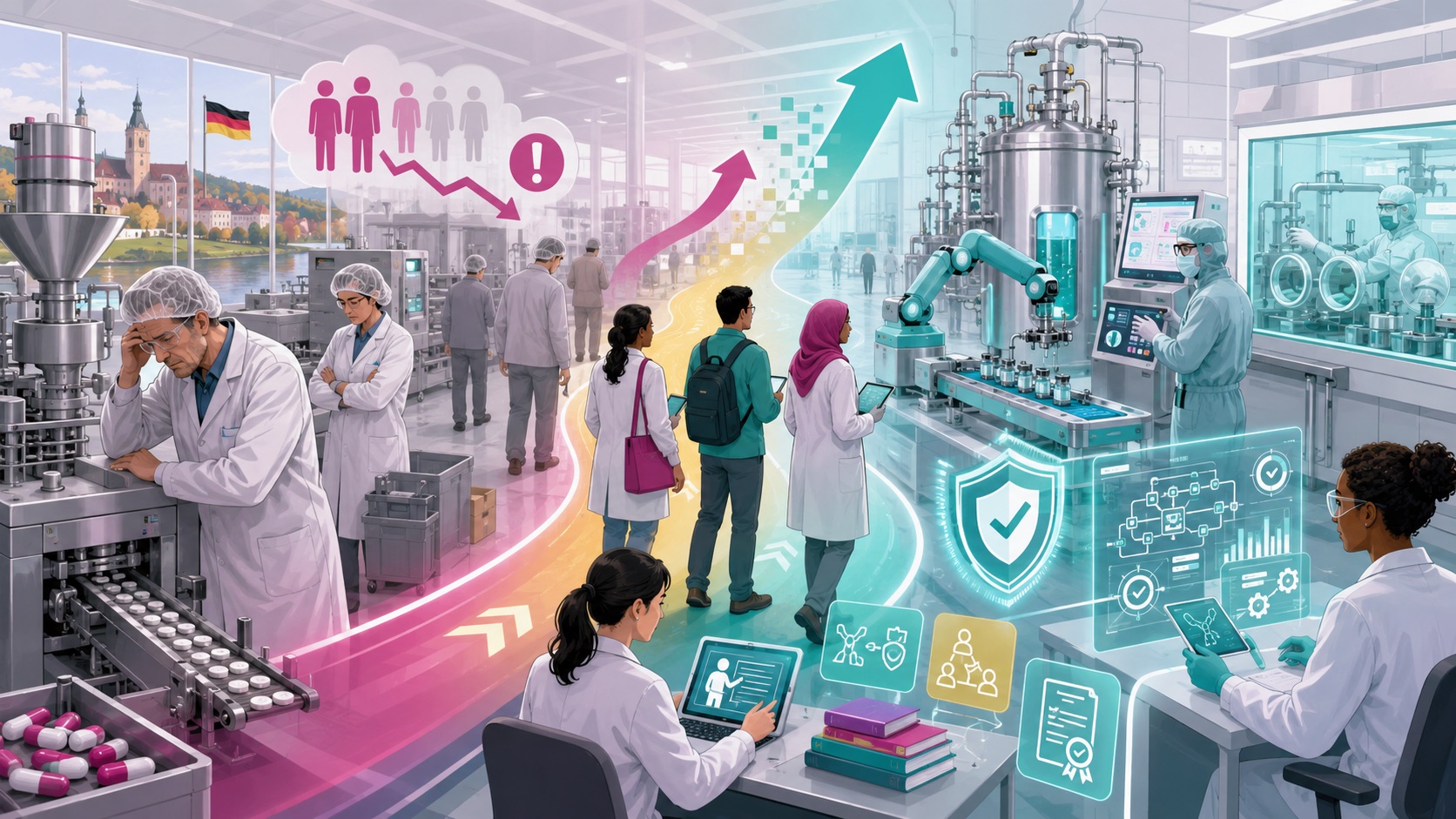
What Happened At Novartis Germany?
Novartis plans to close its production site in Wehr, Germany, by the end of 2028. According to Reuters, the Swiss pharma company said around 220 jobs will be affected. The site manufactures tablets and capsules, which are traditional solid-dose pharmaceutical products.
The negative point is clear: the site was described as no longer competitive. That phrase should make pharma workers pay attention. It shows that even established manufacturing sites can face pressure when cost, technology, product strategy, or operational efficiency no longer fit the company’s future plans.
Why This News Feels Like A Workforce Warning
The emotional message is direct: your pharma job can be at risk even inside a major global company.
Pharma is often seen as a stable industry. However, stability does not protect every role, every plant, or every production technology. Companies still close sites when they believe a facility no longer matches their strategy.
For production professionals, this means one thing: career security now depends on transferable skills.
Why Solid-Dose Manufacturing Workers Should Reskill
The Wehr site manufactures tablets and capsules. These are important dosage forms, but traditional solid-dose manufacturing may face pressure when companies move investment toward advanced therapies, biologics, sterile products, radioligand therapies, or automated facilities.
German media also reported that Novartis is investing €35 million in a new production facility for cancer therapies in Halle, Saxony-Anhalt, expected to become operational in 2027. The same report said Novartis employs more than 2,600 people in Germany across six locations.
This contrast matters. One site may close, while another advanced area may grow.
What This Means for Immigrant Pharma Professionals
Immigrant pharmacists and pharma professionals in Europe should watch this news carefully. Many immigrants enter pharma through production, packaging, QA support, warehouse, or documentation roles. These are valuable entry points. However, the Novartis closure shows that not all manufacturing roles carry the same long-term security.
Which Roles May Stay More Valuable?
Not all pharma jobs face the same risk. Roles linked to quality, validation, compliance, automation, and advanced manufacturing may remain important across many companies and countries.
Why QA And Validation Skills Matter More Now
When a site closes because it is no longer competitive, workers should not only think about production output. They should think about the full manufacturing system.
QA and validation skills matter because every pharma site must prove control. Companies need people who can support: Batch documentation, Equipment qualification, cleaning validation
Process validation, Deviation investigations and CAPA effectiveness.
These skills are useful in solid-dose, sterile, biologics, and advanced therapy environments. That makes them powerful for career protection.
Do Not Wait For A Closure Notice
The strongest lesson is simple: do not wait until your site is at risk.
By the time a closure is announced, many workers may compete for similar roles. The better strategy is to prepare before a crisis.
Want to reduce career risk and prepare for pharma roles in QA, GMP, validation, production, and documentation? Start building transferable skills before the market changes.
Read more on Pharmuni:
Explore Pharmuni GMP Basics Career Path