

European Pharmaceutical Review discussed intelligent automation in pharmaceutical microbiology in May 2026. The article linked automation to rising regulatory pressure and operational complexity. EU GMP Annex 1 is fully applicable since 25 August 2024. Microbiology automation can support faster testing, stronger data visibility, and contamination control. For QC, QA, and sterile teams, digital workflows now affect batch release and inspection readiness.
Why Is Microbiology Automation Accelerating in Pharma?
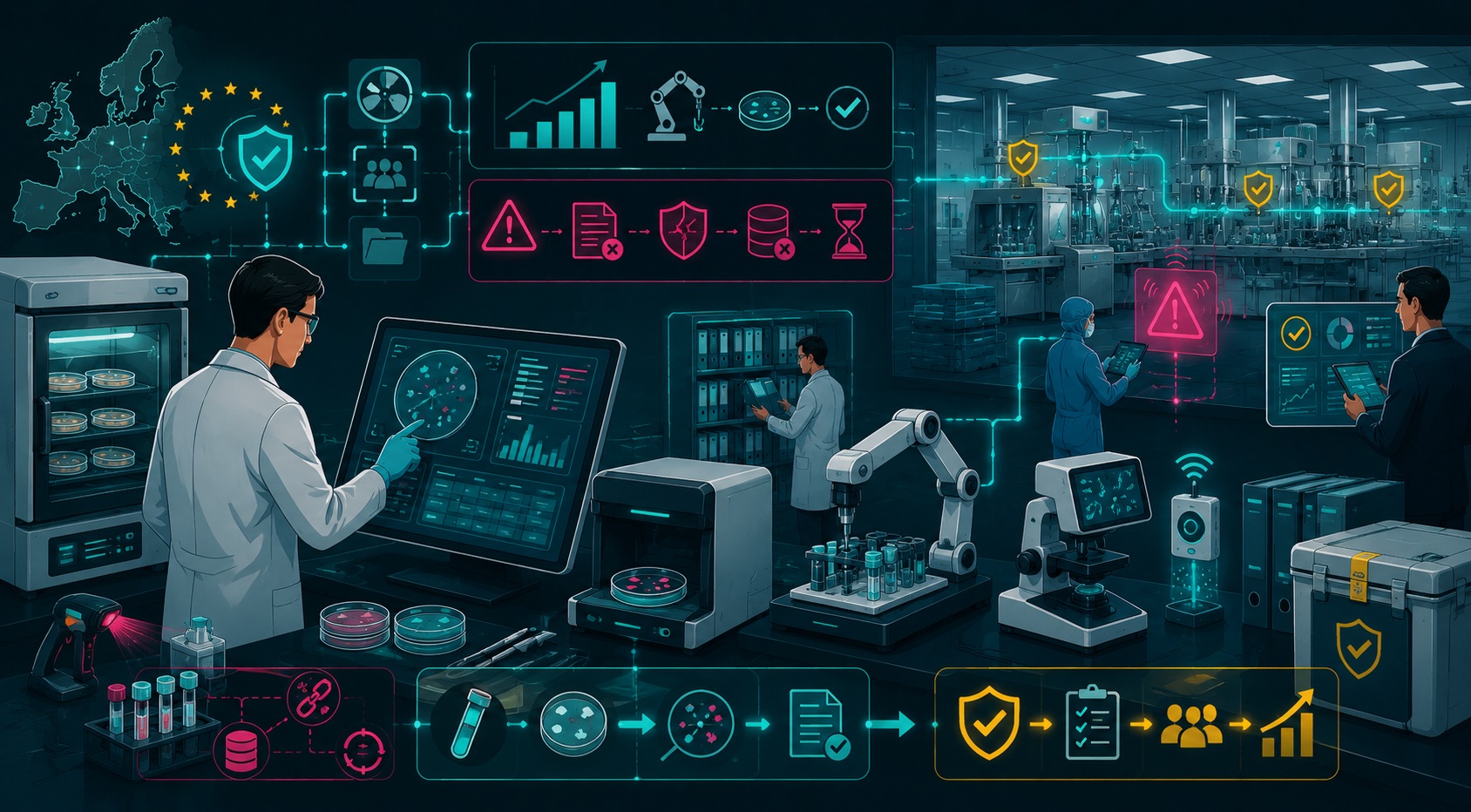
Microbiology automation is accelerating because labs need faster, more consistent ways to manage testing, contamination signals, and batch-release pressure. European Pharmaceutical Review described intelligent automation as a response to regulatory pressure and operational complexity in 2026. For GMP sites, automation can reduce manual variation while improving visibility across microbiology workflows. It also supports stronger audit preparation.
How Does Digital Contamination Risk Change GMP Operations?
Digital contamination-risk management can help pharma sites move faster and work more consistently. It can improve sample tracking, trend visibility, result review, and contamination response. However, it also creates new risks. Teams must validate systems, protect data integrity, control user access, and govern automated decisions. Without clear ownership, digital tools can create confusion instead of compliance confidence during GMP inspections.
Why Should Pharma Professionals Care About Microbiology Automation?
This trend matters because microbiology data influences sterility assurance, batch release, deviation handling, and contamination-control strategy. QC, QA, and sterile manufacturing teams must understand how automation changes daily GMP decisions.
What Does This Mean for QC Microbiology Teams?
QC microbiology teams may gain faster result handling and better workflow consistency. However, they must understand system limits, review exceptions, and maintain scientific control.
- Validate automated plate-reading and reporting workflows.
- Review exception trends before batch release.
Why Should QA Teams Review Digital Contamination Data?
QA teams need reliable data flows to defend contamination-control decisions. Automation helps, but only when governance, audit trails, and deviation links stay clear.
- Check audit trails and user access controls.
- Connect contamination trends with CAPA records.
How Can Sterile Manufacturing Teams Prepare?
Sterile manufacturing teams should connect automation with Annex 1 expectations, contamination-control strategy, and shop-floor decisions. Digital signals must support real production control.
- Align automation outputs with contamination-control strategy.
- Train operators on digital escalation triggers.
What Is the Result for GMP Technology Readiness?
The result is a more digital microbiology environment where speed and compliance must work together. European Pharmaceutical Review’s 2026 coverage shows automation is becoming a strategic GMP issue, not only a lab upgrade. Annex 1 expectations make validated data, contamination control, and inspection readiness critical.
Microbiology automation is making contamination control more digital and inspection-focused. Build your readiness with Pharmuni’s EU GMP Annex 1: Sterile Manufacturing Audit Readiness Guide 2026, Learn smarter, strengthen sterility assurance, and prepare for GMP inspections confidently.