

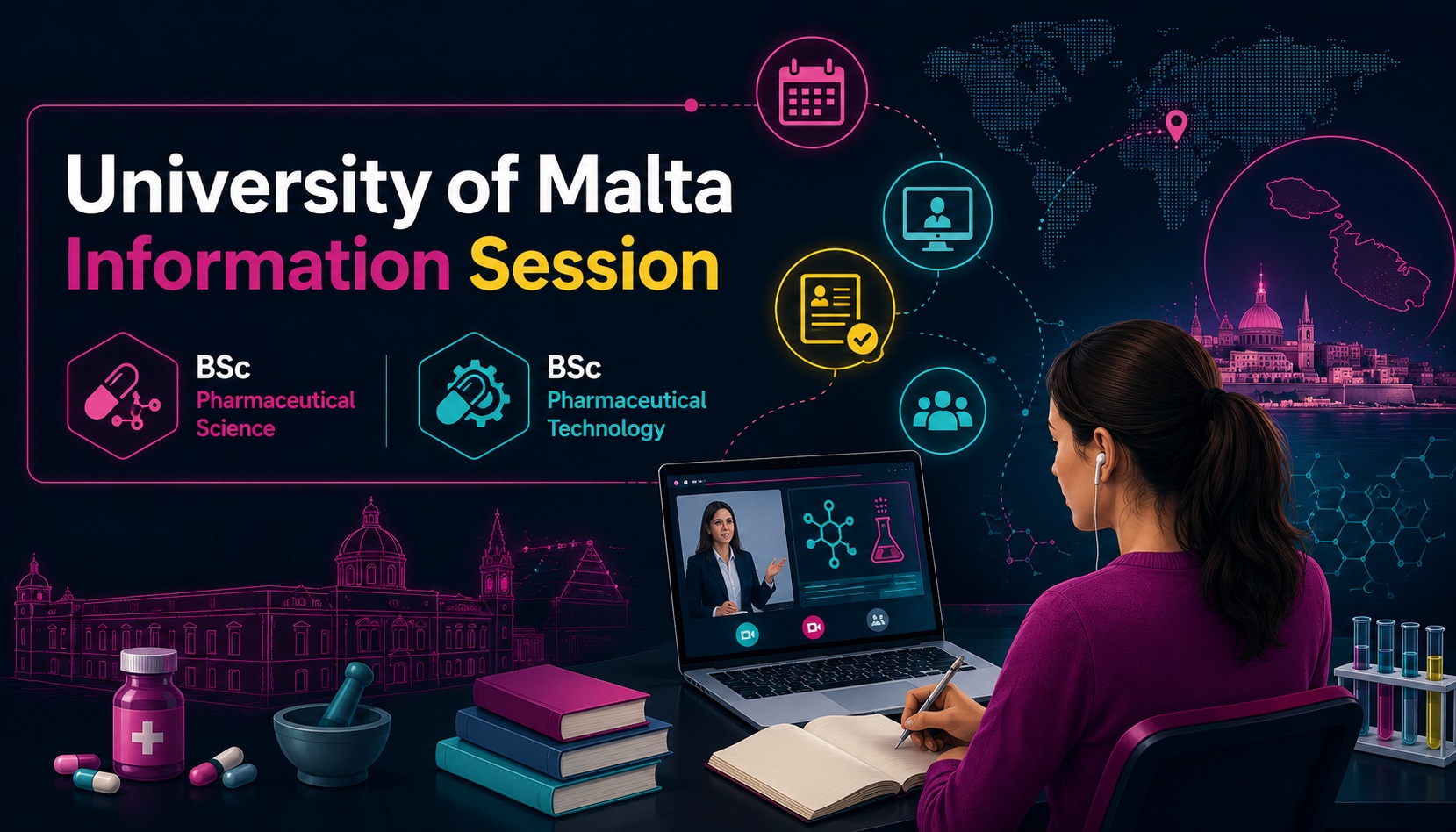
The University of Malta scheduled an online information webinar for its BSc Pharmaceutical Science and BSc Pharmaceutical Technology programmes on 15 July 2026. Both titles contain familiar pharmacy language, yet they may differ in curriculum, progression opportunities and professional outcomes. International applicants must compare the programmes carefully before committing time and money. A degree title alone never proves that it leads to the job you expect. Applicants should connect every module and progression route with a clearly defined career target.
Start with the Intended Role
The first question is not which programme sounds more prestigious. It is which role the applicant wants after graduation. A future pharmacist, formulation scientist, production specialist, quality professional or postgraduate researcher may need different knowledge and recognition. Applicants should ask whether a programme is an academic degree, a route toward further professional training, or preparation for technical work in pharmaceutical manufacturing. They should also confirm whether another qualification is required before they can practise a regulated profession.
Compare Learning Beyond Course Names
Applicants should review credits, laboratory hours, assessment methods, placements and final-year research. Pharmaceutical Science may emphasise drug action, analysis and broader scientific foundations. Pharmaceutical Technology may place stronger attention on dosage forms, process development and manufacturing systems. However, course names can hide important differences, so the official curriculum should control the decision. Students should look for evidence of practical work, data handling, quality principles and exposure to real pharmaceutical environments.
Verify Recognition and Entry Conditions
International students need a second checklist. They should confirm English-language requirements, tuition and living costs, visa rules, application deadlines and document authentication. They should also ask how the qualification is recognised in the country where they plan to work. Recognition for further study is not the same as permission to practise as a pharmacist. Written confirmation from the university or relevant professional authority is more reliable than advice from informal groups.
Ask Questions That Change Decisions
A useful webinar question should produce information that is not obvious on the course page. Ask what graduates do six or twelve months later. Request examples of placements, laboratory facilities and postgraduate routes. Ask whether international students receive career support and whether specific modules match GMP, regulatory or quality roles. After the webinar, compare the answers in a simple table rather than deciding through emotion or marketing language.
Document the Final Choice
After the webinar, applicants should record the evidence supporting their preferred route, remaining uncertainties and the next verification step. This simple decision note reduces confusion and helps families, advisers or admissions teams discuss the choice using the same facts.
The best degree is the one whose learning outcomes match a real professional destination. Strengthen your understanding of regulated pharmaceutical roles through Pharmuni’s Introduction to Regulatory Affairs course before making the next academic decision.