

FDA issued the warning letter on March 5, 2026. The inspection ran from January 13 through February 7, 2025. FDA cited 21 CFR 314.80 and 15-day reporting deficiencies. Findings included case rejection, delayed review, weak follow-up, and contractor oversight. The enforcement highlights process control without establishing product causality.
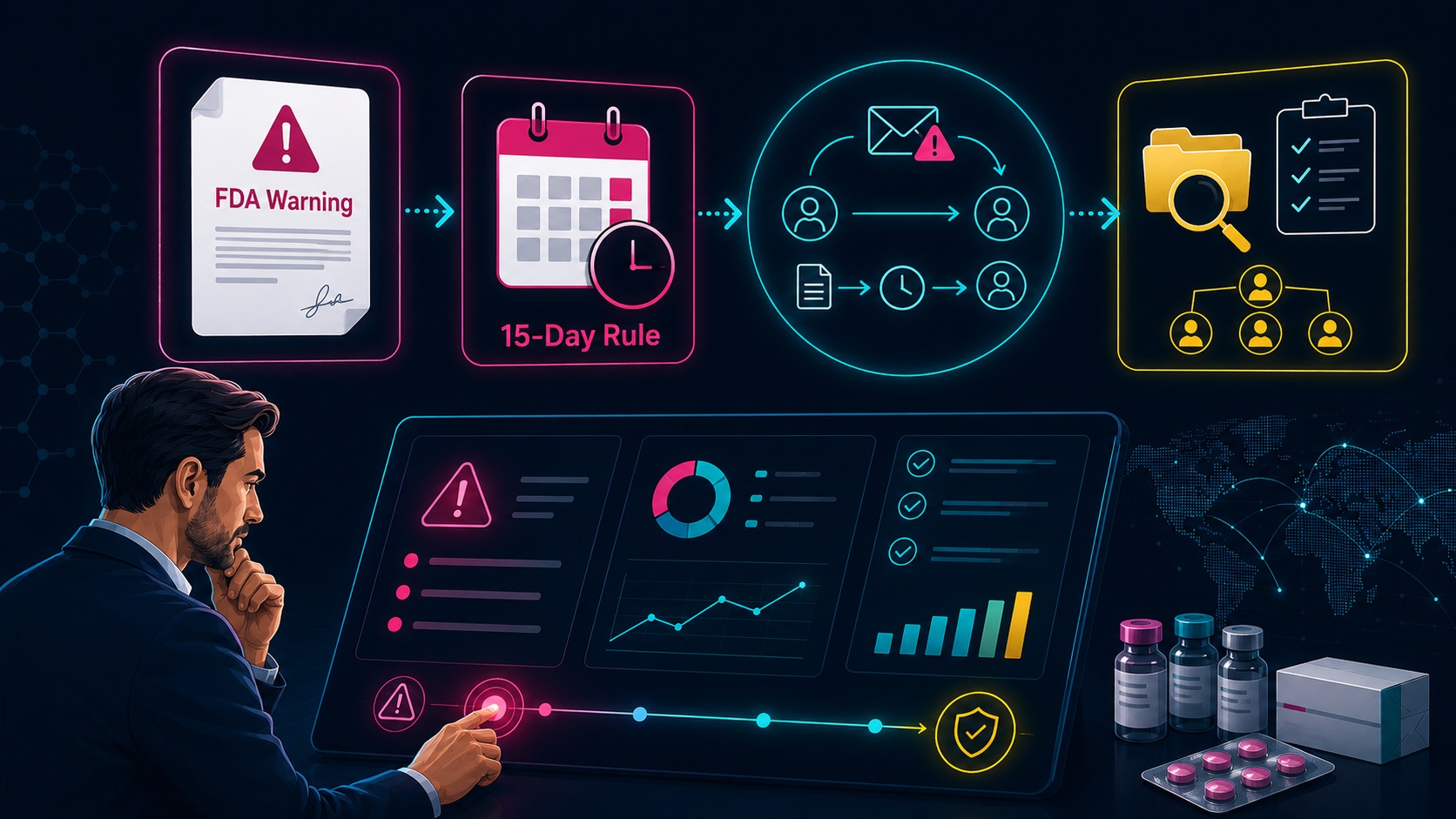
Novo Nordisk FDA Warning Letter
Procedures reportedly allowed some cases to be rejected, invalidated, or delayed before submission. The Novo Nordisk FDA warning letter, issued March 5, 2026, cited 21 CFR 314.80, Argus Safety workflows, medical review, and contractor controls. Serious and unexpected qualifying ADEs require reporting within 15 calendar days. FDA’s findings concern PADE compliance, not confirmed causality for semaglutide, liraglutide, or reported outcomes.
Reporting Failures Expose System-Wide PV Risk
FDA’s findings show how weak definitions can affect ICSR validation, day-zero control, medical review, follow-up, and submission timing. Missed or late 15-day Alert reports may reduce regulatory confidence and delay safety evaluation. However, stronger Argus Safety controls, contractor governance, source verification, CAPA effectiveness checks, and quality oversight can improve compliance. Application holders, vendors, and Regulatory Affairs teams must share clear responsibilities across global postmarketing surveillance operations and prevent recurring gaps.
PADE, Argus, and CAPA Skills Matter
PADE, Argus Safety, and CAPA knowledge connect regulatory compliance with career readiness. ICSR processors, medical reviewers, quality teams, vendor managers, graduates, and international applicants need practical skills in day-zero control, case validation, reporting timelines, contractor governance, and documented remediation planning.
Why ICSR Teams Must Control Timelines
ICSR teams must control initial receipt, case validity, identifiers, seriousness, expectedness, medical review, and follow-up. Accurate source verification helps protect 15-day submission timelines and prevents inappropriate case rejection or delay.
- Verify patient and reporter identifiers against every available source document.
- Escalate qualifying cases before medical-review timelines threaten required submission.
How Quality Teams Should Prevent Recurrence
Quality teams must connect SOP control, deviations, root-cause analysis, CAPA, training, vendor qualification, quality agreements, and audit trails. Measurable effectiveness checks should confirm that reporting failures do not recur systemically.
- Test CAPA effectiveness using retrospective cases and measurable compliance outcomes.
- Define contractor responsibilities, training evidence, oversight methods, and escalation paths.
Why PV Compliance Careers Need Depth
PV compliance careers require knowledge of 21 CFR 314.80, PADE, ICSR workflows, CAPA, vendor oversight, and FDA inspections. Candidates should explain how they prevent, identify, and remediate late reports effectively.
- Add PADE, CAPA, vendor oversight, and FDA requirements to your resume.
- Prepare an interview example involving a delayed 15-day Alert report.
What Could This Warning Letter Change?
The March 5, 2026 warning letter could lead to revised procedures, retrospective case reviews, stronger contractor controls, and measurable CAPA verification. Better day-zero, medical-review, and follow-up controls may improve reporting accuracy and FDA oversight. Remediation work could also increase demand for experienced PADE, quality, vendor-management, and compliance specialists internationally today.
The linked Pharmuni resources cover adverse-event reporting, PV career development, and advanced ICSR workflows. Prevent reporting failures with Pharmuni today. Read Adverse Event Reporting in 2026: AE, FAERS, EU Guide.