

The FDA E2B(R3) deadline was updated on April 6, 2026. E2B(R2) remains available through September 30 for companies not yet transitioned. Affected ESG NextGen submissions must use E2B(R3) from October 1. Safety Reporting Portal users require no migration action. Validated mappings and XML testing can reduce submission failures.
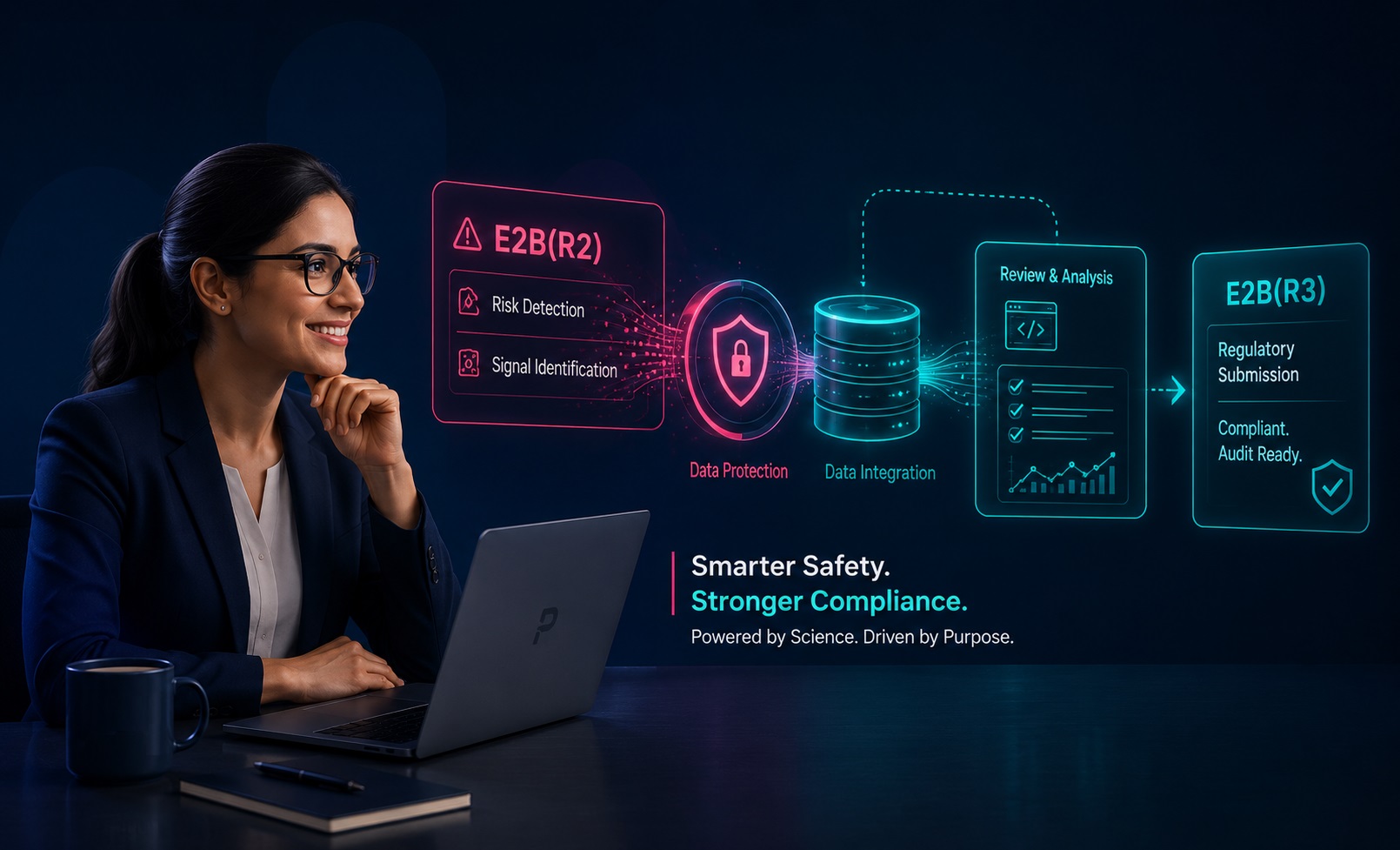
Why Is the FDA E2B(R3) Deadline Ending R2?
Legacy E2B(R2) configurations may not support newer FDA data, mapping, validation, and messaging requirements. The FDA E2B(R3) deadline takes effect October 1, 2026, for affected postmarketing ICSRs. ESG NextGen sends these messages to AEMS, requiring CDER and CBER submitters to migrate. Safety Reporting Portal users require no transition action, so the change excludes that electronic reporting route under current rules.
E2B(R3) Will Reshape Safety Operations
Invalid mappings, XML files, business rules, attachment links, terminology, or acknowledgements may delay FDA submissions. Those failures can quickly increase remediation costs across AEMS, ESG NextGen, vendors, and safety teams. However, E2B(R3) may improve structure, traceability, interoperability, and acknowledgement reconciliation across safety workflows. Companies, ICSR processors, Regulatory Operations, quality teams, and technology vendors must coordinate testing, training, change control, and production readiness carefully across functions before the final migration deadline.
AEMS, XML, and Gateway Skills Matter
AEMS, XML, and gateway knowledge connect pharmacovigilance operations with technical careers. ICSR processors, system administrators, validation specialists, and regulatory teams need these skills. Vendors, graduates, and international applicants must understand mapping, testing, acknowledgements, reconciliation, and controlled deployment before FDA deadlines.
Why ICSR Teams Need E2B(R3) Knowledge
ICSR teams must preserve patient, reporter, product, reaction, seriousness, expectedness, attachment, and follow-up data. Strong E2B(R3) knowledge supports validation, narrative consistency, medical review, and accurate FDA submissions across safety workflows.
- Review how existing case fields map into FDA E2B(R3) regional elements.
- Test initial, follow-up, nullification, amendment, and attachment scenarios before production.
How Technical Teams Should Validate Migration
Technical teams must validate XML schemas, FDA regional elements, mappings, business rules, terminology, and attachments. They should also test acknowledgements, gateway connectivity, audit trails, regression, change control, and reconciliation thoroughly.
- Validate XML files with FDA’s test tool before production deployment.
- Test mappings, acknowledgements, reconciliation, attachments, and gateway connectivity end-to-end carefully.
Why Technical PV Careers Are Expanding
Technical pharmacovigilance careers increasingly require E2B(R3), XML, safety-database configuration, system validation, and Regulatory Operations. Applicants also need vendor management, audit-trail knowledge, and experience resolving failed electronic submissions across regulated markets.
- Add E2B(R3), XML, AEMS, and safety-database validation skills to your resume.
- Prepare an interview example involving mapping defects and failed ICSR transmissions.
What Could the E2B(R3) Transition Improve?
From October 1, 2026, a controlled E2B(R3) transition could reduce rejected messages and improve structured safety data. Better validation may strengthen interoperability, acknowledgement reconciliation, compliance readiness, and audit trails. The deadline may also increase demand for professionals skilled in XML, AEMS, safety databases, gateway testing, and regulatory operations internationally today.
Prepare your safety systems before the FDA deadline. Read ICH Guidelines for Pharmacovigilance Explained (2026). Build practical skills in E2B(R3), ICSR workflows, XML validation, database governance, submissions, and global regulatory compliance with Pharmuni before October 2026.