

The FDA AI liver injury prediction initiative was reported on June 3, 2026. CDER accepted the first ISTAND letter of intent for an in-silico tool. The model targets DILI risk in small-molecule candidates before phase I trials. FDA describes acceptance as step one of three qualification stages. Scientific validation remains essential because current models cannot reliably predict human risk.
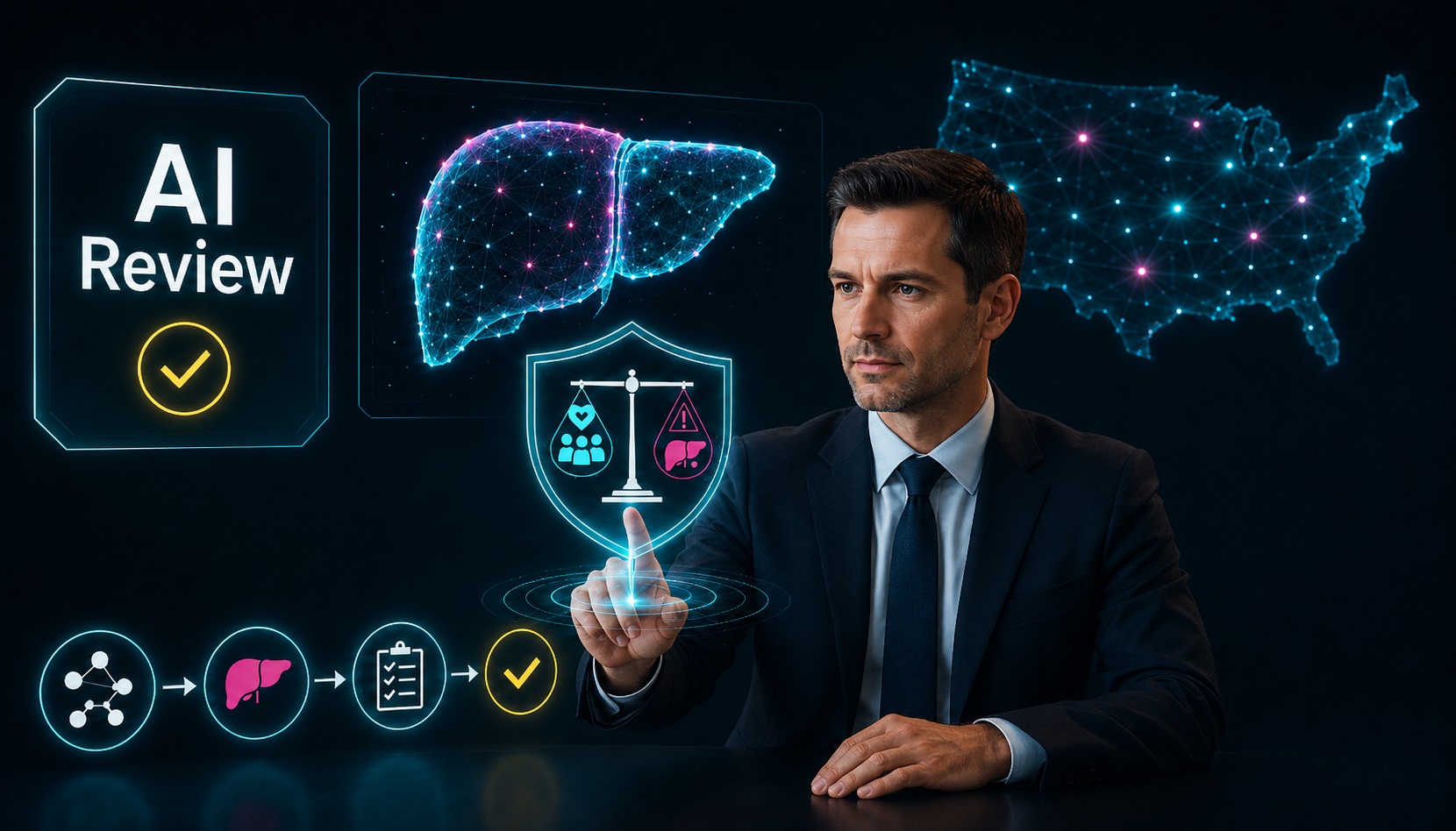
Why Is FDA Evaluating AI for DILI?
DILI prediction remains difficult because animal studies and current models may miss human liver risk. On June 3, 2026, FDA and CDER accepted the first ISTAND letter of intent for an AI-driven Digital Liver Model. The tool compares small-molecule structures with reference drugs. However, evaluation only begins a three-step qualification process and does not establish predictive performance or regulatory acceptance.
AI Could Reshape Pharmaceutical Safety Decisions
AI could help FDA, CDER, toxicologists, and drug-development teams identify liver-risk patterns earlier. However, biased data, weak explainability, false positives, and false negatives could misdirect studies or create unnecessary costs. Strong model validation and human review may improve candidate selection, toxicology planning, and clinical monitoring. The technology could also create cross-functional opportunities for pharmacovigilance professionals, data scientists, and regulatory specialists without replacing scientific judgment or established evidence requirements in practice.
AI, DILI, and Safety Analytics Skills Matter
AI, DILI, and safety analytics now connect several pharmaceutical disciplines. Pharmacovigilance professionals, toxicologists, data scientists, regulatory teams, and graduates must understand both model outputs and biological evidence to support responsible decisions, explain uncertainty, and prepare for increasingly data-driven drug-safety roles.
Why PV Teams Need DILI Expertise
PV and clinical safety teams need DILI expertise to code liver events, assess seriousness and causality, review laboratory trends, detect aggregate signals, and separate individual reports from validated safety concerns.
- Review DILI definitions, MedDRA terms, laboratory patterns, and causality methods.
- Distinguish individual liver reports from validated aggregate safety signals.
How Toxicologists Should Evaluate AI Predictions
Toxicologists should interpret AI predictions beside metabolism, exposure, dose-response, biomarkers, preclinical findings, and mechanistic evidence before changing candidate selection, additional testing, or clinical translation plans in development programs responsibly today.
- Compare predictions with mechanistic, preclinical, exposure, and biomarker evidence.
- Investigate conflicting outputs before changing testing or development decisions.
Why Model Validation Creates Career Opportunities
Data scientists and regulatory professionals need strong validation, explainability, bias assessment, governance, audit trails, documentation, change control, and human oversight to make machine-learning outputs credible for pharmaceutical use and review.
- Learn explainability, external validation, governance, and bias-testing principles.
- Connect machine-learning results with toxicology and pharmacovigilance evidence.
What Could FDA’s AI Evaluation Produce?
Following FDA’s June 3, 2026 letter-of-intent acceptance, the evaluation could lead to additional testing, a qualification plan, and clearer context-of-use requirements. Successful development may support earlier toxicology decisions and patient protection. It may also increase demand for professionals combining DILI science, model validation, regulatory documentation, and human oversight in practice.
Prepare for AI-driven drug safety with Pharmuni. Read AI in Pharmacovigilance: Smart Drug Safety in 2026. Build practical skills in signal detection, safety analytics, regulatory compliance, human oversight, and data-driven pharmacovigilance decisions for future global roles.