

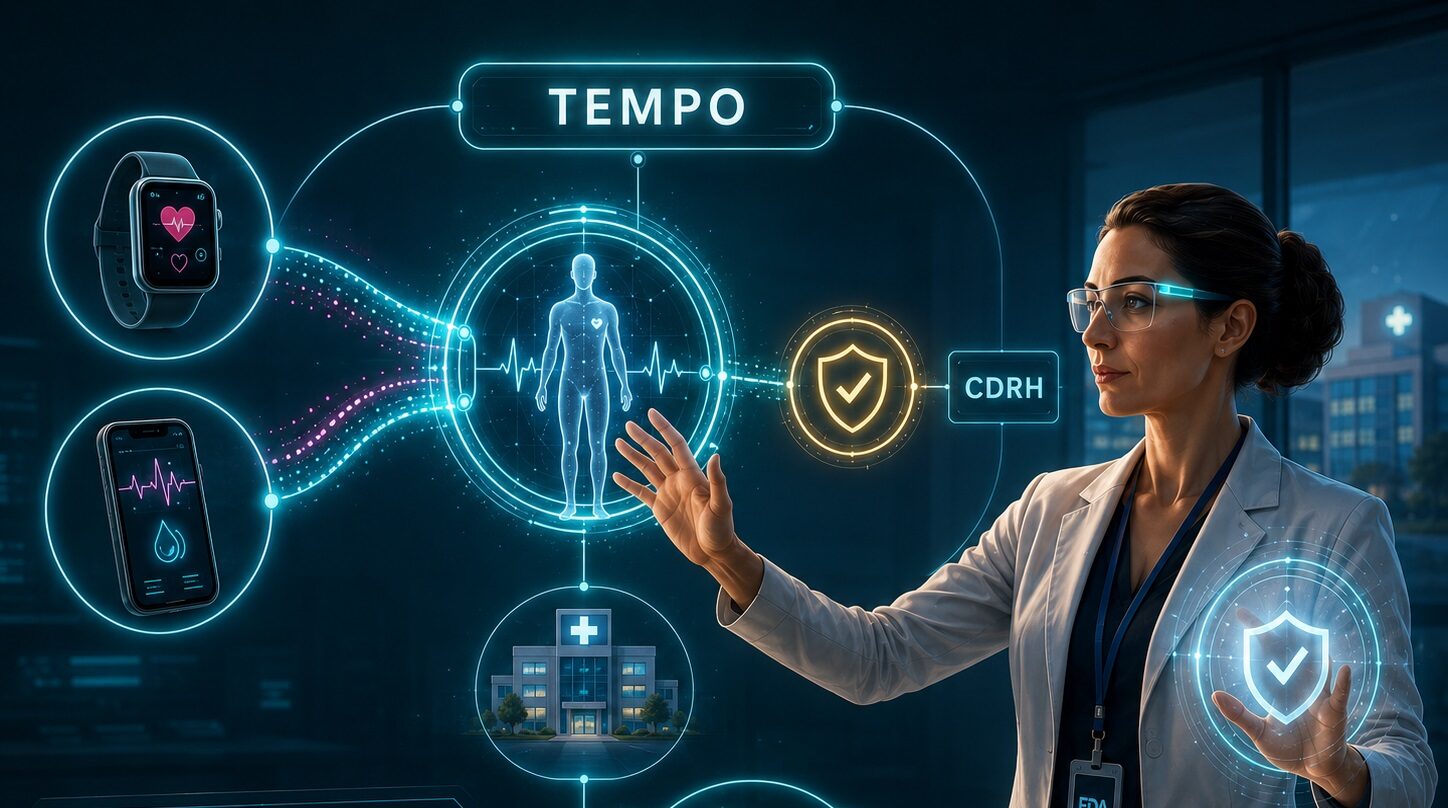
FDA updated the Technology-Enabled Meaningful Patient Outcomes (TEMPO) for Digital Health Devices Pilot Frequently Asked Questions. FDA’s Center for Devices and Radiological Health (CDRH) listed the update on May 18, 2026. TEMPO connects with the CMMI ACCESS model across 4 eligible clinical use areas. FDA began receiving statements of interest on January 2, 2026, and began follow-up requests in March 2026. The update matters for real-world evidence, patient safety, and digital health regulatory readiness.
What Does FDA’s 4-Area TEMPO Update Clarify?
FDA’s updated TEMPO FAQs clarify a voluntary pilot for certain digital health devices intended for clinician-supervised outpatient care under the CMMI ACCESS model. Across 4 eligible clinical use areas, manufacturers may seek participation while planning real-world performance data collection and patient-safety safeguards. The update describes eligibility and expectations; it does not announce selected participants, authorised devices, or guaranteed clinical outcomes.
Promises and Guardrails in Digital Oversight
TEMPO may support access to eligible digital health devices, real-world performance data collection, and clearer FDA engagement for responsible innovation. However, participation has firm guardrails: devices must satisfy intended-use and safety conditions, and manufacturers must be United States based. Participation does not replace appropriate future marketing authorizations. Quality-system readiness, risk controls, and credible evidence remain essential before digital innovation can support regulatory decisions or improved care in routine clinical settings
3 Career Paths Watching Digital Care Evolve
FDA’s TEMPO update reaches beyond medical-device policy. It connects digital innovation with regulatory affairs, quality oversight, real-world evidence, and career readiness. Digital health developers, regulatory and quality teams, and future professionals should watch how technology-enabled care evolves across life sciences.
Digital Health Teams: Turning Devices into Evidence
Digital health developers may need to align device design, intended use, patient-safety planning, and real-world performance data collection to show TEMPO readiness within eligible clinician-supervised outpatient care settings in practice.
- Align devices with eligible clinical use areas.
- Plan meaningful real-world performance data collection.
Regulatory and Quality Teams: Defining Safe Innovation
Regulatory and quality teams may assess enforcement-discretion requests, quality-system readiness, risk controls, reporting plans, and future marketing-submission pathways, helping maintain responsible oversight for participating digital health devices through careful review.
- Review quality-system and patient-safety evidence.
- Prepare regulatory and reporting pathways.
Students and Job Seekers: Entering Digital Health Regulation
Students, graduates, and job seekers should understand device regulation, real-world evidence, digital-health quality systems, and technology-enabled chronic care to build future-ready skills for medtech and life-sciences careers with greater confidence.
- Learn digital health regulatory foundations.
- Build career-ready evidence and quality knowledge.
Up to 10 Manufacturers Per Area: What Comes Next?
FDA’s May 18, 2026 FAQ update states that it currently expects to select up to about 10 U.S.-based manufacturers in each of 4 clinical use areas. The update could improve participation readiness. Meaningful results depend on patient safety, quality systems, real-world data, risk management, and future appropriate marketing authorization decisions.
Digital health innovation needs regulatory confidence. Read Urgent: Regulatory Agency Updates in Pharma. Turn FDA TEMPO insights into evidence-focused, career-ready expertise for safe technology-enabled care and oversight decisions.