

BioSpace listed a webinar on FDA NAMs for July 1, 2026. The session focused on streamlining nonclinical development with new approach methodologies. NAMs are important for sponsors planning IND decisions and evidence packages. This topic helps students, R&D teams, and regulatory beginners. It shows how nonclinical development is becoming more data-driven and human-relevant. This gives job seekers a practical reason to track the update and connect it with role-specific pharma skills.
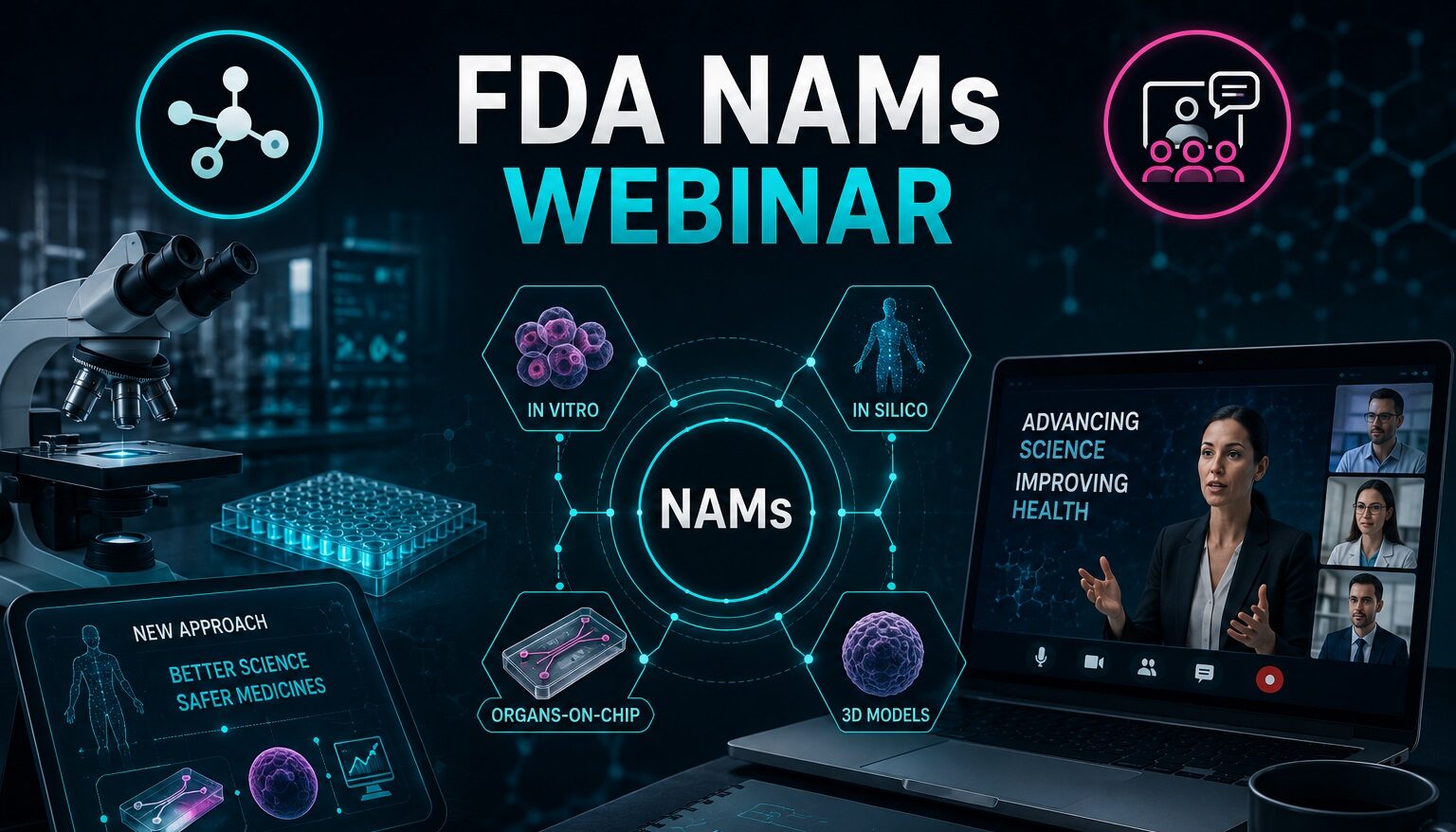
How Are FDA NAMs, Nonclinical Development, and IND Planning Connected?
The July 2026 webinar focused on how sponsors can apply new approach methodologies in nonclinical development. NAMs can support human relevance, weight-of-evidence thinking, and more focused IND planning. For pharma learners, this is a signal. R&D, toxicology, regulatory affairs, and translational science roles increasingly require data interpretation and model justification skills.
Nonclinical Innovation Benefits Students but Raises Evidence Expectations
The positive point is that NAMs can support more efficient development and reduce unnecessary animal testing when scientifically justified. They may create new roles in modeling, simulation, translational science, and regulatory strategy. The negative point is validation complexity. Teams must prove context of use, reliability, and fit-for-purpose value. Weak justification can create regulatory risk.
NAMs Link Toxicology, Regulatory Affairs, and Translational Science Careers
This education news is highly career-relevant. It shows that future nonclinical teams need people who can explain methods, limits, evidence, and regulatory use.
Graduates Seeking R&D Roles
Graduates should show they can evaluate evidence, not only run experiments. NAMs require careful interpretation and reporting.
- Add nonclinical, toxicology, and model validation keywords.
- Prepare examples of data analysis and scientific writing.
Immigrant Pharmacists and Specialists
Immigrant professionals can use NAMs vocabulary to enter regulatory or development roles. Technical English is especially important here.
- Practice explaining model strengths and limits.
- Connect academic research with industry evidence needs.
July 2026 NAMs Focus Makes Evidence Justification Essential
The result is a clear skill signal. Pharma job seekers should learn how nonclinical evidence supports regulatory decisions. R&D, regulatory affairs, toxicology, clinical development, and medical writing teams will value candidates who understand model validation and evidence quality.
Read Now Related Pharmuni Blog Best R&D Pharma Jobs & Career Opportunities in 2026