

FDA issued a warning letter to JW Nutritional LLC for finished-pharmaceutical Current Good Manufacturing Practice (cGMP) violations involving over-the-counter (OTC) drugs. FDA inspected the Texas facility from September 22 to 26, 2025. The warning letter is dated April 15, 2026, and FDA’s webpage is current as of May 19, 2026. FDA identified 3 numbered areas: component testing, production and process control, and laboratory controls. The case matters because contract facilities remain responsible for the quality of OTC drugs they produce.
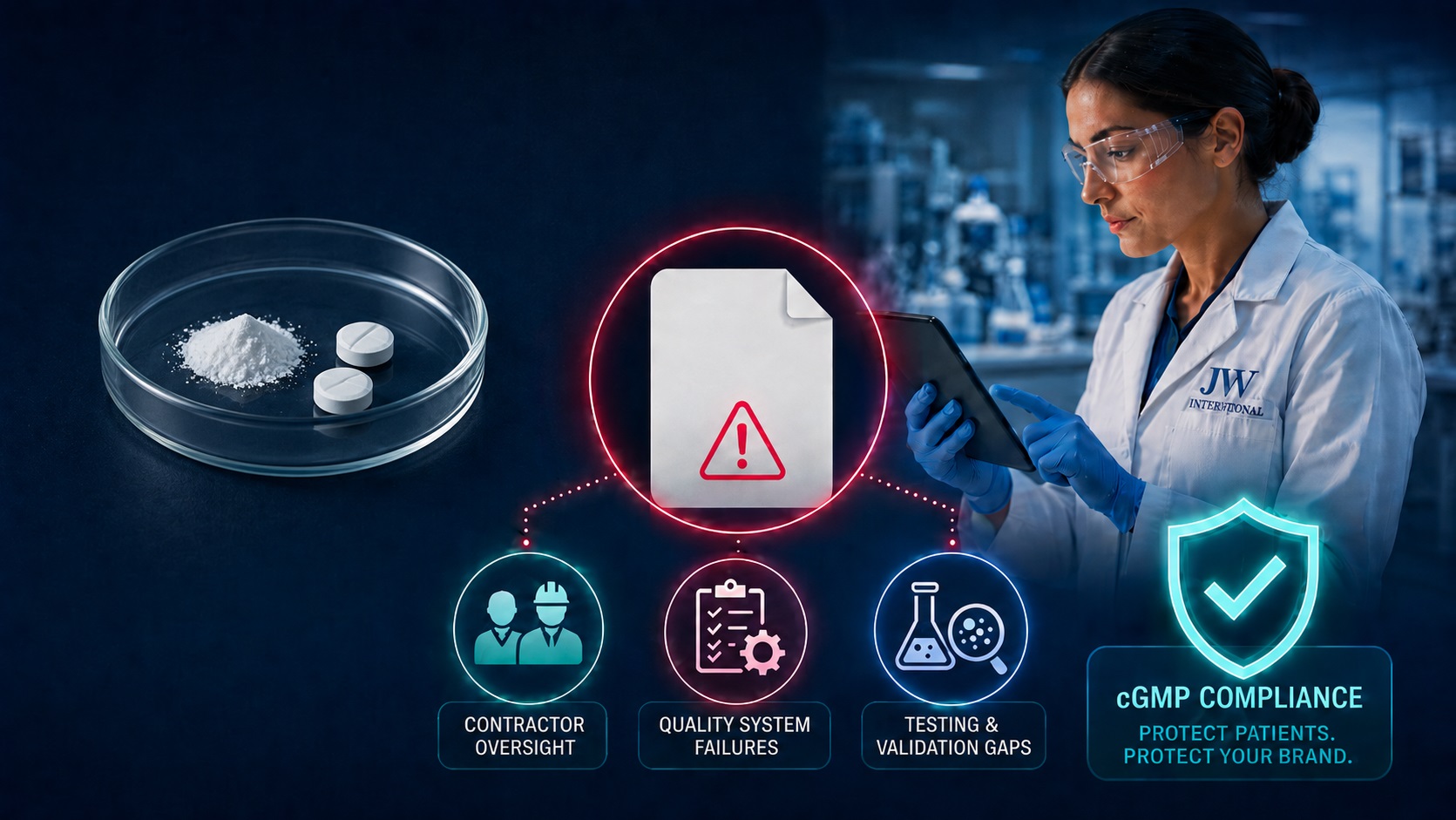
What Do FDA’s 3 OTC Control Failures Reveal?
FDA’s warning letter to JW Nutritional identifies 3 numbered CGMP violation areas involving finished pharmaceutical products, including OTC drugs. FDA described weaknesses in component testing, validated production and manufacturing-water controls, and laboratory or microbiological specifications. These findings concern evidence needed to assure quality during manufacture and release. The letter identifies regulatory deficiencies without establishing patient harm, recall, or completed remediation.
Importance of the OTC Quality Warning
FDA’s findings may help contract manufacturers strengthen component verification, process validation, manufacturing-water control, microbiological testing, and quality oversight. QA and QC teams could use the letter to sharpen inspection-readiness reviews. However, weak controls may support adulteration findings, additional FDA action, or uncertainty for products lacking adequate quality evidence. Quality agreements cannot transfer away contractor responsibility, and corrective and preventive action (CAPA) requires documented evidence before effectiveness can be reliably demonstrated.
Pharma Roles Behind OTC Inspection Readiness
This warning letter matters beyond one Texas manufacturer. It connects component safety, process validation, water-system qualification, laboratory reliability, contractor accountability, and career preparation. Contract manufacturers, QA and QC teams, and validation professionals with GMP learners can apply its practical lessons.
Contract Manufacturers: Owning Every Quality Decision
Contract manufacturers remain responsible for finished-drug quality, even when agreements define shared activities. They should link component controls, process evidence, and documented accountability to inspection-ready decisions before releasing OTC products.
- Review quality agreements and assigned responsibilities.
- Confirm supporting evidence before product release.
QA and QC Teams: Catching Hidden Batch Risks
QA and QC teams may review component identity testing, supplier reliability, laboratory specifications, microbiological controls, and CAPA evidence to prevent hidden quality risks from reaching OTC batch disposition final decisions.
- Strengthen component-testing and laboratory controls.
- Test CAPA effectiveness before inspection.
Validation Professionals and GMP Learners: Proving Control
Validation specialists, students, graduates, and job seekers should understand process validation, water-system qualification, FDA warning letters, and inspection evidence because proven control is essential for future quality-focused pharmaceutical compliance careers.
- Learn validated manufacturing and utilities control.
- Build career-ready inspection knowledge.
15 Working Days to Start Rebuilding Confidence
FDA requested a written response within 15 working days addressing 3 numbered CGMP violation areas. The case could prompt stronger OTC contract-manufacturing reviews. Meaningful progress would require reliable component testing, validated processes, qualified manufacturing water, appropriate microbiological controls, documented CAPA, and sustained CGMP execution supported by evidence, not assurance alone.
FDA’s warning letter shows that OTC quality must be proven, not assumed. Follow the Quality Assurance Specialist Career Path and Build evidence-based skills for component control, validation, CAPA, and inspection-ready contract manufacturing with confidence.