

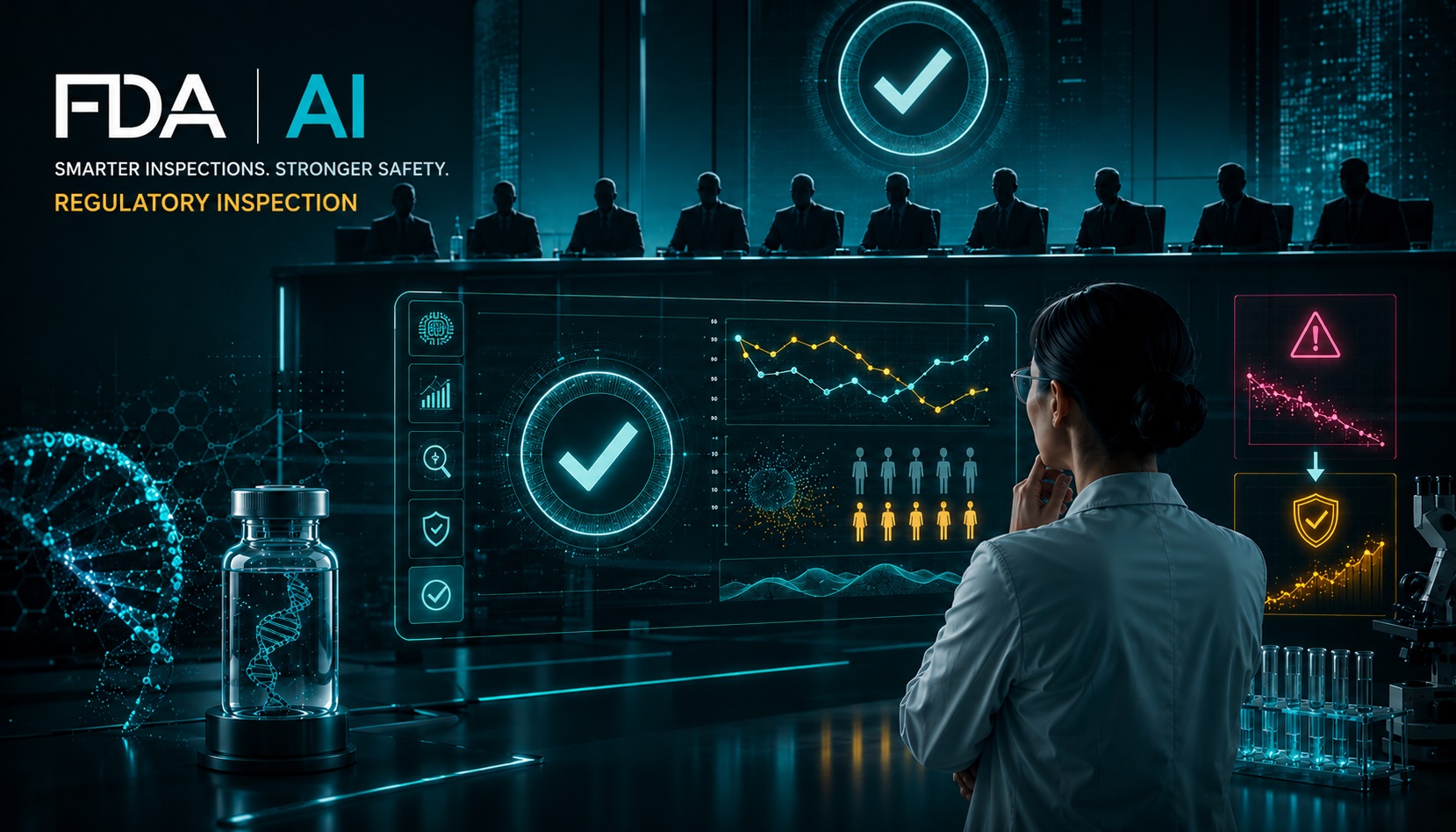
The FDA is exploring how AI can support inspection activities and compliance oversight. The discussion gained attention in 2025 and continues into 2026 as regulators evaluate new digital tools. AI may help identify inspection risks, analyze large datasets, and improve GMP surveillance. The initiative addresses long-standing challenges related to inspection efficiency, data review, and resource allocation.
What Does FDA's AI Inspection Strategy Mean for AI, GMP, and Compliance Teams?
The FDA is evaluating how AI can strengthen inspection activities and improve regulatory oversight. Historically, inspections relied heavily on manual reviews, creating challenges when analyzing large volumes of GMP and compliance data. As AI adoption expands in 2025 and 2026, regulators are exploring ways to improve efficiency while maintaining regulatory rigor. The development matters because it could reshape how inspections, compliance monitoring, and risk assessments are performed.
Impact on FDA Inspections, GMP Compliance, and Pharmaceutical Quality
The growing use of AI may significantly affect FDA inspections, GMP Compliance, and Pharmaceutical Quality systems. Positive impacts include faster inspections, improved risk detection, stronger data analysis, and enhanced compliance oversight. However, concerns remain regarding AI interpretation accuracy, data integrity risks, validation complexity, and higher inspection readiness expectations.
Why This Matters for Quality Assurance, Regulatory Affairs, and GMP Professionals
AI-supported inspections could change how pharmaceutical companies manage compliance programs, documentation practices, and audit readiness. Quality Assurance, Regulatory Affairs, and GMP professionals may need new skills to interpret AI-driven findings, strengthen data governance, and maintain inspection readiness.
Regulatory Affairs, FDA, and Inspection Strategy
AI-driven inspections may influence regulatory readiness, inspection responses, and compliance communication. Companies will need stronger documentation practices and faster access to inspection-related information.
GMP, Data Integrity, and Quality Systems
AI may increase focus on data integrity, quality systems, documentation controls, and GMP compliance. Organizations must ensure data quality remains reliable and inspection-ready.
AI, Pharmaceutical Careers, and Future Skills
Students, job seekers, QA professionals, and compliance specialists should understand AI’s growing role in inspections. Future employers may increasingly value professionals who combine GMP expertise with digital and analytical skills.
What Results Could AI-Enhanced Inspections Deliver by 2026?
As FDA AI initiatives continue through 2026, the industry may see faster inspection preparation, improved risk identification, and more efficient regulatory oversight. Short-term benefits could include better inspection targeting and resource utilization. Long term, AI may contribute to more proactive compliance management, stronger industry preparedness, and improved consistency across inspection programs while supporting future regulatory modernization efforts.
Will AI change FDA inspections? Now Enroll in Preparing for GMP Audits Course and build inspection-ready skills for the future of digital compliance oversight.