

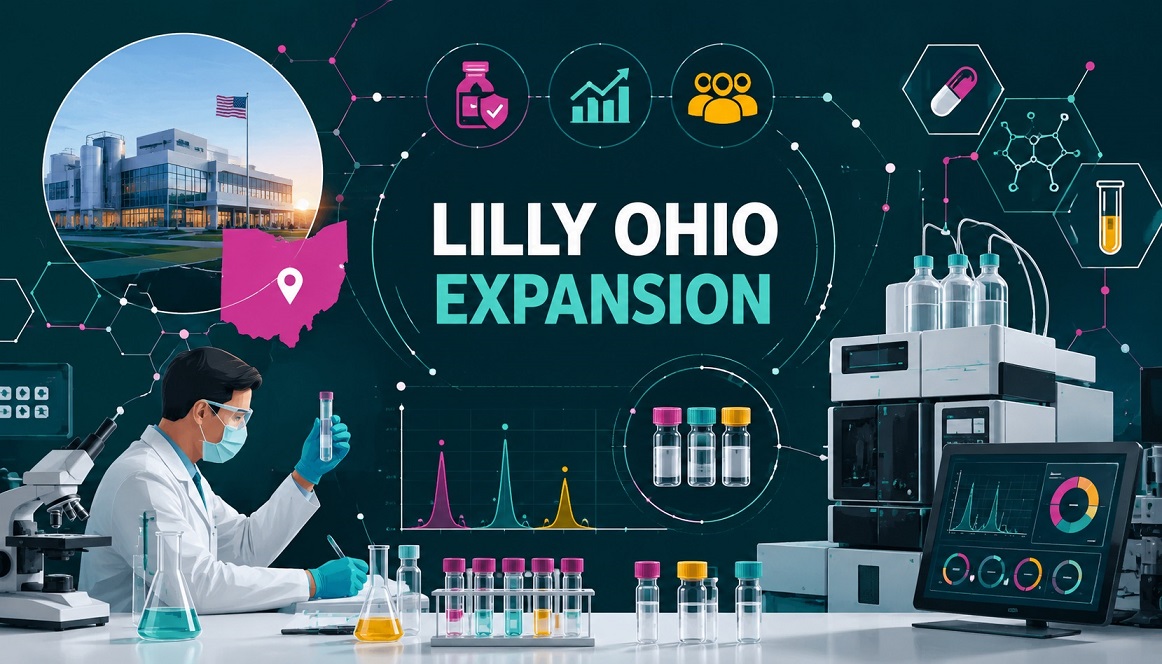
Eli Lilly and Resilience are committing $750 million to expand injectable-device production in Ohio. The project is expected to create at least 400 new jobs and raise Resilience’s Ohio workforce above 1,400. The investment strengthens demand signals for sterile manufacturing, QA, QC, validation, engineering, and packaging skills. Resilience has already produced 150 million Lilly doses, while the expanded KwikPen capacity is expected to reach full operations in 2027. The announcement does not mean all 400 jobs are open now or that visa sponsorship is available.
What Does Eli Lilly’s Development Mean for Pharma Jobs?
Eli Lilly, Resilience, and Ohio define this employment story. The development is a $750 million expansion that is expected to create at least 400 jobs. It centers on sterile injectable device assembly and packaging. For job seekers, timing matters because investment or policy changes can reshape demand before every vacancy appears. Treat the news as a market signal, then verify current openings and requirements through official employer or government listings.
How the Development Could Change Pharma Hiring
The main positive point is that The project gives candidates a visible future-demand signal across sterile production, engineering, quality, validation, packaging, and production support. Eli Lilly, Resilience, and Ohio therefore show where skills may gain value. The main negative point is that The 400 jobs are an announced target, not proof that every position is already advertised, and specialized sterile-manufacturing experience can narrow the applicant pool. Applicants should compare real job descriptions, confirm location or authorization rules, and never assume a headline number guarantees access to a role.
Eli Lilly, Resilience, and Ohio: Who Should Watch?
For pharma professionals, the story is not only about a headline number. The practical questions are which competencies matter, which career groups are exposed to the change, and how early candidates should prepare before demand, competition, or hiring conditions shift again.
QA and QC Professionals
Quality teams should connect existing GMP experience to sterile injectable device assembly and packaging. Strong examples of investigations, laboratory control, documentation, and release support can make technical experience easier for employers to evaluate.
- Show evidence of aseptic operations and validation in your resume, not only a generic QA/QC title.
- Search roles using technical terms such as quality systems, device assembly, and site-specific manufacturing technology.
Manufacturing, Validation, and Engineering Professionals
Operations candidates can benefit when they understand how equipment, process control, qualification, and production documentation connect. The strongest applications explain direct responsibility, scale, systems used, and measurable manufacturing outcomes.
- Build examples around quality systems and device assembly that show hands-on responsibility.
- Monitor commissioning, qualification, maintenance, automation, and production-support vacancies as the project advances.
Graduates and International Pharma Candidates
A pharmacy, biology, chemistry, or engineering degree can support industry applications, but candidates still need role-specific evidence. International applicants should separate scientific fit from licensing, visa, and work-authorization requirements.
What Is the Practical Result for Job Seekers?
The result is a clearer career signal, not a guaranteed job. full operations from the upgraded KwikPen capacity are expected in 2027. Job seekers who track the Ohio expansion early can prepare before recruitment reaches its busiest stage. Monitor official listings and take one practical step now: strengthen evidence in aseptic operations, and validation.
Build GMP Skills with Pharmuni — use role-focused learning and career tools to close skill gaps, without assuming that training guarantees employment, licensing, sponsorship, or placement.