

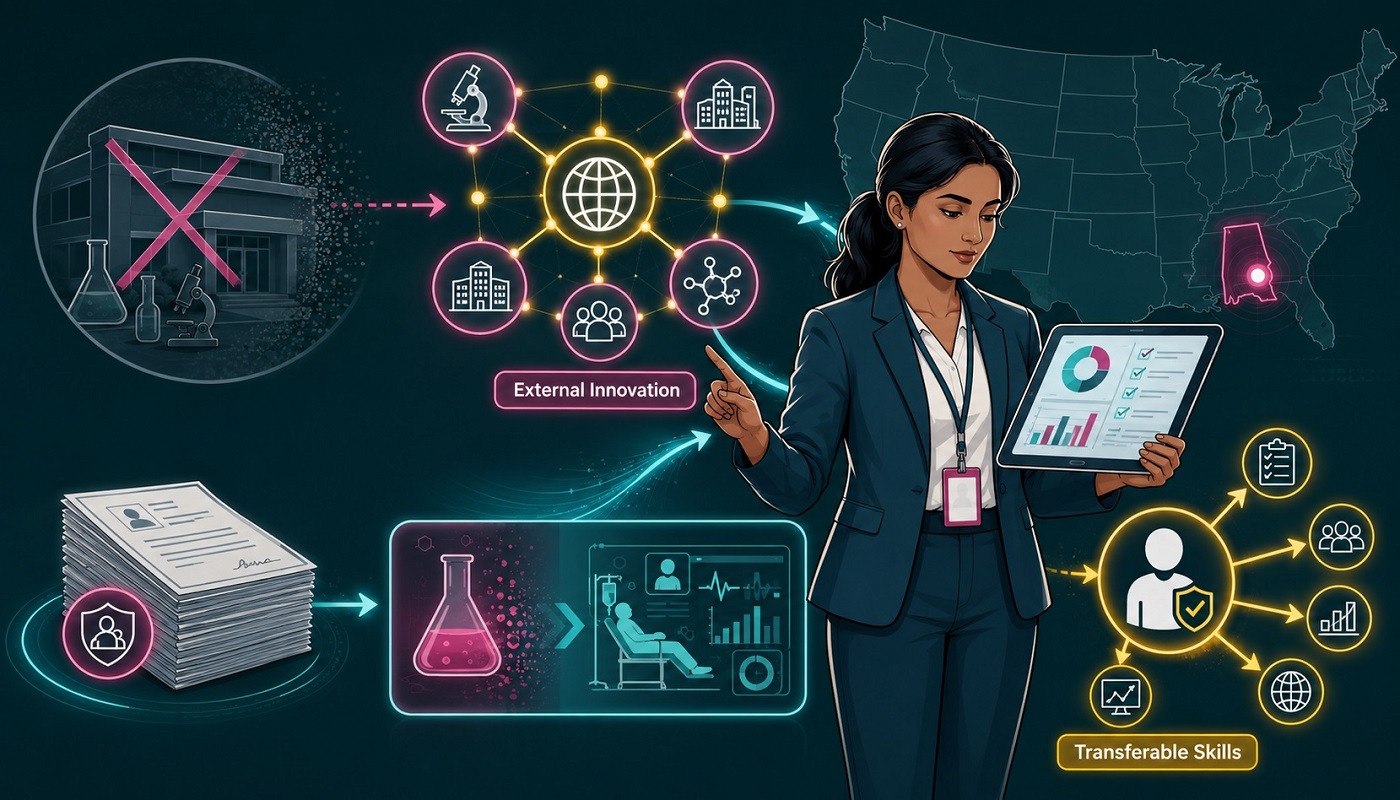
BioCryst announced a strategic shift on June 29, 2026. The company plans to close its Birmingham Discovery Center by the end of 2026. It will move away from internal discovery and rely more on external innovation. This is important for medicinal chemistry and biological science graduates. R&D candidates need transferable skills when discovery models change. This gives job seekers a practical reason to track the update and connect it with role-specific pharma skills.
How Do BioCryst, Birmingham, and External Innovation Affect R&D Careers?
BioCryst said it will discontinue internal discovery programs and close its Birmingham facility by the end of 2026. This shows a common biotech problem. Research jobs can change when companies rebalance cost, partnerships, and pipeline strategy. Students in medicinal chemistry, biology, and pharmacy should learn how discovery, translational research, regulatory planning, and portfolio decisions connect.
Biotech Restructuring Changes the Outlook for Scientists, Graduates, and Hiring Teams
The positive point is that external innovation can create new partnership, alliance, and due diligence roles. It may also open work at CROs, academic spinouts, and platform companies. The negative point is that internal discovery teams can face uncertainty. Graduates should not depend on one narrow lab skill. They need data analysis, literature review, target biology, assay awareness, and clear scientific communication.
Decision Stability Supports Hiring Confidence but Keeps Standards High
The positive side is that FDA output remained meaningful despite leadership instability and workforce pressure. This supports demand for regulatory and development professionals. The negative side is that uncertainty can increase scrutiny, delays, and workload stress. Candidates must show they understand submission quality, agency questions, labeling, safety follow-up, and cross-functional coordination.
Discovery Strategy Links Medicinal Chemistry, Biology, and Pharma Career Planning
This news helps pharma learners see that R&D careers are not linear. Companies may change from internal discovery to partnerships, and workers must explain how their skills remain useful.
Graduates Seeking R&D Roles
Graduates should prepare for roles beyond one lab function. External innovation still needs people who understand science and business decisions.
- Add transferable R&D keywords to your CV.
- Prepare examples about data interpretation and collaboration.
Other Pharma Specialists
Other specialists can position prior lab or academic work as transferable. Clear English around discovery strategy helps recruiters understand foreign experience.
- Translate research tasks into industry language.
- Show experience with methods, reports, and teamwork.
End-2026 Closure Makes R&D Flexibility Essential
The end-2026 facility closure shows why pharma job seekers need flexible career planning. R&D workers should build skills that move across biotech, CRO, academic, and pharmaceutical settings. Scientific writing, data review, assay knowledge, regulatory awareness, and cross-functional teamwork can reduce career risk.
Find Pharmuni Course: Introduction to Regulatory Affairs – Roles and Responsibilities to connect this news with practical pharma career skills.