


Pharma Jobs in Kuwait in 2026: GCC Hiring and Compliance Insights

Kuwait’s pharmaceutical sector continues to expand as healthcare spending rises across the Gulf region. In fact, Kuwait imports over 85% of its medicines, which increases regulatory oversight and strengthens demand for experienced professionals. As a result, Pharma Jobs in Kuwait attract specialists who understand drug registration procedures, GMP compliance, and hospital pharmacy operations. Moreover, the Kuwait Ministry of Health (MoH) supervises licensing, market authorization, and pharmaceutical distribution. Therefore, professionals who already work in regulated pharmaceutical environments often explore Kuwait as a strategic entry point into the broader GCC pharmaceutical market.

What Is Driving Pharma Jobs in Kuwait Under GCC Regulations?

Several regulatory factors drive hiring in Kuwait’s pharmaceutical sector. First, the Kuwait Ministry of Health (MoH) oversees drug licensing and market authorization. As a result, companies hire professionals who understand GCC drug registration and GMP compliance. Therefore, pharma jobs increasingly focus on regulatory affairs, hospital pharmacy, and pharmaceutical quality systems.

Why Kuwait Attracts Regulatory and Hospital Pharmacy Positions

Kuwait attracts strong demand for regulatory and hospital pharmacy professionals because the healthcare system continues to expand under strict pharmaceutical oversight. First, the Kuwait Ministry of Health manages drug licensing, hospital procurement, and regulatory compliance. As a result, companies and healthcare institutions actively recruit specialists in regulatory affairs, hospital pharmacy operations, and pharmaceutical quality systems. Moreover, the growing Gulf pharmaceutical market encourages organizations to hire professionals who understand GCC drug registration and compliance requirements.

Which Companies Drive Pharmaceutical Careers in Kuwait?

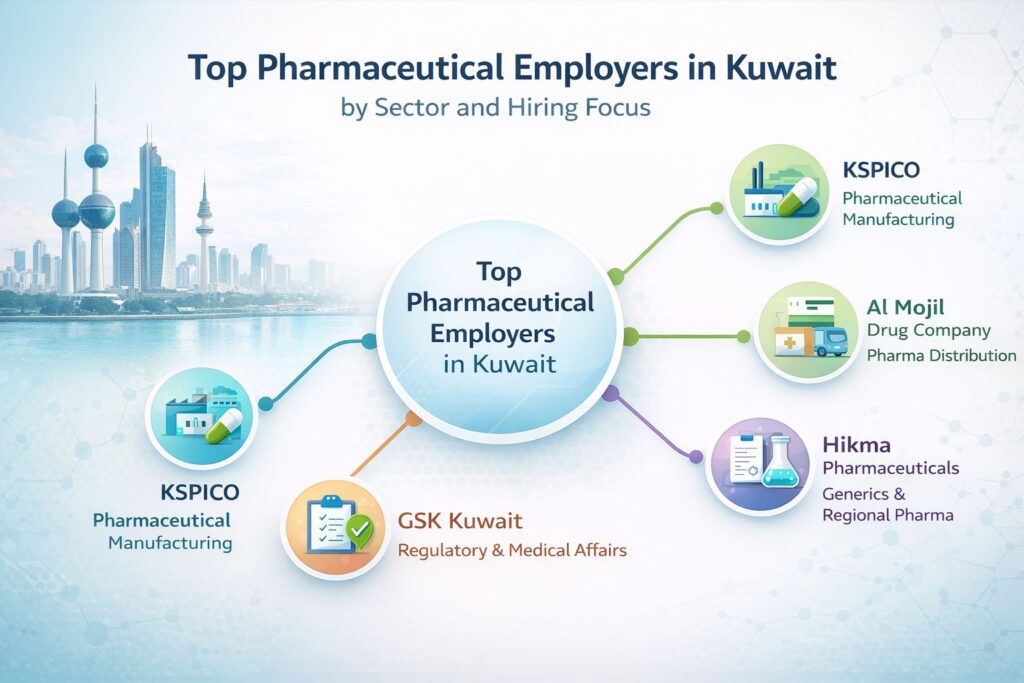
Several pharmaceutical companies play a major role in shaping pharma jobs in Kuwait across manufacturing, distribution, and regulatory sectors. First, local manufacturers and regional distributors support medicine supply and hospital procurement. In addition, multinational pharmaceutical companies expand regulatory, medical affairs, and compliance teams to meet GCC market requirements. Therefore, professionals who understand drug registration, quality systems, and pharmaceutical distribution often find strong career opportunities across these organizations.

The infographic below highlights major pharmaceutical employers in Kuwait and explains their primary hiring focus across manufacturing, distribution, and regulatory operations.

Top pharmaceutical companies offering pharmaceutical jobs in Kuwait across manufacturing, regulatory affairs, and pharma distribution sectors
Top Pharmaceutical Employers in Kuwait by Sector and Hiring Focus

In the following sections, we examine key pharmaceutical employers that create hiring demand across Kuwait’s pharmaceutical industry.

  • KSPICO Career Opportunities in Kuwait’s Pharmaceutical Manufacturing Sector
  • Al Mojil Drug Company Job Offers in Kuwait’s Pharma Distribution Market
  • GSK Kuwait Employment Positions in Regulatory and Medical Affairs
  • Hikma Pharmaceuticals Career Positions in Kuwait’s Generics Market

KSPICO Career Opportunities in Kuwait’s Pharmaceutical Manufacturing Sector

KSPICO supports local pharmaceutical manufacturing and regional medicine supply. Therefore, professionals with GMP compliance and production experience often pursue roles in its manufacturing operations.

Al Mojil Drug Company Job Offers in Kuwait’s Pharma Distribution Market

Al Mojil Drug Company distributes medicines to hospitals and pharmacies across Kuwait. As a result, it hires professionals in pharmaceutical distribution, regulatory coordination, and healthcare logistics.

GSK Kuwait Employment Positions in Regulatory and Medical Affairs

GSK Kuwait offers roles in regulatory affairs and medical affairs. Therefore, professionals with GCC drug registration and compliance experience often join its regional teams.

Hikma Pharmaceuticals Career Positions in Kuwait’s Generics Market

Hikma Pharmaceuticals operates strongly in the regional generics market. Consequently, professionals in manufacturing, regulatory affairs, and quality assurance often pursue roles within its GCC operations.

Pharmaceutical Salary Ranges in Kuwait by Position and Sector

Pharmaceutical salaries in Kuwait vary by sector, experience, and regulatory responsibility. In general, professionals working in regulatory affairs, hospital pharmacy, manufacturing, and pharmaceutical distribution receive competitive monthly pay. Moreover, experience with GMP compliance and drug registration often increases salary levels.

The table below summarizes typical monthly salary ranges (KWD) for key pharmaceutical roles in Kuwait.

Position Sector Typical Monthly Salary (KWD) Key Responsibilities
Regulatory Affairs Specialist
Regulatory / Pharma Companies
700 – 1,400 KWD
GCC drug registration, MoH submission, regulatory compliance
Regulatory Affairs Manager
Regulatory / Corporate
1,200 – 2,000+ KWD
Product approvals, regulatory strategy, lifecycle management
Hospital Pharmacist
Hospital / Clinical
500 – 1,200 KWD
Medication dispensing, hospital pharmacy operations
Senior / Clinical Pharmacist
Hospital / Specialist Roles
1,000 – 2,000+ KWD
Clinical pharmacy services, therapeutic monitoring
Pharmaceutical Production Specialist
Manufacturing
700 – 1,300 KWD
GMP production oversight, batch documentation
Quality Assurance / GMP Specialist
Manufacturing / Pharma
800 – 1,500 KWD
Quality systems, deviation management, CAPA processes
Pharmaceutical Sales / Distribution Manager
Distribution
900 – 1,800 KWD
market expansion, hospital procurement coordination

Overall, the pharmaceutical industry in Kuwait typically offers salaries ranging from about 493 KWD to more than 1,400 KWD per month across many roles, with higher compensation for experienced regulatory and leadership positions.

Licensing and Eligibility Requirements for Pharma Jobs in Kuwait

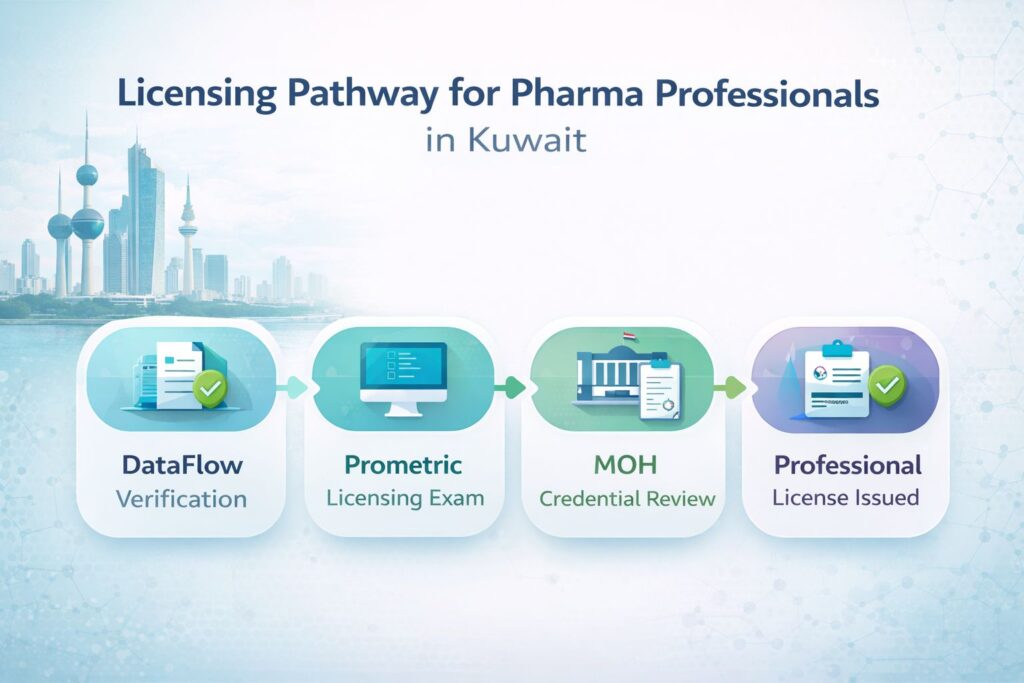
Professionals who pursue pharmaceutical careers in Kuwait must follow licensing rules set by the Kuwait Ministry of Health (MoH). First, candidates verify their academic credentials through DataFlow and submit attested documents. Next, they pass the Kuwait Prometric licensing exam. Finally, the MoH grants a professional license that allows pharmacists and pharmaceutical specialists to work in regulated healthcare and pharmaceutical organizations.

The infographic below explains the step-by-step licensing pathway for pharmaceutical professionals who want to work in Kuwait.

Kuwait MOH licensing steps for pharmaceutical professionals including DataFlow verification and Prometric exam
Licensing Pathway for Pharma Professionals in Kuwait

How to Analyze Pfizer Careers for Regulatory and GMP Professionals

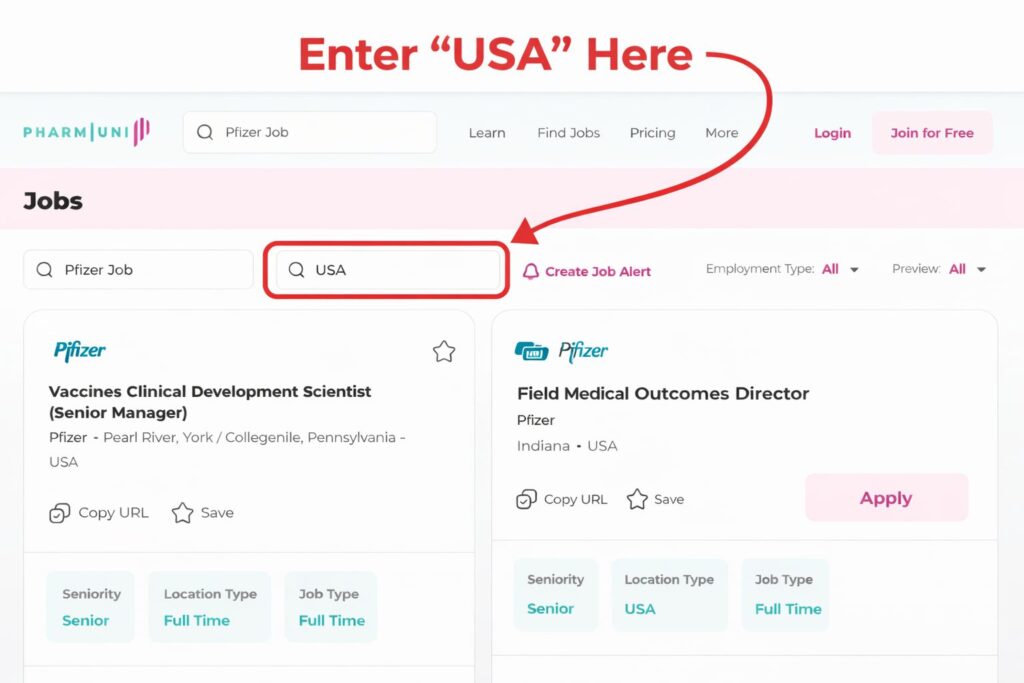
Evaluating Pfizer regulatory affairs jobs requires a clear focus on regulatory scope, GMP responsibilities, and real operational exposure. First, candidates should review the job function and department, since Pfizer hires across regulatory affairs, quality assurance, manufacturing, and clinical research teams. In addition, professionals should assess the level of GMP involvement, including validation activities, deviation management, and inspection readiness. Finally, candidates can refine their search by location, seniority level, and regulatory scope using smart filtering tools. To streamline this process and access relevant opportunities faster, many professionals choose to Explore Pharma Jobs through specialized platforms like PharmUni.

Final Words

Pfizer job openings continue to attract GMP and regulatory professionals because the company operates at a massive global scale. Today, Pfizer employs about 81,000 professionals worldwide, which reflects the size of its research, manufacturing, and regulatory operations. Therefore, professionals who build strong GMP expertise and compliance experience can find valuable career opportunities across Pfizer’s global pharmaceutical network.

FAQs

1️⃣What qualifications do companies like Pfizer expect for GMP roles?

Pharmaceutical employers usually seek experience with GMP compliance, quality systems, deviation management, and validation activities.

2️⃣Do regulatory affairs roles require knowledge of FDA or EMA guidelines?

Yes. Most pharmaceutical companies prefer candidates familiar with FDA regulations, EU GMP rules, and regulatory submission processes.

3️⃣Which departments hire the most professionals in regulated pharmaceutical companies?

Quality assurance, regulatory affairs, manufacturing, and clinical operations usually offer the most career opportunities.

Picture of Mahtab Shardi
Mahtab Shardi

Mahtab is a pharmaceutical professional with a Master’s degree in Physical Chemistry and over five years of experience in laboratory and QC roles. Mahtab contributes reliable, well-structured pharmaceutical content to Pharmuni, helping turn complex scientific topics into clear, practical insights for industry professionals and students.

Pharmaceutical professionals working in a modern lab environment aligned with Kuwait Ministry of Health regulations and GMP compliance standards in the Gulf pharmaceutical industry.

Pharma Jobs in Kuwait in 2026: GCC Hiring and Compliance Insights

Kuwait’s pharmaceutical sector continues to expand under strict Ministry of Health regulations and GCC compliance frameworks. This guide explains regulatory pathways, major employers, salary expectations, and licensing requirements for professionals pursuing pharmaceutical careers within Kuwait’s growing Gulf healthcare market.

Read More »
CQA

Critical Quality Attribute (CQA) in 2026: Expert Guide to Ensure Drug Quality

Critical Quality Attributes (CQAs) are crucial in pharmaceutical manufacturing because they directly affect drug safety, efficacy, and consistency. Regulatory agencies including the FDA and ICH require thorough CQA assessment to minimize risks and ensure high-quality medicines. By following best practices like early identification, risk assessment, and continuous monitoring, manufacturers can maintain robust production processes. Implementing modern strategies such as Quality by Design and integrating CQAs with quality assurance systems ensures compliance and safeguards patient health throughout the product lifecycle

Read More »
Scientists working under sterile manufacturing Sydney standards with focus on GMP validation lifecycle documentation and batch release compliance TGA requirements.

Pharma Jobs in Sydney in 2026: Salary, GMP and Hiring Trends

Sydney’s pharmaceutical sector continues to expand under strict TGA GMP inspection trends and PIC/S compliance Australia alignment. This article analyzes regulatory hiring growth, salary positioning, and compliance-driven career opportunities across manufacturing, quality assurance, and regulatory functions.

Read More »

Share