


Pharma Jobs in Houston in 2026: FDA GMP Manufacturing and Salary Outlook

In 2026, the Houston life sciences cluster supports more than 27,000 professionals across pharmaceutical manufacturing, biotech development, and clinical research, and the region continues to expand as companies invest in biologics production and sterile drug operations. At the same time, Texas regularly appears on FDA inspection schedules due to its growing number of GMP-regulated facilities, which means employers actively seek candidates who understand 21 CFR Part 210 and 211 and who can operate confidently in inspection-facing environments. As a result, pharma jobs in Houston increasingly favor professionals with sterile manufacturing exposure, quality systems expertise, and regulatory discipline. Therefore, for compliance-focused specialists evaluating long-term salary stability and inspection intensity, Houston offers a structurally strong and regulation-driven career landscape rather than a short-term hiring spike.

Table of Contents

What Is Pharma Jobs in Houston Within Texas Manufacturing and Clinical Infrastructure

Houston’s pharmaceutical jobs grow from its biologics production, sterile manufacturing environment, and Texas Medical Center research ecosystem. Companies hire professionals skilled in sterile processing, cleanroom controls, and FDA-aligned GMP systems, while clinical research expansion drives regulatory and quality roles. Pharma jobs in Houston thus combine manufacturing-intensive positions with compliance-focused roles in clinical research.


Why Pharmaceutical and Biotech Jobs in Houston Are Expanding Under GMP and Regulatory Demand

Pharmaceutical and biotech employment in Houston is expanding as manufacturing capacity and clinical research grow together. As biologics facilities scale and invest in sterile production, demand rises for GMP jobs in quality, validation, and process oversight. Meanwhile, clinical research within hospitals and institutes increases the need for regulatory affairs roles supporting IND submissions, compliance, and audit readiness. Therefore, biotech jobs in Houston reflect not just growth, but a direct response to rising GMP and regulatory demands.

Major Pharma and Biotech Employers Offering GMP-Regulated Positions in Houston

Houston’s regulated life sciences market includes global manufacturers, biologics specialists, and research-driven institutions that actively recruit compliance-focused professionals. Because these organizations operate under strict FDA and 21 CFR Part 210/211 requirements, they continuously expand sterile manufacturing, validation, quality assurance, and regulatory affairs teams. Below, we examine the key employers shaping GMP-regulated hiring across manufacturing and clinical infrastructure in Houston.


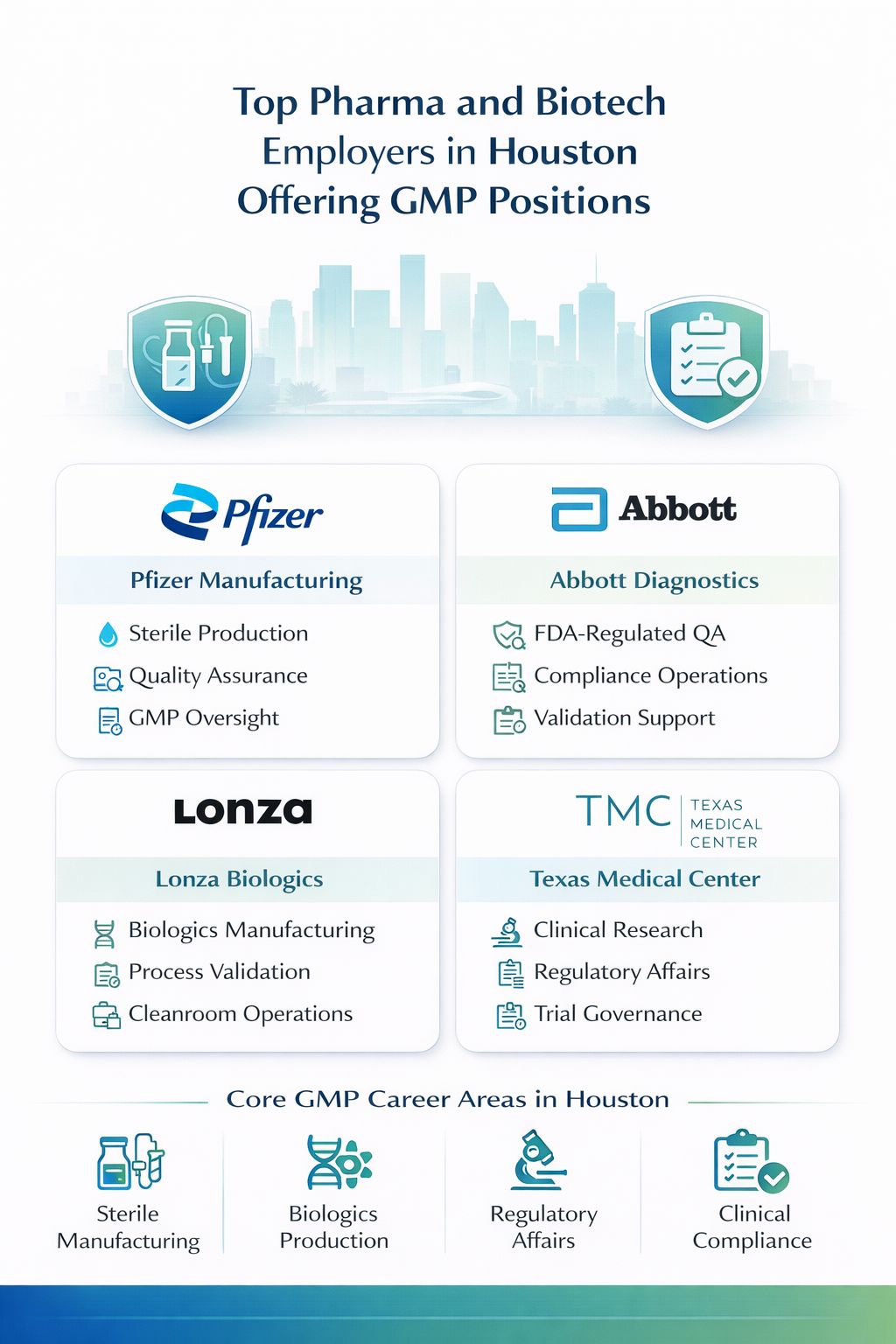
The infographic below maps Houston’s leading pharmaceutical and biotech employers and highlights the GMP-regulated job categories that drive hiring demand across manufacturing, validation, and regulatory operations.

Houston pharmaceutical and biotech employers offering GMP manufacturing, quality assurance, validation, and regulatory affairs job opportunities
Top Pharma and Biotech Employers in Houston Offering GMP-Regulated Manufacturing, Quality, and Regulatory Positions.

In the following section, we outline how each employer structures its GMP, quality, and regulatory workforce across core operational areas:

  • Pfizer Manufacturing – Sterile Production and Quality Assurance Positions
  • Abbott Diagnostics – FDA-Regulated QA and Compliance Job Offers
  • Lonza Biologics – Biotech Manufacturing and Validation Opportunities
  • Texas Medical Center Research Institutions – Clinical and Regulatory Affairs Positions

Pfizer Manufacturing – Sterile Production and Quality Assurance Positions

Pfizer runs sterile manufacturing operations under strict GMP controls. It hires QA and compliance professionals to support inspection readiness and production oversight.

Abbott Diagnostics – FDA-Regulated QA and Compliance Job Offers

Abbott operates FDA-regulated diagnostic manufacturing facilities in Texas. It recruits quality and compliance specialists to manage validation and documentation control.

Lonza Biologics – Biotech Manufacturing and Validation Opportunities

Lonza supports biologics production and contract manufacturing activities. The company hires validation and GMP manufacturing professionals to maintain regulatory compliance.

Texas Medical Center Research Institutions – Clinical and Regulatory Affairs Positions

Texas Medical Center institutions lead large-scale clinical research programs. They recruit regulatory and clinical compliance professionals to support governed trial operations.

Salary Outlook for GMP and Clinical Research Jobs in Houston

Houston’s life sciences market offers stable and competitive compensation, especially for professionals working in sterile manufacturing, biologics production, and regulatory oversight. Because the region combines manufacturing expansion with clinical research growth, employers pay premiums for GMP experience, audit readiness, and validation expertise. At the same time, regulatory affairs and clinical oversight roles show steady mid-to-senior level salary progression, particularly for candidates with FDA interaction experience and lifecycle compliance exposure.

The table below presents current salary benchmarks in Houston across core GMP and clinical research functions.

Role Category Typical Annual Salary Range (Houston)
Sterile Manufacturing Specialist
$65,000 – $95,000
Biologics Production / Process Engineer
$85,000 – $120,000
GMP Quality Assurance Manager
$90,000 – $135,000
Regulatory Affairs Specialist
$80,000 – $125,000
Clinical Research Associate (CRA)
$75,000 – $110,000
Validation Engineer (IQ/OQ/PQ)
$85,000 – $120,000

Texas Licensing Requirements for GMP and Regulatory Careers

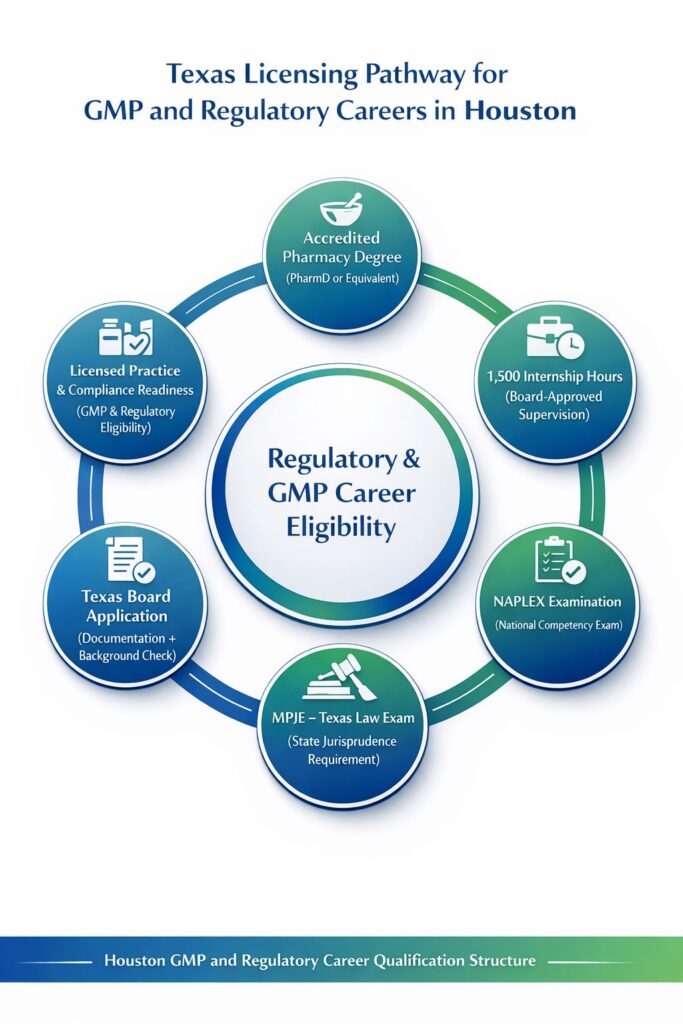
In Texas, pursuing licensure for pharmacy or GMP-related careers requires an accredited pharmacy degree, 1,500 supervised internship hours, and passing the NAPLEX and MPJE. Internship records, fingerprinting, and ID documents complete the process, reflecting a structured pathway to professional eligibility in Houston’s regulated life sciences workforce.

The infographic below illustrates the Texas licensing pathway relevant to GMP and regulatory careers in Houston, highlighting internship hour requirements, exam steps, and eligibility milestones that align with career readiness.

Texas licensing pathway for GMP and regulatory careers in Houston showing 1500 internship hours requirement, NAPLEX and MPJE exams, and Board of Pharmacy eligibility steps
Texas licensing pathway for GMP and regulatory careers in Houston including internship hours, NAPLEX/MPJE requirements, and eligibility steps

How to Evaluate GMP and Clinical Research Job Opportunities in Houston

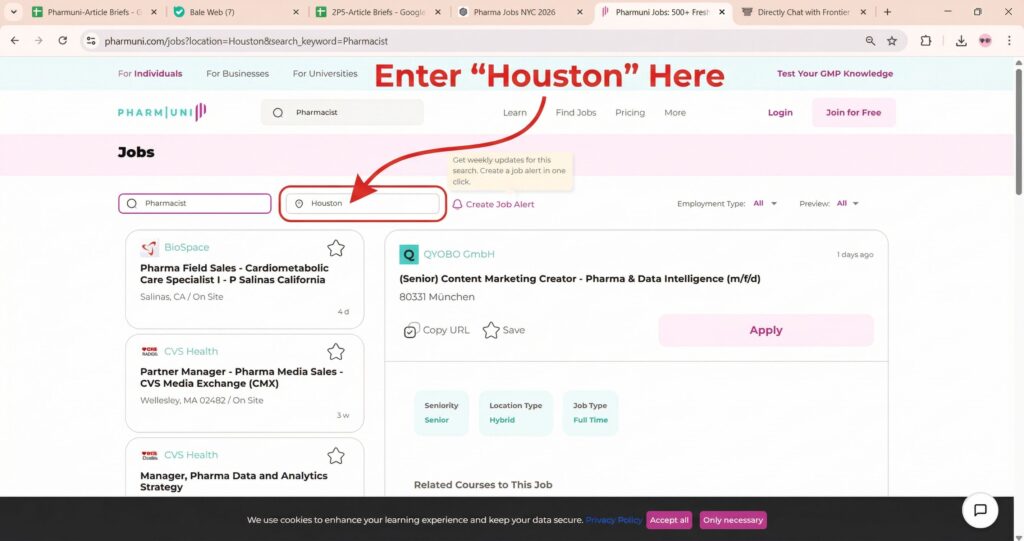
When assessing GMP and clinical research jobs in Houston, focus on your core strengths sterile manufacturing, quality systems, regulatory affairs, or clinical operations. Then review job descriptions to understand required compliance experience, FDA interactions, and responsibilities related to inspection readiness and validation.  Moreover, evaluate employer maturity, pipeline stage, and hiring patterns, because established manufacturers and research institutions often demand deeper GMP and protocol compliance knowledge than early-stage operations. To simplify your search and target roles that align with your experience and career goals, use PharmUni’s smart filters to Explore Pharma Jobs by function, employer, and compliance focus which helps you make data-driven decisions in Houston’s competitive life sciences job market.

How to Assess GMP and Clinical Research Career Opportunities in Houston

Final Words

Houston’s life sciences employment continues to strengthen as the region builds capacity in biologics production and regulated manufacturing. In fact, the Houston market ranked No. 14 nationwide with about 27,500 life sciences jobs in early 2025, and analysts expect continued growth as investment in biomanufacturing and clinical research expands. Therefore, when you consider pharma jobs in Houston, especially those tied to GMP and regulatory compliance, you tap into a labor market where inspection intensity, sterile manufacturing expertise, and lifecycle compliance increasingly influence salary positioning and long-term career stability.

Regulatory scrutiny and investment in Texas ensure that professionals with GMP and inspection readiness skills remain in demand, making pharma jobs in Houston a strong pathway for long-term career growth in regulated pharmaceutical environments.


FAQs

1️⃣ Do I need Texas Board of Pharmacy licensure to work in GMP manufacturing or regulatory roles in Houston?

No. Most sterile manufacturing, quality assurance, and regulatory affairs roles do not require licensure. A Texas pharmacist license applies only to pharmacy-practice positions.

2️⃣How important is sterile manufacturing experience for biologics facilities in Houston?

Very important. Employers prioritize candidates with cleanroom exposure, 21 CFR Part 210/211 knowledge, and audit-ready documentation skills.

3️⃣Are compliance-driven roles in Houston more stable than general research positions?

Yes. GMP and regulatory oversight roles often offer stronger long-term stability because inspection readiness and quality governance remain mandatory regardless of pipeline changes.

Picture of Mahtab Shardi
Mahtab Shardi

Mahtab is a pharmaceutical professional with a Master’s degree in Physical Chemistry and over five years of experience in laboratory and QC roles. Mahtab contributes reliable, well-structured pharmaceutical content to Pharmuni, helping turn complex scientific topics into clear, practical insights for industry professionals and students.

Key Performance Indicators

Key Performance Indicator (KPI) Guide for Pharmaceutical Industry 2026 : Complete Quality Metrics

Approximately 30% of FDA Warning Letters cite inadequate monitoring of Key Performance Indicators (KPIs) as a major compliance issue, highlighting their crucial role in pharmaceutical operations. KPIs provide measurable data to track process efficiency, product quality, and regulatory adherence. Proper KPI management supports risk mitigation, enhances decision-making, and ensures patient safety.

Read More »

Share