


Pharma Jobs in Seattle in 2026: GMP, Salary, and Licensing Insights

In 2023, the FDA conducted more than 1,000 drug manufacturing inspections worldwide, and inspection data showed a measurable increase in observations related to documentation control and quality system execution compared with pre-pandemic years. Moreover, warning letter ratios rose relative to total inspections, which signals tighter scrutiny of GMP compliance and data integrity practices. As a result, hiring standards now reflect operational accountability rather than expansion alone. Pharma Jobs in Seattle increasingly mirror this shift. Employers recruit professionals who can protect validated systems, manage deviations, and maintain inspection readiness without delaying clinical or commercial timelines. Therefore, candidates must understand where compliance pressure concentrates and how it directly shapes real hiring demand.

Table of Contents

What Defines Pharma Jobs in Seattle Under GMP Regulation

Pharma jobs in Seattle operate within a GMP environment shaped by FDA oversight and biologics manufacturing complexity. Companies structure roles around inspection readiness, documentation control, and validated production systems. Manufacturing teams manage batch execution, quality assurance handles deviations and CAPAs, and regulatory specialists align submissions with federal guidance. Because biologics production requires strict traceability, employers prioritize professionals who understand regulated workflows and can perform under audit scrutiny.

Why GMP Jobs in Seattle Require Advanced Compliance Experience

GMP jobs in Seattle require advanced compliance experience because inspection pressure directly affects production timelines and product release. FDA warning letters often focus on documentation gaps and data integrity weaknesses, so employers prioritize professionals who understand validated systems and deviation management. In biologics manufacturing, even small process errors can trigger regulatory scrutiny. Therefore, companies seek candidates who can maintain inspection readiness and protect quality systems under audit conditions. Consequently, prior exposure to regulated environments now plays a central role in hiring decisions.

Where Pharmaceutical Companies and Biotech Positions Concentrate in Seattle

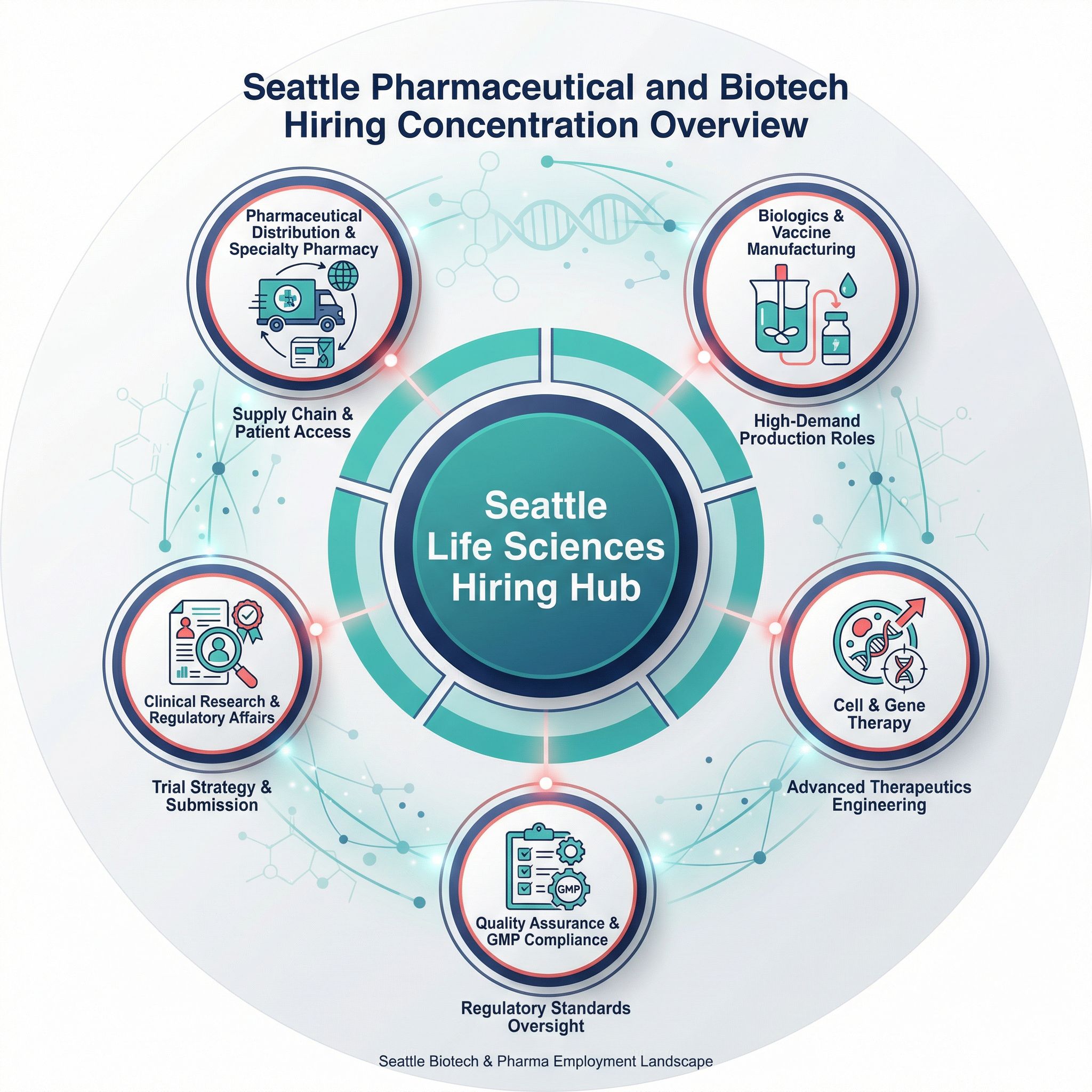
Seattle’s hiring activity concentrates in oncology biotech, biologics manufacturing, and immune-based therapeutic platforms across the broader life sciences cluster. Most regulated positions emerge from companies that operate validated production systems and clinical-stage pipelines. Therefore, professionals with experience in GMP environments and quality oversight find stronger demand in these concentrated innovation hubs.

The visual below highlights where regulated hiring activity clusters across Seattle’s pharmaceutical and biotech ecosystem.

Map showing pharmaceutical companies and biotech hiring concentration in Seattle with focus on GMP manufacturing and oncology clusters.
Geographic and sector concentration of GMP-driven pharmaceutical and biotech employers across the Seattle life sciences region.

Use this section to outline the leading companies that shape regulated hiring demand and define compliance-driven career pathways across Seattle’s biopharma ecosystem.

  • Seagen Biotech Positions in Bothell Focused on ADC Cancer Therapies
  • Adaptive Biotechnologies Seattle Roles in Immune Medicine Platforms
  • Evotec Biologics Seattle GMP Production and Quality Roles
  • Umoja Biopharma Seattle CAR-T Biotech Manufacturing Positions

Seagen Biotech Positions in Bothell Focused on ADC Cancer Therapies

Seagen develops oncology biologics and operates advanced manufacturing systems in the Seattle area. The company hires professionals who can manage GMP production, quality documentation, and inspection readiness in commercial and late-stage clinical settings.

Adaptive Biotechnologies Seattle Roles in Immune Medicine Platforms

Adaptive focuses on immune profiling and regulated diagnostic platforms. The company values candidates who understand assay validation, quality controls, and structured compliance workflows.

Evotec Biologics Seattle GMP Production and Quality Roles

Evotec Biologics supports scalable biologics manufacturing under strict GMP controls. The organization prioritizes engineers and quality specialists with validation and audit-ready experience.

Umoja Biopharma Seattle CAR-T Biotech Manufacturing Positions

Umoja develops CAR-T cell therapies within controlled clinical manufacturing environments. The company seeks professionals who combine technical skill with strong documentation and compliance discipline.

Compensation Patterns Across Pharmacist, Biotech, and GMP Positions

Compensation correlates strongly with compliance responsibility and operational accountability.

Below is a simplified overview of how responsibility levels influence salary bands:

Position Level GMP Accountability Typical Salary Band
Entry-Level Manufacturing
Limited documentation responsibility
Moderate
QA Specialist
Deviation review and CAPA oversight
Upper Moderate
Validation Engineer
System qualification accountability
High
Regulatory Affairs Lead
Submission and audit exposure
High
Licensed Pharmacist
Legal dispensing accountability
High

Higher compensation typically reflects exposure to inspection outcomes and release decisions. Therefore, professionals who manage documentation systems or regulatory interfaces often command stronger offers.

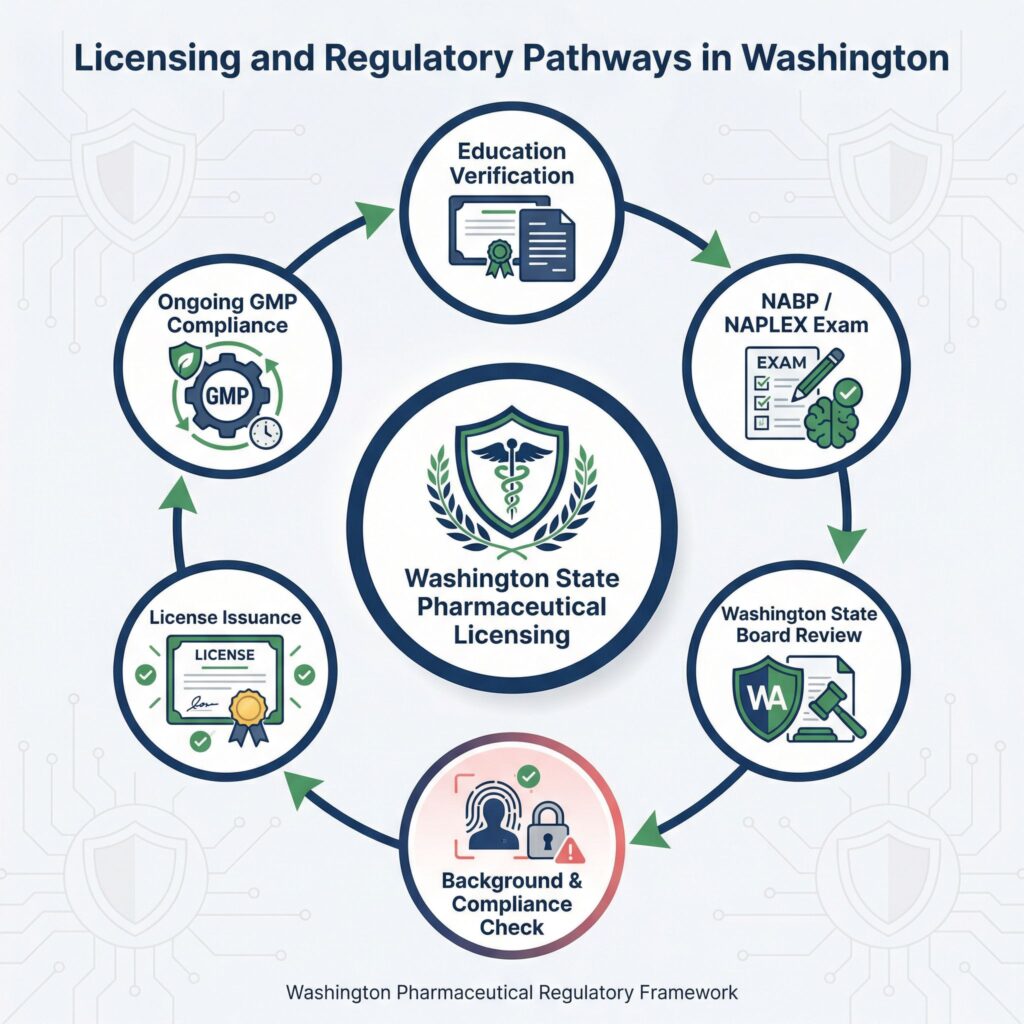
Licensing Pathways for Pharmacist and Technician Employment in Washington

Pharmacists must obtain a Washington State Board of Pharmacy license before practicing, while technicians need state registration and supervised training. Licensed roles carry legal accountability for medication safety, whereas GMP manufacturing positions focus on procedural compliance rather than licensure.

The visual below summarizes the key regulatory steps for pharmacy and related roles in Washington.

Flowchart showing Washington State Board of Pharmacy licensing process and regulatory requirements for pharmacist and pharmaceutical employment roles.
Step-by-step overview of pharmacist licensing, technician registration, and regulatory eligibility requirements under Washington State pharmacy laws.

How to Evaluate High-Quality Pharma Job Offers in Seattle

When professionals assess opportunities, they should go beyond title and salary. First, review whether the employer maintains documented quality systems and transparent deviation handling these indicate compliance maturity rather than surface-level growth hiring. Second, examine whether the job description specifies clear GMP responsibilities, inspection exposure expectations, and integration with quality assurance or regulatory functions.

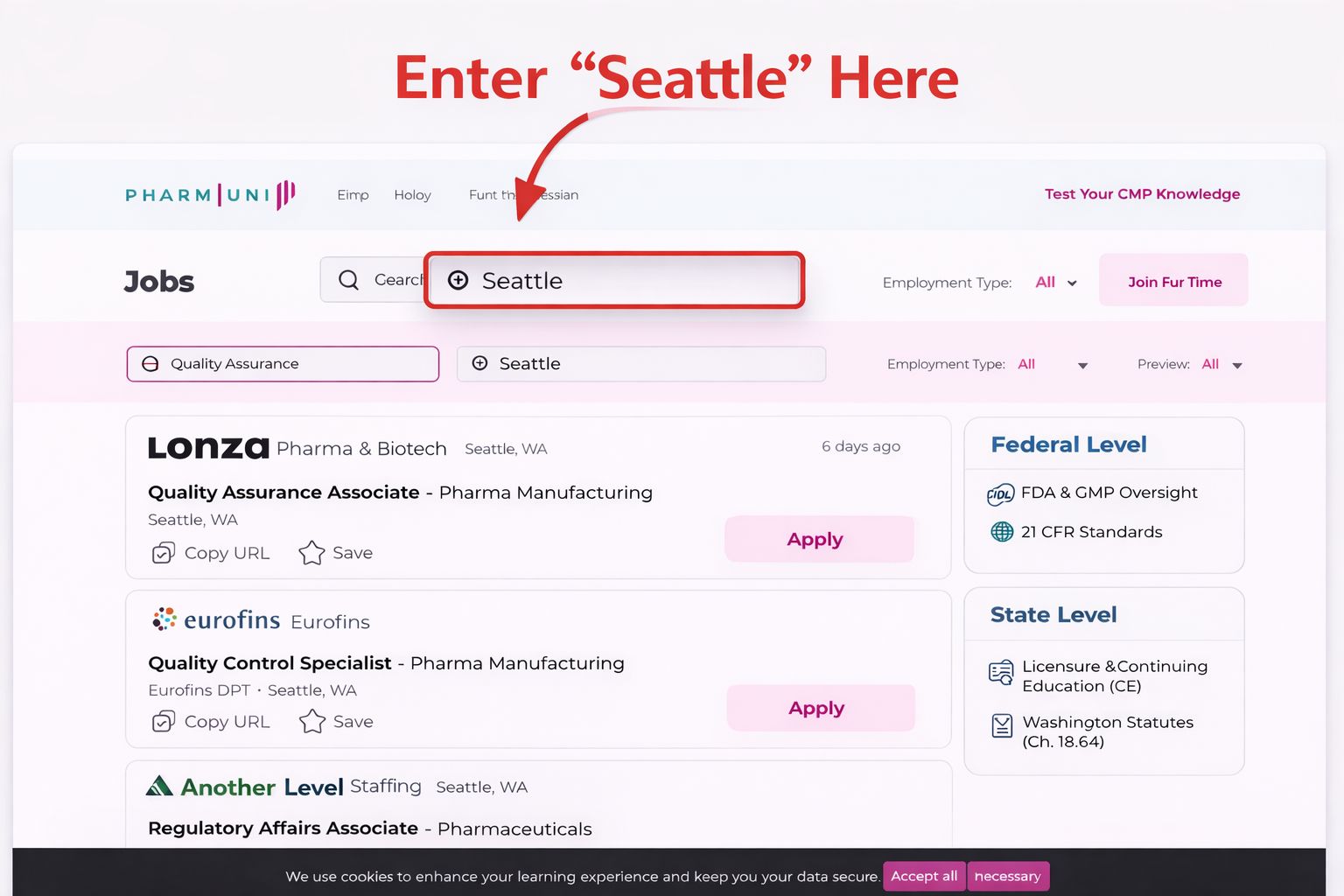
For Seattle roles specifically, use the PharmUni Jobs platform as a starting point to Explore Pharma Jobs in this city. On that site, candidates can filter openings by location, regulatory focus, and compliance requirements, which helps identify positions with real operational depth rather than generic job listings. In addition, evaluate whether the organization provides detail about training, quality systems tools, and inspection readiness employers who emphasize these aspects tend to offer stronger, long-term professional fit in regulated environments.

Final Word

In recent FDA reporting cycles, drug manufacturing inspections have continued to generate hundreds of Form 483 observations annually, with documentation control and process validation among the most frequently cited categories. Even a single unresolved observation can delay product release or clinical progression by weeks. Therefore, compliance discipline does not operate as a background function; it directly shapes operational continuity and hiring priorities.

In Seattle’s biologics-driven ecosystem, companies build teams that can withstand inspection scrutiny without slowing production or clinical milestones. Pharma jobs in Seattle increasingly reward professionals who understand validation protocols, deviation management, and audit readiness at a practical level. Consequently, candidates who align technical expertise with regulatory awareness position themselves for sustainable advancement in a market defined by compliance accountability rather than short-term expansion.

FAQs

1️⃣ Which companies hire most actively in Seattle’s life sciences sector?

Oncology-focused biotech firms, biologics manufacturers, and regulated CDMOs generate the strongest hiring demand, especially in GMP production and quality oversight roles.

2️⃣ Why do employers in biologics and clinical manufacturing require prior GMP experience?

Because FDA inspections frequently target documentation control and validation systems, companies prioritize candidates who can protect batch integrity and maintain audit readiness.

3️⃣How can professionals improve their chances in regulated manufacturing or quality roles?

Gain hands-on exposure to deviation management, electronic quality systems, and validation protocols within controlled production or clinical environments.

Picture of Mahtab Shardi

Mahtab Shardi

Mahtab is a pharmaceutical professional with a Master’s degree in Physical Chemistry and over five years of experience in laboratory and QC roles. Mahtab contributes reliable, well-structured pharmaceutical content to Pharmuni, helping turn complex scientific topics into clear, practical insights for industry professionals and students.

Biotech laboratory team in Seattle conducting quality assurance biotech Seattle processes under FDA regulated companies in Seattle standards.

Pharma Jobs in Seattle in 2026: GMP, Salary, and Licensing Insights

Seattle’s regulated biotech ecosystem drives demand for professionals with GMP experience, licensing awareness, and quality system expertise. This article explores employer concentration, biologics manufacturing Seattle trends, and how compliance expectations shape hiring across pharmaceutical companies in Seattle.

Read More »
Annual Product Review

Annual Product Review (APR) in Pharma in 2026: GMP Requirements, Steps, and Checklist

The Annual Product Review (APR) is a vital component in pharmaceutical quality systems, reviewing yearly product data to ensure compliance and identify improvement opportunities. It reinforces audit readiness by providing transparent, trend-based insights that drive continuous quality assurance and risk mitigation, ultimately safeguarding patient safety and regulatory compliance.

Read More »

Share