


Annual Product Review (APR) in Pharma in 2026: GMP Requirements, Steps, and Checklist

Annual Product Review (APR) is a yearly assessment that summarizes manufacturing and quality data to ensure a product consistently meets standards. It reviews batch records, deviations, complaints, and stability data. According to WHO, conducting APRs improves product reliability by up to 90% and helps identify trends early. This article covers APR’s definition, essential data, review steps, roles involved, and a checklist for effective implementation.

In Good Manufacturing Practices (GMP), APR is critical for inspection readiness, demonstrating compliance with regulatory expectations. Approximately 85% of regulatory audits focus on APR documentation to verify continuous quality control. Following GMP guidelines, APR ensures ongoing product safety and manufacturing consistency.

Table of Contents

What Is an Annual Product Review (APR) in Pharma?

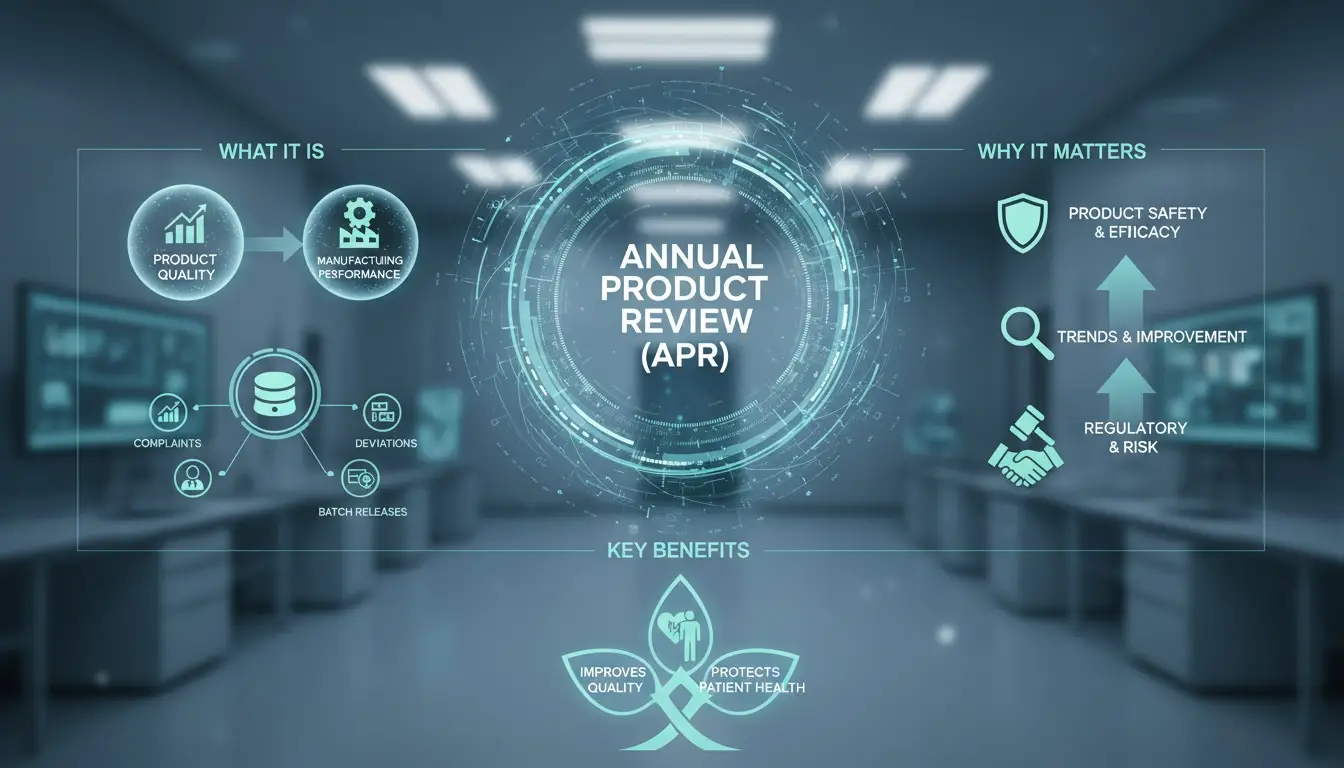
An Annual Product Review (APR) in pharma reviews product quality and manufacturing data yearly. It checks batch records, deviations, complaints, and stability to ensure consistent quality. APR helps detect trends and prevents future issues. Also, it supports regulatory compliance and improves product reliability. For example, WHO’s technical guidelines highlight the importance of APR in quality management. The APR process involves: 

– Collecting all relevant production and quality data 

– Analyzing data to identify any issues or improvements 


Furthermore, APR aligns with FDA and WHO standards. It prepares companies for inspections by showing product control.

Annual Product Review (APR) in Pharma: What It Is and Why It Matters

APR Definition and GMP Context in Pharmaceutical Manufacturing

Annual Product Review (APR) means checking product quality and manufacturing data each year. It helps find problems and improves products. APR supports strong quality control in pharma. First, it collects production and quality information. Second, it reviews this data to spot trends or issues.


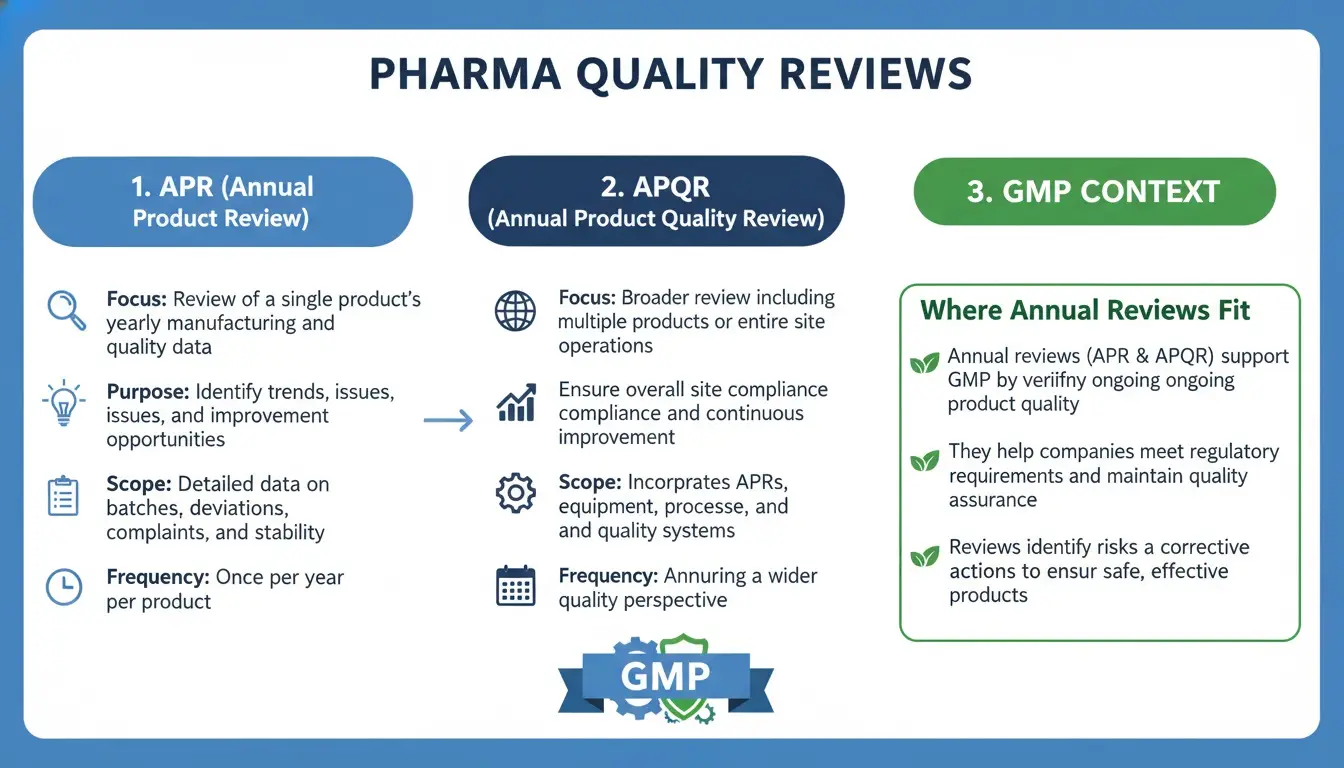
Good Manufacturing Practices (GMP) guide how pharma companies make safe medicines. APR fits well within GMP to ensure product quality. For example, GMP requires regular reviews like APR, which helps meet standards. Also, APR prepares companies for inspections by regulators. The two main benefits of APR under GMP are: 

  1. Ensuring consistent product safety and effectiveness
  2. Documenting quality control for regulatory compliance
APR vs APQR in GMP Context Where Annual Review Fits in Pharma Quality Systems

What Data Should Be Included in an Annual Product Review (APR)?

An Annual Product Review (APR) should include key data from all stages of manufacturing and quality control. First, it must cover batch manufacturing and batch release data. Also, include critical in-process and finished product results. Next, review deviations, out-of-specification (OOS), out-of-trend (OOT), and investigations. Additionally, consider complaints, returns, recalls, and market quality events.


Moreover, the APR should document changes, CAPA, and validation or qualification status. Reviewing all this data helps improve products and ensures safety. Remember, a thorough APR supports compliance and continuous quality improvement. Important data areas include: 

– Batch Manufacturing and Batch Release Data 

– Critical In-Process and Finished Product Results 

– Deviations, OOS/OOT, and Investigations 

– Complaints, Returns, Recalls, and Market Quality Events 

– Changes, CAPA, and Validation/Qualification Status

Batch Manufacturing and Batch Release Data

Batch manufacturing and batch release data provide key information about each production run. They include batch size, materials used, and process parameters. FDA data shows that proper recording reduces product errors by 30%. Also, these data help track product quality and identify any manufacturing issues early.


Moreover, companies must review batch release data before shipping products. This data confirms the product meets quality standards. Two main points are: 

  • Record batch size and raw material details
  • Document final product tests and release approval

Critical In-Process and Finished Product Results

Critical in-process and finished product results ensure product quality during and after manufacturing. They include test results from various stages. Also, reviewing these results helps spot problems early and prevent defects.


Key points include: 

  • Test in-process materials regularly
  • Check final product quality
  • Compare results with standards

Investigate any deviations immediately

Deviations, OOS/OOT, and Investigations

Deviations, OOS (Out of Specification), and OOT (Out of Trend) results need quick action. They show when products don’t meet quality standards or trends change. Also, handling these issues properly keeps product safety and compliance intact.


Follow these steps: 

  • Identify the deviation or OOS/OOT
  • Document the issue clearly
  • Investigate the root cause
  • Implement corrective actions promptly

Complaints, Returns, Recalls, and Market Quality Events

Complaints, returns, recalls, and market quality events show product problems after sales. They help companies improve products and customer safety. Also, quick responses reduce harm and protect brand trust. Studies show 70% of recalls result from quality failures detected after sale.

To manage these events, companies should: 

  • Track all complaints and returns
  • Analyze root causes of issues
  • Communicate promptly with customers

Take corrective actions fast

Changes, CAPA, and Validation/Qualification Status

Companies make changes to improve products or processes and must track these carefully. CAPA (Corrective and Preventive Actions) fixes issues and prevents them from recurring. Also, validating and qualifying ensures changes work well. Studies find that 85% of quality problems link to poor change management.

How APR Supports Product Lifecycle Oversight and Ongoing Process Control

Annual Product Review (APR) helps companies monitor product quality throughout the product lifecycle. It collects and analyzes data from production and quality control. Therefore, companies spot issues early and act to improve processes.

APR also supports ongoing process control by tracking key performance indicators regularly. It helps teams maintain consistency and meet regulatory standards. In addition, APR guides continuous improvements by highlighting trends and risks.

– Monitors product quality over time 

– Detects process deviations early 

– Supports regulatory compliance and improvements

How to Perform an Annual Product Review (APR): Step-by-Step

To perform an APR, first gather all production and quality data. Then, review batch records and identify trends or deviations. Next, compare data against specifications and regulatory requirements. After that, involve cross-functional teams to analyze findings and suggest improvements.


Finally, document all results clearly and submit the report to management. Also, create an action plan to fix issues and improve processes.


  • Collect production and quality data
  • Review batch records and trends
  • Compare results with standards
  • Analyze findings with the team
  • Document all observations

Submit report and plan improvements

Annual Product Review (APR) Workflow – Step, Owner, Output, and Evidence

Step Owner Output Evidence
Collect data
Quality Assurance
Complete data set
Production and QC records
Review batch records
Production Team
Identified trends and issues
Batch review summaries
Analyze compliance
Regulatory Affairs
Compliance assessment report
Comparison with specifications

Who Is Responsible for APR and How QA Reviews and Approves It

The quality assurance (QA) team is responsible for leading the Annual Product Review (APR). They collect data, analyze results, and ensure compliance. Also, cross-functional teams support by providing input and feedback during the review process.


In addition, QA carefully reviews all findings and verifies data accuracy. Then, they approve the APR if it meets quality and regulatory standards. Finally, QA communicates results and follows up on improvement actions.

Final Word

The Annual Product Review (APR) plays a critical role in maintaining pharmaceutical quality. According to FDA guidelines (21 CFR Part 211), companies must complete an APR annually to review batch data, deviations, and complaints. WHO emphasizes APR’s importance for continuous improvement and risk management. EMA also recommends using APRs to identify trends and prevent quality issues. This ensures products meet safety and efficacy standards, reinforcing audit readiness and regulatory compliance.


Pharma quality assurance relies on APRs to track corrective actions and maintain consistent ownership across teams. The APR supports trend-based improvements that WHO reports reduce defects by up to 30%. Regular reviews help organizations stay prepared for inspections and strengthen overall quality management systems, fostering patient safety and regulatory confidence.

FAQs

1️⃣ What is the main purpose of the Annual Product Review (APR)?

The main purpose of the APR is to evaluate a product’s manufacturing and quality data over the year to identify trends, deviations, and areas for improvement, ensuring continued compliance with regulatory requirements.

2️⃣ How often should an Annual Product Review be conducted?

The APR must be conducted annually for each product, as per regulatory guidelines from the FDA, EMA, and WHO. 

3️⃣ Who is responsible for preparing the Annual Product Review?

Batch release confirms that the product meets quality specifications post-manufacturing. Release for distribution ensures supply chain compliance and shipment readiness before products leave the warehouse.

Picture of Ershad Moradi

Ershad Moradi

Ershad Moradi, a Content Marketing Specialist at Zamann Pharma Support, brings 6 years of experience in the pharmaceutical industry. Specializing in pharmaceutical and medical technologies, Ershad is currently focused on expanding his knowledge in marketing and improving communication in the field. Outside of work, Ershad enjoys reading and attending industry related networks to stay up-to-date on the latest advancements. With a passion for continuous learning and growth, Ershad is always looking for new opportunities to enhance his skills and contribute to pharmaceutical industry. Connect with Ershad on Facebook for more information.

Annual Product Review

Annual Product Review (APR) in Pharma in 2026: GMP Requirements, Steps, and Checklist

The Annual Product Review (APR) is a vital component in pharmaceutical quality systems, reviewing yearly product data to ensure compliance and identify improvement opportunities. It reinforces audit readiness by providing transparent, trend-based insights that drive continuous quality assurance and risk mitigation, ultimately safeguarding patient safety and regulatory compliance.

Read More »

Share