


Release for Distribution in Pharma Manufacturing: a 2026 Guide on GMP Controls, Roles, and Required Documents

Release for Distribution requires Quality Unit authorization confirming all specifications met per WHO GDP Chapter 8, alongside logistics verification of temperature control, documentation, and shipping readiness before patient delivery. This dual authorization (Quality+Logistics) ensures regulatory compliance and product integrity throughout the supply chain.

Pharmaceutical batch management encompasses the entire lifecycle from manufacturing through distribution, including quality release, storage, tracking, and recall procedures. Regulatory audits reveal 18% of distribution delays stem from authorization confusion between these two processes. Understanding this distinction prevents compliance failures and ensures patient safety throughout the distribution network while maintaining WHO GMP standards for quality documentation and traceability requirements.

Table of Contents

What Is Release for Distribution in Pharma Industry?

Release for Distribution means a product passes quality checks. Companies follow WHO GDP guidelines before shipping products. Teams verify documentation and temperature controls carefully. This step protects patient safety across supply chains.

Technical guidelines require Quality Unit approval first. Organizations must track batch numbers throughout shipping. However, teams apply these standards consistently.

  • WHO GDP Chapter 8 mandates verification steps
  • 21 CFR Part 211 covers distribution requirements

This ensures compliance across all supply chains.

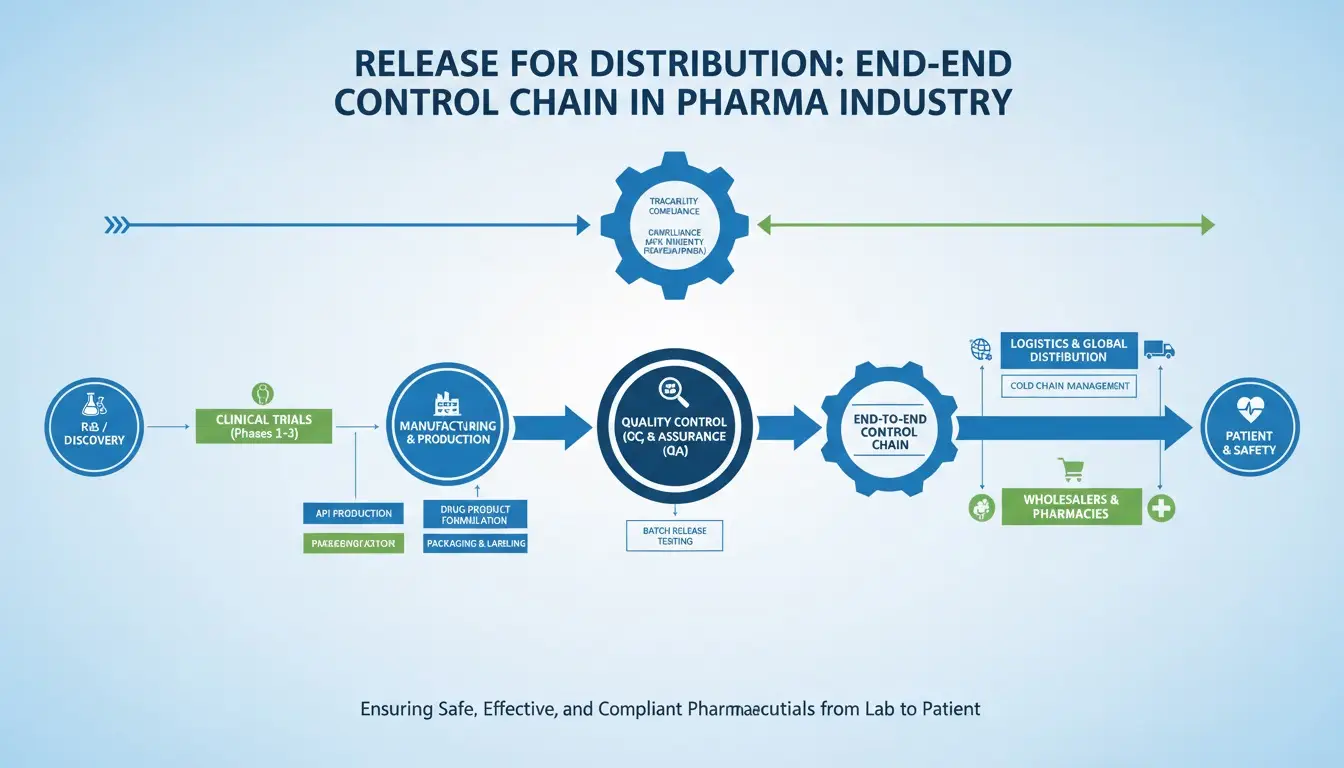
Release for Distribution: End-to-End Control Chain

Definition and GMP Context of Release for Distribution

Release for Distribution means products pass quality checks. Teams verify documentation before shipping goods. This ensures products reach patients safely. Organizations track batches throughout the supply chain.

Companies follow GMP regulations strictly during shipping. Quality documents support every distribution decision.

  • 21 CFR 211 requires proper tracking
  • Temperature controls maintain product integrity

Furthermore, teams apply these standards consistently. This process prevents quality failures during transport.

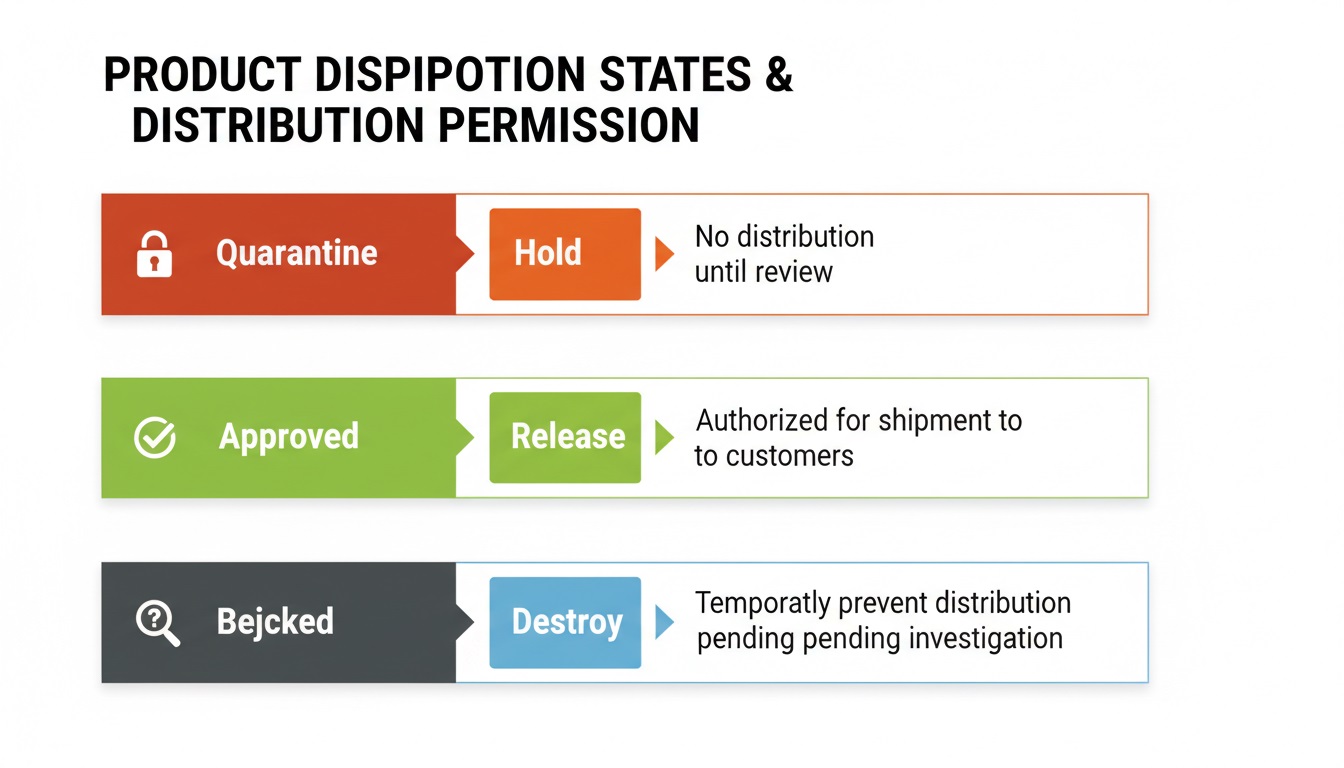
Product Disposition States and Distribution Permission

Regulatory Meaning of “Release for Distribution” Within the Pharmaceutical Supply Chain

Pharma quality groups approve products before shipping daily now. Companies follow FDA guidelines strictly for distribution.
Furthermore, organizations track batches throughout supply chains carefully. Documentation ensures regulatory compliance always now.

  • FDA requires Quality Unit approval
  • Documentation supports every distribution decision
  • Temperature controls maintain product integrity
  • Regulations protect patient safety always

Relationship Between Quality Decision, Physical Stock Status, and Distribution Authorization

Quality assurance teams verify products before distribution decisions. Physical stock status determines shipment readiness.
Furthermore, distribution authorization depends on quality approval first. Teams maintain these standards always.

  • Quality decision confirms product specifications met
  • Physical stock ensures inventory availability now
  • Distribution authorization releases approved products safely

Product Disposition States (Quarantine, Approved, Rejected, Blocked) and Their Operational Controls

Quality teams place materials in quarantine status immediately. Systems prevent shipment until approval arrives from supervisors daily.

Approved products receive distribution authorization automatically. Teams release these products for shipment safely every time now.

Rejected products undergo destruction procedures quickly now. Quality supervisors document these actions permanently always carefully.

Blocked items remain isolated from inventory systems carefully. However, teams review these items systematically every day consistently.

Why Release for Distribution Is a Critical GMP Control Point

Effective teams carry out the release for distribution as a crucial GMP checkpoint. Companies prevent unauthorized products from reaching patients through this control. Organizations maintain regulatory compliance at every step now.

Furthermore, this control prevents counterfeit goods from entering supply chains. Teams enforce quality standards consistently throughout operations.

  • Quality Unit approves all distribution releases
  • Documentation supports every quality decision made
  • Regulatory agencies require this control strictly

This process protects patient safety continuously always.

Difference Between Batch Release and Release for Distribution

Quality groups complete batch release after manufacturing finishes daily. Teams document all test results before authorization occurs. However, companies perform distribution release before shipping products out. Organizations verify temperature requirements before final authorization.

  • Batch Release verifies product quality and specifications meet all standards
  • Distribution Release confirms supply chain compliance before final shipment now

NDA Document Checklist by Functional Are

Aspect Batch Release Release for Distribution
Purpose
Confirms product quality and specifications
Confirms shipment readiness and supply chain compliance
Timing
After manufacturing and quality testing
Before shipping products to customers
Authorization
Quality Unit/Qualified Person (QP)
Quality Unit plus Logistics teams
Focus
Product quality, test results, batch disposition
Documentation, temperature control, shipping readiness
Regulatory Reference
WHO GMP, 21 CFR Part 211
WHO GDP Chapter 8, 21 CFR Part 211

Who Is Responsible for Release for Distribution (QA / QP / Authorized Person)?

Quality expert review batch disposition status carefully now. Furthermore, QP officials sign certification documents where required.  Authorized users change system status in ERP platforms regularly.


  • QA Batch Disposition Review: Deviations, OOS/OOT, CAPA Status, and Documentation Completeness
  • QP Certification Requirements (Where Applicable): Legal Accountability, Batch Certification, and Market-Specific Release
  • Authorized Person in ERP/WMS: System Status Change, Shipment Block Removal, and Access Segregation
  • Warehouse and Supply Chain Execution Controls: Picking Eligibility, FEFO Rules, and Dispatch Hold Prevention

1-QA Batch Disposition Review

QA teams review batch disposition carefully to ensure product quality and safety. They check deviations and out-of-specification (OOS) or out-of-trend (OOT) results. They assess the status of Corrective and Preventive Actions (CAPA) thoroughly. Next, they verify documentation completeness before approving batches for release. This review prevents errors and maintains compliance.


Key points of QA batch disposition review: 

  • Identify and evaluate deviations promptly
  • Analyze OOS and OOT results carefully
  • Check CAPA status and effectiveness
  • Confirm all required documents are complete
  • Approve batch only when all criteria meet standards

2-QP Certification Requirements

Qualified Persons (QPs) hold legal accountability for batch certification where required. They review batch data carefully to ensure compliance with regulations and quality standards. Moreover, QPs certify batches before releasing them to the market. This process guarantees that products meet all safety and legal requirements.


For example, a QP certifies a batch of medicines before market release. They verify documentation, test results, and compliance thoroughly. Then, the QP signs the certification to approve the batch.

3-Authorized Person in ERP/WMS

An Authorized Person manages batch disposition using ERP and WMS systems efficiently. They change system status to move batches through production and distribution stages. Also, they remove shipment blocks after quality approval to allow product delivery. Furthermore, they follow strict access segregation to protect data integrity and prevent errors.

For example, an Authorized Person updates the ERP system status for a batch. Then, they remove shipment blocks in the WMS after final checks. Next, they ensure only authorized staff access sensitive batch data.

4-Warehouse and Supply Chain Execution Controls

Warehouse and supply chain teams control batch disposition to ensure product quality and timely delivery. They manage picking eligibility based on batch status and product conditions. Also, they apply FEFO rules to use older batches first, reducing waste. Moreover, they prevent dispatch holds by verifying all documentation and approvals.


Key controls include: 

  1. Check picking eligibility before releasing products for shipment.
  2. Apply FEFO rules to select the oldest batch first.
  3. Verify batch documentation to avoid dispatch holds.
  4. Coordinate with QA to confirm batch release status quickly.

What Documents Are Needed Before Product Distribution?

Good Manufacturing Practice (GMP) requires specific documents before product distribution to ensure safety and quality. First, teams collect batch production records that detail manufacturing steps. Next, quality control test results must confirm product meets standards. Finally, release authorization documents prove that the product is safe for distribution. These documents help maintain compliance and protect consumers.


Key documents needed include: 

  • Batch production records confirming manufacturing details.
  • Quality control test reports showing product compliance.
  • Product release authorization signed by a qualified person.

Final Word

In summary, batch quality disposition involves confirming product specifications, while distribution execution authorization ensures proper shipment readiness. Both processes must work together to maintain product integrity and compliance. Importantly, teams rely on documented evidence rather than verbal approval to release products. Therefore, clear records and approvals remain essential before distribution happens.


Key points to remember: 

  • Batch quality disposition checks product meets all quality standards.
  • Distribution execution authorization confirms logistics and shipment readiness.
  • Release depends solely on complete, documented approvals from responsible persons.

FAQs

1️⃣ What does "Release for Distribution" mean in the pharmaceutical industry?

Release for Distribution means that a product passes all quality checks and meets regulatory standards before shipping. Teams verify documentation, temperature control, and shipment readiness to protect patient safety.

2️⃣ Who authorizes the release for distribution of pharmaceutical products?

The Quality Unit authorizes product release after confirming all quality specifications. Additionally, logistics teams verify temperature control and shipping readiness to ensure compliance.

3️⃣ What is the difference between batch release and release for distribution?

Batch release confirms that the product meets quality specifications post-manufacturing. Release for distribution ensures supply chain compliance and shipment readiness before products leave the warehouse.

Picture of Ershad Moradi

Ershad Moradi

Ershad Moradi, a Content Marketing Specialist at Zamann Pharma Support, brings 6 years of experience in the pharmaceutical industry. Specializing in pharmaceutical and medical technologies, Ershad is currently focused on expanding his knowledge in marketing and improving communication in the field. Outside of work, Ershad enjoys reading and attending industry related networks to stay up-to-date on the latest advancements. With a passion for continuous learning and growth, Ershad is always looking for new opportunities to enhance his skills and contribute to pharmaceutical industry. Connect with Ershad on Facebook for more information.

Release for Distribution in Pharma Manufacturing: a 2026 Guide on GMP Controls, Roles, and Required Documents

Release for Distribution requires Quality Unit authorization confirming all specifications met per WHO GDP Chapter 8, alongside logistics verification of temperature control, documentation, and shipping readiness before patient delivery. This dual authorization ensures regulatory compliance and product integrity throughout the supply chain. Understanding these processes prevents delays and protects patient safety by maintaining GMP standards and traceability requirements.

Read More »
NDA Regulatory Affairs

NDA Regulatory Affairs in 2026: Key Processes, Documents, and RA Responsibilities

NDA regulatory affairs work turns science into a review-ready submission. An NDA is the formal FDA marketing application for a new drug. FDA first runs a filing check within 60 days to confirm completeness. Then the team reviews the dossier. The CTD’s five-module structure, delivered through eCTD, improves consistency, traceability, and lifecycle management during review.

Read More »

Share