


Pharma Jobs in Switzerland in 2026: Salary, Licensing, and Hiring Demand

Pharma jobs in Switzerland continue to expand within a country that exports more than CHF 100 billion in pharmaceutical products annually, making life sciences its largest industrial sector. At the same time, Swissmedic maintains strict regulatory oversight, and companies face constant compliance pressure during inspections and market authorisation renewals. Therefore, employers cannot afford mis-hiring in regulatory, quality, or clinical roles.

Many professionals explore Pharma Jobs across Europe to access stable markets with strong governance. Switzerland stands out because it combines high salaries, structured licensing pathways, and concentrated industry hubs. However, entering this market requires clarity about employer concentration, regulatory expectations, and language requirements.

Table of Contents

Pharma Jobs in Switzerland: Market Demand and Employer Landscape

Switzerland’s pharmaceutical job market concentrates in Basel, Zurich, and parts of the French-speaking region.

Most recruitment activity centers in Basel’s life sciences hub, particularly in regulatory, quality, and biologics-focused positions within multinational firms.

Basel hosts more than 700 life sciences companies and remains the operational center for global players such as Roche and Novartis. Consequently, pharmaceutical companies in Switzerland actively recruit specialists in regulatory affairs, pharmacovigilance, quality assurance, and biologics manufacturing. Meanwhile, Zurich attracts biotech startups and digital health innovators, which creates demand for data-driven roles and clinical research functions.

In hospital settings, clinical pharmacist Switzerland hospital positions remain competitive and language-dependent. German proficiency dominates in Basel and Zurich, while French matters in Geneva and Lausanne. Therefore, international applicants must align language readiness with canton requirements.

Although hiring remains stable, companies prioritize candidates who understand Swiss GMP standards and inspection culture. Recruiters frequently screen for prior exposure to regulated environments rather than general pharmaceutical experience.

Education and Licensing Pathway for Pharmacists in Switzerland

Foreign-trained pharmacists must complete formal recognition before practicing in Switzerland.

Foreign-trained pharmacists must complete degree recognition, fulfill language requirements, and secure formal authorization before entering clinical practice in Switzerland.

The Swissmedic licensing process requires academic evaluation through the MEBEKO degree recognition Switzerland framework. First, authorities assess equivalence to Swiss pharmacy education. Then, applicants demonstrate language proficiency based on canton requirements. Finally, candidates register with relevant authorities before entering clinical practice.

Industry roles differ. Regulatory, GMP, or quality positions in Swiss pharmaceutical industry jobs may not require full pharmacist registration, but employers still value recognized degrees and documented compliance experience. During inspections, regulators frequently review personnel qualification records, so incomplete documentation can delay onboarding.

Professionals targeting pharma jobs in Switzerland should prepare documentation early because recognition timelines can extend several months.

Four Entry Routes into Switzerland’s Pharmaceutical Sector

Switzerland’s life sciences market offers structured career pathways shaped by regulatory intensity, manufacturing specialization, and clinical accountability. Therefore, professionals must first identify which entry route aligns with their academic background, language readiness, and inspection-level experience. While some candidates pursue hospital-based practice, others enter through compliance-driven industry roles or manufacturing operations. Understanding these defined entry routes allows applicants to target the right employers instead of applying broadly without strategic alignment.

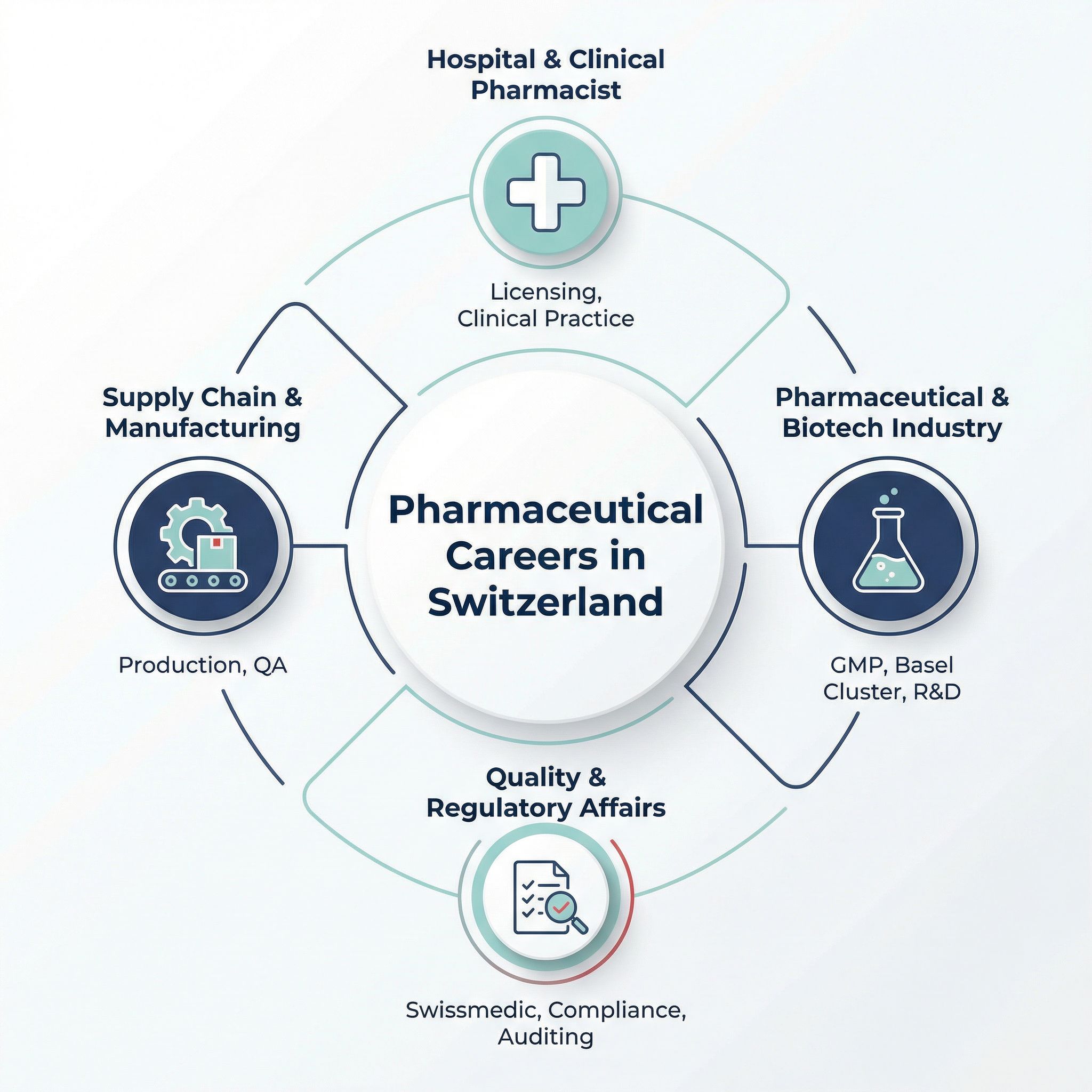
The infographic below outlines the structured entry points that shape how professionals access Switzerland’s regulated pharmaceutical employment market.

Infographic illustrating four structured entry routes into Switzerland’s pharmaceutical sector including hospital pharmacist roles, biotech careers, regulatory affairs positions, and GMP manufacturing pathways.
A visual breakdown of the four main sectors driving pharma jobs in Qatar, including hospitals, manufacturing, distribution, and regulatory bodies.

The following sections outline the four primary career pathways available in Switzerland’s regulated pharmaceutical environment:

  • Hospital and Clinical Pharmacist Roles
  • Pharmaceutical Industry and Biotech Careers
  • Quality, GMP, and Regulatory Affairs Positions
  • Supply Chain, Manufacturing, and Compliance Roles

1. Hospital and Clinical Pharmacist Roles

Hospital roles focus on medication safety, oncology support, and therapeutic monitoring. However, language fluency and cantonal licensing remain mandatory. In practice, hospitals often review documentation carefully before offering contracts, especially during accreditation cycles.

2. Pharmaceutical Industry and Biotech Careers

Industry positions cover regulatory affairs, clinical operations, pharmacovigilance, and biologics development. Basel life sciences cluster drives much of this demand. English speaking pharma jobs in Switzerland appear more frequently in multinational corporate offices than in public institutions.

3. Quality, GMP, and Regulatory Affairs Positions

Quality and regulatory teams manage inspection readiness, deviation handling, and change control. Companies operating under Swiss GMP standards face regular audits, and therefore they hire professionals with structured documentation and CAPA experience. During inspection preparation, even minor compliance gaps can delay product release timelines.

4. Supply Chain, Manufacturing, and Compliance Roles

Manufacturing roles focus on biologics production, sterile operations, and supply chain traceability. Employers prioritize candidates who understand validation protocols and batch release procedures because regulatory scrutiny remains intense.

Salary Benchmarks Across Swiss Pharmaceutical Positions

Swiss pharmaceutical salaries rank among the highest in Europe, but they reflect high living costs and compliance accountability.

Role Entry Level (CHF/month) Mid-Level (CHF/month) Senior Level (CHF/month)
Hospital Pharmacist
6,500
8,000
10,000+
Regulatory Affairs Specialist
7,000
9,000
12,000+
QA Manager
8,000
10,000
13,000+
Manufacturing Scientist
7,000
9,500
12,500+

Pharmacy salary in Switzerland varies by canton and employer size. Nevertheless, compensation consistently exceeds most EU markets. Entry-level industry roles start high, yet they demand prior compliance familiarity. Therefore, candidates should assess total compensation against housing and insurance costs before relocating.

Future Outlook of the Swiss Life Sciences Job Market

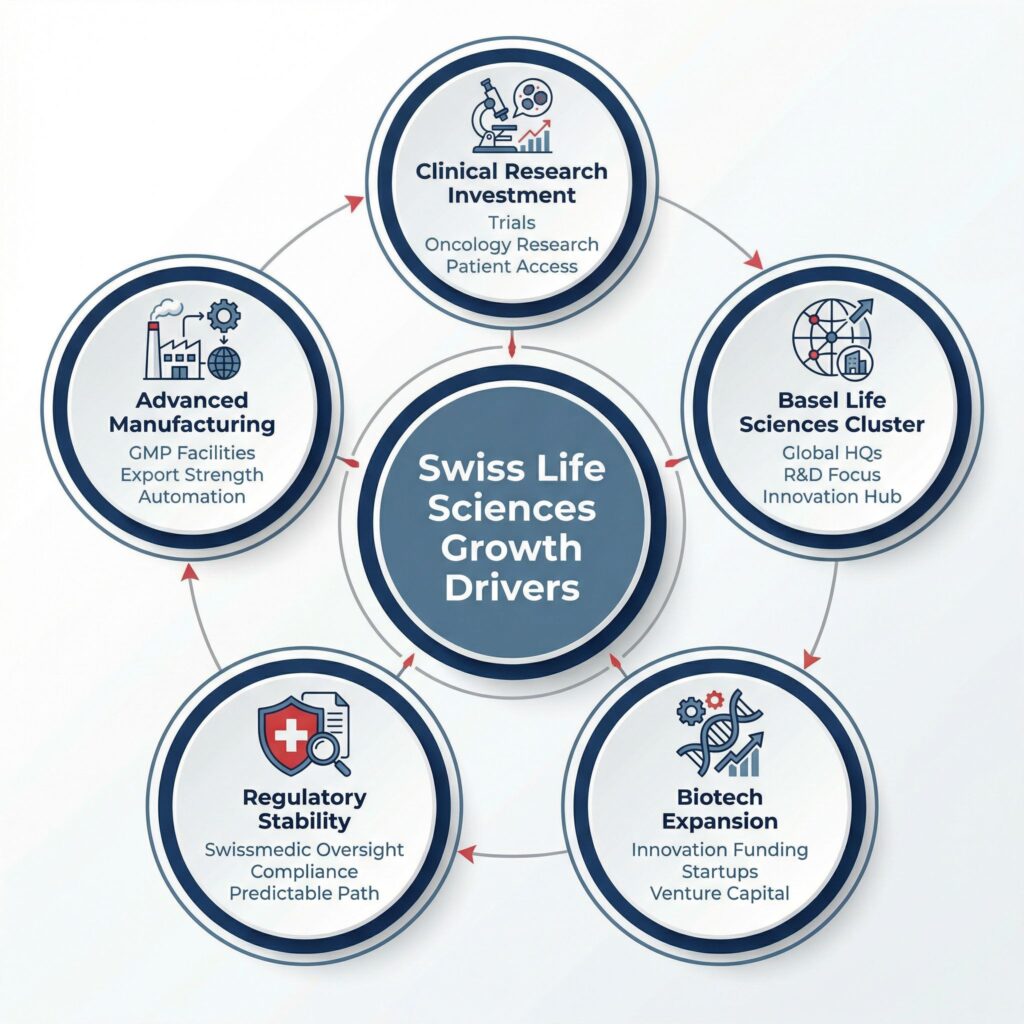
Switzerland’s life sciences sector shows long-term hiring stability driven by biologics expansion, regulatory rigor, and sustained research investment.

The infographic below maps the four structured entry routes that define how professionals enter Switzerland’s regulated pharmaceutical sector.

This infographic illustrates the primary career pathways into Switzerland’s pharmaceutical sector, including hospital practice, biotech industry roles, regulatory compliance, and GMP-driven manufacturing positions.

Biologics and oncology pipelines continue to expand, and therefore companies invest in regulatory science and manufacturing scale-up. Meanwhile, digital transformation reshapes clinical data management and quality oversight. EU regulatory alignment also increases cross-border coordination, which strengthens demand for experienced compliance professionals.

Although hiring cycles fluctuate slightly, structural demand persists because Switzerland positions itself as a global pharmaceutical innovation hub.

How to Find the Best Pharmaceutical Positions in Switzerland

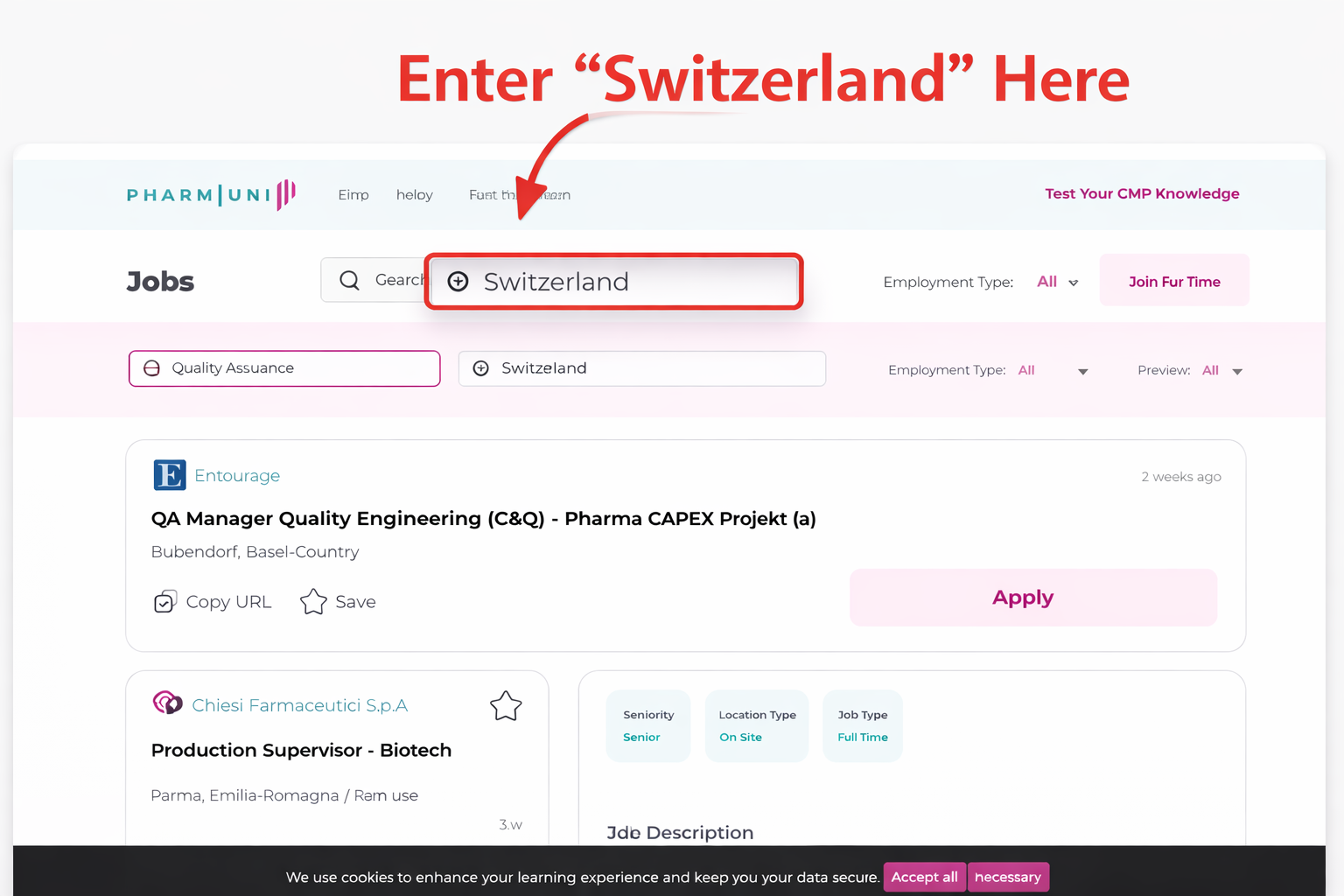
Professionals should avoid scattered applications and instead use centralized platforms that allow filtering by role, location, and specialization. When you search by canton or sector, you reduce mismatch risk and increase response rates. Moreover, you can compare hospital, biotech, and regulatory positions efficiently. If you want a structured way to review updated openings, you can Explore Pharma Jobs here.

Find the Best Pharmaceutical Positions in Switzerland

Final Word

More than 40% of Switzerland’s total exports come from pharmaceuticals, and regulatory scrutiny continues to intensify across manufacturing and post-marketing surveillance. Therefore, pharma jobs in Switzerland demand not only technical skill but documented compliance readiness. Companies cannot afford inspection delays or clinical start-up setbacks caused by unprepared staff. Professionals who complete licensing early and target employer tracks aligned with their experience reduce transition risk and strengthen long-term employability in this highly regulated market.

FAQs

1️⃣ Can foreign-trained pharmacists work in Switzerland without Swissmedic or MEBEKO recognition?

No. You must complete official degree recognition through MEBEKO and meet cantonal language requirements before practicing in clinical or community pharmacy settings.

2️⃣ Why do regulatory and GMP roles in Basel often require prior inspection experience?

Because companies operate under strict Swiss GMP oversight, hiring managers prioritize candidates who understand audit readiness, deviation handling, and inspection documentation standards.

3️⃣ What improves the chances of securing a role in Switzerland’s life sciences sector?

Early licensing preparation, canton-aligned language proficiency, and proven experience in regulated environments significantly increase hiring success.

Picture of Mahtab Shardi

Mahtab Shardi

Mahtab is a pharmaceutical professional with a Master’s degree in Physical Chemistry and over five years of experience in laboratory and QC roles. Mahtab contributes reliable, well-structured pharmaceutical content to Pharmuni, helping turn complex scientific topics into clear, practical insights for industry professionals and students.

Release for Distribution in Pharma Manufacturing: a 2026 Guide on GMP Controls, Roles, and Required Documents

Release for Distribution requires Quality Unit authorization confirming all specifications met per WHO GDP Chapter 8, alongside logistics verification of temperature control, documentation, and shipping readiness before patient delivery. This dual authorization ensures regulatory compliance and product integrity throughout the supply chain. Understanding these processes prevents delays and protects patient safety by maintaining GMP standards and traceability requirements.

Read More »

Share