


Features
Topics
Discover

Unlock the potential of your career in the Pharma industry with our online courses and qualifications.

Career Path

Pick a career path, follow its guided course roadmap, and secure industry-verified credentials in a few months.

Courses

Earn career credentials from industry leaders that demonstrate your expertise.

GMP Environments in 2026: Inspection Readiness and Control Expectations

In 2024 alone, more than 60% of publicly cited GMP inspection observations across the EU and US referenced facility design, environmental control, or flow deficiencies. In many Form 483 letters and EU non-compliance reports, GMP environments appeared in the opening lines of the findings. These observations rarely result from documentation gaps alone. Instead, they point to structural weaknesses that inspections repeatedly expose, delay regulatory decisions, and force costly remediation cycles under active timelines defined by Good Manufacturing Practices.

This article explains how inspectors assess controlled manufacturing areas today, why the same environmental findings continue to reappear, and what inspection-ready operations look like in practice through the combined lens of facility design, flow control, environmental monitoring, and risk-based decision making.

Table of Contents

What Are GMP Environments in Pharma

GMP environments refer to the controlled conditions that protect product quality during manufacturing. Regulators do not judge these environments by design alone. Instead, they evaluate how consistently the environment performs during routine operations.

In real facilities, controlled manufacturing areas include cleanrooms and the systems that manage airflow, personnel movement, and material handling. Therefore, inspectors focus on daily behavior, not drawings or qualifications. They look at how people move, how materials flow, and how the environment reacts under normal production pressure.

Ultimately, a GMP environment only meets expectations when it maintains control during real operating conditions.

Why GMP Environments Matter for Inspection Readiness

Inspections quickly reveal whether a manufacturing site operates in control or only appears compliant, and environmental performance often sets that judgment from the start.

First, they review whether facility design supports clear flows. Then, they observe how those flows work in practice. At the same time, they examine environmental monitoring trends to confirm stability over time. As a result, gaps between design intent and daily operations quickly attract attention.

Moreover, weak environmental control often explains repeat inspection findings. When the environment allows risk to return, inspectors lose confidence in corrective actions. Therefore, inspection readiness depends on how well the environment supports compliant behavior every day.

Core Elements of GMP Environment Control

Stable outcomes depend on environmental controls operating as an integrated system rather than isolated compliance elements.

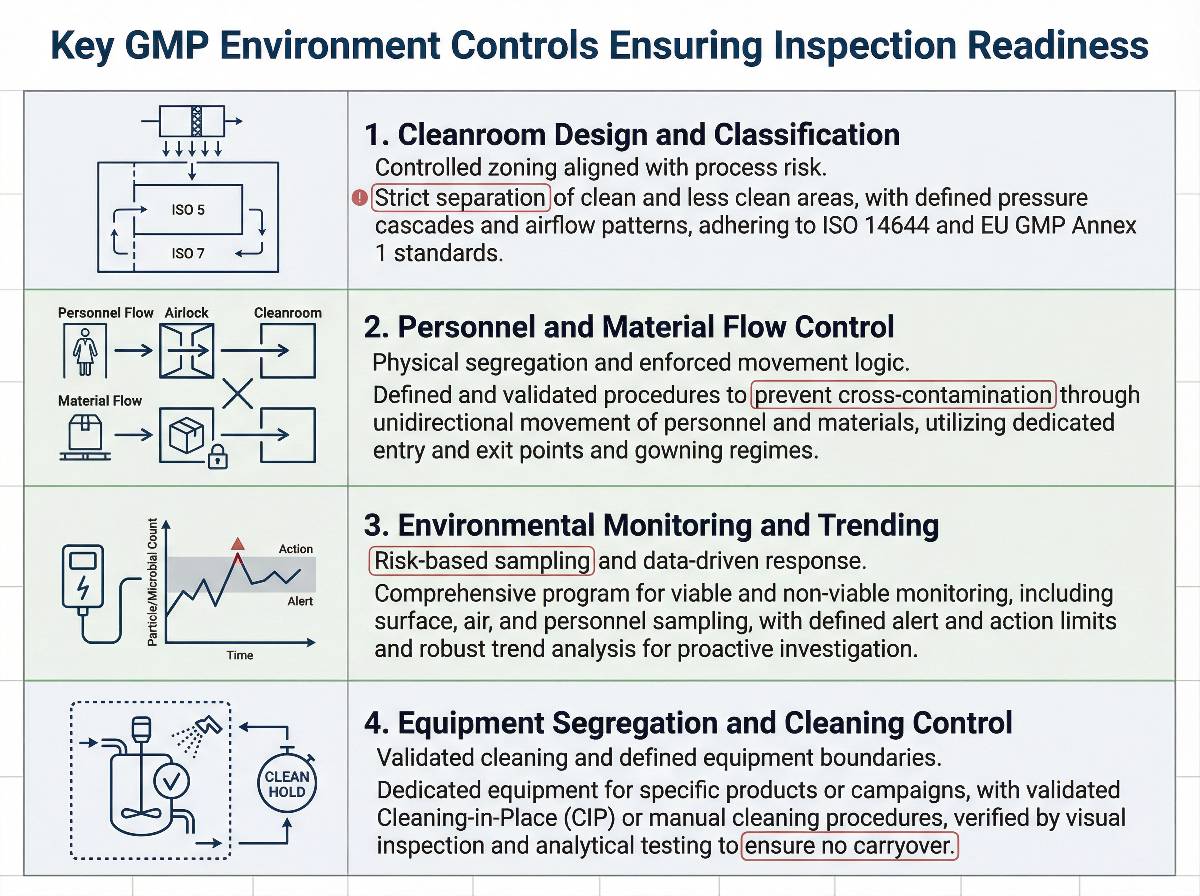
The infographic below highlights the core GMP environmental controls that directly influence inspection readiness and long-term compliance stability.

Infographic showing key GMP environmental controls that ensure inspection readiness, including HVAC systems, pressure control, environmental monitoring, and contamination prevention measures in pharmaceutical facilities.
Key GMP Environmental Controls Supporting Inspection Readiness

Effective environmental control depends on how well facility design, daily operations, and monitoring systems work together. Inspectors do not assess these elements in isolation. Instead, they evaluate whether each control reinforces the others during routine manufacturing. When one element fails, environmental risk quickly spreads across the system and becomes visible during inspection.

This section focuses on the controls that most directly influence inspection outcomes:

  • Cleanroom Design and Environmental Monitoring
  • Personnel Flow and Material Segregation
  • Equipment Segregation and Contamination Prevention

Cleanroom Design and Environmental Monitoring

Cleanroom design must match process risk and daily operations. Inspectors check whether room classification, airflow patterns, and pressure differentials remain stable during routine production. Therefore, they review how the environment performs under normal workload, not under ideal conditions.

Environmental monitoring plays a central role in this assessment. Inspectors expect monitoring locations, frequencies, and limits to reflect contamination risk. When monitoring data shows instability or delayed response, inspectors question whether the environment truly remains under control.

Personnel Flow and Material Segregation

Personnel movement directly affects environmental control. Inspectors closely observe how operators gown, move, and interact with materials during routine tasks. If personnel frequently cross zones or bypass controls, inspectors view the environment as fragile.

Material segregation receives equal attention. Inspectors expect clear separation between incoming, outgoing, and in-process materials. When flow logic relies on individual judgment rather than physical design, inspection risk increases.

Equipment Segregation and Contamination Prevention

Equipment placement influences contamination risk. Inspectors assess whether equipment location, movement, and cleaning boundaries support environmental control. Shared or mobile equipment without clear segregation often raises concern.

Effective facilities define equipment zones clearly and enforce cleaning responsibilities consistently. When equipment control aligns with room classification and process risk, inspectors gain confidence in contamination prevention measures.

Risk-Based Controls and GMP Compliance

Risk-based control focuses environmental effort where failure creates the highest product risk. Inspectors expect facilities to explain why they apply stronger controls in some areas and lighter controls in others.

During inspections, regulators check whether monitoring, limits, and responses reflect process risk. When sites adjust controls based on real exposure and historical data, inspectors see maturity. However, generic programs often signal weak risk ownership.

Well-controlled facilities use risk logic to prevent repeat findings and maintain inspection readiness.

  • Focus monitoring on high-risk operations
  • Act on trends, not single events
  • Adjust limits based on process behavior

Common Facility Gaps Leading to Repeat Inspection Findings

Repeat inspection findings usually signal unresolved GMP system weaknesses rather than new compliance failures.

Therefore, when companies fail to correct root causes in facility controls, inspectors identify the same gaps again during follow-up audits.

The table below outlines common facility deficiencies, the regulatory risks they create, and the corrective actions that effectively prevent repeat inspection findings.

Typical Deficiency Regulatory Concern Effective Corrective Action
Inadequate pressure differentials
Risk of cross-contamination
Rebalance HVAC and verify under dynamic load
Poor personnel flow control
Human-driven contamination
Redesign pathways and retrain with observation
Superficial EM trending
Missed systemic drift
Implement statistical trend reviews
Shared equipment without zoning
Product mix-up risk
Define equipment segregation and labeling
Delayed response to excursions
Loss of environmental control
Strengthen investigation timelines

These gaps persist when environmental controls are treated as compliance artifacts rather than operational systems.

Across multiple inspection cycles, repeat observations are rarely caused by new failures. They typically result from unresolved facility system gaps that remain structurally uncorrected.

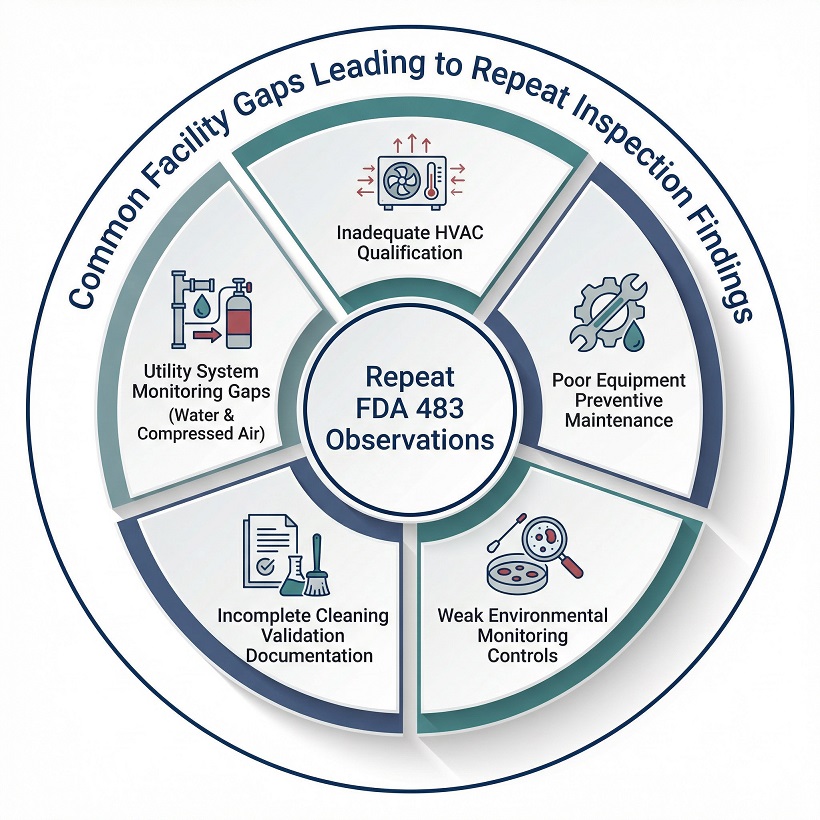
Circular infographic illustrating common pharmaceutical facility gaps leading to repeat FDA inspection findings, including HVAC qualification, preventive maintenance, environmental monitoring, cleaning validation, and utility system controls.
Common Facility Gaps Driving Repeat FDA Inspection Findings

Final Word

In 2023, over 40% of repeat GMP citations in EU inspection summaries were linked to unresolved facility and environmental control issues demonstrating that remediation often fails when root causes are structural. In regulatory practice, inspectors rarely cite environmental failures as isolated issues; instead, they treat them as indicators of deeper weaknesses in site governance and operational discipline. For organizations operating GMP environments, inspection readiness depends less on new procedures and more on whether design, behavior, and monitoring reinforce each other under real conditions.

Facilities that proactively stress-test their environments during routine operations, not just audits, reduce regulatory risk, protect product integrity, and avoid costly inspection cycles. The difference between a minor observation and a critical finding is often visible long before inspectors arrive.

FAQs

1️⃣ How do inspectors determine whether a controlled manufacturing area is truly under control?

Inspectors correlate facility design, personnel behavior, and environmental monitoring trends to assess real operational control. They focus on how the area performs during routine production, not during staged or idle conditions.

2️⃣ Why do environmental monitoring issues often lead to repeat inspection findings?

Recurring excursions point to systemic weaknesses rather than isolated technical failures. When trend analysis, root cause depth, or response timelines remain weak, inspectors expect the same issues to reappear.

3️⃣ What practical changes improve inspection outcomes without redesigning the facility?

Stronger flow discipline, risk-based monitoring, and better alignment between daily operations and design intent improve inspection outcomes. These actions address common inspection citations without requiring major capital investment.

Picture of Mahtab Shardi

Mahtab Shardi

Mahtab is a pharmaceutical professional with a Master’s degree in Physical Chemistry and over five years of experience in laboratory and QC roles. Mahtab contributes reliable, well-structured pharmaceutical content to Pharmuni, helping turn complex scientific topics into clear, practical insights for industry professionals and students.

Share